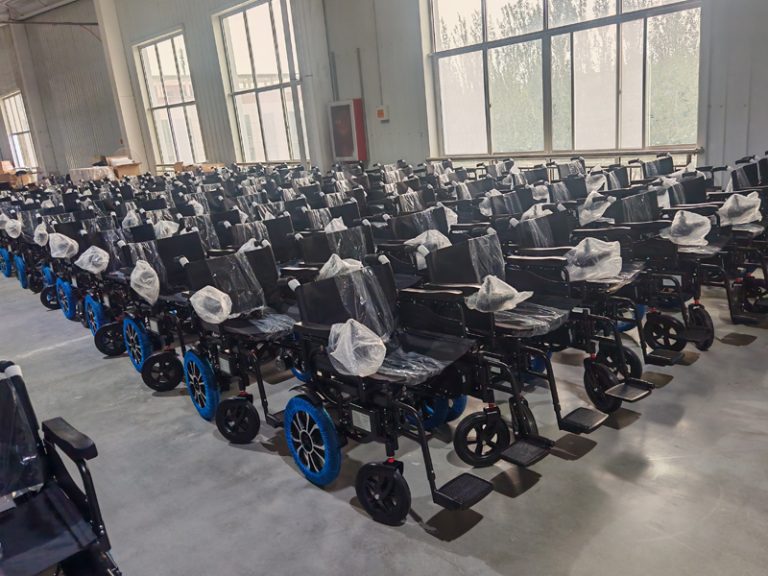
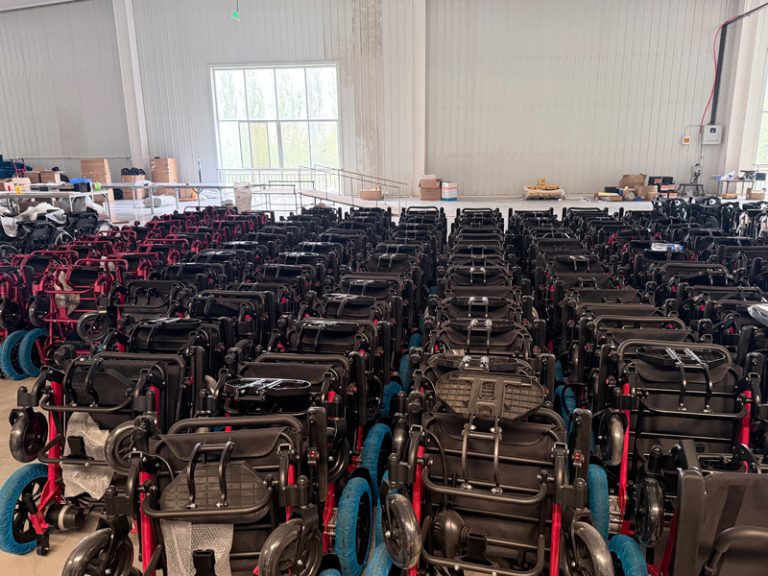
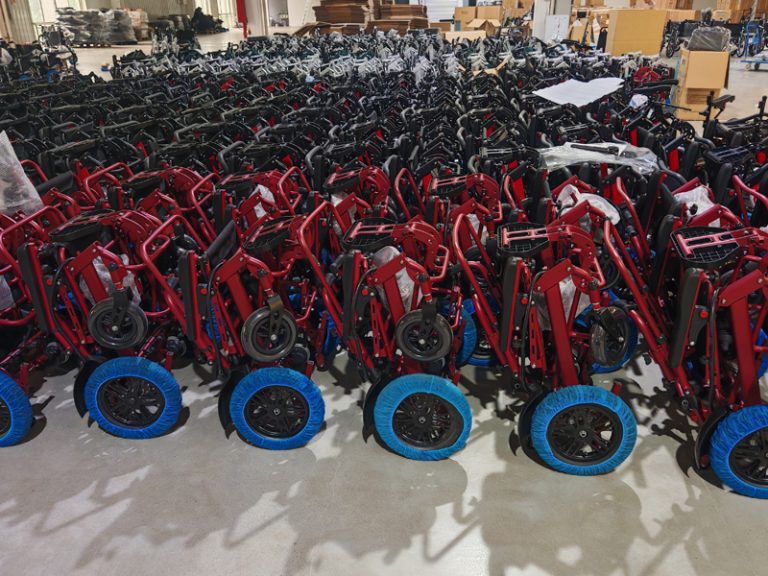
Our Location
Free Trade Tower, Xiyong street.
Chongqing, China

Free Trade Tower, Xiyong street.
Chongqing, China

Shipping a wheelchair to another country is not quite the same as sending an ordinary parcel. A wheelchair is larger, heavier, and often more expensive than standard household goods. Depending on the model, it may also contain batteries, electronic components, removable parts, or other equipment that requires special handling. Once customs clearance, international transportation, and local delivery are added to the process, the question becomes more complicated than simply asking how many days a courier needs.
So, how long does it take to ship a wheelchair internationally?
In most cases, international wheelchair shipping takes approximately 5 to 20 business days, although the actual delivery time can be shorter or considerably longer. Express air freight may deliver a wheelchair in roughly 3–7 business days in favorable circumstances, while standard air freight commonly takes around 5–12 business days. Ocean freight is usually much slower, often taking 20–60 days or more, but it can be substantially more economical for large shipments or multiple wheelchairs.
The exact timeline depends on several factors: the country of origin, destination country, shipping method, wheelchair size and weight, whether the wheelchair is manual or powered, battery regulations, customs procedures, documentation, and the final-mile delivery arrangement.
For anyone arranging an international wheelchair shipment, understanding these variables before booking transportation can prevent unpleasant surprises. A wheelchair may arrive at the destination country quickly but remain at customs for several days. Likewise, a shipment that leaves the warehouse immediately may still take longer than expected because of port congestion, holidays, remote-area delivery, or incomplete paperwork.
This guide explains what really affects international wheelchair shipping times, how long each shipping method typically takes, and what you can do to make the process faster and more predictable.
There is no single delivery time that applies to every wheelchair shipment. However, it is useful to think of international shipping as several separate stages rather than one continuous journey.
A typical shipment may involve:
Order or pickup → Packaging → Export processing → International transportation → Customs clearance → Local transportation → Final delivery
Each stage adds time.
For a straightforward manual wheelchair shipped by air between major cities, the process may be completed within one to two weeks. A powered wheelchair traveling to a remote destination can take considerably longer because of battery requirements, freight handling, customs inspection, and local transportation.
Here is a practical general estimate:
| Shipping Method | Typical Transit Time | Best For |
|---|---|---|
| Express courier | 3–7 business days | Urgent individual shipments |
| Air freight | 5–12 business days | Faster international delivery |
| Standard freight | 7–20 business days | General wheelchair shipments |
| Ocean freight | 20–60+ days | Large, heavy, or multiple shipments |
| Door-to-door freight | 7–25+ business days | Convenience and simplified logistics |
These figures are estimates rather than guarantees. The shipping route and customs process can have as much influence on the final delivery date as the transportation method itself.
For example, a shipment traveling from a major warehouse near an international airport to a major city may move relatively quickly. A wheelchair going from a smaller inland city to a rural destination overseas may require several additional transportation stages.
That is why a professional shipping quote should ideally include not only the international transit time but also pickup, export handling, customs clearance, and final delivery.
At first glance, shipping a wheelchair seems straightforward. Fold it, put it in a box, attach a shipping label, and send it.
In reality, wheelchairs can require special logistics.
A standard manual wheelchair may be relatively simple to transport, but even then, its dimensions can make it unsuitable for ordinary parcel networks. Some models cannot be folded completely, while others require reinforced packaging to protect wheels, frames, armrests, footrests, and brakes.
Powered wheelchairs introduce additional considerations.
Many electric wheelchairs and mobility scooters use lithium-ion batteries, lead-acid batteries, or other battery systems. Depending on the battery type and the transportation method, special packaging, labeling, documentation, or carrier approval may be required.
This is particularly important when shipping by air.
Air transportation is generally faster than sea freight, but airlines and freight carriers have strict rules concerning certain batteries and dangerous goods. A shipment may therefore experience delays if the battery information is missing or if the carrier needs additional documentation before accepting the cargo.
The wheelchair itself may be ready to ship on Monday, but if the carrier cannot approve the battery configuration until Wednesday, the actual transit clock has barely started.
For this reason, the fastest shipping method is not always the fastest overall solution. Choosing a carrier that routinely handles mobility equipment can sometimes result in a smoother shipment even if its advertised transit time is slightly longer.
One of the most important factors in determining international shipping time is the type of wheelchair being transported.
Manual Wheelchairs
Manual wheelchairs are generally easier to ship internationally because they do not have a propulsion battery.
A lightweight folding wheelchair can often be packaged relatively compactly, making air freight or courier shipping practical. Depending on the route, a manual wheelchair may arrive within approximately 5–15 business days.
However, larger rigid-frame wheelchairs can require freight transportation rather than standard parcel service. Their size and weight can increase handling costs and may also affect the available shipping options.
Electric and Power Wheelchairs
Power wheelchairs require more planning.
The first question should be: What type of battery does the wheelchair use?
Lithium-ion batteries can be subject to specific transportation requirements, particularly when shipped by air. Some batteries may need to be removed, separately packaged, or transported under specific dangerous-goods procedures depending on the battery’s specifications and the carrier’s rules.
Lead-acid batteries have different requirements and may also require special handling.
Before booking a shipment, provide the carrier with accurate information about:
Providing this information at the beginning can prevent one of the most common international wheelchair shipping problems: the shipment being booked before the carrier has approved the equipment.
If the wheelchair is needed urgently, air freight is usually the most practical option.
International air freight can often move a wheelchair between major cities within 5–12 business days, including transportation and routine handling. Express services may be faster, sometimes reaching approximately 3–7 business days on suitable routes.
But it is important to distinguish between flight time and total delivery time.
A direct flight may take only several hours. That does not mean the wheelchair will arrive at the recipient’s home within several hours.
Before and after the flight, the shipment may need to pass through:
This is why a shipping company may quote “5–10 business days” even when the actual flight is much shorter.
Air freight is also generally more expensive than ocean freight. For an individual wheelchair, however, the additional cost may be worthwhile when the recipient depends on the equipment for daily mobility.
If the wheelchair is being shipped because the original equipment was damaged, lost, or left behind during international travel, speed can become especially important.
Ocean freight is generally the opposite of air freight.
It can take significantly longer, but it is often more economical for bulky or heavy equipment.
For international wheelchair shipments, ocean transit may take approximately 20–60 days, depending on the origin, destination, shipping route, port schedules, container availability, customs procedures, and inland transportation.
Ocean freight can make sense when:
For example, a business importing 30 wheelchairs may find containerized ocean freight far more economical than sending each unit individually by air.
For one wheelchair needed immediately, however, ocean freight is rarely the preferred choice.
The important thing is to compare total landed cost, not simply the transportation price. A low ocean freight quote may still involve port fees, customs charges, destination handling, warehouse fees, and inland delivery costs.
International transportation is only part of the journey.
Once a wheelchair reaches the destination country, it may need to pass through customs before it can be delivered.
Customs clearance can take anywhere from a few hours to several business days, and occasionally longer if the shipment requires inspection or additional documentation.
Several things can affect the process.
The first is the accuracy of the paperwork.
The shipping documents should clearly identify the product. A description such as “medical equipment” may be less useful than a specific description such as “manual wheelchair” or “powered wheelchair with rechargeable battery,” depending on the circumstances and the carrier’s requirements.
Other information may include:
A mismatch between the paperwork and the physical shipment can create unnecessary questions.
For example, if the documents describe a shipment as one wheelchair but the package contains multiple pieces of equipment, customs may request clarification.
Similarly, an unusually low declared value can trigger questions because customs authorities may need to determine whether the declared value is reasonable.
The best strategy is simple: make the documentation accurate before the wheelchair leaves the origin country.
International wheelchair shipping is not just about where the shipment starts. The destination can have an equally important effect.
Major international logistics hubs tend to offer more frequent transportation options. Smaller cities may require additional domestic transportation after the wheelchair clears customs.
Consider two shipments leaving the same warehouse.
One goes to a major metropolitan area with a large international airport and established freight network. The other goes to a rural region several hours from the nearest major city.
Even if both shipments use the same international carrier, the second shipment may take several extra days.
The same principle applies to islands, remote regions, mountainous areas, and locations with limited freight infrastructure.
When requesting a quote, always provide the complete destination address or at least the postal code when possible. A shipping company can then determine whether additional inland transportation is necessary.
Good packaging does more than protect a wheelchair. It can also make the logistics process easier.
A wheelchair that arrives damaged is not a successful shipment, even if it arrived on schedule.
Manual wheelchairs should generally be protected against impacts, pressure, moisture, and rough handling. Removable components such as footrests, cushions, armrests, or other accessories may need separate protection.
For powered wheelchairs, packaging must also account for electrical components and battery requirements.
The shipping dimensions are important because freight charges are not always based solely on actual weight. Depending on the carrier and service, dimensional or volumetric weight may influence the shipping price.
An oversized box can therefore cost significantly more than a compact, properly designed package.
Professional wheelchair shipping services may use:
A little extra preparation at the warehouse can prevent much larger problems later.
If time is critical, there are several practical steps that can reduce avoidable delays.
1. Choose the shipping method before packing
Do not package the wheelchair first and ask the carrier afterward.
Determine whether the shipment will travel by courier, air freight, or ocean freight before finalizing the packaging. Different transportation methods may have different size, weight, and battery requirements.
2. Confirm battery requirements early
For powered wheelchairs, battery details should be provided before booking.
Do not simply tell the carrier that the wheelchair is “electric.” Provide the exact battery type and specifications whenever possible.
3. Prepare customs documents in advance
Make sure the invoice, product description, value, quantity, and recipient information are consistent.
Incomplete documentation is one of the easiest delays to prevent.
4. Use a carrier experienced with mobility equipment
A company that regularly ships wheelchairs and medical equipment is often better prepared to deal with unusual dimensions, batteries, customs documentation, and freight handling.
5. Avoid shipping immediately before major holidays
International transportation networks can become congested around major holidays.
Customs offices, freight terminals, warehouses, and local delivery companies may also operate with reduced staffing.
If the wheelchair is needed by a specific date, build additional time into the schedule rather than choosing a delivery estimate with no buffer.
6. Ask for a door-to-door quote
A door-to-door service can reduce the number of logistics steps the customer has to manage.
Ask whether the quoted price includes:
Also ask which costs are excluded.
A cheap transportation quote can become expensive when additional destination charges appear later.
This is one of the most important questions to ask before arranging international wheelchair delivery.
Suppose someone is moving abroad and needs a wheelchair at their new home. If the flight is scheduled for June 20, shipping the wheelchair on June 15 may be far too late, even if the advertised transit time is five business days.
International shipping estimates should not be treated like guaranteed appointment times.
A better approach is to work backward from the date the wheelchair is actually needed.
For example:
Required at destination: June 20
Recommended arrival buffer: Several days
Estimated customs and final delivery: Several business days
International transit: Several business days
Export processing and pickup: Several business days
The exact buffer depends on the route and shipping method, but allowing extra time is especially important when the wheelchair is essential for daily mobility.
If a wheelchair is medically necessary, a delay is more than an inconvenience. It can affect independence, transportation, work, travel, and basic daily activities.
In such situations, paying more for a reliable service can be more sensible than choosing the lowest possible shipping price.
Although delivery time is the focus of this article, cost is closely connected to shipping speed.
International wheelchair shipping prices can vary substantially depending on:
A small folding manual wheelchair may be considerably less expensive to transport than a heavy power wheelchair packed in a large crate.
Air freight generally costs more than ocean freight because speed and cargo capacity are priced differently.
It is also important to understand that the cheapest shipping quote is not necessarily the cheapest final cost.
For example, one quote might include pickup, customs brokerage, and final delivery, while another quote might cover only the international transportation segment.
When comparing prices, ask each provider for a breakdown of the total cost.
A useful comparison should include both estimated delivery time and total landed cost.
Wheelchairs can be expensive, particularly powered models and customized equipment.
Before shipping internationally, check what protection is included in the carrier’s standard liability coverage.
Standard carrier liability may not equal the full replacement value of the wheelchair.
Consider additional cargo insurance if the equipment has significant financial value or is difficult to replace.
This is particularly important for customized wheelchairs. A highly personalized wheelchair may have a replacement cost that goes far beyond the value of a standard model.
Keep photographs of the wheelchair before packaging, especially photographs showing its overall condition and any existing marks or damage.
It is also sensible to photograph the packaged wheelchair before it leaves the warehouse.
These records can be useful if a damage claim later becomes necessary.
Reliable tracking can make the shipping process much less stressful.
However, international tracking does not always update continuously.
A shipment may show no new scan while it is:
This does not automatically mean the wheelchair is lost.
For freight shipments, tracking information may also be less detailed than the tracking available for a small parcel.
If a shipment appears inactive for an unusually long period, contact the shipping provider and ask specifically which stage the wheelchair is currently in.
A useful question is not simply “Where is my shipment?”
Instead, ask:
“Has the shipment cleared export customs, arrived in the destination country, and been released for final delivery?”
That question can often produce much more useful information.
Most delays fall into a relatively small number of categories.
Customs documentation problems are among the most common. Missing or inconsistent paperwork can cause a shipment to be held until the issue is resolved.
Battery restrictions can affect powered wheelchairs, particularly when the shipping method involves air transportation.
Incorrect dimensions or weight can create problems if the shipment was booked using inaccurate information.
Customs inspections are sometimes unavoidable and may extend the delivery timeline.
Weather and transportation disruptions can delay flights, ships, and local delivery.
Public holidays can reduce operating hours at customs offices, ports, warehouses, and delivery companies.
Remote destinations may require additional inland transportation.
Damaged packaging can also cause delays if the carrier needs to inspect or repackage the equipment.
Finally, some delays happen because the recipient cannot accept delivery. Residential freight shipments may require someone to be available at the destination.
Understanding these potential problems makes it easier to plan realistically.
Imagine a customer needs to ship a powered wheelchair from the United States to a European destination.
The wheelchair is collected on Monday.
On Tuesday, the carrier checks the dimensions, weight, and battery documentation. Because the battery information is complete, the shipment is approved for air transportation.
By Wednesday, the wheelchair reaches the export freight terminal.
It departs on Thursday and arrives in the destination country on Friday.
The shipment then enters import customs.
If everything is correct, customs releases it on Monday or Tuesday. The local freight carrier collects it and arranges final delivery.
The wheelchair might reach the recipient around the middle of the following week.
In this example, the international flight itself accounts for only a small portion of the total timeline. Most of the time is spent moving the equipment through the logistics network before and after the flight.
Now imagine that the battery documentation is incomplete.
The wheelchair may sit at the export terminal for several additional days.
The lesson is important: international wheelchair shipping time is determined by the entire logistics process, not just the time the wheelchair spends on an airplane or ship.
For a non-urgent international shipment, planning at least two to four weeks ahead is a reasonable starting point.
For ocean freight, a much longer planning window may be necessary.
For urgent shipments, air freight may be able to move a wheelchair within a week, but it is still wise to allow additional time for customs and unexpected problems.
If the wheelchair is needed for a major event, relocation, extended vacation, medical appointment, or permanent move, do not schedule the shipment based on the carrier’s fastest possible delivery estimate.
Instead, use a conservative estimate.
For example, if a carrier says air freight normally takes 5–10 business days, plan around the longer end of the range rather than assuming five days.
That approach may seem overly cautious, but it can make a significant difference when the wheelchair is essential.

The right shipping provider should be evaluated on more than price.
Before booking, ask:
Does the company regularly ship wheelchairs?
Can it handle powered wheelchairs and batteries?
Does the quote include customs-related services?
Is the service door-to-door?
What happens if customs holds the shipment?
Is tracking available?
What insurance or liability coverage is included?
Are residential or remote-area delivery fees included?
What is the estimated total delivery window rather than only the transit time?
A professional provider should be able to explain the process clearly.
Be cautious if a company gives an unusually specific delivery promise without asking about the wheelchair’s size, weight, battery type, origin, and destination.
International freight is affected by too many variables for a meaningful quote to be based on only the product name.
The more information you provide at the beginning, the more accurate the shipping estimate is likely to be.
So, how long does it take to ship a wheelchair internationally?
For most shipments, a realistic expectation is somewhere between 5 and 20 business days, with express air services potentially taking only several business days and ocean freight often taking several weeks or more.
But the most important point is that international wheelchair shipping time is not determined by transportation alone.
Packaging, battery regulations, export procedures, customs clearance, destination handling, local transportation, holidays, and the final delivery location can all affect the final arrival date.
If speed is the priority, air freight and experienced mobility-equipment carriers are usually the best starting points. If cost matters more and the shipment is not urgent, ocean freight may be worth considering.
For powered wheelchairs, battery documentation should be handled before the shipment is booked. For all wheelchair types, accurate dimensions, weight, product descriptions, invoices, and destination information can reduce unnecessary delays.
Most importantly, do not plan around the shortest possible delivery estimate when the wheelchair is essential. Give yourself a reasonable buffer.
A wheelchair is not an ordinary package. For the person waiting for it, it can represent independence, mobility, work, travel, and everyday life. Choosing the right shipping method and preparing the shipment properly can make the difference between a smooth international delivery and a frustrating delay.
1. How long does it usually take to ship a wheelchair internationally?
Most international wheelchair shipments take approximately 5–20 business days, depending on the destination, shipping method, customs clearance, and type of wheelchair. Express air freight can sometimes take around 3–7 business days, while ocean freight may require 20–60 days or longer.
The actual transportation time is only one part of the process. Export handling, customs, local delivery, and battery approval can all affect the final arrival date.
2. Can I ship an electric wheelchair internationally?
Yes, electric and power wheelchairs can generally be shipped internationally, but they may require additional preparation because of the battery.
The battery type, capacity, packaging, and transportation method can affect whether the wheelchair can travel by air and what documentation is required. Before booking, provide the carrier with the exact battery specifications and ask whether the battery must be removed or handled separately.
For international shipments, it is strongly recommended to use a carrier or freight company familiar with powered mobility equipment.
3. What is the fastest way to ship a wheelchair overseas?
Express air freight or an international courier/freight service is usually the fastest option. Depending on the route and destination, delivery may take approximately 3–7 business days, although customs clearance and local delivery can extend the total timeline.
If the wheelchair is urgently needed, choose a provider based not only on its advertised transit speed but also on its experience with wheelchairs, battery regulations, customs procedures, and door-to-door delivery. A carrier that handles mobility equipment regularly may provide a more predictable result than simply choosing the fastest advertised service.