Our Location
Free Trade Tower, Xiyong street.
Chongqing, China

Free Trade Tower, Xiyong street.
Chongqing, China
Choosing the right Electric Wheelchair Manufacturer is one of the most important decisions a mobility equipment distributor can make. The manufacturer behind your products affects far more than the purchase price. It influences product quality, delivery reliability, warranty costs, customer satisfaction, regulatory compliance, replacement parts, brand reputation, and ultimately the profitability of your distribution business.
For a distributor, importing electric wheelchairs is rarely a one-time transaction. A successful business usually depends on building a stable product portfolio and maintaining a reliable supply chain over several years. This means the cheapest factory is not necessarily the best supplier, and a large catalog alone does not prove that a manufacturer can support your business.
The right Electric Wheelchair Manufacturer should be able to provide consistent production, suitable product designs, reliable quality control, appropriate certification documents, flexible customization, professional communication, and practical after-sales support. For distributors entering a new market, the manufacturer should also understand the difference between supplying products and helping a business build a sustainable mobility product line.
Before contacting an Electric Wheelchair Manufacturer, define what you actually want to sell.
This sounds obvious, but it is one of the most frequently overlooked steps in international sourcing. Many distributors begin by requesting a catalog and price list from several factories. They then compare unit prices without first deciding which customers they want to serve.
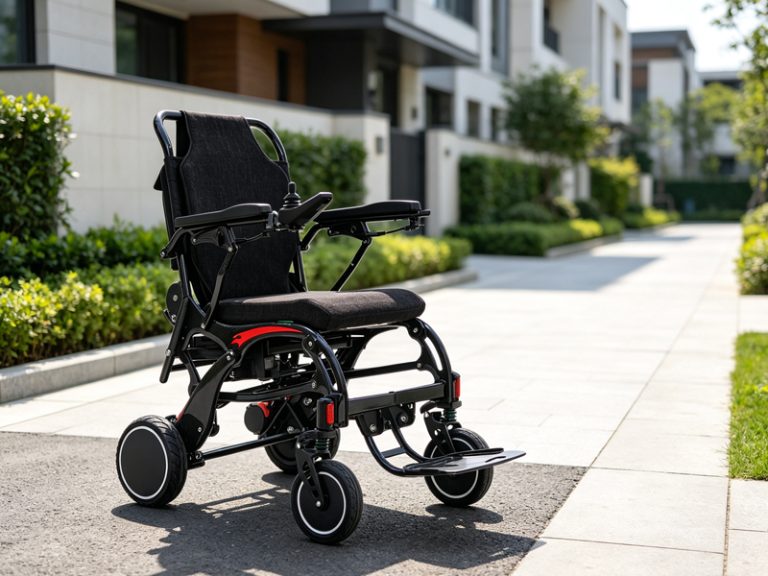
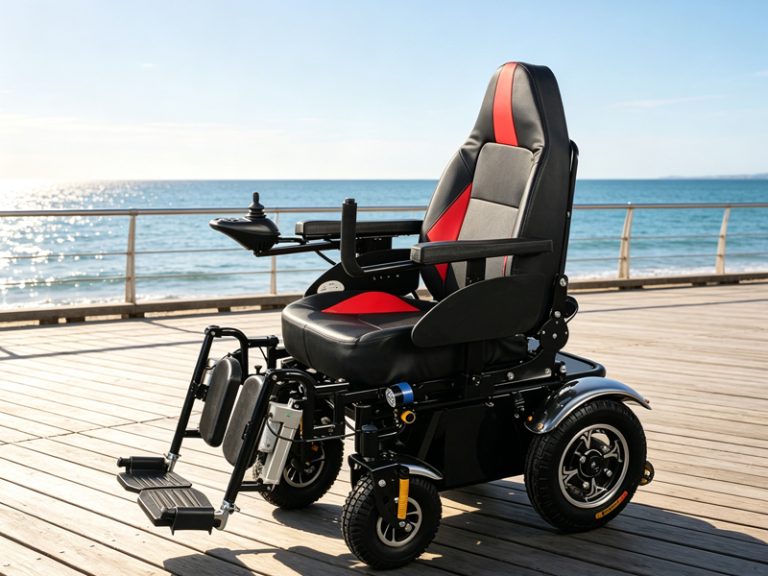
An electric wheelchair designed for elderly users who primarily travel indoors is very different from an all-terrain power wheelchair designed for outdoor environments. A lightweight folding power chair may appeal to private consumers and travel-focused retailers, while a heavy-duty electric wheelchair may be more appropriate for rehabilitation suppliers, care facilities, or specialist medical equipment distributors.
Your target market should determine your product requirements.
For example, a distributor serving European rehabilitation retailers may prioritize compact folding designs, documentation, spare parts and long-term availability. A distributor serving outdoor mobility customers may place greater importance on motors, suspension, tires, ground clearance and battery performance. A medical equipment wholesaler may focus more heavily on durability, serviceability and standardized configurations.
A professional manufacturer should be able to discuss these differences with you rather than simply sending the same catalog to every potential buyer.
This is why supplier selection should begin with five questions:
Who are your customers? What type of wheelchair do they need? Which price segment are you targeting? What regulations apply in your market? And what product portfolio do you want to build over the next two to three years?
Once these questions are clear, comparing manufacturers becomes much easier.
A real manufacturing partner should offer more than an attractive quotation.
Electric wheelchairs combine mechanical structures, motors, controllers, batteries, braking systems, wheels, seating components and electronic systems. Small inconsistencies in one component can affect the performance of the complete product. For distributors, this means manufacturing capability should be evaluated from several different perspectives.
1. Manufacturing Capability
The first question is whether the company actually controls its manufacturing process.
A trading company may offer competitive prices and access to many products, but it may not control production, quality inspection or component sourcing. This can make customization, troubleshooting and long-term product consistency more difficult.
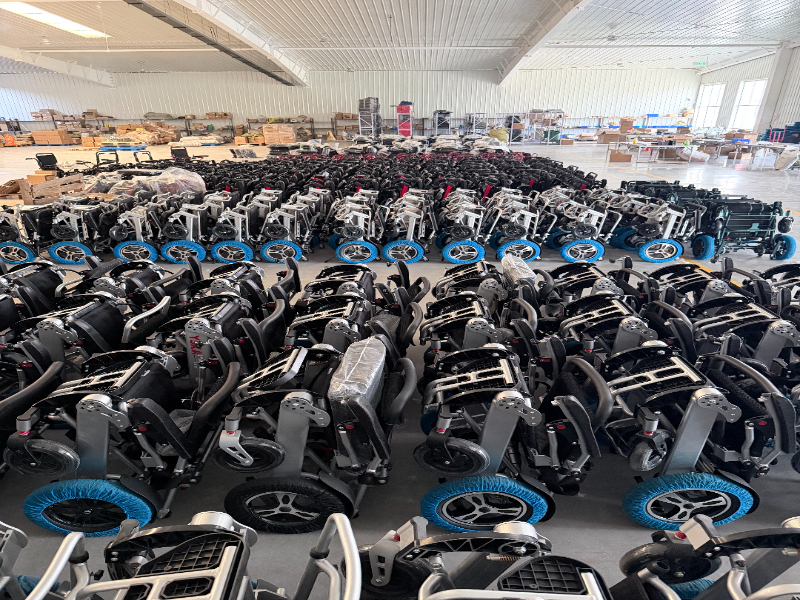
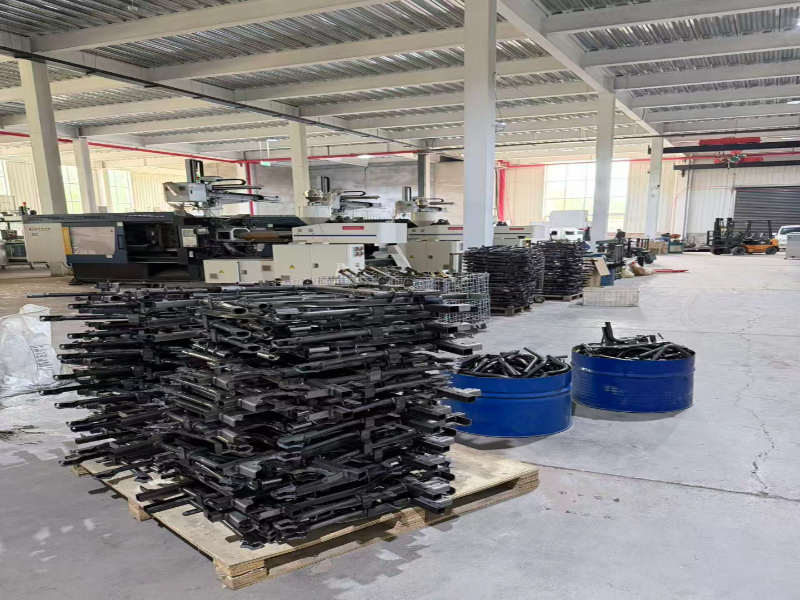
A manufacturer should be able to explain its production process clearly, including assembly, inspection, testing and packaging.
For example, IYASOCARE describes an integrated production process covering raw materials, component manufacturing, assembly, quality inspection and packaging. Its official distributor information also identifies production facilities and three production lines.
For a distributor, this matters because production control can make communication more direct. If a problem appears in a product batch, you want to be able to communicate with the organization responsible for manufacturing rather than relying on several intermediaries.
2. Product Development Capability
A strong Electric Wheelchair Manufacturer should not only manufacture existing models. It should also have the ability to improve and adapt products.
Different markets have different requirements. A distributor may need a particular battery configuration, controller, seat cushion, wheel design, frame color, logo, packaging format or accessory package.
OEM/ODM capability becomes particularly valuable here.
IYASOCARE states that its OEM/ODM services can include branding, packaging and structural engineering support, while its electric wheelchair manufacturing information describes customization of elements such as logos, colors, structures, materials, batteries, controllers and accessories.
However, distributors should not assume that every requested modification is automatically possible.
Before approving customization, ask whether the change affects product testing, certification, production cost, tooling, minimum order quantity or delivery time. A professional manufacturer should explain these consequences clearly.
Certification is another major consideration when choosing an Electric Wheelchair Manufacturer, especially for distributors selling into regulated markets.
A supplier may tell you that its products are “CE certified” or “internationally certified,” but that statement should not be treated as sufficient evidence.
The important question is whether the documentation applies to the exact product and configuration you intend to purchase.
Ask for the relevant technical and compliance documents for the specific model. Check the manufacturer name, model information, applicable standards and other details carefully.
IYASOCARE states that it works with international certifications and standards including CE and ISO 13485, with additional certifications such as TÜV and CFS referenced on its official company materials.
For distributors, however, certification should be considered the beginning of due diligence rather than the end.
Your own obligations may depend on the destination country, your role in the supply chain, the product configuration and how the product is marketed. Importers and distributors should therefore independently verify the regulatory requirements applicable to their market before commercial distribution.
A good manufacturer should be willing to provide documentation and cooperate with reasonable compliance checks.
If a supplier avoids technical questions or cannot clearly identify which documents correspond to the product you are buying, that should be treated as a warning sign.
A distributor should also look at the breadth and structure of the manufacturer’s product portfolio.
An electric wheelchair manufacturer that produces only one or two generic models may be suitable for a highly specific project. However, distributors often benefit from working with a supplier that can support different customer segments.
A broad portfolio makes it possible to build a product range around different needs and price points.
For example, a distributor could offer:
| Customer Requirement | Suitable Product Direction |
|---|---|
| Daily indoor mobility | Compact electric wheelchair |
| Travel and transportation | Lightweight folding power wheelchair |
| Outdoor use | All-terrain electric wheelchair |
| Long periods of sitting | Reclining power wheelchair |
| Rehabilitation | Adjustable or specialized wheelchair |
| Limited lower-body function | Standing wheelchair |
| Difficult terrain | Off-road electric wheelchair |
| Institutional use | Heavy-duty power wheelchair |
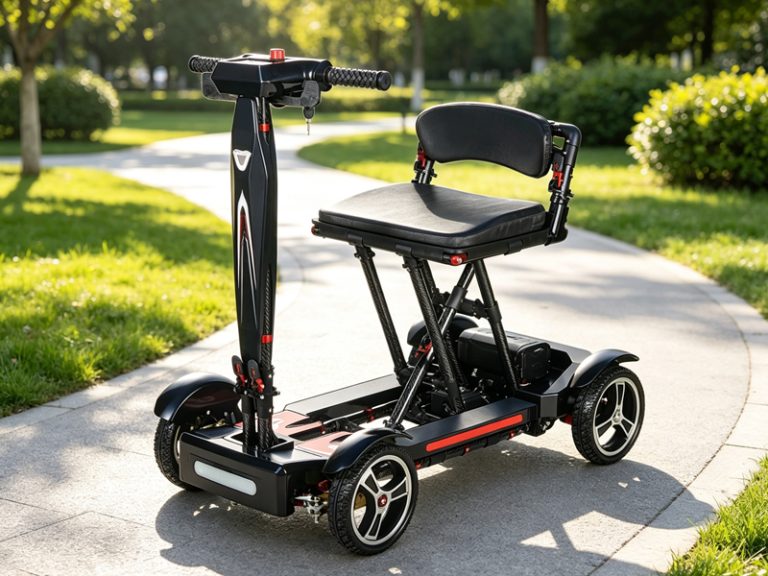
IYASOCARE’s current catalog includes electric wheelchairs as well as standing wheelchairs, stair-climbing wheelchairs, off-road wheelchairs, manual wheelchairs, transfer wheelchairs, sports wheelchairs, children’s wheelchairs and mobility scooters.
For a growing distributor, this kind of product breadth can reduce the need to manage numerous separate suppliers.
Instead of developing one relationship for folding wheelchairs, another for outdoor models and another for rehabilitation products, a distributor may be able to expand its portfolio through a single manufacturing relationship.
That can simplify communication, product training, spare-parts management and purchasing.
One of the biggest mistakes distributors make is choosing a supplier based almost entirely on unit price.
Suppose Manufacturer A offers an electric wheelchair for $600 and Manufacturer B offers a similar model for $650. At first glance, Manufacturer A appears more competitive.
But imagine that Manufacturer A has inconsistent battery performance, higher defect rates and slower warranty support. If several products require replacement parts after arrival, the apparent $50 saving can disappear quickly.
The real purchasing cost should therefore include:
Product price + shipping + inspection + warranty exposure + spare parts + returns + service costs + communication costs.
A reliable Electric Wheelchair Manufacturer should have a defined quality-control system.
Ask questions such as:
IYASOCARE states that every wheelchair shipped undergoes inspection and describes quality control throughout component sourcing, assembly and final inspection.
For a new distributor, ordering samples before a large shipment is strongly recommended. A sample allows you to evaluate the actual product instead of relying only on photographs and specifications.
A sample order should not be treated as a formality.
Use the sample as a real-world evaluation.
Test the wheelchair on the surfaces your customers are likely to encounter. Check steering, acceleration, braking, turning radius, seat comfort, folding mechanisms, battery charging, controller operation and general build quality.
If the product is intended for outdoor use, test it outdoors. If it is designed for travel, check its folded dimensions and transportation practicality. If your customers are elderly users, evaluate whether the controls are intuitive and whether transferring into and out of the chair is practical.
For distributors, this stage is also an opportunity to assess communication.
How quickly does the manufacturer answer technical questions? Can it provide drawings and specifications? Can it explain replacement parts? Does it respond professionally when you identify a problem?
The behavior of the supplier during sample testing can be a useful indication of what the relationship will look like after a larger order.
Many distributors assume OEM simply means putting their logo on an existing wheelchair.
In reality, OEM cooperation can be much broader.
Depending on the manufacturer’s capabilities, a distributor may request:
Brand logo → product color → packaging → labels → accessories → seat configuration → selected components → user manual → product specifications → market-specific configuration.
The commercial value is not simply visual customization. It is the ability to create a product that fits the distributor’s market.
For example, a retailer may want a particular color and packaging design, while a rehabilitation distributor may need different accessories and documentation.
A capable Electric Wheelchair Manufacturer should help the distributor understand which changes are practical and which changes could increase cost or create compliance issues.
This is where technical communication becomes extremely important.
Never approve an OEM project based only on a marketing promise. Request a written specification covering the exact configuration, components, packaging, branding and acceptance criteria.
Minimum order quantity is another factor that should be evaluated carefully.
A large MOQ can make sense for established distributors with predictable sales. However, it can create significant financial pressure for a new distributor that is still testing the market.
A more flexible manufacturer may allow a distributor to begin with smaller quantities, collect market feedback and gradually increase order volume.
IYASOCARE’s current OEM/manufacturing information promotes flexible ordering and states that orders can start from one unit on its OEM page.
For your own procurement process, confirm the actual MOQ for the exact model, customization level and packaging configuration you want. Do not assume that the general MOQ advertised by a supplier applies to every OEM project.
You should also ask about:
These details can have a major effect on your cash flow.
A wheelchair arriving late can be almost as damaging to a distributor as a defective wheelchair.
Imagine launching a new product line for a seasonal sales campaign, only to discover that production is delayed by several weeks. Your customers may move to another supplier, your advertising budget may be wasted, and your warehouse planning can become complicated.
Therefore, ask the manufacturer how production schedules are managed.
A professional supplier should be able to provide realistic information about production lead times and communicate changes quickly.
IYASOCARE describes an order process in which confirmed orders are scheduled for production, customers are updated during the process, and completed products are packaged for shipment.
Distributors should still establish their own contractual expectations regarding delivery dates, packaging requirements, shipping documents and inspection procedures.
Electric wheelchairs contain electrical and mechanical components, so after-sales support is unavoidable.
Even a high-quality product can eventually require a replacement controller, battery, charger, motor, tire, armrest or other component.
A manufacturer that disappears after the shipment leaves the factory is not a strong long-term partner.
Before choosing an Electric Wheelchair Manufacturer, ask for a spare-parts list and warranty policy.
Important questions include:
How long is the warranty? Which parts are covered? Who pays shipping for replacement parts? How are technical problems diagnosed? Can troubleshooting videos be provided? Are spare parts available separately? How quickly can replacement components be shipped?
IYASOCARE describes service and repair support for distributors and highlights technical assistance and after-sales processes as part of its business cooperation.
For a distributor, good after-sales support can directly affect customer reviews and repeat purchases.
Among the manufacturers a distributor can evaluate, IYASOCARE offers a combination of product breadth, OEM/ODM capability and international market support.
The company identifies itself as a China-based wheelchair and rehabilitation equipment manufacturer, with its operations in Chongqing. Its official website presents electric wheelchairs as a major product category and lists a broader mobility portfolio.
For distributors, several characteristics are particularly relevant.
A Broad Mobility Portfolio
The company’s catalog currently includes dozens of electric wheelchair products alongside manual, standing, stair-climbing, off-road, transfer and other mobility products.
This can give distributors more flexibility when developing a complete product range.
OEM/ODM Support
IYASOCARE promotes OEM/ODM cooperation covering areas such as branding, packaging, structural engineering and selected product configurations.
For distributors planning to develop their own mobility brand, this can be more valuable than simply purchasing standard products.
International Market Orientation
The company states that it has established partnerships in more than 30 countries and regions and references CE, ISO 13485, TÜV and other certifications on its official materials.
Its website also specifically promotes cooperation with distributors, regional agents and OEM/ODM customers.
Manufacturing and Quality Control
IYASOCARE describes an integrated production process from components through assembly, inspection and packaging, with quality control applied throughout production.
For a distributor, these factors make IYASOCARE a manufacturer worth including in a supplier comparison rather than making a purchasing decision based solely on price.
Before placing your first major order, create a supplier evaluation sheet.
Score each manufacturer from 1 to 5 in the following areas:
| Evaluation Area | What to Check |
|---|---|
| Manufacturing | Factory, production lines, engineering |
| Product Quality | Materials, testing, consistency |
| Certification | Model-specific documentation |
| OEM/ODM | Logo, packaging, technical customization |
| Product Range | Folding, outdoor, heavy-duty, rehabilitation |
| MOQ | Trial order and repeat order flexibility |
| Lead Time | Production and shipping preparation |
| Spare Parts | Availability and pricing |
| Warranty | Coverage and response process |
| Communication | Response speed and technical knowledge |
| Export Experience | International shipping and documentation |
| Long-Term Support | Product updates and business cooperation |
Do not choose the supplier with the highest score in only one category.
Instead, look for a manufacturer that performs consistently across the entire evaluation.
A supplier offering a slightly higher unit price may ultimately be much more profitable if it reduces defects, improves delivery reliability and gives you better after-sales support.
The best distributor-manufacturer relationships are not based on one purchase order.
They develop over time.
The distributor provides market information, customer feedback and sales forecasts. The manufacturer provides production capability, engineering support, quality control and supply-chain stability.
As sales increase, the relationship can develop into deeper cooperation, including exclusive configurations, private-label products, regional distribution agreements or new product development.
This is particularly important in the electric wheelchair industry because customer requirements continue to change. Lightweight products, folding designs, outdoor mobility, rehabilitation functions and smart controls can create new market opportunities.
A manufacturer that can adapt alongside your business gives you a stronger foundation than a supplier that only offers today’s catalog.
For this reason, selecting an Electric Wheelchair Manufacturer should be viewed as a strategic decision.
You are not simply buying wheelchairs.
You are choosing the manufacturing system behind your future product line.
Choosing the right Electric Wheelchair Manufacturer requires a wider evaluation than comparing quotations.
Start by identifying your target customers and market requirements. Then evaluate the manufacturer’s actual production capabilities, product development experience, certification documentation, quality-control procedures, OEM/ODM services, MOQ, delivery performance, spare-parts availability and after-sales support.
Always test samples before committing to large quantities. Verify documents for the exact models you intend to sell. Establish written specifications for customized products, and make sure warranty and spare-parts responsibilities are clear before production begins.
For distributors looking for a China-based supplier, IYASOCARE is one manufacturer worth evaluating. Its official materials highlight electric wheelchair manufacturing, OEM/ODM cooperation, international certifications, a broad mobility product portfolio and distributor-focused business support.
Ultimately, the best supplier is not necessarily the one with the lowest factory price. It is the Electric Wheelchair Manufacturer that can consistently deliver the right products, maintain quality, support your brand and grow with your distribution business.
A reliable manufacturer can help you reduce procurement risk, build customer trust and expand your product portfolio. A poorly chosen supplier can create problems at every stage of the business.
For that reason, take the time to compare manufacturers carefully before placing your first large order. The decision you make at the sourcing stage can influence your distribution business for years.
1. What should a distributor look for in an Electric Wheelchair Manufacturer?
A distributor should evaluate manufacturing capability, product quality, certification documentation, OEM/ODM capability, MOQ, production lead times, spare parts, warranty support and communication. It is also important to confirm that the manufacturer can supply the product categories needed for the distributor’s target market.
2. Is OEM important when choosing an Electric Wheelchair Manufacturer?
Yes, especially if the distributor wants to develop a private-label mobility brand. OEM/ODM can allow customization of branding, packaging, selected components, product configuration and other details. However, every customization should be confirmed in writing because certain changes may affect cost, testing, certification and production lead time.
3. Should I choose the cheapest Electric Wheelchair Manufacturer?
Not necessarily. The lowest unit price does not always produce the lowest total cost. Poor quality, delayed shipments, warranty claims, replacement parts and inconsistent communication can create significant additional expenses. A better approach is to compare the manufacturer’s total value, including product quality, reliability, compliance, service and long-term support.