Our Location
Free Trade Tower, Xiyong street.
Chongqing, China

Free Trade Tower, Xiyong street.
Chongqing, China
Choosing an Electric Wheelchair Factory is one of the most important decisions an importer makes when entering or expanding in the mobility equipment market. At first glance, many factories may appear similar. They may offer competitive prices, attractive product photos, electric wheelchairs with modern designs and promises of fast delivery. However, once an importer starts placing regular orders, the differences between manufacturers become much more obvious. Product consistency, quality control, technical support, documentation, spare parts, production capacity and communication can have a direct impact on customer satisfaction and, ultimately, the reputation and profitability of the importing company.
For this reason, an importer should not choose an electric wheelchair factory simply because it offers the lowest quotation. A reliable manufacturer should be evaluated as a complete supply-chain partner rather than as a source of individual products. The ideal factory should have the engineering capability to develop and improve electric wheelchairs, a stable production system, appropriate quality-control procedures, experience with international markets, clear product documentation and the ability to support distributors after the products have arrived in the destination country.
For importers looking for a long-term manufacturing partner, IYASOCARE is one manufacturer worth evaluating. Based in Chongqing, China, IYASOCARE focuses on wheelchairs and rehabilitation equipment and provides electric and manual wheelchair manufacturing together with OEM/ODM services. Its official information describes a production structure covering component manufacturing, assembly, inspection and packaging, as well as cooperation with distributors and international customers.
A common mistake among new importers is to begin the purchasing process by comparing product catalogues. One factory may offer 20 models, another 40 models and another 100 models, so the buyer naturally assumes that the factory with the largest catalogue must be the strongest manufacturer. In reality, the number of products listed on a website does not necessarily prove manufacturing capability.
An importer should first determine whether the supplier is an actual manufacturer, an OEM factory, a trading company or a combination of manufacturing and trading operations. This distinction matters because a trading company may be able to provide a wide catalogue without actually controlling the production process. When problems occur with motors, controllers, batteries, frames or spare parts, the trading company may need to contact another factory before it can provide a solution.
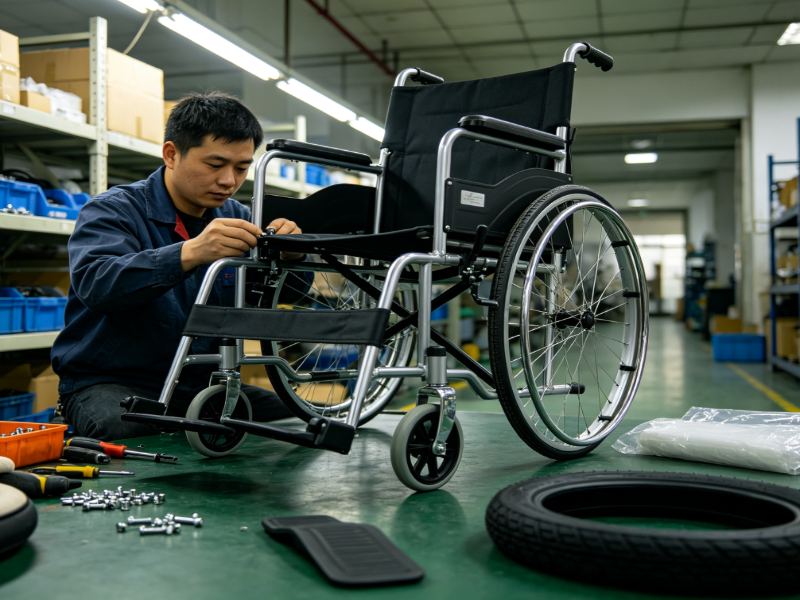
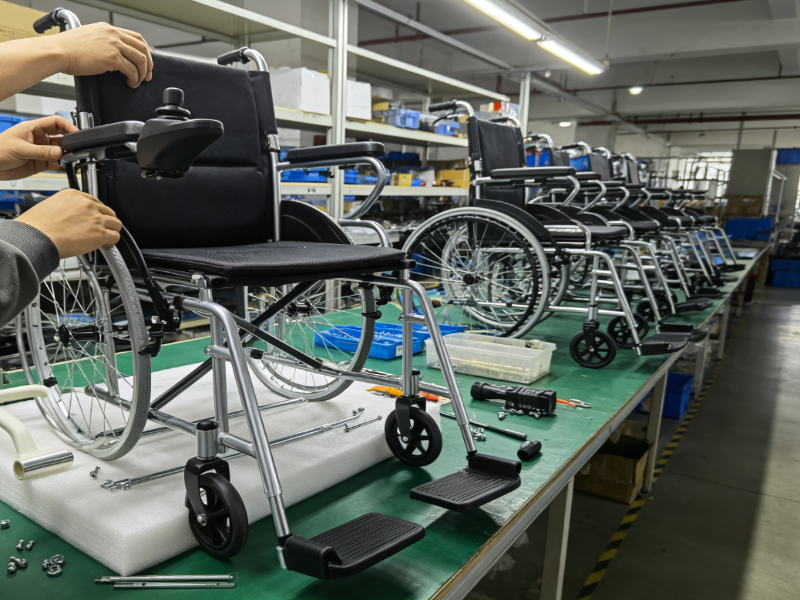
A genuine Electric Wheelchair Factory should be able to explain its production process clearly. Importers should ask where the main components come from, how frames are produced, where welding and assembly take place, how electrical systems are tested and how finished wheelchairs are inspected before shipment.
IYASOCARE states that it established its own factory in 2019 and has expanded its manufacturing facilities, with specialized workshops covering areas such as stamping, injection molding, welding and assembly. The company also states that it operates three modern wheelchair production lines and conducts product testing during production.
This type of information is much more valuable to an importer than a simple product catalogue because it provides a clearer picture of whether the supplier has control over the manufacturing process.
An electric wheelchair factory may be able to produce a small trial order without difficulty. The more important question is whether the same factory can maintain quality and delivery schedules when your business grows.
Imagine that a distributor begins with 20 wheelchairs per month and gradually increases sales to 100, 300 or even more units. If the factory does not have sufficient production capacity, the importer may experience longer lead times, delayed shipments or inconsistent product quality. These problems can become particularly damaging when the importer has already established a retail network or signed agreements with regional dealers.
Production capacity should therefore be evaluated together with delivery stability. Ask the manufacturer about normal production lead times, peak-season capacity, production scheduling and how urgent orders are handled. It is also useful to understand whether the factory has multiple production lines or depends heavily on a single assembly line.
IYASOCARE states that its three modern wheelchair production lines are designed to support customer delivery schedules. Its official manufacturing information also describes continuous process optimization and quality-control procedures.
For an importer, this matters because a successful wheelchair business is rarely based on one container. The objective is usually to establish repeat purchasing. A factory that can support the second, fifth and tenth order is much more valuable than a supplier that simply offers an attractive price for the first order.
Every manufacturer will say that quality is important. What matters is how quality is actually controlled.
A professional importer should ask what happens between the moment raw materials arrive at the factory and the moment the finished electric wheelchair is packed for shipment. Quality control should not be limited to checking the appearance of the finished product.
Electric wheelchairs contain several systems that need to work together. The frame must have sufficient structural strength. Motors must operate correctly. The controller needs to respond predictably. Braking systems must function properly. Batteries need to match the electrical system. Connectors and wiring need to be installed correctly. Wheels, armrests, footrests and seating components also need to meet the required specifications.
A strong factory should therefore have inspection procedures at different stages of production. Incoming components should be checked, assembly should be monitored and finished wheelchairs should undergo functional inspection before packaging.
IYASOCARE states that wheelchairs undergo inspection before leaving the factory and describes quality control as part of its production process. Its homepage also states that every wheelchair shipped undergoes rigorous inspection.
For importers, this creates an important distinction: quality control should be a system, not a final visual check.
Before signing a large purchasing agreement, request samples and test them under realistic conditions. If possible, evaluate steering, braking, folding mechanisms, battery performance, motor response, comfort, stability and transportation durability. A sample provides information that product photographs and sales presentations cannot.
Certification is one of the first topics an importer should discuss with an Electric Wheelchair Factory, particularly when products will be sold in regulated markets.
However, buyers should avoid making the common mistake of assuming that simply seeing a CE logo is sufficient. The importer should understand which specific product the documentation applies to, which configuration was tested and whether the documents are current and relevant to the intended market.
For European business, importers should carefully review the applicable regulatory requirements for the specific product, intended use and role of the importer or distributor. Depending on the product and market, technical documentation, declarations, testing records, labeling and other compliance materials may need to be reviewed before commercial distribution.
IYASOCARE publishes information about international certifications and identifies CE and ISO 13485 among its manufacturing credentials, while its OEM information also highlights international compliance support.
A professional importer should still conduct its own due diligence. Ask the factory for the relevant Declaration of Conformity, test reports, product specifications, user manuals, labeling information and battery-related transportation documentation where applicable. The goal is not simply to collect certificates but to make sure that the documentation corresponds to the exact product being purchased.
This is especially important when ordering OEM products. If the importer changes the battery, controller, motor, frame, seating configuration or other important components, the compliance implications should be discussed with the manufacturer before production begins.
For distributors that want to develop their own brand, the ability to customize an electric wheelchair can be more valuable than a low factory price.
OEM usually means that the manufacturer produces a product under the buyer’s brand, while ODM generally involves a deeper level of product development or modification. In practical terms, an importer may want its own logo, packaging, colors, product specifications, user manual, accessories or even structural changes.
A reliable Electric Wheelchair Factory should be able to explain what can be customized and what cannot. It should also be transparent about minimum order quantities, tooling requirements, engineering costs, production lead times and certification considerations.
IYASOCARE promotes OEM/ODM cooperation and describes support covering design, production, delivery and customized branding. Its official information also mentions customization of areas such as logos, colors, structures, materials and selected accessories.
For an importer, this creates a potential path from simply reselling a generic wheelchair to developing a recognizable mobility brand.
However, customization should always have a commercial purpose. Changing every detail of a product may increase development costs and create unnecessary complexity. A better strategy is to identify the features that matter most to your target customers and customize those areas first.
A strong electric wheelchair factory should not necessarily offer every type of wheelchair in existence. What matters is whether its product portfolio matches the market you want to serve.
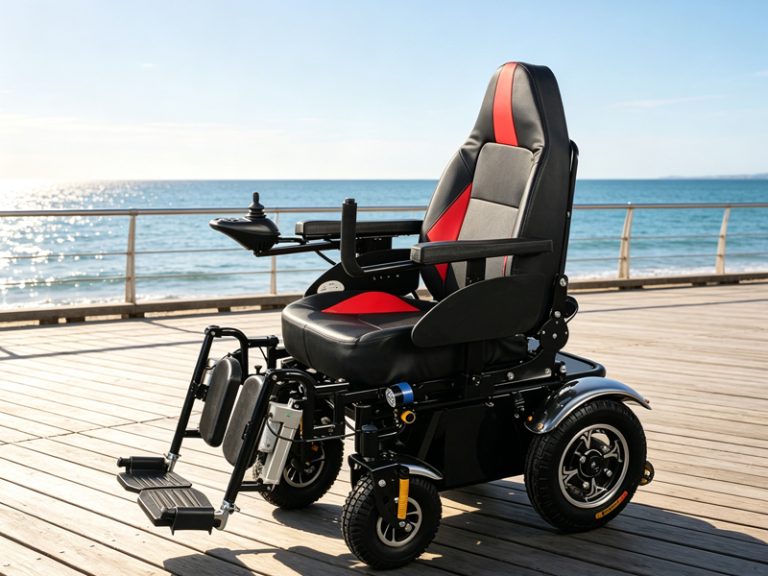
For example, a distributor focusing on elderly users may prioritize lightweight folding power chairs, reclining wheelchairs and comfortable indoor/outdoor models. A rehabilitation equipment company may need standing wheelchairs, transfer wheelchairs and rehabilitation-oriented designs. An outdoor mobility retailer may be more interested in off-road electric wheelchairs, heavy-duty models and long-range products.
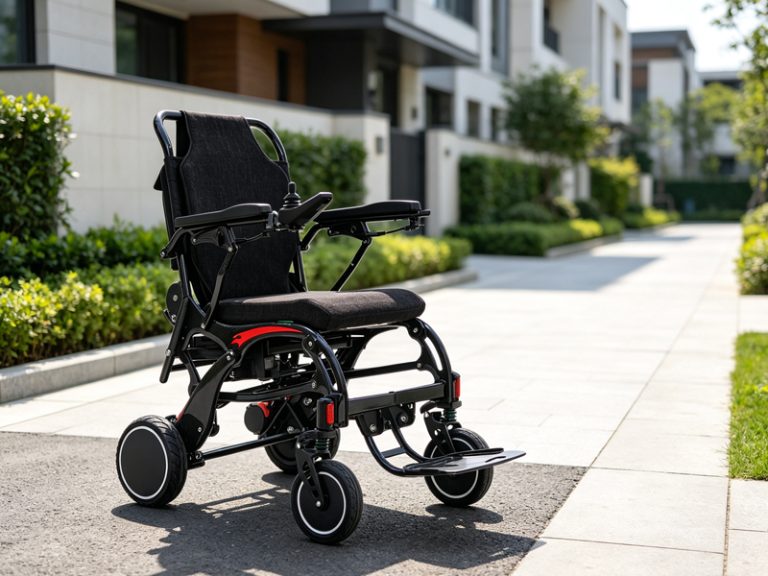
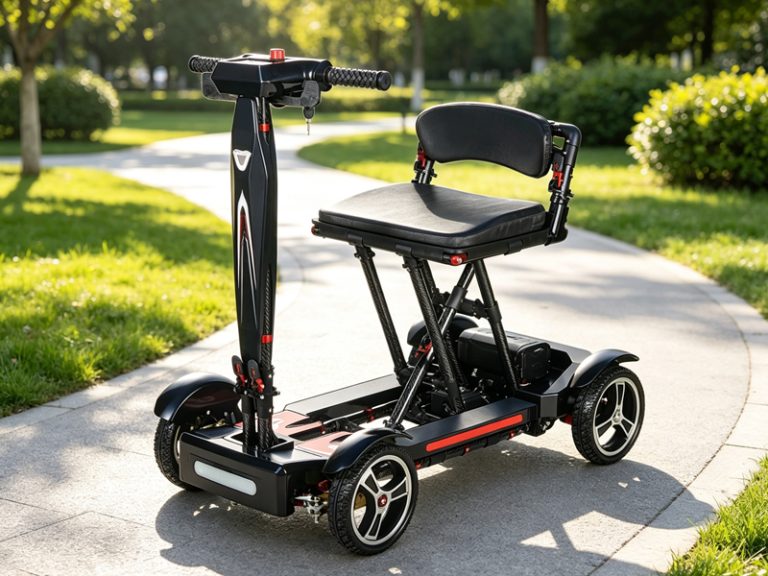
IYASOCARE currently lists multiple mobility categories, including electric wheelchairs, manual wheelchairs, standing wheelchairs, stair-climbing wheelchairs, transfer wheelchairs, beach wheelchairs, sports wheelchairs, children’s wheelchairs, off-road wheelchairs and mobility scooters. Its current catalogue includes dozens of electric wheelchair models.
For an importer, a broad product range can reduce supplier fragmentation. Instead of purchasing one product category from several unrelated factories, a distributor may be able to develop multiple product lines through one manufacturing relationship.
This can simplify product training, spare-parts management, marketing materials, communication and quality-control procedures.
One of the biggest differences between a short-term supplier and a long-term manufacturing partner appears after the wheelchair has been sold.
A distributor may be able to sell hundreds of electric wheelchairs successfully, but eventually customers may need replacement controllers, chargers, batteries, motors, tires, armrests, footrests or other components. If the factory cannot provide spare parts efficiently, the distributor may be forced to keep customers waiting or replace entire wheelchairs unnecessarily.
Before placing an order, ask the Electric Wheelchair Factory for a spare-parts catalogue and determine which components are considered standard replacement parts. It is also useful to clarify warranty periods, response times, technical support and responsibility for defective components.
A good manufacturer should be able to provide technical information that allows the distributor’s service team to identify common problems and perform basic troubleshooting.
IYASOCARE’s official website describes technical support and distributor-oriented services as part of its cooperation model, while its homepage also states that it provides replacement support for products and accessories affected by quality issues or shipping damage.
For a growing importer, this support can directly affect customer retention. A wheelchair customer who receives quick assistance is much more likely to continue trusting the distributor.
Many importers focus heavily on machinery and production lines but underestimate communication.
A factory can have good equipment and still become difficult to work with if communication is slow, unclear or inconsistent. International orders involve product specifications, drawings, packaging, shipping schedules, payment terms, inspections, documents and after-sales issues. Every misunderstanding can create additional costs.
Before starting a long-term partnership, pay attention to how the factory communicates during the sample and quotation stage. Does the sales team understand your specifications? Can the engineering team explain technical questions? Are changes recorded clearly? Does the factory provide production updates?
For OEM projects, communication becomes even more important because small misunderstandings can affect hundreds or thousands of units.
A professional manufacturer should have a process for confirming product specifications before mass production. Written specifications, approved samples and clear packaging instructions can significantly reduce misunderstandings.
The best Electric Wheelchair Factory for an importer is not necessarily the factory with the most products or the cheapest price. It is the factory that understands how your business operates.
A regional distributor may need stable container shipments, protected territory and marketing materials. A medical equipment retailer may require smaller orders and frequent replenishment. A private-label brand may need customized packaging and product documentation. A new importer may prioritize low-risk trial orders before committing to large volumes.
IYASOCARE promotes cooperation with distributors, regional agents and OEM/ODM customers, and its official distributor information describes flexible partnership models for international buyers.
An importer should therefore explain its business model clearly before negotiating the final price. Tell the factory which country you sell in, which customer segment you target, your expected annual volume, your preferred products and whether you require private labeling.
This allows the manufacturer to propose a more suitable cooperation model instead of simply sending a standard price list.
When comparing manufacturers, avoid creating a spreadsheet that contains only unit prices. A better evaluation system should include several categories.
| Evaluation Area | What an Importer Should Check |
|---|---|
| Manufacturing | Factory ownership, production lines and assembly capability |
| Product Quality | Inspection procedures, sample performance and consistency |
| Certification | Product-specific documentation and applicable market requirements |
| OEM/ODM | Logo, packaging, specifications and engineering customization |
| Production Capacity | Monthly capacity, lead time and peak-season stability |
| Product Range | Folding, reclining, standing, off-road and other categories |
| Spare Parts | Availability, pricing and replacement procedures |
| After-Sales | Warranty, technical support and response time |
| Export Experience | Shipping documentation and international market experience |
| Communication | Engineering support, order updates and problem solving |
| Commercial Terms | MOQ, payment terms, sample policy and shipping options |
This method prevents the purchasing decision from being dominated by price alone.
For example, Factory A may be $50 cheaper per wheelchair but have slow spare-parts support and inconsistent delivery. Factory B may cost slightly more but provide stronger documentation, better quality control and reliable technical support. For a distributor building a long-term business, Factory B may ultimately be the less expensive option.
For importers currently searching for an Electric Wheelchair Factory, IYASOCARE is worth including in the supplier comparison process because its business model covers several of the areas that international buyers typically need.
The company is based in Chongqing, China, and states that it operates its own wheelchair manufacturing facilities. Its product portfolio covers electric and manual wheelchairs as well as specialized mobility products, while its manufacturing information highlights production lines, R&D and quality-control capabilities.
Its OEM/ODM service is particularly relevant to distributors that want to develop their own product range rather than simply resell standard products. The company describes cooperation from product development through mass production and supports customized branding and product requirements.
The breadth of the catalogue is another advantage for importers. A buyer can investigate lightweight folding electric wheelchairs, heavy-duty models, off-road wheelchairs, standing wheelchairs, stair-climbing wheelchairs and other mobility products within one supplier relationship.
At the same time, professional buyers should still perform independent due diligence. Request samples, verify product-specific documentation, confirm commercial terms and test the products in the actual market before committing to large-scale purchasing.
A manufacturer should be selected because its capabilities match your business requirements—not simply because its website looks professional.
For an importer, selecting an Electric Wheelchair Factory is not just a purchasing decision. It is a supply-chain decision, a quality decision and, in many cases, a brand decision.
The right manufacturer should provide more than an attractive quotation. It should have controlled production, reliable quality inspection, appropriate compliance documentation, practical OEM/ODM capabilities, stable delivery, spare-parts support and professional communication. It should also have enough product-development capability to respond when market demand changes.
Before signing a long-term agreement, importers should always begin with samples and documentation. Test the products, evaluate packaging, confirm the electrical system, review the technical files, discuss warranty procedures and establish clear responsibilities for quality issues. If the manufacturer passes these stages, a larger trial order can provide an additional opportunity to evaluate production consistency.
For businesses looking for a China-based manufacturing partner, IYASOCARE can be included in this evaluation process. Its official information shows a focus on wheelchair manufacturing, OEM/ODM cooperation, international distribution and a broad mobility product portfolio.
Ultimately, the best Electric Wheelchair Factory is not the supplier that gives you the lowest price on the first order. It is the manufacturer that can help you maintain product quality, protect your reputation, solve problems quickly and support your business as your sales grow.
A strong factory should make your supply chain simpler—not more complicated.
1. What is the most important thing an importer should check when choosing an Electric Wheelchair Factory?
The most important factor is the manufacturer’s overall reliability rather than one individual specification. Importers should evaluate production capability, quality control, product-specific certification documentation, OEM/ODM support, delivery stability, spare parts and after-sales service together. A factory that offers a low price but cannot maintain consistent quality or provide technical support can create much higher costs after the products enter the market.
2. Is IYASOCARE suitable for electric wheelchair importers and distributors?
IYASOCARE is positioned by its official website as a manufacturer serving distributors, OEM/ODM customers and international mobility-equipment buyers. Its catalogue includes electric wheelchairs and multiple specialized wheelchair categories, while its manufacturing information describes production lines, R&D and quality-control capabilities. Importers should still request samples and verify the documentation and specifications of the exact models they intend to purchase before placing a large order.
3. What should an importer ask an Electric Wheelchair Factory before placing an order?
At minimum, ask about the exact product specifications, certification and technical documentation, sample availability, MOQ, production lead time, quality-control procedures, warranty terms, spare-parts availability, packaging, shipping documents and OEM/ODM options. It is also important to ask whether changes to motors, batteries, controllers, frames or other components could affect product testing or compliance. The clearer these details are before production begins, the lower the risk of expensive problems later.