Our Location
Free Trade Tower, Xiyong street.
Chongqing, China

Free Trade Tower, Xiyong street.
Chongqing, China
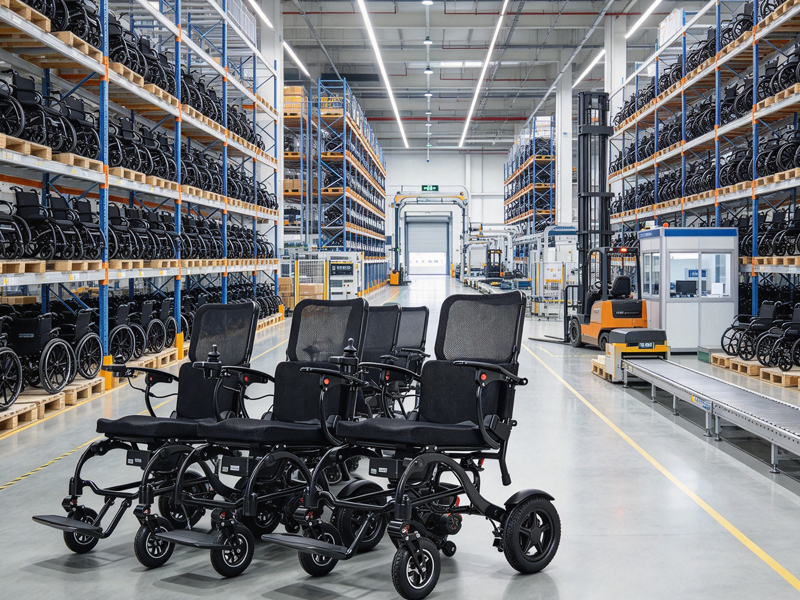
The market for lightweight electric wheelchairs is evolving as more consumers look for mobility solutions that are easy to transport, simple to operate, and suitable for everyday travel. For distributors, medical equipment retailers, importers, and private-label brands, this creates a promising business opportunity. However, choosing the right product is only part of the equation. Finding a reliable Bluetooth travel wheelchair manufacturer is what often determines whether a wholesale business can grow steadily or struggle with product complaints, delayed shipments, and unexpected costs.
A Bluetooth-enabled travel wheelchair combines powered mobility with electronic connectivity features. Depending on the model, Bluetooth may support a mobile application, device status monitoring, configuration settings, or other connected functions. These features can help differentiate a product in a competitive market, but they also introduce additional questions about software reliability, electronic compatibility, and long-term technical support.
For wholesale buyers, the challenge is to look beyond attractive product photographs and competitive quotations. A manufacturer may offer a lightweight folding frame, a lithium-ion battery, and smartphone connectivity, yet still lack the production controls or after-sales infrastructure needed to support a long-term distribution partnership.
The most dependable supplier is not necessarily the one offering the lowest unit price. It is the one that can consistently manufacture the agreed product, provide verifiable documentation, meet delivery commitments, and respond professionally when something goes wrong.
Before contacting manufacturers, define what your target customers actually need. A travel wheelchair intended for frequent air travel has different priorities from a powered wheelchair designed mainly for shopping centers, hotels, or everyday outdoor use.
The first step is to establish a clear product specification. Consider the intended user, expected travel conditions, preferred folding mechanism, battery configuration, weight capacity, and level of electronic connectivity. These requirements will help you distinguish between manufacturers that genuinely understand the travel wheelchair category and those simply adding popular keywords to a general electric wheelchair listing.
Portability deserves particular attention. Many customers choose a travel wheelchair because they need to place it in a car trunk, store it in a small apartment, or transport it between destinations. Ask suppliers to provide the wheelchair’s unfolded and folded dimensions, total weight, weight without the battery, and the weight of removable components.
Do not rely on a single advertised weight figure. A wheelchair described as lightweight may still be difficult for a caregiver to lift if the battery cannot be removed or the folded frame is awkward to handle. Request a physical sample and evaluate the complete handling experience before making a large wholesale commitment.
Battery performance is equally important. Ask for the battery chemistry, rated voltage, capacity in ampere-hours, and energy rating in watt-hours. Also request realistic information about driving range, charging time, and the conditions under which the manufacturer’s range figures were measured.
Actual range can vary with user weight, terrain, temperature, tire condition, driving style, and battery age. A supplier that explains these limitations clearly is generally more useful than one that promises unusually long travel distances without supporting evidence.
Comfort should not be overlooked. Seat dimensions, cushion materials, backrest support, armrest design, footrest adjustment, and suspension all affect the user experience. A compact wheelchair that is uncomfortable after twenty minutes may receive poor reviews even if its electronics perform perfectly.
Create a written specification sheet before requesting quotations. When every manufacturer quotes against the same requirements, comparing offers becomes much more meaningful.
Bluetooth connectivity can be a useful selling point, but wholesale buyers should establish exactly what the technology does before including it in product descriptions.
Not every Bluetooth travel wheelchair offers the same functions. Depending on the manufacturer’s design, connectivity may allow users to access a companion application, review battery status, adjust certain settings, monitor device information, or operate approved functions through a compatible interface.
Some products may use Bluetooth primarily for service diagnostics or configuration rather than direct user control. Others may not provide an application at all. The term “Bluetooth-enabled” alone does not tell you enough to assess the product’s commercial value.
Ask the manufacturer to demonstrate the complete connection process using the actual production model. Check which smartphones and operating systems are supported, whether the application requires an account, how firmware updates are delivered, and what happens if the phone loses its connection.
Most importantly, determine what remains functional when Bluetooth is unavailable. Essential driving, braking, and other safety-related functions should behave as designed without relying on a smartphone connection unless the product has a specifically engineered and validated control architecture. Never assume that wireless connectivity is an appropriate replacement for conventional controls.
A practical supplier evaluation should cover four areas:
Software support is particularly important for private-label businesses. A manufacturer may provide an excellent physical product while depending on a third-party application that could become incompatible with future smartphone updates.
Ask whether the application is owned by the manufacturer, licensed from another developer, or maintained by an independent supplier. Clarify who is responsible for technical support if the application stops working after a major operating system update.
You should also request a demonstration of any advertised wireless function before approving marketing claims. If a feature is still under development, confirm its expected release date and contractual status rather than assuming it will be available in the production batch.
The goal is not simply to find a wheelchair with Bluetooth. It is to find a manufacturer that can deliver a connected mobility product whose advertised functions are practical, reliable, and supportable over time.
Once your product requirements are clear, evaluate whether potential suppliers have the manufacturing capability to meet them consistently.
Start by confirming the company’s legal identity, registered business information, factory address, and role in the supply chain. Some businesses manufacture their own wheelchairs, while others purchase finished products from third-party factories and resell them under different brands.
Neither arrangement is automatically unsuitable. A trading company may provide valuable sourcing and export services. However, you should understand who controls the production process, who approves component changes, and who takes responsibility for quality problems.
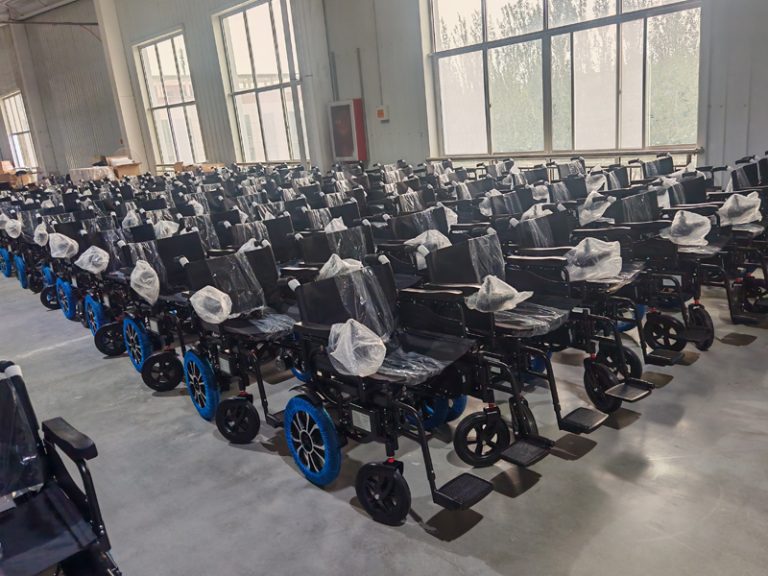
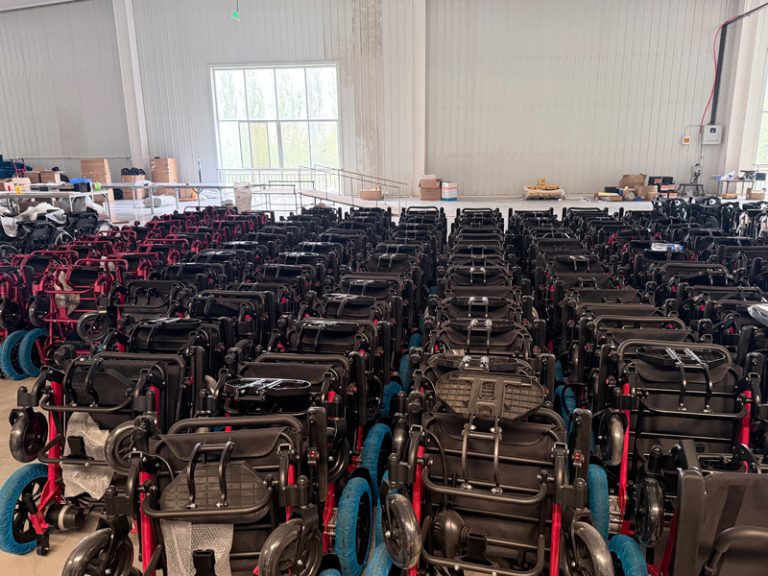
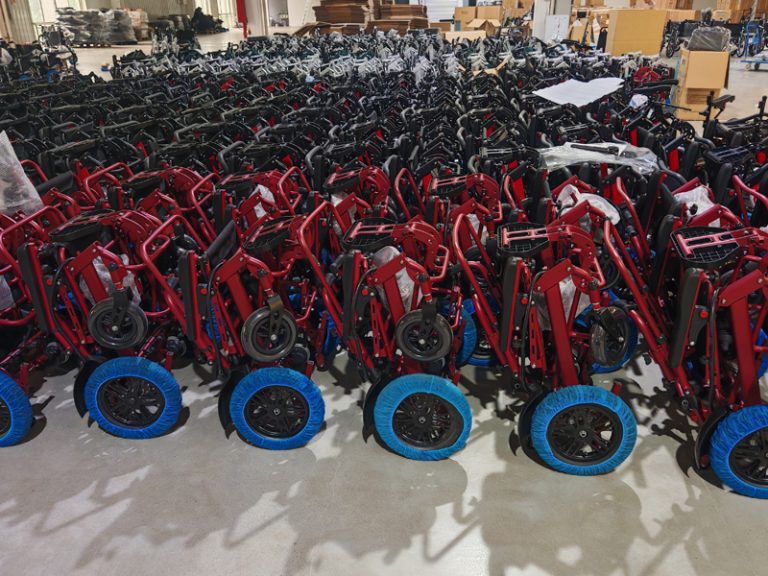
Ask the supplier to explain its production workflow, from incoming component inspection to final assembly and packaging. If possible, arrange an on-site factory visit. When travel is impractical, request a live video walkthrough that shows the actual production area rather than a prerecorded promotional presentation.
Pay attention to how the factory handles critical components, including motors, controllers, batteries, chargers, wiring harnesses, folding mechanisms, and structural frame parts. These components directly affect performance, reliability, and the ability to repair the wheelchair after delivery.
A capable manufacturer should be able to explain how incoming materials are checked, how nonconforming components are separated, and how assembly instructions are controlled. It should also have a clear method for identifying finished products and tracing them to relevant production records.
Production capacity deserves a closer look. Ask how many units the factory can manufacture per month for your particular model, not just its total output across every product category. A supplier producing thousands of conventional wheelchairs may have limited capacity for a specialized Bluetooth model with customized electronics.
Discuss seasonal demand, peak production periods, component lead times, and how additional orders would be accommodated. If you expect to expand from a small trial order to regular container shipments, make sure the manufacturer can support that growth without compromising quality.
A reliable factory does not need to be the largest operation in the industry. It needs to demonstrate repeatable processes, realistic capacity planning, and clear responsibility for the product it supplies.
Compliance should be part of supplier selection from the beginning, especially when importing powered mobility equipment into markets with specific medical device requirements.
The exact obligations depend on the product’s intended use, classification, design, and destination country. Requirements for the United States may differ from those for the European Union, the United Kingdom, Australia, or other markets.
Ask the manufacturer which regulations and technical standards apply to the exact wheelchair model you intend to purchase. Do not assume that a document issued for one model automatically covers every product in the supplier’s catalogue.
For powered wheelchairs, relevant references may include the ISO 7176 series. Different parts address subjects such as stability, braking effectiveness, dimensions, power and control systems, and electromagnetic compatibility. ISO 7176-21 specifically addresses electromagnetic compatibility requirements and test methods for electrically powered wheelchairs, scooters, and associated chargers. The US Food and Drug Administration also maintains a database of recognized consensus standards for medical devices.
Official references:
For a Bluetooth-enabled model, electromagnetic compatibility and wireless performance deserve particular attention. The supplier should be able to explain how the electrical system, controller, charger, and wireless components have been evaluated in the product’s intended configuration.
Battery documentation is another essential part of the process. Request the relevant battery specifications, charging information, applicable safety test documentation, and transport paperwork. Lithium-ion batteries intended for transport may require evidence of compliance with applicable UN 38.3 testing requirements. Confirm the documentation and shipping conditions with the manufacturer and freight provider before placing an order.
For the United States, verify the applicable FDA requirements for the specific device, including establishment registration, device listing, and any required premarket authorization or exemption. Registration or listing should not be treated as equivalent to FDA clearance or approval.
For European sales, determine the applicable regulatory framework and whether the product falls within the scope of medical device legislation. Confirm the relevant conformity assessment, technical documentation, labeling, and other obligations before making a purchasing decision.
Certificates and test reports should be checked against the legal manufacturer’s name, product model, production configuration, and intended market. Where necessary, confirm their validity directly with the issuing organization or testing laboratory.
Be cautious when a supplier responds to every compliance question with a generic certificate or a collection of logos. A document is valuable only when its scope and relevance can be established.
The best approach is to prepare a market-specific compliance checklist and make satisfactory documentation a condition of supplier approval.
A product sample is one of the most effective ways to determine whether a manufacturer’s claims match the actual user experience.
Before paying for a large wholesale order, obtain a production-representative unit with the same frame, battery, controller, Bluetooth hardware, application, and accessories planned for the final shipment.
Begin with basic usability. Fold and unfold the wheelchair several times. Check whether the locking mechanism engages securely, whether the components are easy to handle, and whether the folded product can be lifted and stored as expected.
Next, assess driving performance in suitable, controlled conditions. Evaluate acceleration, turning, braking, low-speed maneuverability, and performance on the surfaces for which the wheelchair is intended. Confirm that the controls respond predictably and that the product remains stable within its specified operating conditions.
Do not treat a short demonstration in a showroom as proof of long-term durability. Ask the supplier for relevant mechanical testing records and details of its reliability testing procedures. Depending on the product, useful evaluations may include repeated folding cycles, fastener retention, structural strength, brake performance, and endurance testing of key components.
Test the Bluetooth functions separately. Pair the wheelchair with compatible devices, close and reopen the application, disconnect and reconnect Bluetooth, and review how the system behaves when the connection is interrupted. Verify that all safety-critical functions remain available according to the product’s design.
Battery testing should reflect realistic expectations. Compare the supplier’s published range with your own observations, but avoid drawing conclusions from a single short test. A meaningful range assessment needs consistent conditions and an appropriate test procedure.
Document any issues with photographs, videos, and written observations. Send the findings to the manufacturer and assess how professionally the company responds. Does it investigate the cause, explain the proposed correction, and provide a revised sample when needed?
This interaction reveals something important about the supplier’s working style. A manufacturer that handles sample feedback carefully is more likely to establish a productive quality-control process for your wholesale order.
Once the sample is approved, preserve the specification, photographs, configuration details, and written approval as a reference for mass production. Any subsequent design or component change should be reviewed and approved before implementation.
For wholesalers and brand owners, customization can help differentiate a product in a crowded mobility equipment market. However, OEM and ODM capabilities vary considerably between manufacturers.
OEM services typically involve producing a product according to a buyer’s branding and agreed specifications. ODM services may include a broader level of design, engineering, and product development support. In practice, individual suppliers use these terms differently, so clarify exactly what is included.
Common customization options include frame colors, logo placement, packaging design, user manuals, seat materials, accessories, and selected product configurations. Some manufacturers may also support application localization or changes to the user interface.
Bluetooth-related customization requires particular care. Translating application text is relatively straightforward compared with changing wireless functions, control logic, firmware, or safety-related behavior. Software modifications should be properly specified, tested, and documented.
Before approving customization, ask the supplier which changes are standard options and which require engineering work. Establish the development fee, minimum order quantity, sample approval process, intellectual property arrangements, and responsibility for ongoing software maintenance.
For example, a distributor selling into several European markets may require localized manuals, multilingual application support, region-appropriate charging equipment, and packaging that meets local requirements. These details should be agreed upon before production rather than handled as last-minute requests.
Branding also needs practical planning. Confirm artwork dimensions, printing methods, packaging materials, carton markings, and the approval process for production samples. Request photographs of the finished packaging before shipment if a physical inspection is not possible.
Avoid choosing a supplier solely because it promises unlimited customization. A dependable manufacturer will explain technical limitations, identify changes that could affect compliance, and provide a realistic development schedule.
The most useful customization partner is one that helps you build a consistent product identity without introducing unnecessary engineering risks or making future servicing difficult.
Price is an important consideration in wholesale purchasing, but comparing unit prices alone can produce misleading results.
A manufacturer offering a lower quotation may exclude accessories, use a different battery configuration, provide limited packaging, or charge additional fees for branding and documentation. Another supplier may quote a higher price while including services that reduce your overall operating costs.
Request a detailed quotation from each shortlisted manufacturer. The quotation should identify the exact model, approved specifications, battery configuration, included accessories, packaging, customization charges, minimum order quantity, production lead time, and payment terms.
Also clarify the pricing basis. Confirm whether the quotation covers the factory price only or includes freight, insurance, customs-related charges, and other delivery costs under the agreed Incoterm.
For a realistic comparison, calculate the estimated landed cost per unit:
Landed cost per unit = Product cost + Packaging and customization + Freight and insurance + Import duties and applicable fees, divided by the number of units received.
Some costs, such as customs brokerage or inspection, may be charged per shipment rather than per unit. Allocate them appropriately when comparing different order quantities.
You should also consider the cost of operating the product after the sale. Spare parts, warranty replacements, technical support, software maintenance, and customer service can have a significant effect on profitability.
A wheelchair that costs slightly less to purchase may become more expensive if batteries fail prematurely, replacement controllers are unavailable, or warranty claims take weeks to resolve.
Ask about wholesale price tiers and the conditions attached to each tier. Confirm whether a lower price depends on a larger order, a standard configuration, a longer production schedule, or a different payment arrangement.
When negotiating, focus on the complete commercial relationship rather than demanding the lowest possible figure. Better packaging, a more reliable delivery schedule, spare-parts support, or clearer warranty terms may provide greater long-term value than a small reduction in unit cost.
A supplier’s ability to manufacture a wheelchair is only one part of successful wholesale fulfillment. The product must also be packed correctly, documented accurately, and delivered according to the agreed schedule.
Ask manufacturers to provide a realistic production timeline that separates material preparation, assembly, inspection, packaging, and shipment readiness. Confirm how the timeline changes when you request customized colors, branded cartons, or software modifications.
Request the dimensions and gross weight of each shipping carton. For travel wheelchairs, compact packaging can improve freight efficiency, but it must still protect the folding frame, controller, charger, and other components during handling.
Check whether the wheelchair is packed fully assembled, partially assembled, or folded with removable parts secured separately. Ask how the packaging protects against moisture, vibration, impact, and accidental movement.
Battery transportation requires special attention. The applicable requirements depend on battery type, energy rating, whether the battery is installed in or packed with the wheelchair, and the chosen transport method. Provide the freight forwarder with accurate battery information early in the process.
Request relevant transport documents, including the applicable UN 38.3 test summary where required, and confirm that packaging, labeling, and shipping arrangements comply with current regulations. Never assume that a wheelchair described as suitable for travel is automatically accepted by every airline.
Airline policies may differ, particularly regarding lithium battery capacity, removable batteries, spare batteries, and approval procedures. If air travel is a key selling point, give customers accurate information and direct them to confirm requirements with their airline before departure.
Before dispatch, establish a pre-shipment inspection process. Depending on order size and risk, this may involve inspecting a defined sample or checking every unit against agreed functional criteria.
The inspection should cover product identity, folding operation, control response, braking, battery and charger configuration, Bluetooth functionality, accessories, labels, and packaging. Agree in advance how defects will be recorded and what happens if the inspection fails.
A clear delivery and inspection process reduces misunderstandings and helps ensure that the products reaching your warehouse match the sample you approved.
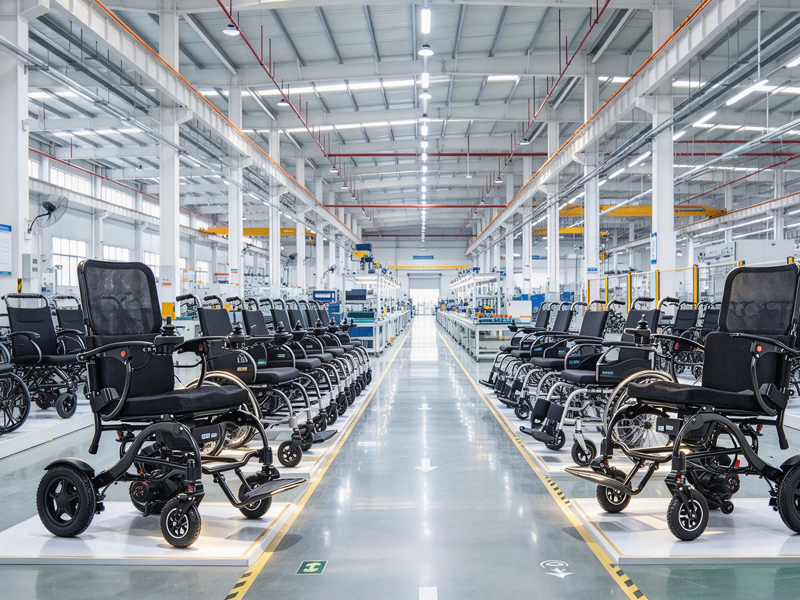
For mobility equipment, after-sales support is not simply an optional extra. It directly affects customer satisfaction, product reviews, repeat purchases, and the long-term reputation of your business.
Before placing a wholesale order, ask the manufacturer to provide its written warranty policy. The policy should specify the warranty period, covered components, exclusions, claim submission process, response expectations, and responsibility for shipping replacement parts.
Pay attention to how the warranty treats the battery, motor, controller, charger, folding mechanism, and electronic components. These parts may have different coverage periods or service conditions.
Request a spare-parts catalogue with model-specific part numbers and prices. Confirm which components are normally stocked, which must be manufactured to order, and how long replacement parts are expected to remain available.
Bluetooth-enabled products introduce additional support needs. Ask who handles application troubleshooting, firmware problems, pairing issues, and compatibility questions. Determine whether the supplier can provide remote technical assistance and whether software updates are included in the commercial agreement.
You should also ask for service documentation that your own support team can use. Clear troubleshooting guides, wiring diagrams where appropriate, maintenance instructions, and replacement procedures can reduce the time required to resolve common issues.
For overseas distributors, communication speed matters, but the quality of the response matters more. A supplier that replies quickly without addressing the technical problem does not provide effective support.
Request examples of how the manufacturer handles a typical warranty claim. You do not need confidential customer information; you need to understand the process, expected turnaround, and available remedies.
Finally, establish a process for recording product complaints and recurring failures. If several customers report the same controller issue or folding problem, the manufacturer should have a method for investigating the cause and implementing corrective action.
Reliable after-sales support protects your business after the initial transaction is complete. It is one of the strongest reasons to evaluate a supplier as a long-term partner rather than a source of inexpensive products.
A professional-looking website and polished catalogue do not guarantee that a manufacturer can deliver a dependable product. During supplier evaluation, watch for inconsistencies between sales claims and verifiable evidence.
One warning sign is a supplier that refuses to identify the actual production facility or explain whether it manufactures the product itself. If the business is a trading company, that fact should be clear so you can evaluate the supply chain appropriately.
Another concern is incomplete or inconsistent documentation. Product names, model numbers, battery specifications, company details, and test reports should align. If documents refer to different models or configurations, ask for clarification before proceeding.
Be cautious when a manufacturer promises unusually low prices without explaining the specifications or cost differences. A lower quotation may be legitimate, but it should be supported by a clear comparison of materials, components, services, and commercial terms.
Unrealistic delivery promises also deserve scrutiny. Ask how the factory will secure critical components and maintain quality if the order is unusually large or the schedule is compressed.
Other warning signs include reluctance to provide samples, vague warranty commitments, no clear spare-parts policy, unapproved component substitutions, and pressure to make a large advance payment before the product and documents have been reviewed.
Bluetooth-related claims require the same skepticism. If a supplier cannot demonstrate the advertised application or explain who maintains the software, treat the feature as unverified until sufficient evidence is provided.
None of these issues automatically proves that a supplier is unreliable. The important point is whether the manufacturer provides credible explanations and verifiable evidence when questions arise.
If a concern remains unresolved, reduce your exposure. Request additional documentation, commission an independent inspection, start with a smaller order, or continue evaluating other suppliers.
A disciplined sourcing process gives you more negotiating power and helps prevent avoidable problems from becoming expensive commitments.
Once you have shortlisted several manufacturers, use a consistent scoring system rather than relying on first impressions or sales presentations.
The following framework can help organize your decision. Adjust the weightings according to your business model, target market, and product requirements.
| Evaluation area | Suggested weighting | What to examine |
|---|---|---|
| Product quality and safety | 25% | Test evidence, sample performance, durability, and functional inspection |
| Regulatory documentation | 20% | Market-specific compliance, traceable reports, and accurate product records |
| Bluetooth and technical support | 15% | Demonstrated functions, application maintenance, compatibility, and troubleshooting |
| Manufacturing and delivery | 15% | Production capacity, component sourcing, lead times, and shipment consistency |
| Commercial terms | 10% | Transparent pricing, MOQ, payment terms, and total landed cost |
| After-sales service | 10% | Warranty coverage, spare parts, claim handling, and technical documentation |
| OEM/ODM flexibility | 5% | Branding, packaging, customization, and development support |
Score each supplier against the same criteria and record the evidence behind each score. A high score should reflect demonstrated capability rather than promises.
Some requirements should be treated as pass-or-fail conditions rather than simply weighted. For example, if a supplier cannot provide documentation needed for your intended market, a competitive price should not compensate for that deficiency.
The scorecard is most useful when combined with sample testing, document verification, and a clear purchasing agreement. It provides a structured way to compare suppliers while keeping your most important requirements visible.
Finding a reliable Bluetooth travel wheelchair manufacturer is best approached as a staged purchasing process.
Begin by defining the target customer, intended market, product specifications, and estimated order volume. Identify suppliers with relevant manufacturing experience and request detailed quotations alongside product documentation.
Next, verify the manufacturer’s identity and production capabilities. Review the applicable certificates and test reports, arrange a factory audit where practical, and confirm the availability of spare parts and technical support.
Order a representative sample and test the complete product, including the Bluetooth functions, battery configuration, folding mechanism, driving performance, and packaging. Document the results and require written approval of any changes before mass production.
Once the supplier passes these checks, agree on the commercial details. The contract or purchase order should identify the approved model and configuration, quantities, prices, delivery dates, inspection requirements, warranty terms, documentation obligations, and procedures for handling defects.
For OEM or ODM projects, also document branding requirements, intellectual property responsibilities, software maintenance, and the approval process for design revisions.
Start with an order size that matches your ability to evaluate demand and manage inventory. A smaller initial shipment can help reveal issues with product quality, packaging, delivery, and customer feedback before you expand the purchasing commitment.
After the first delivery, review actual performance against the agreed standards. Track defect rates, delivery accuracy, warranty claims, spare-parts response times, and recurring customer feedback.
Share meaningful findings with the manufacturer and agree on corrective actions where necessary. A supplier that responds constructively to documented feedback may become more valuable over time than one that simply offers an attractive first quotation.
For wholesalers, the objective is not to find a manufacturer that never encounters a problem. It is to find a partner with the systems, expertise, and accountability to prevent avoidable failures and resolve genuine issues professionally.
Choosing the right Bluetooth travel wheelchair manufacturer for wholesale orders requires more than comparing prices or browsing product catalogues. Buyers need to evaluate the complete product, from its physical design and electronic functions to its compliance documentation, packaging, and long-term serviceability.
A dependable manufacturer should demonstrate that its wheelchairs meet agreed specifications, that its Bluetooth functions work as advertised, and that the company can support the product after it reaches the customer. It should also provide realistic production schedules, transparent commercial terms, and documentation appropriate to the intended market.
For distributors, importers, and private-label brands, these factors determine much more than the quality of a single shipment. They influence customer confidence, inventory planning, warranty expenses, and the ability to build a sustainable mobility equipment business.
Take the time to verify claims, test samples, compare total costs, and document your requirements before placing a large order. The right manufacturing partnership is built on evidence, consistent communication, and shared responsibility—not promises alone.
1. What Should I Look for in a Reliable Bluetooth Travel Wheelchair Manufacturer?
Look for a manufacturer with verifiable production capabilities, consistent product quality, relevant compliance documentation, and demonstrated Bluetooth functionality. The supplier should provide detailed specifications, sample units, transparent wholesale pricing, realistic delivery schedules, and written warranty terms. Reliable access to spare parts and technical support is also essential, particularly for products with electronic controls and companion applications.
2. What Is the Minimum Order Quantity for Wholesale Bluetooth Travel Wheelchairs?
The minimum order quantity (MOQ) varies by manufacturer, product model, battery configuration, and customization requirements. Standard models may be available in smaller quantities, while private-label orders involving customized packaging, colors, or software may require higher commitments. Ask for quotations at several order quantities and confirm whether the MOQ changes when you request OEM or ODM services. Before placing a large order, consider purchasing a sample or arranging a small initial shipment to evaluate quality and customer demand.
3. How Can I Verify the Quality and Safety of a Bluetooth Electric Travel Wheelchair Before Bulk Purchasing?
Start by requesting model-specific test reports, applicable regulatory documentation, battery records, and a detailed product specification sheet. Verify that the documents match the exact model and configuration you intend to purchase. Test a production-representative sample for folding operation, braking, maneuverability, battery performance, and Bluetooth connectivity. Confirm that safety-critical functions operate as designed when the wireless connection is unavailable. Where appropriate, arrange an independent inspection or laboratory assessment before approving mass production.