Our Location
Free Trade Tower, Xiyong street.
Chongqing, China

Free Trade Tower, Xiyong street.
Chongqing, China
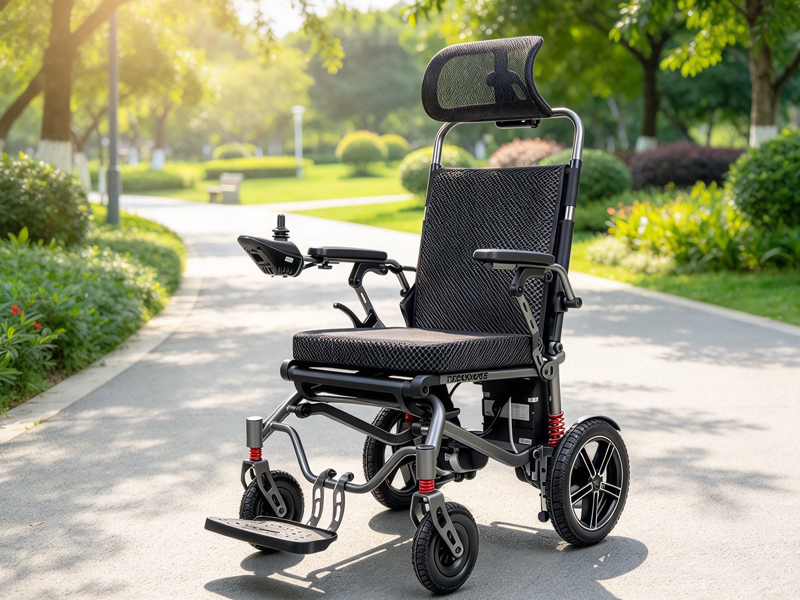
Choosing a wheelchair is about more than finding a comfortable seat. For many people, the real challenge begins when it is time to leave home. A wheelchair that works perfectly indoors may become difficult to manage when loading it into a car, navigating a busy airport, visiting family, or storing it in a small apartment.
This is why lightweight folding wheelchairs have become an increasingly practical choice for people who want greater mobility without the inconvenience of bulky equipment. A well-designed folding wheelchair can make everyday outings easier, reduce the effort required from caregivers, and give users more freedom to plan their days around the activities they enjoy.
However, not every folding wheelchair offers the same advantages. Some prioritize an exceptionally low carrying weight, while others provide a longer driving range, stronger motors, additional storage, or adjustable seating for extended periods of use. Understanding these differences is essential before making a decision.
In this guide, we explore five lightweight and portable electric wheelchairs from Iyasomed: the YSE144, YSE140, YSE148, YSE130L, and YSE146L. Each model serves a different purpose, helping users compare portability, comfort, battery performance, and everyday practicality.
Whether you are looking for a compact electric wheelchair for road trips, a lightweight carbon fiber model for frequent transportation, or a reclining wheelchair designed for greater seating flexibility, the following recommendations will help you identify the features that matter most.
A wheelchair can be described as lightweight and portable for several reasons, but the most useful choice is the one that fits naturally into your daily routine.
Consider what happens during a typical outing. You may need to fold the chair, lift it into a vehicle, secure it for transport, and unfold it again at your destination. If these steps require too much effort or assistance, even a comfortable wheelchair can become inconvenient.
Three factors deserve particular attention.
Weight and folded dimensions determine how manageable the wheelchair is during transportation and storage. A compact folding frame can be especially useful for smaller car trunks, apartments, and homes with limited storage space. The battery also matters because some manufacturers list the chair’s weight without it, while others provide the complete operating weight.
Battery range and motor performance influence how far you can travel between charges and how confidently the chair handles everyday routes. A wheelchair intended mainly for indoor use has different requirements from one used for shopping trips, outdoor paths, and longer excursions.
Seating comfort and accessibility are equally important. Seat width, backrest height, cushion thickness, adjustable footrests, and flip-up armrests can all affect the overall experience. A chair that is easy to transport but uncomfortable after an hour may not be the right choice for someone who spends much of the day seated.
Carbon fiber is particularly attractive in portable wheelchair design because it offers a strong, lightweight frame. Aluminum alloy is another practical option, while steel frames can support feature-rich designs that prioritize adjustability and seating comfort over minimum carrying weight.
The goal is not simply to choose the lightest wheelchair available. It is to find a balance between manageable weight, reliable performance, appropriate seating support, and the type of travel you actually do.
Product link: Carbon Fiber Folding Electric Wheelchair with Dual Motors YSE144
Best for users who prioritize low carrying weight and compact storage.
When portability is the main concern, the YSE144 deserves a close look. Its full carbon fiber frame is designed to reduce carrying weight while maintaining the structural support needed for everyday mobility.
The wheelchair weighs approximately 12 kg without the battery and 15 kg with the battery installed. This distinction is important for anyone who regularly lifts a wheelchair into a car or needs to store it between outings. Even a few kilograms can make a noticeable difference when transportation is part of the daily routine.
When folded, the YSE144 measures approximately 63 × 26 × 70 cm. Its narrow folded profile makes it a practical option for users who want to save space at home or in a vehicle. The compact structure is particularly useful for family road trips, short excursions, and visits to places where a full-size powered wheelchair would be difficult to accommodate.
Portability does not mean sacrificing powered assistance. The YSE144 uses two 150W brushless motors and a 24V 6Ah lithium battery. It offers a stated driving range of up to 10 km per charge and a maximum speed of 4.5 km/h. Charging typically takes four to six hours.
For shorter daily journeys, these specifications can be sufficient. Think of moving around a shopping center, visiting friends, navigating accessible public spaces, or enjoying a local outing without relying entirely on someone else to push the chair.
The seating arrangement also reflects practical everyday needs. The seat measures 41 cm wide and 40 cm deep, while the breathable nylon mesh cushion supports airflow during use. Flip-up armrests make side transfers more convenient when moving between the wheelchair and a bed, sofa, or vehicle seat.
Additional features include an electromagnetic braking system, 6.5-inch front PU wheels, and 12-inch rear PU wheels. The manufacturer lists a maximum user weight of 130 kg, a climbing capability of 3°, and obstacle-crossing capability of up to 25 mm.
These specifications make the YSE144 particularly appealing to users who value lightweight construction and straightforward travel convenience. It is not necessarily the best option for someone who needs the longest possible range, but it offers a sensible combination of compact storage, low weight, and powered mobility.
Before purchasing, consider whether its 10 km stated range comfortably covers your typical journeys, allowing extra capacity for detours and changing conditions.
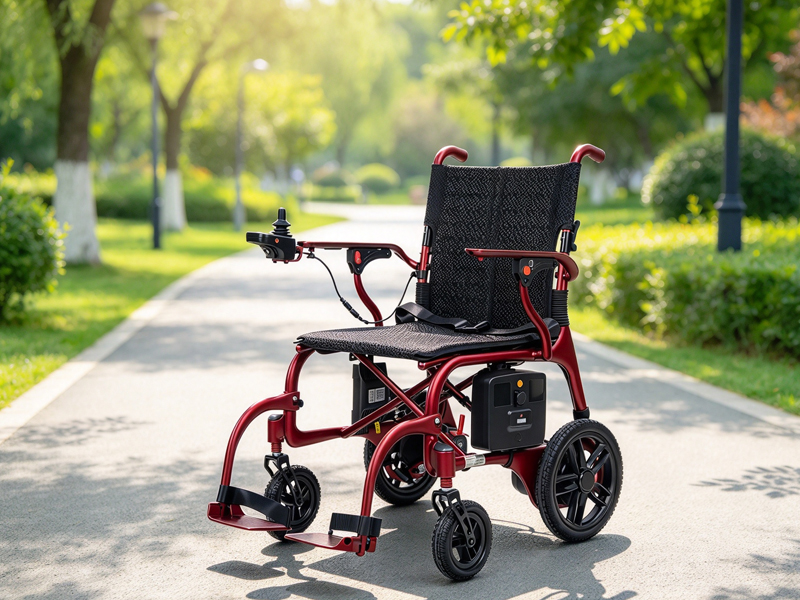
Product link: Carbon Fiber Folding Electric Wheelchair YSE140
Best for travelers who want a balance of portability, speed, and everyday driving performance.
For users who travel frequently but do not want to compromise too much on driving performance, the YSE140 offers a different balance.
This carbon fiber folding electric wheelchair weighs approximately 17.5–21.5 kg, depending on the battery configuration. Although it is heavier than the YSE144, it provides a stated driving range of up to 15 km per charge and a maximum speed of 6 km/h.
That additional range can be useful when a day involves several stops. A trip to the shops might turn into lunch with friends, a visit to a park, or an afternoon spent exploring a new destination. Having more available range can make it easier to plan these activities without returning home as early to recharge.
The YSE140 is equipped with dual 220W brushless motors. Compared with the YSE144’s 150W motors, this higher motor rating may be attractive to users seeking stronger powered assistance for regular mobility. The manufacturer lists a climbing capability of up to 9°, although actual performance depends on the user’s weight, surface conditions, battery charge, and other operating factors.
Its folded dimensions are approximately 79 × 59 × 29 cm, making it suitable for storage in many vehicle trunks and other compact spaces. The chair has a 43 cm seat width and 41 cm seat depth, with a 49 cm backrest height. Flip-up armrests help simplify transfers and provide more convenient access when approaching tables or other furniture.
Battery options include 24V 6Ah and 12Ah lithium configurations, and charging generally takes four to six hours. The listed maximum user weight is 100 kg.
One point deserves special attention: the product page describes the YSE140 as airline-approved. However, wheelchair battery rules, cabin dimensions, handling procedures, and approval requirements vary between airlines and aircraft. Anyone planning to fly should confirm the exact battery specifications and transportation arrangements directly with the airline before booking.
The YSE140 is a strong candidate for users who want a portable electric wheelchair with more range and a higher stated speed than the YSE144. Its slightly greater weight may be a worthwhile trade-off for those who value everyday performance as much as compact storage.
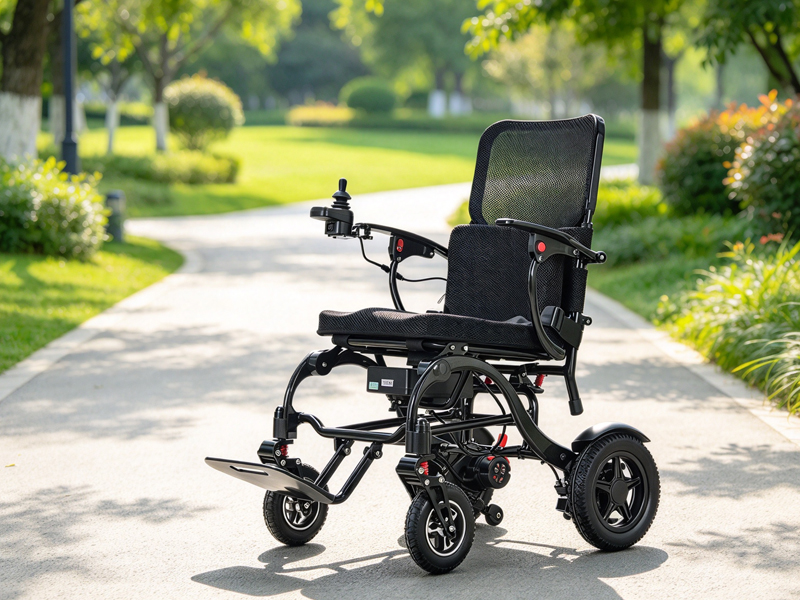
Product link: Portable Carbon Fiber Electric Wheelchair YSE146L
Best for users seeking a lightweight chair for shopping, local travel, and routine mobility.
Not everyone needs a wheelchair designed around extended travel. For many people, the priority is simpler: a chair that can be folded, stored in a car, and used comfortably for everyday errands.
The YSE146L is designed around this kind of practical mobility.
Its carbon fiber frame weighs approximately 11.5 kg without the battery and 16 kg with the battery installed. This relatively low operating weight makes it an appealing option for users and caregivers who frequently need to handle the chair during transportation.
When folded, the wheelchair measures approximately 72 × 30 × 70 cm. These dimensions help make storage easier in smaller homes, vehicle trunks, and spaces where a full-size powered wheelchair would be inconvenient.
The YSE146L uses dual 24V 150W brushless motors paired with a 24V 10Ah lithium battery. Its stated driving range is 10–15 km per charge, with a maximum speed of 4.5 km/h. Charging typically takes four to six hours.
This combination is well suited to shorter journeys and regular activities, such as shopping, attending appointments, visiting friends, and moving around accessible indoor and outdoor environments.
The seating dimensions are 40 cm wide and 41 cm deep, with a seat height of 45 cm. Flip-up armrests make side transfers easier, while the black cushion provides a straightforward seating surface for daily use.
Wheel configuration is another practical consideration. The YSE146L features 6.5-inch front PU wheels and 11-inch rear PU wheels. Its electromagnetic braking system is designed to engage when the joystick is released, helping the chair stop in a controlled manner.
The manufacturer lists a maximum user weight of 100 kg and a climbing capability of 3°. These limits should be considered carefully when choosing a wheelchair for a particular user and environment.
The YSE146L is particularly suitable for someone who values a manageable carrying weight and compact storage more than a higher maximum speed or extended battery range.
For example, a family member might keep the folded chair in the car for weekend outings, while a caregiver can bring it along for appointments or shopping trips. Its portability can make these activities easier to organize without requiring a bulky wheelchair to remain permanently in the vehicle.
If your typical outings are relatively short, the YSE146L offers a useful balance of portability, powered movement, and everyday convenience.
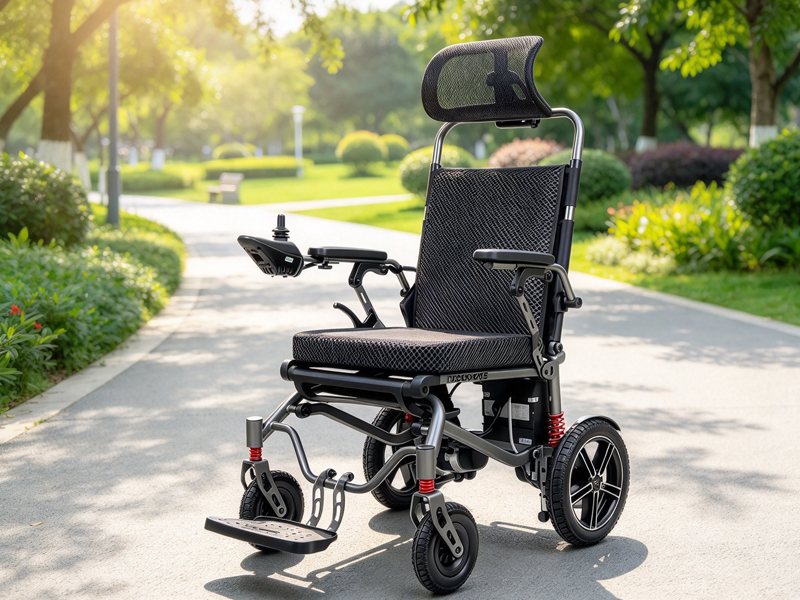
Product link: Lightweight Electric Folding Wheelchair YSE130L
Best for users who want additional everyday features, storage, and flexible driving options.
A lightweight folding wheelchair becomes more useful when it can handle the small practical tasks that make up a normal day. Carrying shopping, moving between indoor and outdoor spaces, and navigating a familiar route are all part of everyday independence.
The YSE130L takes a slightly different approach from the carbon fiber models. Instead of using a carbon fiber frame, it features a high-strength aluminum alloy structure and focuses on combining folding convenience with additional functionality.
The manufacturer lists a maximum user weight of 130 kg and an operating weight below 25 kg including the battery in its product description. Its folded dimensions are approximately 63 × 38 × 74 cm, while the product page lists a typical charging time of four to six hours.
These specifications make the YSE130L worth considering for people who want a practical powered wheelchair but do not necessarily need the lowest possible carrying weight.
One of its most distinctive features is the manual and electric mode switching system. An intelligent clutch allows users or caregivers to switch between powered driving and manual movement. This flexibility may be useful in situations where powered operation is not necessary or where the chair needs to be moved by a caregiver.
The wheelchair uses dual 250W motors and a lithium battery available in several capacities, including 6Ah, 12Ah, 20Ah, and 26Ah configurations. The listed driving range is approximately 15–25 km, depending on battery capacity and operating conditions.
For users who regularly spend time away from home, this range may be more practical than the shorter-range options in the lineup.
The YSE130L also features a 44 × 44 cm seat and a 5 cm thickened cushion. This wider seating surface may be appealing to users who prefer more room than the 40–43 cm seats offered by some compact carbon fiber models.
Its 8-inch front wheels and 12-inch rear wheels support movement across common everyday surfaces. The manufacturer lists a maximum speed of 6 km/h and a climbing capability of up to 15°. These figures should not be treated as a guarantee of safe operation on every slope; actual suitability depends on the user’s weight, terrain, traction, and operating instructions.
Practical extras include a front basket, rear storage bag, optional Bluetooth remote control, battery-level display, and electromagnetic braking. The remote-control option may be helpful for some caregivers, although users should confirm its availability and intended operation before ordering.
The YSE130L is therefore an interesting choice for people who need more than a minimal travel chair. Its aluminum frame, multiple battery options, manual/electric switching, and storage features make it suitable for a broader range of everyday activities.
The main trade-off is weight. If one person must lift the wheelchair frequently, compare its actual shipping and operating configuration with a lighter carbon fiber model before deciding.
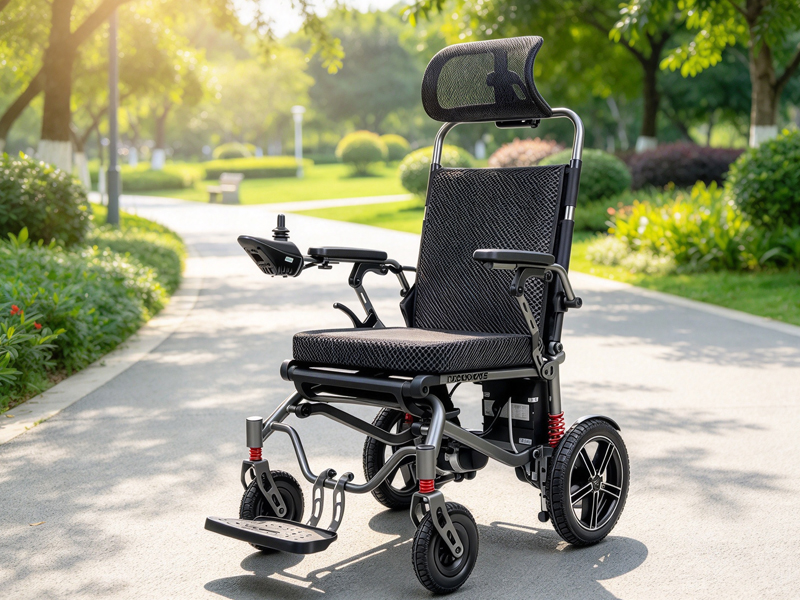
Product link: Electric Reclining Wheelchair YSE148
Best for users who prioritize adjustable seating, leg support, and extended periods of comfort.
Portability matters, but it should not be the only consideration when choosing a wheelchair.
Some users spend much of the day seated and need more flexibility in how they position their back, legs, and head. For them, a lightweight travel wheelchair with a fixed seating position may not provide the level of adjustment they need.
The YSE148 addresses a different set of priorities. It is a folding electric reclining wheelchair designed around adjustable positioning and everyday comfort rather than minimum carrying weight.
Its hydraulic reclining system allows the backrest to move from an upright seated position to a fully reclined position. This flexibility can be useful during periods of rest and may help users who need to change their posture throughout the day. Anyone with specific pressure-management or medical positioning requirements should consult a qualified healthcare professional to determine whether the chair meets those needs.
The seating system includes adjustable armrests, footrests, a headrest, and telescopic leg rests. These features provide more opportunities to adapt the chair to the user’s preferred position.
Another practical detail is the flexible controller placement. The controller can be configured for left- or right-hand operation and positioned at the front or rear according to the product’s supported setup. This can be valuable for users whose preferred control position differs from that of a standard wheelchair.
The YSE148 is powered by dual 250W motors and includes an electromagnetic braking system. The manufacturer lists a maximum speed of 6 km/h, a driving range of approximately 10–25 km depending on battery selection and conditions, and a climbing capability of up to 9°.
Its battery options include 24V lead-acid batteries in 12Ah or 20Ah capacities and lithium batteries in several capacities, from 6Ah to 30Ah. Charging typically takes four to six hours.
The chair has a 43 cm seat width and 44 cm seat depth, with a listed maximum user weight of 120 kg. Its steel frame provides a solid foundation for the adjustable seating system, but the trade-off is weight: the product specifications list approximately 32 kg net weight, with another figure of 36 kg also shown.
The folded dimensions are approximately 60 × 35 × 92 cm, making it possible to store the chair more compactly than its fully assembled dimensions might suggest. Nevertheless, at this weight, it is not the first choice for someone who needs to lift a wheelchair into a vehicle frequently without assistance.
Instead, the YSE148 is best viewed as a comfort-oriented alternative for users who value reclining functionality and adjustable support. It demonstrates why the best folding wheelchair is not always the lightest one.
For people who spend long periods in their wheelchair, the ability to adjust seating position may be more important than saving several kilograms during transport.
The five models differ in ways that become clearer when their key specifications are placed side by side.
| Model | Weight | Stated range | Max user weight | Best suited to |
|---|---|---|---|---|
| YSE144 | 12 kg without battery; 15 kg with battery | Up to 10 km | 130 kg | Low-weight travel and compact storage |
| YSE140 | 17.5–21.5 kg, depending on configuration | Up to 15 km | 100 kg | Travel with a higher stated speed and longer range |
| YSE146L | 11.5 kg without battery; 16 kg with battery | 10–15 km | 100 kg | Everyday outings and easy transportation |
| YSE130L | Listed as under 25 kg including battery in product description | 15–25 km | 130 kg | Daily mobility, storage, and flexible driving modes |
| YSE148 | Approximately 32 kg net; another figure of 36 kg is listed | 10–25 km | 120 kg | Reclining comfort and adjustable seating |
Specifications are based on the manufacturer’s product listings. Driving range depends on battery configuration, user weight, terrain, temperature, and driving habits. Verify the exact configuration and final specifications with the supplier before purchase.
There is no single winner for every user. The YSE144 and YSE146L are especially attractive when low carrying weight is the priority, while the YSE140 offers a higher stated speed and a different balance between weight and range. The YSE130L adds practical storage and operating flexibility, whereas the YSE148 prioritizes reclining comfort.
Before making a purchase, think about the places you visit most often and the people who will help with transportation, if assistance is needed.
Start with the real carrying weight. Always check whether the manufacturer’s stated weight includes the battery. A wheelchair that weighs 12 kg without its battery may have a different handling weight once fully assembled. If you expect to lift the chair frequently, ask whether the battery can be removed easily and how much the remaining frame weighs.
Measure your available storage space. Do not rely on a general claim that a wheelchair fits in a car trunk. Measure the trunk opening, interior width, and available depth. Consider whether luggage, groceries, or other passengers will share the same space. Folded dimensions can vary considerably between models, and the shape of the folded chair matters as much as its total volume.
Choose a realistic driving range. Estimate the distance of your typical outing, then leave a comfortable reserve rather than planning to use the entire advertised range. A wheelchair’s actual range may be reduced by hills, frequent stops, higher user weight, cold weather, and battery age. If you regularly travel longer distances, a model with a higher-capacity battery may be more suitable.
Check seat dimensions and transfer needs. The correct seat width should provide comfortable support without restricting movement or creating excessive pressure. Seat depth, cushion thickness, armrest height, and footrest positioning also deserve attention. If side transfers are part of the daily routine, flip-up armrests can be particularly useful.
Consider the terrain. A wheelchair intended for smooth indoor flooring and paved paths may not be suitable for steep slopes, loose gravel, wet grass, or rough outdoor surfaces. Pay attention to the manufacturer’s stated climbing capability, wheel dimensions, braking system, and operating instructions. Avoid assuming that a published maximum slope is appropriate for routine use in every condition.
Check battery transportation requirements. For air travel, contact the airline before departure and provide the exact battery chemistry, voltage, and watt-hour rating. Ask about battery removal, storage, terminal protection, and wheelchair handling. A product described as travel-friendly or airline-approved should not be assumed to meet every airline’s requirements automatically.
Finally, think about maintenance and after-sales support. Ask about battery replacement, charger compatibility, spare parts, warranty terms, and servicing arrangements. A portable wheelchair is an investment in daily mobility, and access to reliable support can matter just as much as its initial specifications.
A lightweight folding wheelchair can make everyday life more manageable, but the right model should suit the user’s actual routine rather than simply look impressive on a specification sheet.
For frequent car travel and easier lifting, the YSE144 and YSE146L are compelling carbon fiber options. The YSE144 offers a listed operating weight of 15 kg with its battery, a 130 kg load capacity, and a compact folding structure. The YSE146L is similarly focused on portability, with a listed total weight of 16 kg and a practical range of 10–15 km.
For people who want a longer stated range and a higher maximum speed, the YSE140 is worth comparing. The YSE130L is a practical alternative for users who value a wider seat, manual/electric switching, optional remote control, and additional storage. For users who need a reclining backrest and more adjustable positioning, the YSE148 offers a different kind of value, even though it is considerably heavier.
The best lightweight folding wheelchair is ultimately the one that makes daily activities easier without creating new difficulties. A good match should be manageable to transport, comfortable to use, appropriate for the user’s weight and mobility needs, and reliable enough for the journeys that matter most.
Take time to compare the actual carrying weight, folded size, battery configuration, and seating dimensions before deciding. When these practical details match your lifestyle, a folding wheelchair can become much more than a mobility device: it can be a useful part of maintaining independence, enjoying outings, and making everyday plans with greater confidence.
The best choice depends on your carrying needs, travel distance, and preferred features. The YSE144 weighs approximately 15 kg with its battery, while the YSE146L weighs approximately 16 kg with its battery. Both use carbon fiber frames and fold into compact dimensions, making them attractive options for users who frequently transport a powered wheelchair in a vehicle.
If you need a higher stated maximum speed and a longer range, the YSE140 may be worth considering. Always compare the complete operating weight, including the battery, rather than relying only on the frame weight.
Many lightweight folding electric wheelchairs are designed for vehicle transportation, but the answer depends on the chair and the vehicle. The YSE144 folds to approximately 63 × 26 × 70 cm, the YSE146L to 72 × 30 × 70 cm, and the YSE140 to 79 × 59 × 29 cm.
Measure your car trunk and its opening before purchasing. Remember to allow space for luggage and consider how the folded wheelchair will be lifted, positioned, and secured. If you are unsure, request a dimensional drawing or confirm the folded configuration with the supplier.
Driving range varies by model and battery configuration. The YSE144 offers a stated range of up to 10 km, the YSE140 up to 15 km, and the YSE146L approximately 10–15 km. The YSE130L lists approximately 15–25 km, while the YSE148 lists approximately 10–25 km depending on the selected battery and operating conditions.
Actual range may be lower because of hills, user weight, temperature, frequent acceleration, and battery condition. For everyday use, choose a wheelchair with enough range to complete your normal journey while keeping a reasonable reserve for unexpected stops or route changes.