Our Location
Free Trade Tower, Xiyong street.
Chongqing, China

Free Trade Tower, Xiyong street.
Chongqing, China
In the evolving landscape of mobility solutions, standing wheelchairs represent more than just a device that moves from point A to point B. They challenge the very definition of mobility, blending transport, rehabilitation, health therapy, and personal independence into one versatile machine.
For individuals with limited mobility — whether due to spinal cord injuries, neurological conditions, muscular disorders, or age-related decline — these wheelchairs can be transformative. They offer not just motion, but a daily strategy for engagement with the world around them, indoors and outdoors.
In this comprehensive guide, we’ll explore:
What modern standing wheelchairs are and how they differ from traditional wheelchairs
The physical, psychological, and quality-of-life benefits these devices deliver
Key considerations when choosing a standing wheelchair
How different types — from indoor models to rugged outdoor options — fit different lifestyles
And we’ll highlight three standout products from Iyasomed that illustrate the latest innovations in standing and reclining wheelchair design:
Fully Functional Standing Wheelchair YSE309
Electric Reclining & Standing Wheelchair YSE301
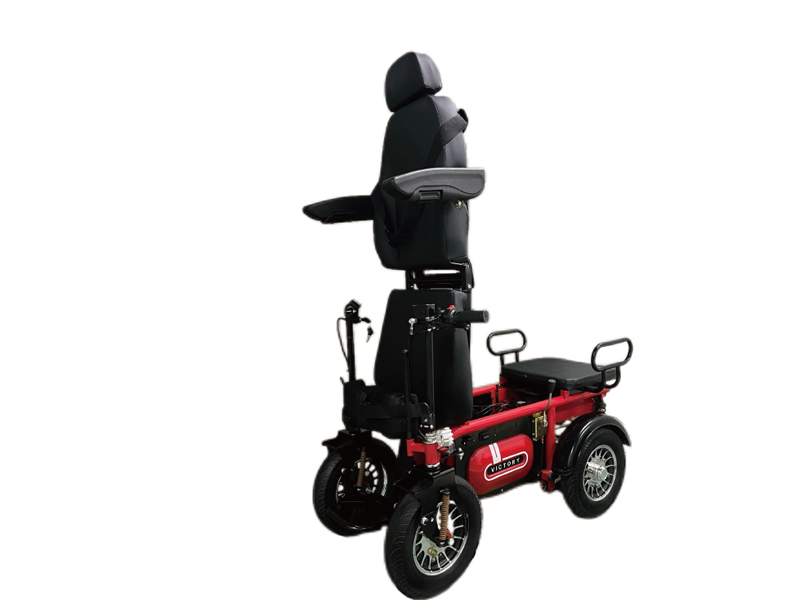
Off-Road Electric Standing & Lying Wheelchair YSE302
At its core, a standing wheelchair is a mobility device designed to elevate the user from a seated position into an upright, standing posture — independently and safely. Unlike conventional wheelchairs that keep users seated horizontally at all times, standing wheelchairs use electrical or hydraulic systems to raise the seat and support body weight in a fully upright stance.
This feature unlocks functionality that was once difficult or impossible for many wheelchair users:
Eye-to-eye engagement with others in social and work settings
Easier access to countertops, shelves, appliances, or workstations
Upright positioning for short periods to support health and body function
Modern standing wheelchairs also often integrate tilting, reclining, and pressure relief mechanisms, making them powerful tools for daily life beyond mobility.
Being able to transition from a seated to a standing position isn’t merely a convenience — it’s rooted in health science.
Even short durations of prolonged sitting slow blood flow, especially in the lower legs. Standing helps normalize circulation, reducing swelling and the risk of blood pooling — a key factor in preventing deep vein thrombosis and other vascular issues.
Weight-bearing through the legs and hips encourages bone stimulation that can slow the progression of osteoporosis — a common risk for individuals with long-term mobility impairments. Standing also gently engages muscles that may otherwise atrophy with inactivity.
Pressure sores (or ulcers) develop when tissue is compressed for extended periods. Redistributing weight through standing alleviates pressure on critical points such as the pelvis and buttocks, decreasing the risk of skin breakdown.
Upright posture allows the body’s organs to function more naturally: digestion improves, breathing becomes fuller, and bladder and bowel function may normalize. These benefits have been acknowledged in clinical and user reports alike.
The benefits aren’t purely physiological. Standing wheelchairs also reshape how users interact with life around them.
Confidence & Self-Esteem — Standing at eye level helps users engage socially and feel seen rather than hovering below the expected height of interaction.
Independence — Tasks once requiring caregiver support — like reaching for items on shelves, preparing food, or handing out at counters — become feasible without assistance.
Participation in Activities — Whether at work, in education, or during leisure time, standing wheelchairs make engagement more natural and active.
Not all wheelchairs are built the same. While some are optimized for indoor maneuverability, others are engineered for outdoor performance. Modern standing wheelchairs unify both:
Compact turning radius for tight hallways and doorways
Smooth control systems for carpet and hard floors
Adjustable posture settings for long-term comfort
Pneumatic or all-terrain tires that handle gravel, grass, and uneven surfaces
Powerful motors with higher torque for slopes and outdoor exploration
Shock absorption for comfort over terrain changes
Devices like the YSE309 and YSE302 are designed with this range in mind, ensuring both everyday indoor use and extended outdoor travel without compromise.
When evaluating standing wheelchairs, there are several features that make a significant difference in performance and comfort:
Hydraulic and electric systems support a smooth transition between positions — from seated to standing and, in some models, to full recline.
Dual braking systems — electronic, electromagnetic, or manual — add layers of safety, especially on inclines or outdoors.
Adjustable knee pads, padded armrests, breathable seat cushions, and posture-supporting structures make a big difference for long-wear comfort.
Range and motor power determine how far and how easily you can travel outdoors. Outdoor-targeted models often include higher-capacity batteries and motors to offer longer range and higher top speeds.
Intuitive remote controls, joysticks, or toggle switches allow users — including those with limited hand strength — to operate the wheelchair independently.
Below are three innovative models that illustrate the diversity of use cases for standing mobility — from everyday home life to off-road adventures.
The YSE309 brings a hydraulic reclining design and robust build quality into a versatile standing wheelchair solution.
Key Features & Advantages:
Hydraulic recline with standing height up to 180 cm enables seamless transitions between sitting, resting, and vertical standing.
Dual brake system (hand and electromagnetic) for enhanced safety across indoor and outdoor environments.
Wider pneumatic front wheels and anti-interference joystick control make navigation smooth even on complex surfaces.
High load capacity and roomy seat design (49 cm seat width, 150 kg capacity) suit a wide range of users.
This wheelchair excels for users who want everyday flexibility — from active standing therapy, to relaxed reclining rest, to comfortable driving both inside the home and outdoors.
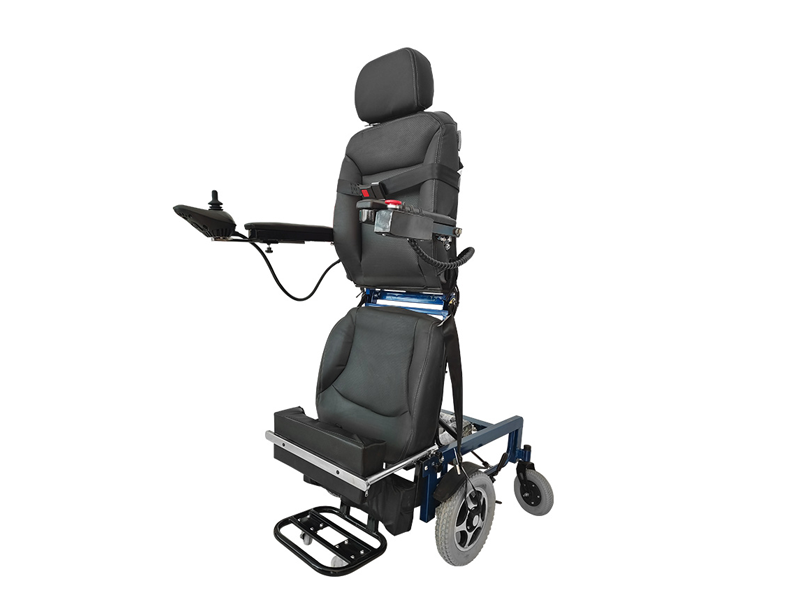
The YSE301 model is a multifunctional standing wheelchair designed to balance daily use with therapeutic positioning.
Standout Benefits:
Powered reclining backrest and leg lift, along with a powered stand function, reduce fatigue and support rehabilitation.
Intelligent electronic and electromagnetic braking systems ensure stability even on slopes.
Smooth front and rear shock suspension with widened tires offer comfort on uneven flooring or pavement.
With a range up to 45 km and a top speed of 8 km/h, it’s ideal for everyday travel and therapy routines.
This model provides an excellent balance of performance, comfort, and independence — suitable for long home use, rehabilitation programs, and outdoor outings.
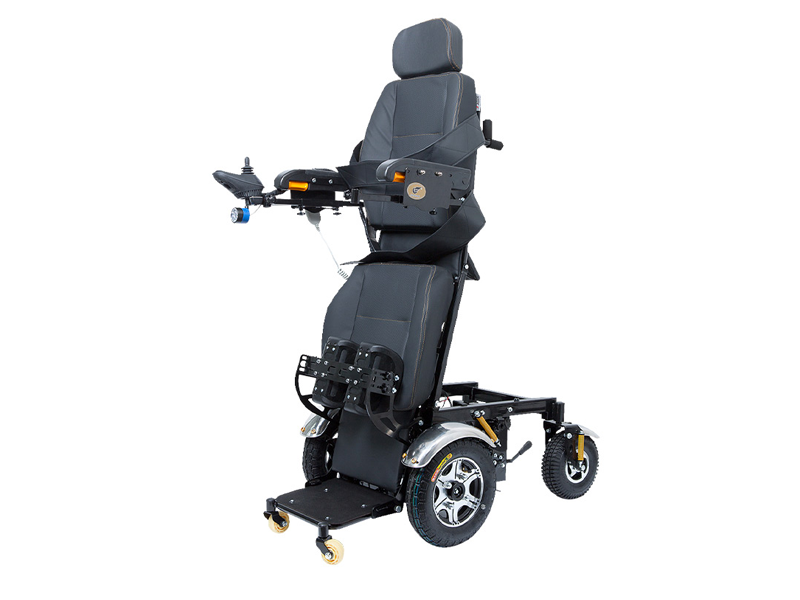
For users who want to take mobility beyond paved pathways, the YSE302 delivers a four-wheel drive, shock-absorbed, high-power outdoor experience.
What Makes It Special:
48 V 800 W motor with a 28 km/h top speed — exceptional power for outdoor challenges.
Four driving modes (off-road, climbing, normal, indoor) for flexibility across environments.
Large pneumatic tires and suspension provide stability over grass, gravel, and slopes.
180° recline and remote-controlled standing adjustments support therapeutic positioning and comfort on long journeys.
This wheelchair is ideal for adventurous users who value freedom, performance, and rugged reliability. Its multi-mode design bridges daily needs with outdoor exploration possibilities.
When considering a standing wheelchair, think through these questions:
What environments will you spend time in?
For indoor and occasional outdoor use, models like the YSE301 and YSE309 perform exceptionally.
If you love outdoor travel or live in mixed-terrain regions, the YSE302 offers added stability and power.
Do you need frequent posture transitions?
If rehabilitation or pressure relief is a priority, full recline and stand mechanisms are key.
How important is independence in control?
Accessible controls and adjustable mechanisms matter most for users with limited hand strength or dexterity.
Are health and therapy considerations part of your purchase decision?
Standing regularly has documented circulation, respiratory, and bone health benefits.
Standing wheelchairs have moved far beyond simple mobility aids. They are health tools, engagement devices, and daily enablers, empowering users to live more fully, comfortably, and actively.
Whether your priority is indoor ease, outdoor adventure, therapeutic standing, or extended resting comfort, there’s a solution designed to meet your needs — and products like the YSE309, YSE301, and YSE302 reflect the broad capabilities of modern standing wheelchair technology.
For users and caregivers alike, these devices offer practical freedom — a meaningful step toward quality of life that extends far beyond wheels and motors.