Our Location
Free Trade Tower, Xiyong street.
Chongqing, China

Free Trade Tower, Xiyong street.
Chongqing, China
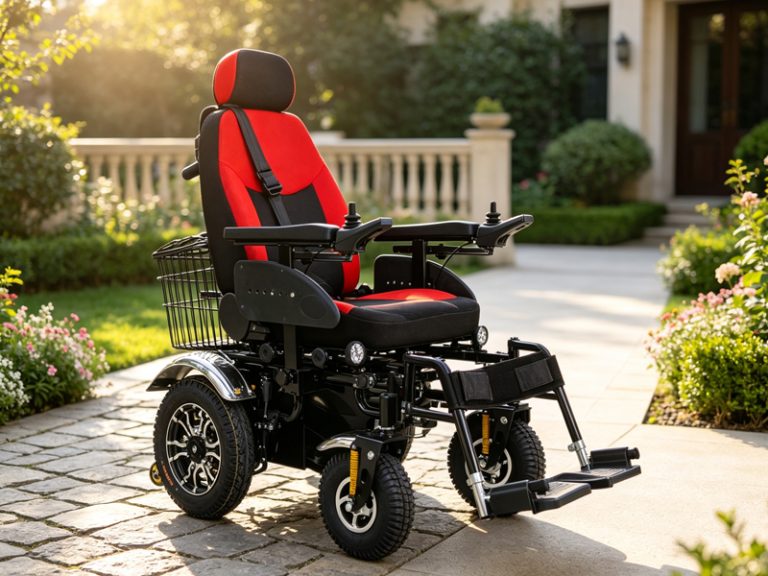
Choosing a mobility chair is no longer simply a matter of finding a powered seat with four wheels. For many users, the real priority is finding a wheelchair that fits naturally into everyday life: it should be easy to control, practical to transport, comfortable enough for extended use, and compact enough to work in homes, vehicles, shops, airports, and other everyday environments. This is where a Lightweight Electric Wheelchair with Remote Control can offer a particularly useful combination of convenience and mobility.
Table of Contents
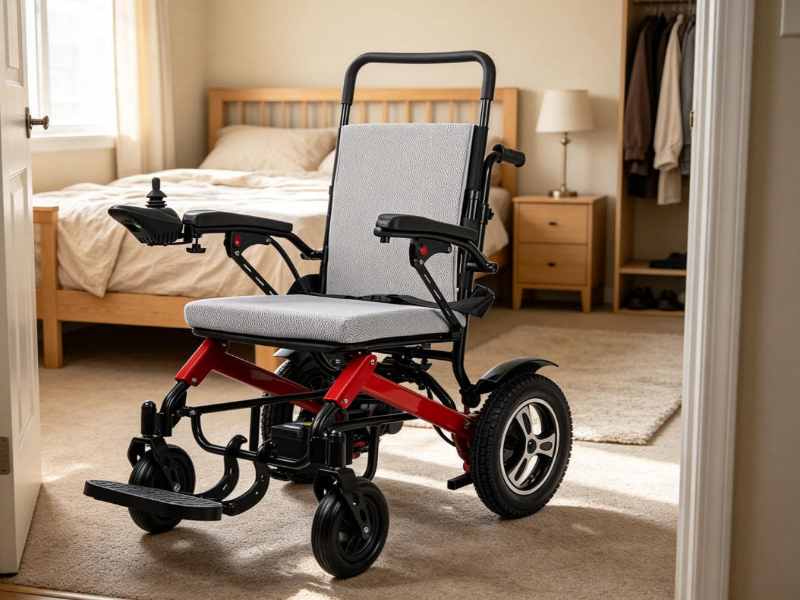
ToggleA modern Folding Power Chair is designed around a simple idea: electric mobility should not have to mean a bulky or difficult-to-manage machine. Advances in lightweight frames, folding mechanisms, compact drive systems, and user-friendly controls have made powered wheelchairs considerably more adaptable. For people who want the independence of electric propulsion but still need a wheelchair that can be transported or stored with relative ease, a folding model can provide a practical middle ground.
Traditional powered wheelchairs can provide excellent mobility, but their size and weight may become inconvenient outside the home. A chair that works well in a spacious rehabilitation facility may be much harder to place in a private vehicle or store in a smaller apartment.
A lightweight folding design approaches the problem differently. Instead of treating portability as an afterthought, the frame and folding structure are designed to make transportation part of the overall user experience.
This matters particularly when a wheelchair needs to move between different environments. A user may start the morning at home, travel by car to a medical appointment, visit a shopping centre, and later spend time with family outdoors. A mobility chair that can be folded and transported more conveniently gives the user greater flexibility instead of limiting mobility to one location.
The same principle applies to caregivers. Family members and professional carers may need to lift, load, unload, store, or reposition a wheelchair several times a day. A lighter, more compact chair can make these tasks less demanding.
However, lightweight construction should never be treated as the only measure of quality. The best Lightweight Electric Wheelchair with Remote Control should balance portability with stability, seating comfort, driving performance, battery practicality, braking, frame strength, and ease of operation.
That balance is what separates a genuinely useful mobility product from a chair that is simply light on paper.
Remote control functionality can add another layer of convenience to a powered wheelchair, particularly when the chair needs to be positioned without the user sitting in it.
A conventional power wheelchair is generally operated from its onboard controller. This is effective when the user is seated and driving independently, but there are situations where an additional control option can be useful.
For example, a caregiver may need to reposition the wheelchair before helping the user transfer into it. In another situation, a family member may want to move the chair a short distance inside a room or position it correctly before a trip. Remote functionality can make these small tasks more convenient.
For users, the value of remote control is not necessarily about replacing the primary joystick or controller. Instead, it can complement normal operation and provide additional flexibility.
A good remote-control system should therefore be intuitive rather than complicated. Buttons and commands need to be easy to understand, while the wheelchair should respond predictably. Safety should always remain the priority, particularly around ramps, stairs, crowded areas, uneven surfaces, or other situations where unintended movement could create a hazard.
Buyers should also distinguish between a wheelchair that includes a genuinely useful remote-control system and one that simply advertises remote functionality without explaining how it works. When evaluating a product, ask about control range, operating method, emergency stopping, battery requirements, and whether remote operation is intended primarily for positioning or independent driving.
The defining advantage of a Folding Power Chair is its ability to reduce the physical footprint of the wheelchair when it is not being used.
This can be especially valuable for people who regularly travel by car. A conventional power wheelchair may occupy substantial cargo space, while a foldable model can be more convenient to place in a trunk or other storage area, depending on the vehicle and the chair’s folded dimensions.
The same advantage applies at home. Not every household has a dedicated wheelchair storage area. A folding design can make it easier to store the chair in a hallway, bedroom, utility area, or other suitable location when appropriate.
Portability also changes the way people think about travel. Instead of asking whether a destination can accommodate a large powered wheelchair, users can focus more on whether the wheelchair can be transported and whether the destination itself is accessible.
Of course, folding does not automatically mean that a chair is lightweight enough for every person to lift. Buyers should always check the actual product weight, folded dimensions, battery configuration, and whether components such as the battery can be removed separately.
These details are particularly important for international buyers and distributors because transportation requirements vary significantly between markets.
The frame is the foundation of any wheelchair, and lightweight construction needs to be approached carefully.
Aluminium and other lightweight materials can help reduce overall weight while maintaining the structural properties required for everyday mobility. However, material selection alone does not determine quality. Frame geometry, joints, folding points, wheel placement, suspension, seating structure, and manufacturing consistency all influence the final product.
For a Lightweight Electric Wheelchair with Remote Control, the frame also needs to accommodate the drive system, battery, controller, and other electrical components without compromising balance.
A well-designed chair should feel stable during normal movement rather than excessively front-heavy or rear-heavy. The centre of gravity, wheelbase, seat position, and motor arrangement all influence handling.
This is one reason why buyers should not select a powered wheelchair solely according to its advertised weight. A slightly heavier chair with better stability and construction may ultimately provide a much better ownership experience than an extremely light model that compromises other important characteristics.
For businesses looking for an established manufacturer and a broader product portfolio, IYASOCARE is worth considering. Its mobility range includes electric wheelchairs designed for different applications, allowing distributors and mobility-equipment suppliers to compare configurations rather than relying on a single universal model.
Two models are particularly relevant to buyers researching compact electric mobility.
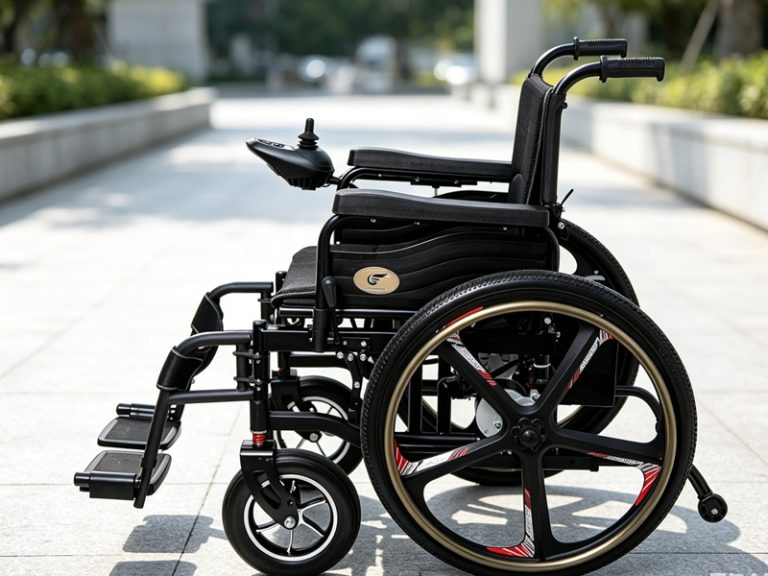
The IYASOCARE YSE130X Folding Electric Wheelchair is a suitable product to examine when portability and powered mobility are both important purchasing considerations.
Its foldable configuration addresses one of the most common challenges associated with electric wheelchairs: transportation and storage. Instead of requiring a large permanent storage area, a folding structure can make the wheelchair easier to integrate into everyday routines.
For distributors, this type of product can also appeal to a broad customer segment. Not every electric wheelchair buyer is looking for an advanced rehabilitation platform or an off-road machine. Many simply want dependable powered mobility for ordinary activities such as shopping, visiting family, attending appointments, or moving around accessible public spaces.
The YSE130X can therefore be positioned as a practical option within a wider Folding Power Chair product range. Its value is particularly relevant for customers who place strong emphasis on convenience and portability while still wanting electric drive rather than a manually propelled wheelchair.
When presenting the model to customers, however, sellers should provide the complete current specification sheet rather than relying only on general descriptions. Important information includes total weight, folded dimensions, battery type and capacity, charging time, driving range, maximum user weight, turning radius, motor configuration, and applicable certifications.
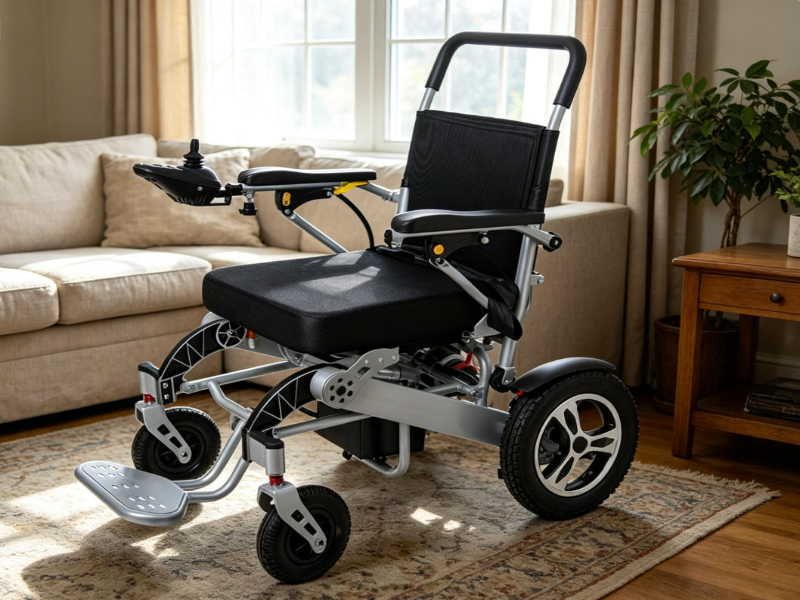
The IYASOCARE YSE130L Electric Wheelchair is another model that can be considered when building a product selection around practical powered mobility.
For customers comparing electric wheelchair configurations, having more than one model is useful because mobility requirements differ considerably from person to person. A smaller user living in an apartment may have very different priorities from a customer who spends most of the day outdoors.
The YSE130L can be evaluated alongside the YSE130X according to factors such as frame dimensions, folding requirements, seating configuration, driving environment, transport needs, and available specifications.
This approach is more useful than declaring one wheelchair universally “best.” The right Lightweight Electric Wheelchair with Remote Control depends on how the individual actually intends to use it.
For B2B buyers, model diversity is equally important. A distributor that offers several configurations can address different price points and customer requirements without having to change suppliers for every product category.
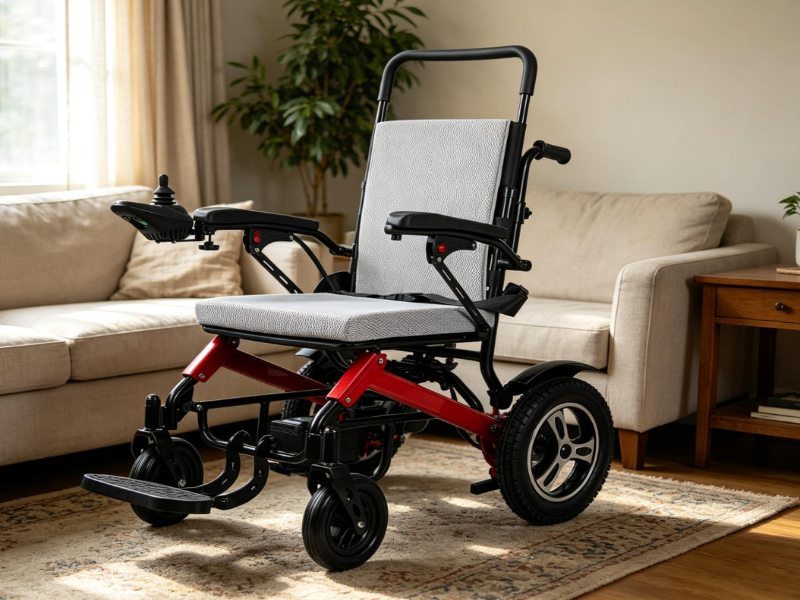
A Folding Power Chair should be evaluated as a complete mobility system rather than simply as a folding frame with an electric motor.
1. Weight and folded size
Start with the physical dimensions. Ask whether the wheelchair can realistically be lifted by the intended user or caregiver and whether its folded size works with the vehicle being used.
A product may technically fold while still being too heavy or bulky for convenient transportation. Actual measurements are therefore more useful than marketing phrases such as “compact” or “portable.”
2. Battery and range
Battery performance has a direct effect on usability. Buyers should understand the battery type, capacity, charging time, expected range, charging method, and replacement availability.
Advertised range should also be interpreted carefully because real-world performance can vary with user weight, terrain, temperature, battery condition, tyre pressure, driving style, and frequency of acceleration.
For people who travel frequently, battery transport and airline requirements should also be checked before flying.
3. Motor performance
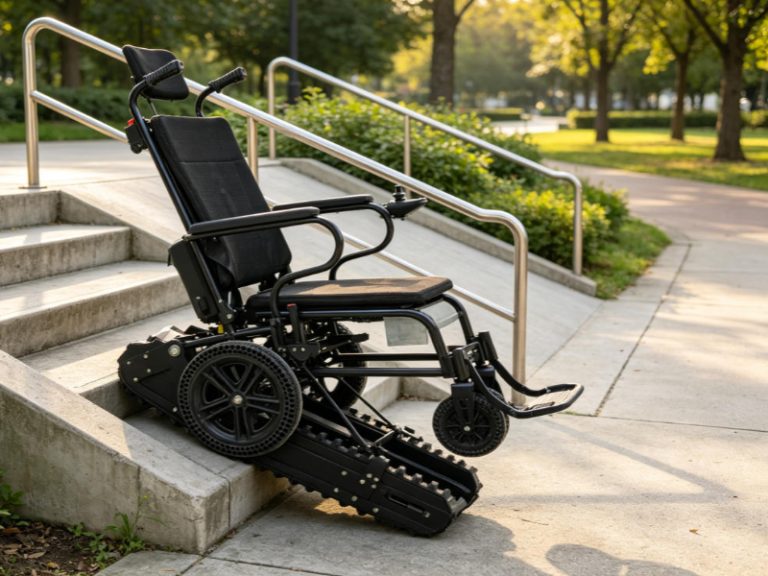
Motor output should match the intended environment. A wheelchair used primarily on smooth indoor floors has different requirements from one expected to handle outdoor paths, gradients, or rougher surfaces.
Higher motor power is not automatically better. The goal is to find an appropriate combination of torque, efficiency, control, battery consumption, and terrain capability.
4. Braking and safety
Braking deserves as much attention as acceleration. Buyers should understand how the wheelchair stops, how it behaves on slopes, and whether the drive system includes an electromagnetic or other automatic braking mechanism.
Safety features should be evaluated according to the product’s intended application and local regulatory requirements.
5. Seating comfort
A wheelchair may be technically impressive but still unsuitable if the seating position is uncomfortable.
Seat width, seat depth, back support, cushion design, armrests, footrests, and posture all affect the user’s experience. Someone who spends several hours a day in the chair should pay particular attention to pressure distribution and overall seating support.
6. Turning and indoor manoeuvrability
Compact dimensions can be extremely useful indoors. A wheelchair should be able to move through the user’s normal environment without constantly requiring large turning spaces.
Before purchasing, consider door widths, corridors, lifts, bathrooms, kitchen areas, and other spaces that the user regularly needs to access.
One of the biggest mistakes buyers make is assuming that a lightweight wheelchair is automatically suitable for every user.
Weight capacity remains essential. A chair should be selected according to the manufacturer’s stated maximum user weight and operating conditions. Seat width and depth are equally important because poor fit can affect comfort, posture, and control.
Users should also think about their normal environment.
Someone living in a small apartment may prioritise a compact folding mechanism and tight turning radius. A frequent traveller may focus on weight and folded dimensions. A caregiver may care most about lifting and loading. Someone who spends considerable time outdoors may prioritise motor torque, ground clearance, tyres, suspension, and stability.
This is why the term Lightweight Electric Wheelchair with Remote Control should describe a category rather than dictate a purchasing decision.
The best product is the one whose characteristics match the user’s real routine.
For distributors, importers, medical-equipment companies, and mobility retailers, choosing the product is only part of the purchasing decision. The manufacturer behind the product can have an equally important impact on long-term business performance.
A reliable supplier should be able to provide consistent product quality, technical documentation, replacement parts, packaging information, product specifications, and after-sales support.
OEM and private-label capability may also matter for companies developing their own mobility brand. Instead of simply purchasing finished products, businesses may need customised colours, branding, packaging, manuals, specifications, or product configurations.
This is where working directly with a manufacturer can provide advantages over dealing with multiple unrelated trading companies.
For companies evaluating IYASOCARE, the wider product catalogue can be useful because it allows buyers to investigate different electric and manual wheelchair categories within one supplier relationship.
The manufacturer’s current commercial terms, certifications, OEM capabilities, production capacity, minimum order quantities, lead times, and export documentation should nevertheless be confirmed directly before placing an order.
A good wheelchair purchase begins with the user rather than the product.
Before comparing models, write down where the chair will be used, how frequently it will be transported, who will operate it, how much storage space is available, what distances are normally travelled, and whether the user needs assistance from a caregiver.
Then compare the available models against those requirements.
For example, a person who mainly travels between home and medical appointments may value portability more than high-speed outdoor performance. A frequent traveller may prioritise a lightweight frame and folding dimensions. A person who spends most of the day seated may place greater emphasis on posture and cushioning.
The same principle applies to B2B purchasing. Instead of asking which wheelchair is the most advanced, distributors should ask which models are most relevant to their local market.
A well-selected range might include a compact Folding Power Chair, a lightweight manual wheelchair, a heavier-duty electric model, and specialist products for rehabilitation or outdoor mobility. This creates a more complete product portfolio and allows sales teams to match the product to the customer’s actual needs.
A Lightweight Electric Wheelchair with Remote Control represents an important direction in modern mobility equipment: combining powered independence with practical portability. For users who want electric propulsion but do not want their wheelchair to become difficult to transport or store, a folding configuration can make everyday life considerably more manageable.
The most important point is not to choose a wheelchair because it has the longest advertised range, the smallest folded dimensions, or the highest motor output. Instead, evaluate the complete package: frame construction, weight, folded size, battery, motor, braking, seating, controls, safety features, manoeuvrability, and after-sales support.
For buyers exploring a Folding Power Chair, the IYASOCARE YSE130X and YSE130L are two models worth including in a broader comparison. Businesses can also explore the manufacturer’s wider mobility portfolio through IYASOCARE before selecting models for their specific market.
Ultimately, the right powered wheelchair should make mobility easier rather than adding new obstacles. When portability, control, comfort, and dependable construction are considered together, a folding electric wheelchair can become more than a transportation device—it can be a practical tool for maintaining independence and participating more freely in everyday life.
1. What is a Lightweight Electric Wheelchair with Remote Control?
A Lightweight Electric Wheelchair with Remote Control is a powered mobility chair designed to combine electric propulsion with a relatively portable construction and, depending on the model, remote positioning or control functionality. Buyers should check the manufacturer’s exact remote-control functions rather than assuming every model operates in the same way.
2. Is a Folding Power Chair suitable for travel?
A Folding Power Chair can be convenient for travel because its folded structure may make transportation and storage easier than with a larger fixed-frame power wheelchair. However, users should check the actual weight, folded dimensions, battery specifications, vehicle storage capacity, and airline or transport requirements before travelling.
3. How do I choose between different folding electric wheelchairs?
Start with your actual environment and daily routine. Compare weight, folded dimensions, battery capacity, range, motor performance, maximum user weight, seating dimensions, braking system, manoeuvrability, and available support. For B2B buyers, also evaluate certification, OEM capability, spare parts, quality control, production capacity, and supplier reliability before making a purchasing decision.
WhatsApp us