Our Location
Free Trade Tower, Xiyong street.
Chongqing, China

Free Trade Tower, Xiyong street.
Chongqing, China
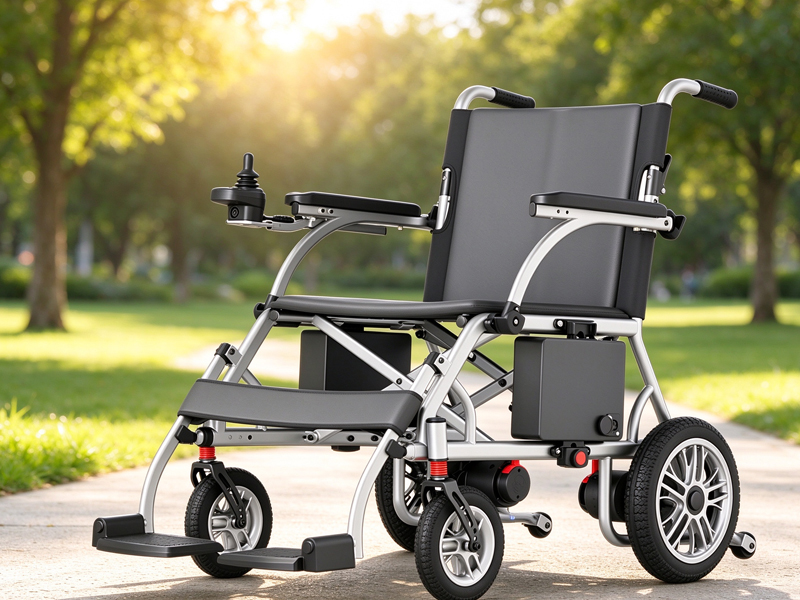
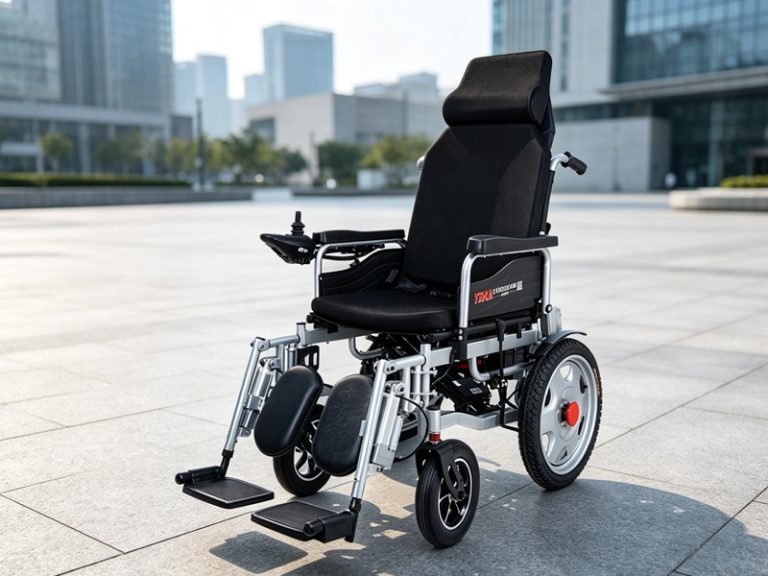
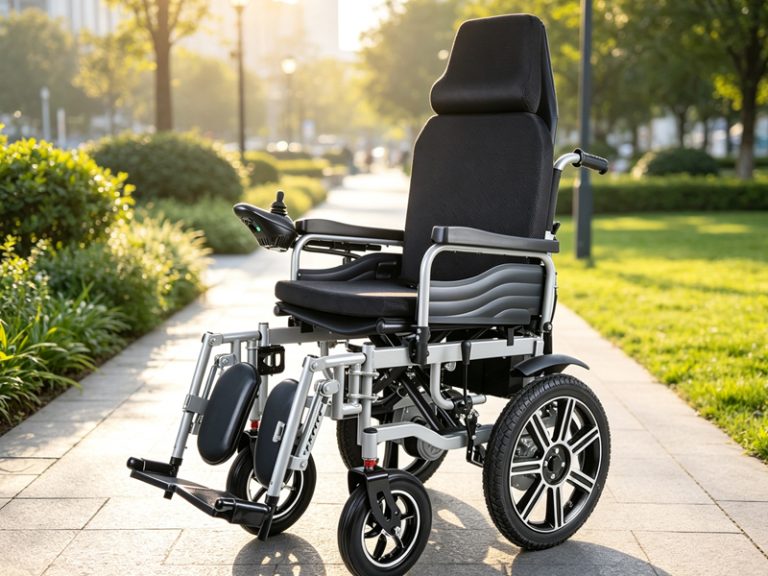
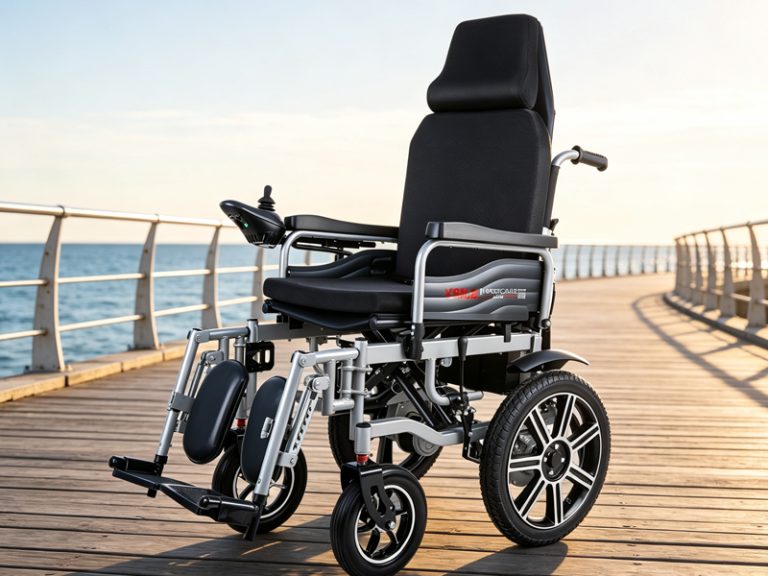
A good wheelchair should fit naturally into a normal routine: moving around the house in the morning, going to a medical appointment, visiting family, shopping at the supermarket, taking a trip with children or grandchildren, or simply getting outside for some fresh air.
That is why lightweight electric wheelchairs for seniors have become increasingly attractive. Compared with traditional heavy power wheelchairs, modern folding models can be much easier to transport, store, and operate. The challenge is that not every lightweight wheelchair is designed for the same type of user.
Some seniors care most about weight. Others need more motor power for outdoor use. Some spend most of their time indoors, while others regularly travel by car or airplane. Battery range, seat comfort, folding size, braking, wheel design, and ease of control can all make a noticeable difference after the wheelchair becomes part of everyday life.
Among the models worth considering, the Iyasocare YSE144, YSE106, and YSE133 take three slightly different approaches to lightweight mobility.
Rather than asking which wheelchair is universally “the best,” it is more useful to ask a better question:
Which lightweight wheelchair fits the senior user’s actual daily routine?
That is the question this guide is designed to answer.
A lightweight wheelchair needs to do more than simply weigh less.
For an older user, the real advantage of a lightweight design becomes apparent when the chair has to be moved, folded, stored, or transported repeatedly.
Imagine a typical weekend.
A family member arrives to take an elderly parent to lunch. The wheelchair needs to come out of the house, be folded, lifted into the trunk, removed again at the destination, and unfolded before use.
If the wheelchair is unnecessarily heavy, every one of those steps becomes harder.
This is particularly important for caregivers. Even when the senior does not personally lift the chair, a family member may need to handle it several times a day.
A folding electric wheelchair can therefore provide benefits that have little to do with motor performance alone.
The most useful features to look for include:
The key is balance.
A wheelchair that is extremely light but uncomfortable may not be suitable for someone who spends several hours a day sitting in it. On the other hand, a powerful wheelchair that is too heavy to load into a car may be inconvenient for someone who travels frequently.
Modern folding electric wheelchairs are increasingly designed around this balance between portability, comfort, performance, and independence.
The three models discussed here are not identical products with slightly different specifications. Each one addresses a different set of priorities.
The YSE144 puts more emphasis on carbon fiber construction and dual-motor performance.
The YSE106 combines an aluminum alloy frame with a compact folding design and relatively strong 250W × 2 motors.
The YSE133 takes lightweight portability particularly seriously, with an aluminum frame weighing approximately 17 kg without the battery and a flexible dual-battery configuration.
1. YSE144 Carbon Fiber Folding Electric Wheelchair with Dual Motors
For seniors who want a lightweight wheelchair but do not want to give up outdoor performance, the YSE144 Carbon Fiber Folding Electric Wheelchair with Dual Motors is an interesting option.
View the YSE144 Carbon Fiber Folding Electric Wheelchair
The first thing that separates the YSE144 from conventional power wheelchairs is its carbon fiber folding construction.
Carbon fiber has become increasingly popular in lightweight mobility equipment because it offers a strong strength-to-weight ratio. For a senior or caregiver who frequently needs to transport a wheelchair, reducing unnecessary frame weight can make a meaningful difference.
But weight is only part of the story.
The YSE144 also uses a dual-motor configuration, which makes the model particularly relevant to users who spend considerable time outdoors.
Outdoor mobility is different from indoor mobility.
Inside a home, a wheelchair may primarily travel over smooth floors and relatively short distances. Outside, the situation can involve sidewalks, ramps, parking lots, pavement transitions, gentle slopes, and uneven surfaces.
A dual-motor system can provide stronger and more controlled driving performance in these situations. Iyasocare’s published information describes the YSE144 as a carbon-fiber folding electric wheelchair designed to combine lightweight portability with stronger dual-motor performance.
This makes the YSE144 particularly interesting for an active senior who does not want a wheelchair that feels limited to indoor environments.
It can also make sense for families who frequently travel by car.
The folding design means the chair can be stored more conveniently than many traditional full-size electric wheelchairs. That matters when trunk space is limited or when a wheelchair has to be loaded and unloaded frequently.
Why consider the YSE144?
The YSE144 is worth looking at if the senior user:
It is also worth remembering that “lightweight” does not automatically mean “easy to lift for every person.” The complete transport weight depends on the battery configuration and accessories, so buyers should always check the actual shipping or ready-to-use weight before purchasing.
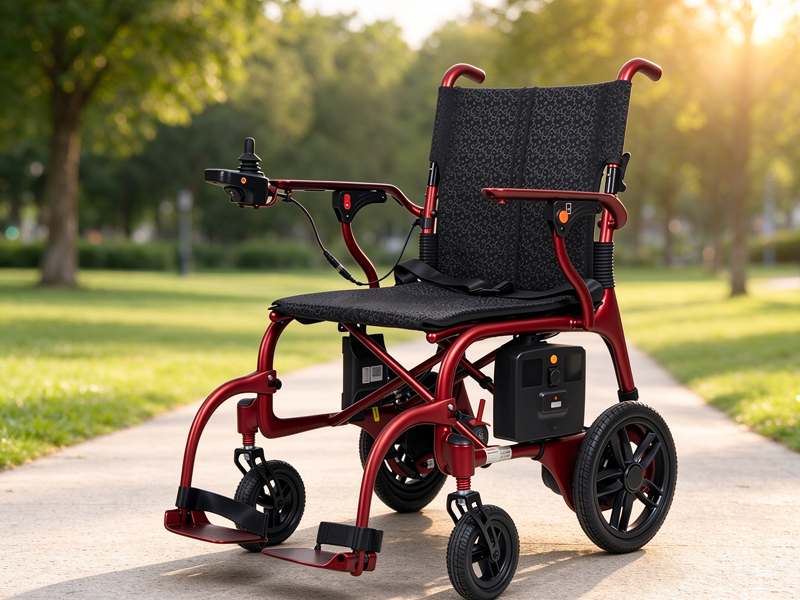
2. YSE106 Foldable Electric Wheelchair
The YSE106 Foldable Electric Wheelchair takes a more traditional lightweight approach by combining an aluminum alloy frame, folding construction, dual motors, and lithium battery power.
View the YSE106 Foldable Electric Wheelchair
According to the published specifications, the YSE106 has a net weight of approximately 16.8 kg, with a listed gross weight of around 18 kg. It uses two 250W hub motors and a 24V 6Ah lithium battery. The listed maximum speed is 8 km/h, while the stated driving range is approximately 10–15 km depending on conditions.
Those numbers tell an interesting story.
The YSE106 is not designed simply as a basic indoor mobility chair. Its 250W × 2 motor configuration gives it a relatively strong power system for a lightweight folding wheelchair.
The published specifications also list a climbing capability of up to 15 degrees, although actual performance on slopes will naturally depend on factors such as user weight, battery condition, surface type, temperature, and gradient.
The chair also includes manual and electronic parking brake functions, flip-up armrests, and an adjustable push handle. Its compact folding design makes it easier to store and transport.
This combination can be useful for seniors whose daily routine involves both indoor and outdoor movement.
Think about someone who lives in a suburban home.
During the week, the wheelchair may be used inside the house and around the neighborhood. On weekends, it may be folded and placed into a vehicle for a shopping trip or family visit.
For that kind of routine, a chair needs to be reasonably light without becoming too limited in terms of motor output.
The YSE106 is also interesting because of its relatively compact seat dimensions. The published specifications list a 36 cm seat width and 36 cm seat depth. That can be convenient for smaller users, but it also means buyers should measure the user’s seating requirements carefully before ordering.
Who may prefer the YSE106?
The YSE106 may be a practical option for seniors who want:
It is especially important to check the seat width before buying. Lightweight does not necessarily mean universally suitable, and correct seating dimensions are just as important as frame weight.
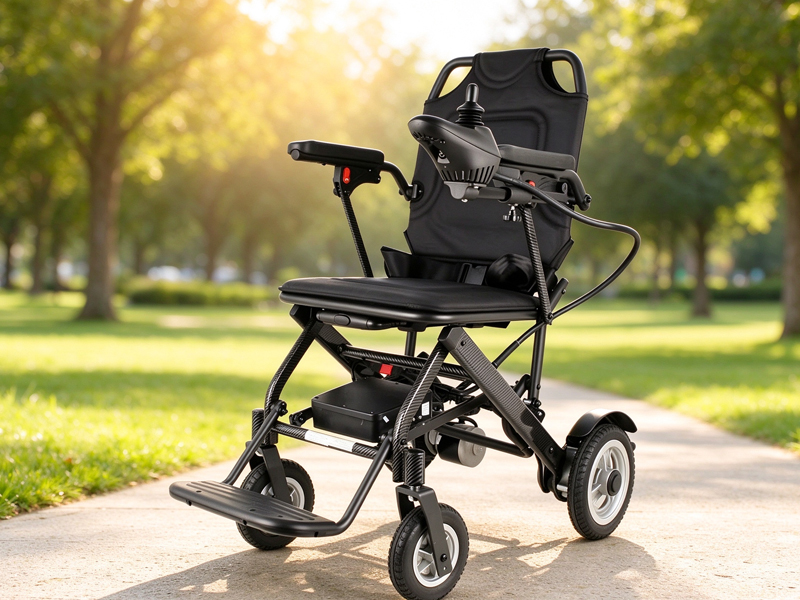
3. YSE133 Lightweight Aluminum Electric Wheelchair
If the main priority is reducing the physical burden of lifting and transporting the wheelchair, the YSE133 deserves close attention.
View the YSE133 Lightweight Aluminum Electric Wheelchair
The YSE133 uses an aluminum alloy frame and weighs approximately 17 kg without the battery. Iyasocare lists the complete weight at about 18.5 kg with a 6Ah battery and approximately 19.5 kg with a 12Ah battery.
For a caregiver who has to lift a wheelchair into a vehicle regularly, that difference matters.
The YSE133 also has a folding size of approximately 90 × 33 × 82 cm, allowing it to be stored more efficiently when it is not being used.
One of the most practical features is its dual lithium battery configuration.
Available battery options include:
The manufacturer lists a driving range of approximately 5–20 km, depending on the battery configuration and driving conditions.
This gives buyers some flexibility.
A user who mainly moves around the home or takes short trips may not need the largest battery configuration. Someone who regularly spends more time outdoors may prefer a higher-capacity option.
The YSE133 uses two 200W brushless motors and has a listed maximum speed of 6 km/h, with a climbing ability of up to 9 degrees. It also uses an electromagnetic braking system.
The comfort features are worth mentioning because this is where some lightweight wheelchairs can disappoint.
The YSE133 includes a breathable backrest, leather seat cushion, flip-up armrests, front-wheel shock absorption, PU non-inflatable tires, and a three-position adjustable footrest. These details are not just cosmetic. For a senior who spends significant time in the chair, seat support, leg positioning, and vibration control can have a noticeable effect on the everyday experience.
Who is the YSE133 designed for?
The YSE133 makes particular sense for users who prioritize:
For seniors who frequently rely on a spouse, child, or caregiver to move the wheelchair, the lightweight construction can be especially practical.
Rather than creating a simple “winner” list, it is more useful to look at what each model is trying to accomplish.
| Feature | YSE144 | YSE106 | YSE133 |
|---|---|---|---|
| Frame | Carbon fiber | Aluminum alloy | Aluminum alloy |
| Motor setup | Dual motor | 250W × 2 hub motors | 200W × 2 brushless motors |
| Folding design | Yes | Yes | Yes |
| Battery | Configuration dependent | 24V 6Ah lithium | 24V 6/12/20Ah lithium options |
| Listed range | Configuration dependent | Approx. 10–15 km | Approx. 5–20 km |
| Maximum speed | Check current configuration | 8 km/h | 6 km/h |
| Climbing capability | Configuration dependent | Up to 15° listed | Up to 9° listed |
| Main emphasis | Lightweight + performance | Lightweight + motor output | Lightweight + portability |
| Suitable use | Active outdoor mobility and travel | Everyday indoor/outdoor use | Everyday mobility and transportation |
The specifications above come from Iyasocare’s published product and related product information; actual performance can vary with battery selection, rider weight, terrain, temperature, and operating conditions.
This is an important distinction.
A senior who spends 90% of the time inside the home does not necessarily need the same configuration as someone who visits shopping centers, parks, restaurants, and community areas several times a week.
Likewise, someone whose family frequently transports the wheelchair may place a much higher value on weight and folded dimensions than someone who leaves the wheelchair in one location most of the time.
It is easy to become distracted by motor wattage, maximum speed, and battery capacity.
Those specifications matter, but they should not be the first things a senior or caregiver considers.
Start with the daily routine.
If the wheelchair will mostly be used at home
Look closely at:
A wheelchair that fits comfortably through doors and around furniture can be more useful than a more powerful model that feels oversized indoors.
If the wheelchair will be used outdoors frequently
Motor configuration, wheel size, braking, battery range, and climbing capability become more important.
The YSE144’s dual-motor carbon-fiber concept may appeal to active outdoor users, while the YSE106’s dual 250W hub motors offer another approach to combining lightweight construction with stronger power output.
If transportation is the biggest concern
Weight should move near the top of the checklist.
The YSE133 is particularly notable here because its aluminum frame is listed at approximately 17 kg without the battery.
But remember to think about complete lifting weight, not just frame weight.
Battery capacity, accessories, cushions, and other components can change the final weight.
A wheelchair can be lightweight, powerful, and easy to fold, but if the seat becomes uncomfortable after an hour, it may not work well as an everyday chair.
This is especially important for seniors who spend several hours in the wheelchair.
Before buying, pay attention to:
Seat width:
The user should have enough room to sit naturally without excessive side pressure.
Seat depth:
The seat should provide adequate thigh support without pressing uncomfortably behind the knees.
Backrest:
Breathable materials can be useful for longer periods of sitting.
Armrests:
Flip-up armrests can make transfers easier.
Footrest:
Adjustability helps accommodate different leg lengths and sitting positions.
The YSE133, for example, includes a breathable backrest, leather seat cushion, flip-up armrests, and a three-position adjustable footrest.
These features are easy to overlook when shopping online, but they often become much more important after the wheelchair is used every day.
Battery range is another area where marketing numbers can sometimes be misleading.
A manufacturer may provide a maximum or estimated range under particular test conditions. Real-world range can change depending on:
For example, Iyasocare lists the YSE133 with battery options from 6Ah to 20Ah and a stated range of approximately 5–20 km.
That does not mean every user will achieve 20 km in normal daily use.
Instead, think about your actual routine.
If the senior typically travels 2–4 km in a day and has access to charging at home, an enormous battery may not be necessary.
If the wheelchair is used for longer outings, shopping trips, parks, medical appointments, or multiple destinations in one day, additional battery capacity may be worth considering.
The goal is not to buy the largest battery.
The goal is to have enough range without adding unnecessary weight.
The real value of a folding wheelchair becomes obvious outside the showroom.
A senior may need to:
If the wheelchair is difficult to fold and transport, every trip becomes a logistical exercise.
A lightweight folding power chair can simplify this routine considerably.
This is one reason models such as the YSE106 and YSE133 can be attractive to families looking for an everyday wheelchair rather than a large stationary power chair. Iyasocare’s current materials emphasize folding construction and portability across its lightweight wheelchair range.
However, buyers should always measure the actual folded wheelchair against their vehicle’s trunk opening.
A chair may technically fit inside a trunk while still being difficult to load because of the trunk opening, depth, or surrounding luggage.
If you are buying a lightweight wheelchair for an elderly parent, spouse, or yourself, try this simple exercise before looking at price.
Write down five typical activities:
Monday: moving around the house
Tuesday: grocery shopping
Wednesday: doctor’s appointment
Saturday: family outing
Sunday: park or neighborhood trip
Then ask:
Your answers will usually reveal the appropriate type of wheelchair more clearly than a specification table.
For example, someone who frequently travels and wants stronger outdoor performance may naturally gravitate toward the YSE144.
Someone looking for a compact aluminum folding chair with relatively strong dual motors may find the YSE106 more relevant.
Someone whose biggest concern is minimizing lifting and transportation effort may want to examine the YSE133 closely.
That is a more useful way to think about the “best lightweight wheelchair for seniors” than simply searching for the lightest model available.
The best lightweight wheelchair for seniors is not necessarily the lightest wheelchair, the fastest wheelchair, or the wheelchair with the largest battery.
It is the one that removes the most friction from everyday life.
For some users, that means choosing the YSE144, where carbon fiber construction and dual motors bring together portability and stronger outdoor performance.
For others, the YSE106 offers an appealing combination of an aluminum alloy folding frame, 250W × 2 motors, lithium battery power, and compact transportation.
And for users who put a particularly high value on low weight, easy storage, comfortable everyday features, and flexible battery options, the YSE133 is a model worth serious consideration. Its approximately 17 kg frame weight without the battery, folding dimensions, dual 200W brushless motors, and available 6Ah/12Ah/20Ah battery configurations give it a practical focus on everyday portability.
Ultimately, the right wheelchair should make life feel less complicated—not more.
Before ordering, measure the user’s seating requirements, doorways, vehicle storage area, and typical travel route. Confirm the complete product weight, battery configuration, maximum user weight, and local transportation requirements with the supplier.
A little planning at the beginning can make a very big difference once the wheelchair becomes part of everyday life.
1. What is the best lightweight wheelchair for seniors for everyday use?
There is no single model that is ideal for every senior because daily mobility needs vary. The YSE144 is designed around lightweight carbon-fiber construction and dual-motor performance, making it relevant for users who frequently travel outdoors. The YSE106 combines an aluminum alloy frame with 250W × 2 motors and a folding design, while the YSE133 emphasizes low weight, folding portability, flexible lithium-battery options, and everyday comfort. The best choice depends on the user’s weight, seating requirements, terrain, travel frequency, and transportation needs.
2. Is a lightweight electric wheelchair suitable for seniors who travel frequently?
Yes. Folding lightweight electric wheelchairs can be particularly convenient for seniors who regularly travel by car because they are easier to store and transport than many traditional full-size power wheelchairs. However, buyers should check the actual folded dimensions, complete weight including the battery, battery transportation rules, and the storage space available in their vehicle before purchasing.
3. Should seniors choose an aluminum or carbon fiber electric wheelchair?
Both materials can be useful, but they serve somewhat different priorities. Carbon fiber is attractive when low weight and portability are important, while aluminum alloy provides a practical lightweight frame for everyday mobility. The decision should not be based on frame material alone. Motor performance, battery range, seat dimensions, braking, folding size, comfort, and the user’s normal environment are equally important. For example, the YSE144 uses a carbon-fiber folding design with dual motors, while the YSE106 and YSE133 use aluminum alloy frames with different motor and battery configurations.