Our Location
Free Trade Tower, Xiyong street.
Chongqing, China

Free Trade Tower, Xiyong street.
Chongqing, China
When an importer, distributor or medical equipment brand begins looking for a new wheelchair supplier, the first question is often simple: Where can we find a reliable OEM CE-certified electric wheelchair manufacturer? The more difficult question comes afterward: how can a buyer determine whether a manufacturer can actually deliver consistent quality, compliant documentation, stable production and long-term support rather than simply offering an attractive quotation?
For electric wheelchairs, supplier selection deserves particular attention. Unlike many ordinary consumer products, a power wheelchair combines mechanical structures, electric motors, controllers, batteries, braking systems, seating systems and user-safety considerations. A manufacturer therefore needs more than production capacity. It needs engineering experience, quality management, testing procedures, export knowledge and the ability to adapt products to different markets.
For overseas distributors and private-label brands, OEM CE-certified electric wheelchair manufacturer is therefore more than a search phrase. It describes a type of manufacturing partner capable of connecting product development, compliance, customization and international supply into one workable process.
The phrase OEM CE-certified electric wheelchair manufacturer contains several concepts that international buyers should evaluate separately.
OEM, or Original Equipment Manufacturing, generally means that a factory can manufacture products according to a customer’s specifications, branding or commercial requirements. Depending on the project, this may involve private labeling, packaging, colors, components, product configuration, manuals or other customized elements.
CE, meanwhile, relates to European conformity requirements. Buyers should not treat a CE mark as a generic guarantee that every product from a factory is automatically compliant with every market requirement. The relevant conformity assessment depends on the product, intended use, applicable legislation and specific configuration. For medical devices sold in Europe, buyers should also examine the manufacturer’s Declaration of Conformity and supporting technical documentation rather than relying only on a logo printed on a brochure.
An experienced OEM CE-certified electric wheelchair manufacturer should therefore be able to discuss compliance documentation clearly. Professional buyers may ask for the applicable Declaration of Conformity, relevant test documentation, product specifications, labeling information and other technical files needed for their target market.
This distinction is particularly important when a distributor is planning to build a private-label wheelchair business. The manufacturer’s compliance status, the specific model’s documentation and the responsibilities of the importer or brand owner may all need to be considered separately.
A distributor rarely needs exactly the same product as every other distributor in the market. European rehabilitation suppliers, Middle Eastern mobility retailers, African medical equipment wholesalers and North American private-label companies may have very different requirements.
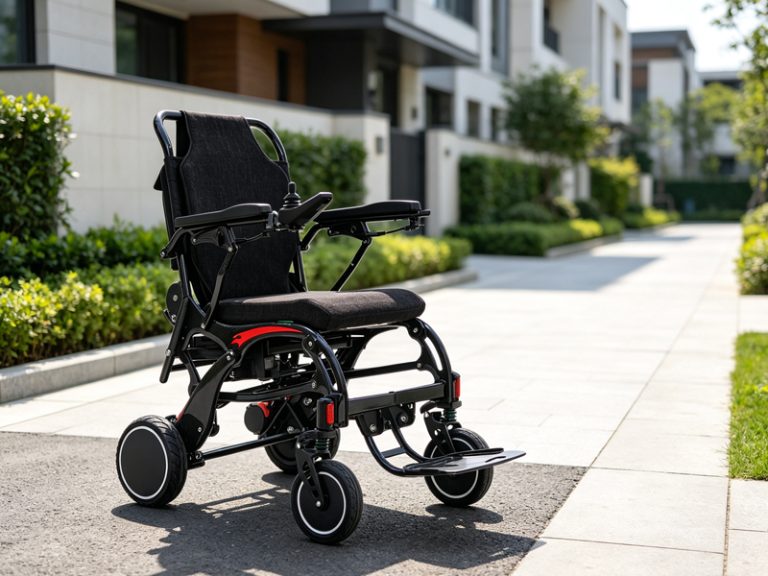
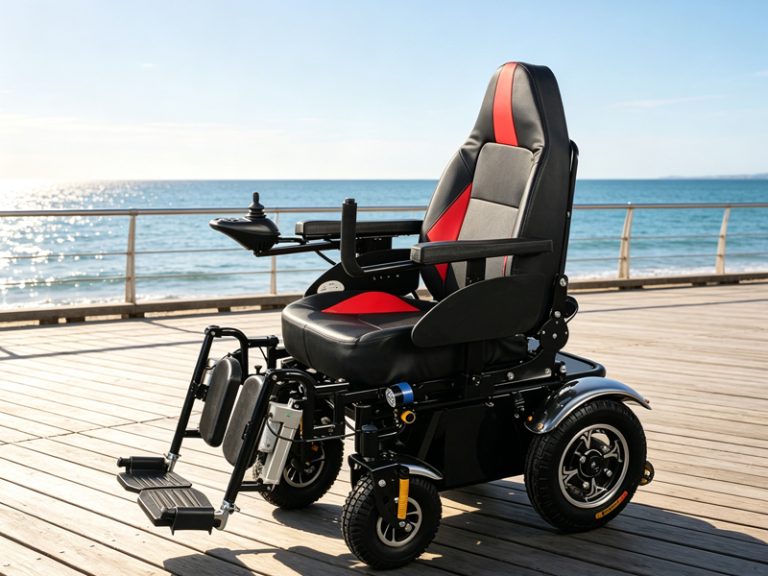
One buyer may need a lightweight folding power wheelchair for urban transportation. Another may require an off-road electric wheelchair with larger tires and a stronger motor. A rehabilitation equipment company may be more interested in standing or reclining functionality, while a hospital supplier may prioritize durability, serviceability and standardized replacement parts.
This is where OEM capability becomes commercially valuable.
A capable OEM CE-certified electric wheelchair manufacturer can potentially help a buyer create a product line rather than simply purchase an existing catalog model. Depending on the factory’s engineering and production capabilities, customization may cover branding, labels, packaging, seating configurations, accessories, colors and selected components.
IYASOCARE describes its OEM/ODM service as a process covering customer requirements, customized solutions, production, delivery and ongoing support. Its service information also mentions customized labeling, packaging design and production support.
For a distributor building its own brand, this can reduce the need to coordinate several different suppliers. Instead of sourcing the frame from one company, electrical system from another and packaging from a third, an integrated manufacturer can potentially provide a more streamlined supply chain.
That does not mean every customization is technically or commercially practical. A professional buyer should always confirm the minimum order quantity, engineering cost, lead time, tooling requirements, certification implications and warranty responsibilities before approving changes.
One of the easiest ways to distinguish a specialist manufacturer from a simple trading company is to examine its product range and production structure.
Electric wheelchairs are not one uniform category. The requirements of a lightweight folding wheelchair can be completely different from those of an all-terrain power chair. A standing wheelchair introduces additional mechanical and safety considerations, while a stair-climbing wheelchair requires another level of structural and control-system engineering.
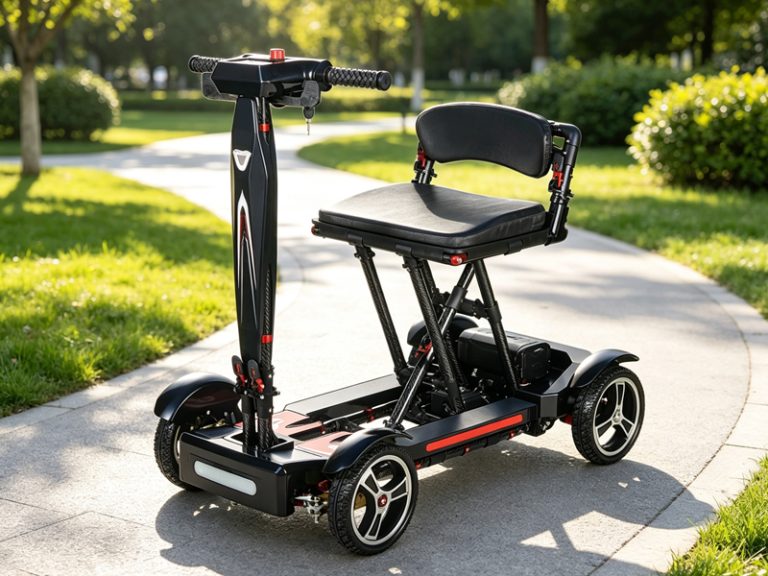
IYASOCARE’s official product catalog currently includes a broad range of mobility categories, including electric wheelchairs, manual wheelchairs, standing wheelchairs, stair-climbing wheelchairs, off-road wheelchairs, children’s wheelchairs, sports wheelchairs, transfer wheelchairs and mobility scooters.
This range can be valuable for distributors because it creates opportunities to build a more complete product portfolio from one manufacturing relationship.
For example, a new mobility equipment distributor could begin with lightweight folding electric wheelchairs and later introduce heavy-duty, standing, reclining or outdoor models. Rather than changing factories every time the product category expands, the distributor can potentially develop several product lines with the same manufacturing partner.
From a procurement perspective, this can simplify communication, product training, spare-parts management and quality-control procedures.
A professional OEM CE-certified electric wheelchair manufacturer should have a production system capable of controlling the product from raw material and components through final assembly and inspection.
An electric wheelchair contains numerous components that influence performance. Motors determine propulsion characteristics. Controllers affect acceleration and responsiveness. Batteries influence range and charging behavior. Braking systems affect stopping performance. Frames determine structural stability. Wheels and tires influence traction and ride characteristics.
A problem in one component can affect the entire product.
For that reason, a manufacturer should ideally have clearly defined quality-control checkpoints rather than relying only on a final visual inspection.
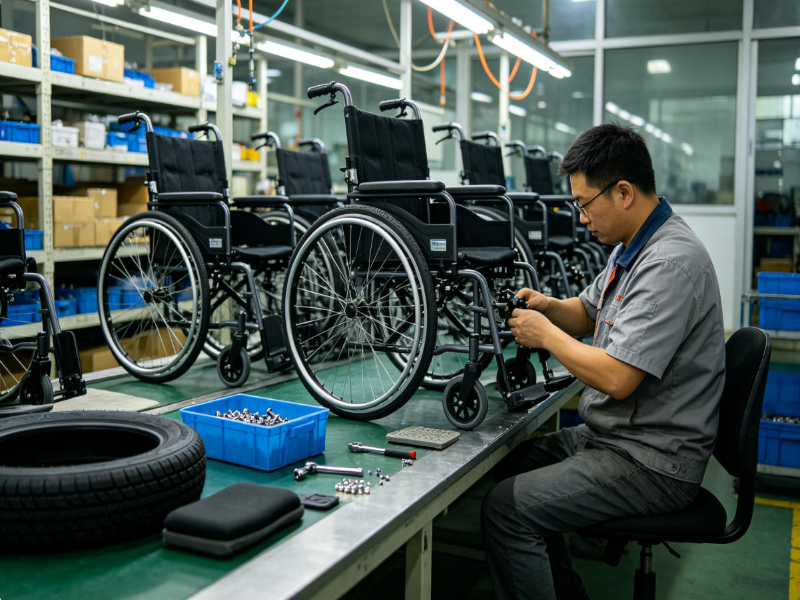
IYASOCARE describes its manufacturing process as covering raw material selection, component manufacturing, assembly, quality inspection and packaging. Its company information also states that its factory includes specialized workshops for stamping, injection molding, welding and assembly, together with multiple production lines.
The manufacturer also states that each wheelchair is tested before leaving the factory.
For an overseas buyer, the next step should be verification. Ask what is tested, how frequently testing occurs, what acceptance criteria are used and whether inspection records can be provided for the products being ordered.
The stronger the manufacturer’s answer, the easier it becomes to assess production reliability.
A successful supplier evaluation should not begin with price. Price matters, but a low unit quotation can become expensive if products arrive with inconsistent quality, incomplete documentation or poor after-sales support.
A practical evaluation can be divided into six areas.
1. Compliance Documentation
Ask the manufacturer for the relevant CE documentation for the exact model you intend to purchase. Do not simply request a generic certificate and assume it covers every product.
Check the product model, manufacturer information, applicable standards and dates. If you are importing into the European market, determine your own obligations as importer, distributor or brand owner as well.
2. Factory Capability
Find out whether the company actually manufactures the products or mainly trades products sourced from other factories.
Ask about production lines, engineering personnel, quality-control staff, monthly capacity and lead times. Factory photographs are useful, but a video factory inspection or physical visit provides stronger evidence.
IYASOCARE states that it operates its own factory, has three modern wheelchair production lines on its company page and has expanded its manufacturing facilities since establishing its factory in 2019.
3. Product Development
A strong OEM CE-certified electric wheelchair manufacturer should be able to explain how new products are developed and modified.
If you request a different controller, battery configuration, seat design or frame specification, the manufacturer should be able to tell you whether the change is technically feasible and whether it affects compliance or testing.
4. Sample Testing
Never rely entirely on photographs.
Order samples and test them under realistic conditions. Examine folding mechanisms, steering, brakes, battery charging, controller response, seat comfort, frame construction and packaging.
For commercial buyers, sample testing also allows the distributor to evaluate whether the manufacturer’s product quality matches the expectations of the target market.
5. Spare Parts and After-Sales Support
Electric wheelchairs require after-sales support. Batteries eventually need replacement. Tires can wear. Controllers and chargers may need servicing. Mechanical components can require adjustment.
A manufacturer that provides spare parts, technical documentation, repair guidance and training can significantly reduce the burden on the distributor.
IYASOCARE states that its partners receive technical guidance, product training and after-sales support, and its service page describes a one-year warranty policy for its wheel products.
The exact warranty terms should always be confirmed in the commercial agreement.
6. Communication and Long-Term Cooperation
The quality of communication before the order is often a useful indicator of what will happen afterward.
If a supplier answers technical questions clearly, provides documents quickly and communicates production progress transparently, it is easier to manage international procurement.
A manufacturer that only talks about price while avoiding questions about documentation, testing and after-sales service should be evaluated carefully.
For distributors searching specifically for an OEM CE-certified electric wheelchair manufacturer, IYASOCARE presents several characteristics worth considering.
First, the company has an extensive mobility product portfolio rather than concentrating on only one wheelchair category. Its catalog includes dozens of electric wheelchair products alongside manual, standing, stair-climbing and off-road models.
Second, the company promotes OEM and ODM cooperation. Its official OEM page describes cooperation from product design through mass production, with engineering support intended to balance functionality, materials, cost and customer requirements.
Third, IYASOCARE states that its products have reached more than 30 countries and regions and highlights international certifications including CE, ISO 13485 and TÜV.
Fourth, the manufacturer provides a broader business-support structure for distributors. Its services include product training, technical support, logistics assistance, marketing resources and customized wholesale services.
These characteristics are particularly relevant to B2B buyers who are not simply looking for a one-time shipment. A distributor normally needs a supplier capable of supporting product launches, repeat orders, spare parts and future model expansion.
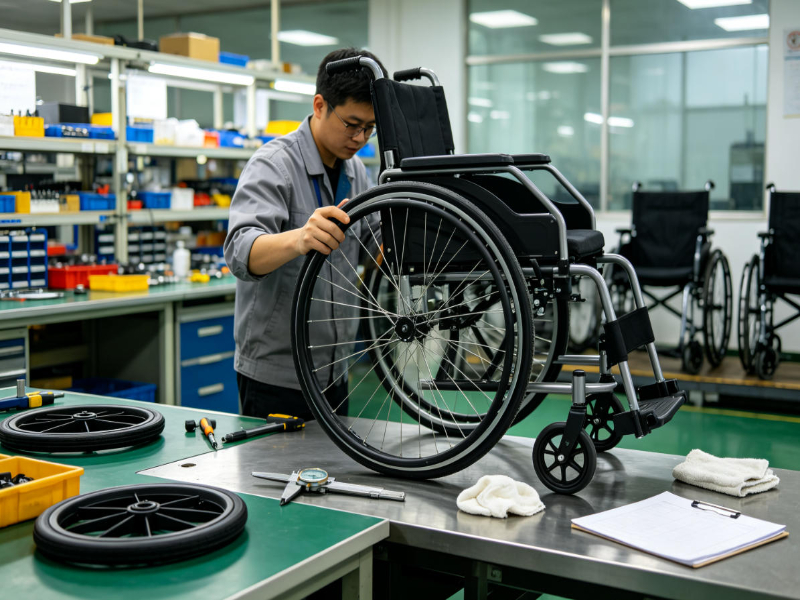
The global electric wheelchair market is increasingly segmented. Customers want products designed for specific lifestyles rather than one generic power wheelchair.
For travel-focused users, lightweight folding electric wheelchairs can make transportation easier. For people living in rural environments, all-terrain electric wheelchairs may offer greater practicality. Users who need positioning flexibility may prefer reclining or standing models. Other customers may prioritize compact dimensions for indoor use.
This diversity creates an opportunity for distributors.
Instead of selling one electric wheelchair to everyone, a professional mobility business can develop several clearly defined product categories. The key is to select a manufacturer capable of supporting this strategy.
IYASOCARE’s catalog demonstrates this multi-category approach, including lightweight electric wheelchairs, carbon-fiber models, off-road products, standing wheelchairs and stair-climbing designs.
For a private-label business, this can also create stronger brand consistency. Customers may encounter different wheelchair models while still recognizing the same brand identity, packaging and service system.
That is one of the strongest commercial arguments for developing an OEM relationship instead of repeatedly buying unrelated products from different trading companies.
It is tempting to believe that finding a “CE-certified” supplier solves the compliance problem. In practice, professional buyers should go further.
The first question should be: Which product is certified?
The second should be: What documentation supports that claim?
The third should be: Does the exact configuration I am purchasing correspond to the documented product?
The fourth should be: What responsibilities do I have in my target market?
These questions become especially important when the buyer intends to modify the product under its own brand.
A change to an important component or product configuration may affect technical documentation or conformity considerations. Therefore, OEM customization should be discussed with the manufacturer before production begins rather than after the product has already been modified.
IYASOCARE’s official website provides access to its company information, certification information and OEM/ODM services, giving prospective buyers a starting point for supplier verification.
The best relationship between a wheelchair factory and distributor is not based entirely on the lowest purchase price.
A long-term partnership should create value on both sides.
The manufacturer needs predictable orders, realistic product requirements and clear feedback from the market. The distributor needs stable quality, reliable delivery, technical support, competitive pricing and continuous product development.
When these elements work together, OEM cooperation becomes more than private labeling.
The manufacturer can learn which features customers prefer. The distributor can use that information to improve its product portfolio. New models can be introduced based on real market demand rather than assumptions.
This is particularly valuable in the electric wheelchair industry because user needs vary significantly between countries.
A model that performs well in a European urban market may not be the best choice for an outdoor-focused market. Battery requirements, road conditions, customer expectations and purchasing power can all differ.
A flexible OEM CE-certified electric wheelchair manufacturer can help distributors adapt their product strategy accordingly.
Before moving from sample testing to mass production, prepare a clear supplier checklist.
Ask for the exact product specification and model number. Confirm the motor configuration, battery type and capacity, controller, charger, dimensions, maximum user weight and standard accessories.
Confirm packaging specifications and whether private-label packaging is available. Discuss logo placement, product labels, manuals, warning information and language requirements.
Then clarify production lead time, sample lead time, payment terms, quality standards, inspection procedures, warranty conditions and spare-parts availability.
If the product is intended for Europe, discuss CE-related documentation and conformity responsibilities before the purchase order is finalized.
For larger orders, consider a pre-shipment inspection. A third-party inspection can provide an additional layer of confidence before the goods leave the factory.
These steps may take more time at the beginning, but they can prevent much larger problems later.
For a mobility equipment company, the wheelchair factory behind the product can influence the reputation of the brand itself.
If a wheelchair performs reliably, customers are more likely to trust the distributor. If replacement parts are readily available, after-sales service becomes easier. If documentation is complete, market entry becomes more manageable. If product development is consistent, the brand can continue expanding.
That is why choosing an OEM CE-certified electric wheelchair manufacturer should be considered a strategic business decision rather than simply a purchasing decision.
IYASOCARE’s OEM/ODM model is designed around this type of relationship. The company describes partnerships with distributors, regional agents, medical institutions and private-label customers, while offering product customization, technical support and logistics assistance.
For companies entering the mobility market or expanding an existing wheelchair portfolio, this integrated approach can simplify sourcing and provide a foundation for long-term growth.
Finding the right OEM CE-certified electric wheelchair manufacturer requires more than searching for a factory with competitive prices. A reliable partner should combine manufacturing capability, engineering knowledge, product quality, compliance documentation, customization options and after-sales support.
CE-related documentation should be verified for the specific products being purchased. OEM customization should be discussed carefully because changes to product configuration can affect technical and compliance considerations. Samples should be tested before mass production, while quality-control procedures, spare parts and warranty arrangements should be established in advance.
IYASOCARE is one manufacturer that overseas buyers can evaluate as part of this process. Based in Chongqing, China, the company states that it manufactures a broad range of mobility equipment, provides OEM/ODM services and supports international customers. Its official information highlights CE, ISO 13485 and TÜV certification credentials and reports partnerships covering more than 30 countries and regions.
Its product range also extends beyond standard power wheelchairs to include folding, off-road, standing and stair-climbing models, allowing distributors to develop broader mobility portfolios through one supplier.
Ultimately, the best OEM CE-certified electric wheelchair manufacturer is not necessarily the factory offering the cheapest quotation. It is the partner that can consistently provide the right product, appropriate documentation, dependable quality, responsive communication and sustainable support as your business grows.
For importers, wholesalers, rehabilitation equipment companies and private-label brands, that difference can determine whether an electric wheelchair becomes simply another product in the catalog—or the foundation of a successful mobility business.
1. What should I look for in an OEM CE-certified electric wheelchair manufacturer?
Look beyond the CE mark. Check the manufacturer’s exact compliance documentation, production capability, OEM/ODM experience, quality-control process, sample quality, spare-parts availability, warranty terms and international export experience. The manufacturer should also be able to explain how customization affects the product and its documentation.
2. Can I customize an electric wheelchair under my own brand?
Yes, OEM/ODM projects can include different levels of customization, depending on the manufacturer and product. Common possibilities include branding, labels, packaging, manuals, colors and selected product configurations. IYASOCARE specifically promotes OEM/ODM cooperation and customized labeling and packaging services.
3. Is IYASOCARE suitable for overseas electric wheelchair distributors?
IYASOCARE is positioned by its official website as an international wheelchair manufacturer serving distributors and OEM/ODM customers. Its product portfolio includes electric, manual, standing, stair-climbing and off-road wheelchairs, while the company states that its products are supplied to more than 30 countries and regions. It also highlights CE, ISO 13485 and TÜV certifications.