Our Location
Free Trade Tower, Xiyong street.
Chongqing, China

Free Trade Tower, Xiyong street.
Chongqing, China
Choosing a power wheelchair is about more than finding a comfortable seat or a reliable motor. For people who spend much of the day in a wheelchair, the ability to change sitting positions can make a meaningful difference in comfort, daily activities, skin health, and long-term seating support.
Two features often come up during the selection process: power tilt and power recline. At first glance, they seem almost identical. Both allow the user to lean backward, both can help relieve discomfort, and both are available on many complex rehabilitation power wheelchairs. However, they work in different ways and serve different purposes.
Understanding the difference between power wheelchair tilt vs. recline can help you ask better questions, compare seating systems more confidently, and identify the features that may be most useful for your everyday needs.
The short answer is that tilt is primarily designed to change the orientation of the entire seating system while maintaining the seat-to-back angle, whereas recline changes the angle between the seat and backrest. Tilt is often an important tool for pressure redistribution and postural support. Recline can provide greater flexibility for repositioning, personal care, and accommodating certain limitations in hip movement.
The easiest way to understand these two functions is to look at what actually moves when you press the control on your wheelchair.
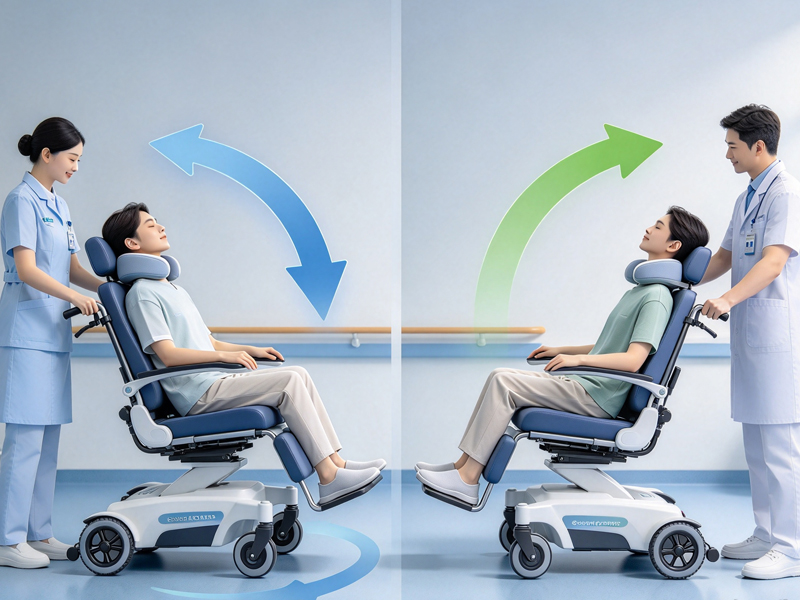
Power tilt moves the seating system as a whole. The seat, backrest, and typically the foot support move backward together, keeping their relative angles essentially unchanged. If your hips and knees are positioned at particular angles before the movement, those angles generally remain similar as the entire system tilts.
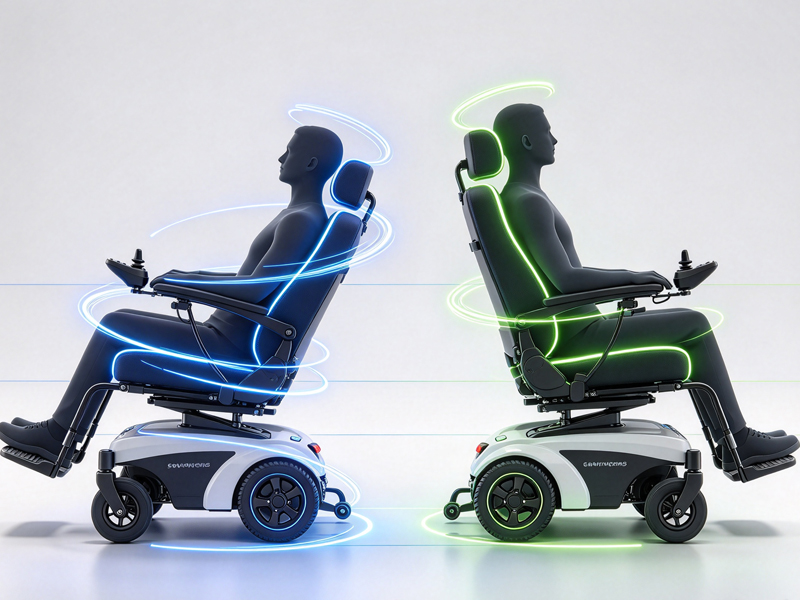
Power recline works differently. Instead of rotating the complete seating system, the backrest moves backward relative to the seat. This opens the angle between your torso and thighs, allowing you to move from an upright sitting position toward a more reclined posture.
Imagine sitting in a chair while someone gently tips the entire chair backward without changing your position inside it. That is the basic principle of tilt. Now imagine keeping the seat in place while moving the backrest away from your body. That is recline.
| Feature | Power Tilt | Power Recline |
|---|---|---|
| What moves? | The seating system tilts as a unit | The backrest moves relative to the seat |
| Seat-to-back angle | Remains essentially fixed | Becomes more open |
| Primary benefit | Pressure redistribution and postural support | Repositioning and changes in hip angle |
| Skin considerations | Can reduce pressure on weight-bearing areas when appropriately positioned | May increase skin shear as the body moves against the cushions |
| Common applications | Pressure management, fatigue management, supported sitting | Personal care, accommodating hip limitations, changing posture |
The distinction matters because changing your position is not the same as redistributing pressure effectively. A movement that feels relaxing may not provide the particular seating support your body needs.
It is also worth remembering that wheelchair models differ. The available movement range, footrest configuration, head support, and control options depend on the equipment. A clinical seating assessment helps determine which combination is appropriate.
When you sit for hours at a time, your body places sustained pressure on several areas of the seating surface. The sitting bones, commonly called the ischial tuberosities, carry a substantial portion of your weight in an upright position. Depending on your posture and seating system, pressure may also affect the sacrum, buttocks, thighs, and other areas.
For people who can stand up, walk around, or shift their weight independently, changing position throughout the day may come naturally. For someone with limited strength, reduced sensation, or restricted movement, those adjustments can be difficult or impossible without assistance.
This is where a tilt-in-space power wheelchair can become especially valuable.
By rotating the entire seating system backward, tilt changes how body weight is distributed across the seat and backrest. Instead of placing as much of the load on the same sitting surfaces, a properly configured tilt position can transfer some of that load toward the back and thighs.
The goal is not simply to lean back. It is to change the loading pattern in a controlled way while maintaining a supported posture.
This distinction is particularly important for wheelchair users who have a higher risk of pressure injuries. People with spinal cord injuries, advanced neurological conditions, significant muscle weakness, or reduced sensation may not receive reliable warning signals when prolonged pressure begins to damage their skin.
For these users, power tilt can provide a practical way to change position without requiring a physical transfer out of the wheelchair.
However, tilt is not a guarantee against pressure injuries. Its effectiveness depends on the angle achieved, how long the position is maintained, the user’s anatomy, cushion selection, overall posture, and individual skin condition. Regular skin checks, appropriate seating, and a personalized pressure management plan remain important.
A common mistake is assuming that a very small backward movement automatically provides adequate pressure relief. Clinical evidence suggests that the degree of tilt matters, and the most appropriate angle varies from person to person. Your physical therapist, occupational therapist, or seating specialist can help establish a suitable routine rather than relying on a universal setting.
Tilt may also be useful when prolonged upright sitting contributes to fatigue or discomfort. A supported change in orientation can allow some users to rest while remaining in their wheelchair. For individuals who experience symptoms associated with changes in blood pressure or upright tolerance, positioning may also be part of a broader clinical management plan. These effects are individual, so anyone with dizziness or suspected orthostatic hypotension should obtain professional guidance before changing their seating routine.
In practical terms, tilt is often worth considering when independent weight shifting is limited, pressure management is a priority, or maintaining a stable relationship between the torso and pelvis is important.
Power recline addresses a different set of needs. Rather than moving the whole seating system, it changes the relationship between the backrest and seat, allowing the user to open the angle between the torso and thighs.
That extra range of movement can be useful when an upright sitting posture becomes uncomfortable or when daily care requires a more horizontal position.
Consider someone who has difficulty tolerating a fixed hip angle throughout the day. Certain musculoskeletal conditions, limited hip extension, or contractures can make conventional sitting positions uncomfortable. A recline function may allow the seating system to accommodate a more open hip angle, provided the movement is appropriate for that person’s range of motion.
Recline can also support personal care routines. Depending on the wheelchair configuration and the individual’s clinical needs, a more reclined position may make some dressing, bladder management, or catheter-related tasks easier to perform. This can reduce the need for certain transfers and may simplify care for both the wheelchair user and their caregiver.
The important qualification is that not every care task can be performed safely in a reclined wheelchair. The user’s medical needs, equipment setup, transfer requirements, and caregiver training all matter.
Some people also appreciate recline because it allows them to rest between activities. After spending several hours attending appointments, working, or socializing, changing the backrest angle may provide a welcome break from an upright posture.
Still, comfort alone does not tell the whole story.
When the backrest reclines, the body can slide or move relative to the seat and back cushion. This movement creates shear forces within the skin and underlying tissues. Shear is different from direct pressure: it occurs when tissues experience opposing forces, particularly as the body shifts against a supporting surface.
For someone who is vulnerable to skin breakdown, repeated or poorly managed sliding can be a concern. Returning from a reclined position to upright sitting may also change pelvic alignment or leave the user sitting farther forward than intended.
That does not mean recline should be avoided. It means the feature needs to be selected and used with attention to positioning, skin protection, and the individual’s ability to tolerate movement.
A well-designed seating system may incorporate mechanisms that help manage these changes, and combining recline with tilt can improve positioning options. The correct technique should be demonstrated by a qualified seating professional.
Recline is therefore particularly relevant when changing the hip angle, accommodating specific movement limitations, or supporting necessary care activities is a major part of daily life.
If your primary concern is preventing pressure injuries, the comparison becomes more straightforward, although the clinical details still matter.
Tilt is commonly used as a pressure redistribution strategy because it changes the orientation of the entire seating system without substantially changing the angle between the seat and backrest. This can help unload vulnerable areas while preserving a more consistent seated posture.
Recline alone may change pressure distribution in some circumstances, but it can also introduce additional shear as the user moves against the seating surfaces. It should not be treated as an automatic substitute for a properly prescribed tilt-based pressure management routine.
Research and professional seating guidance indicate that the effects of tilt and recline depend on the angles used and whether the functions are combined. Small adjustments may not produce the same effects as larger, clinically appropriate movements.
For that reason, it would be misleading to say that every wheelchair user should tilt by exactly the same amount or at precisely the same interval. Some clinical guidance uses scheduled position changes at intervals such as 15–30 minutes for people who cannot independently shift their weight, but the appropriate angle, duration, and frequency should be individualized.
A person with a history of pressure injuries may need a different plan from someone who has good sensation and can independently reposition. Existing wounds, cushion performance, posture, daily activity, and other medical considerations can all affect the decision.
The Rehabilitation Engineering and Assistive Technology Society of North America (RESNA) has published professional guidance on tilt, recline, and elevating leg rests, emphasizing their potential role in pressure management, positioning, comfort, and other functional needs. Its literature updates are useful background for understanding why these functions should be prescribed according to individual requirements rather than chosen solely by preference.
The practical takeaway is simple: if pressure redistribution is the main reason you are considering a power seating option, ask your clinician specifically how tilt will be used, what angles are appropriate, and how the plan fits with your cushion and skin care routine.
Tilt may be particularly helpful for people who spend long periods in their wheelchair and cannot reliably shift their weight without assistance.
For example, a person living with a spinal cord injury may have limited sensation or voluntary movement below the level of injury. Without an effective way to reposition, the same areas of the body may remain under pressure for extended periods.
Someone with amyotrophic lateral sclerosis (ALS), muscular dystrophy, or advanced multiple sclerosis may experience progressive weakness that makes independent weight shifting increasingly difficult. A power tilt system can allow the person to adjust their seating position through a joystick, switch, or another adapted control.
Tilt may also be useful for people who need a more stable relationship between the pelvis and torso while changing position. Because the seating system moves together, the user can lean backward without opening the hip angle in the same way that recline does.
For some wheelchair users, this can make position changes easier to tolerate during everyday activities, including reading, working at a desk, or spending time with family.
That said, a diagnosis alone does not determine whether tilt is necessary. Two people with the same condition may have very different strength, sensation, posture, skin risk, and functional abilities.
The right question is not simply whether someone has a particular medical condition. It is whether the feature addresses a documented need that cannot be managed adequately through the person’s existing seating arrangement and movement strategies.
Recline may be more relevant when the primary need involves changing the hip angle or achieving a position that cannot be reached comfortably with tilt alone.
People with certain hip contractures or restricted hip movement may require a seating system that accommodates their available range of motion. Forcing a person into a standard upright position when their joints cannot comfortably tolerate it can compromise posture and comfort.
A recline mechanism may help accommodate these limitations, but the range of motion must be assessed carefully. The goal is to support a comfortable, functional position rather than force the body into an angle it cannot safely achieve.
Recline can also benefit users whose care routines involve specific positioning requirements. For instance, certain dressing or catheter-related tasks may be easier when the backrest moves farther backward. This can be especially relevant when transfers require considerable effort or assistance.
Caregivers may find a suitable reclining configuration helpful because it creates more options for supported repositioning. However, convenience should never override safe transfer practices, skin protection, or clinical instructions.
It is equally important to distinguish between wanting to rest and needing a recline function. Some users can achieve their comfort goals through tilt, an appropriately adjusted backrest, or other seating features. Others require the additional movement that recline provides.
A seating assessment helps determine which situation applies.
For some people, the most useful solution is not choosing one feature over the other. It is choosing a power wheelchair that combines both.
A tilt-and-recline system provides two different ways to change position. Tilt can help redistribute pressure while maintaining a relatively consistent hip angle. Recline can open that angle when additional postural movement or a particular care position is needed.
Together, these functions provide more flexibility than either one alone.
Imagine a wheelchair user who spends most of the day seated, cannot independently perform effective weight shifts, and also needs a more open hip position for comfort or personal care. Tilt may address the first requirement, while recline may address the second.
The combination allows the user or caregiver to select a position according to the activity and the person’s needs at that moment.
However, having more features does not automatically mean having a better wheelchair. A combined system can increase equipment complexity, affect the overall size and weight of the chair, and require more attention to setup and training. Depending on the model, it may also influence cost, maintenance requirements, and available funding.
The important consideration is whether each function serves a distinct, documented purpose.
When evaluating a combination system, ask your seating specialist to demonstrate how tilt and recline interact, whether the footrests need to move with either function, and how the system maintains support as the user changes position.
It is also worth testing the controls. A person who can operate a joystick independently may need a different control arrangement from someone who uses a head switch, a specialty switch, or caregiver-operated controls.
The best seating system is one that supports the person’s actual routine, not simply the one with the longest feature list.
Once you understand the difference between tilt and recline, the next step is to look beyond the feature names. A suitable power wheelchair needs to work with your body, your environment, and the activities you want to perform.
Start with your daily sitting routine. How many hours do you typically spend in the chair? Can you shift your weight without assistance? Do you experience discomfort after sitting upright for a while? Are there specific care tasks that require a more reclined position?
These questions help clarify whether the priority is pressure redistribution, postural accommodation, personal care, or a combination of needs.
Next, consider your current seating support. Cushion type, backrest shape, pelvic positioning, head support, and footrest configuration all influence how a tilt or recline system feels and functions. Adding a power movement feature to a poorly fitted seating system will not necessarily resolve the underlying problem.
The physical environment matters, too. Some wheelchairs need additional clearance behind the user when the backrest reclines. Other seating configurations may change the chair’s overall dimensions as the seat tilts. If you frequently use narrow doorways, work at a table, or travel in a vehicle, these details deserve attention before you make a decision.
Think about controls and independence as well. Can you operate the seating functions yourself? Are the controls easy to reach? Would a different switch position make the system more accessible? These practical details can determine whether you use the feature regularly or find it difficult to operate.
Finally, arrange a seating evaluation with an appropriately qualified physical therapist, occupational therapist, or assistive technology professional. For complex rehabilitation equipment, an experienced seating and mobility specialist can help coordinate the clinical assessment, equipment trial, and configuration.
Whenever possible, test the proposed seating functions in a real-world setting. Pay attention to comfort, pelvic alignment, head support, how easily you can return to an upright position, and whether the movement interferes with activities such as eating, reaching, or using a desk.
A few minutes in a showroom may reveal whether a control feels intuitive, but a thorough evaluation should also consider longer periods of use and the demands of your everyday routine.
For buyers in the United States, insurance coverage may influence which power seating features are available.
Medicare and many private insurers evaluate power seating options according to specific coverage requirements and medical necessity. Approval is not based simply on whether a feature would be convenient or more comfortable.
Documentation may need to explain why the person requires a particular function. For tilt, relevant clinical concerns can include an inability to perform adequate independent weight shifts, increased risk of pressure injury, or a need for supported repositioning. For recline, documentation may address functional positioning requirements or limitations that make changes in the hip angle necessary.
If both features are requested, the clinical rationale should explain what each one contributes. A combined system should not be assumed to qualify simply because it offers more options.
Coverage rules, equipment classifications, and documentation requirements can vary with the payer and the circumstances. Before committing to a purchase, confirm the current requirements with your clinician, equipment supplier, and insurance provider.
It is also sensible to ask whether the quoted configuration includes all necessary seating components, controls, and support accessories. A wheelchair base alone may not provide the positioning capabilities required for your needs.
Good documentation and a proper seating evaluation can help ensure that the requested equipment is connected to a clear clinical purpose.
When comparing power wheelchair tilt vs. recline, it is easy to focus on the mechanics and forget the person who will use the chair every day.
Tilt is often the more relevant starting point when pressure redistribution and supported repositioning are central concerns. Recline becomes especially important when the user needs a wider hip angle, specific care positions, or additional flexibility in posture.
For people with overlapping needs, a combination of tilt and recline may offer the most useful range of movement.
But there is no universal winner. A feature that makes one person more comfortable may be unnecessary or less suitable for someone else. Medical history, skin condition, joint mobility, posture, transfer needs, and personal routines all influence the decision.
The smartest approach is to begin with the problem you want the seating system to solve. Then work with a qualified professional to identify the features that address that problem safely and effectively.
A power wheelchair should do more than get you from one place to another. With the right seating configuration, it can also support more comfortable sitting, greater independence in repositioning, and a daily routine that better fits your needs.
1. Is tilt or recline better for pressure relief in a power wheelchair?
Power tilt is generally the more direct option when the main goal is pressure redistribution because it changes the orientation of the entire seating system while keeping the seat-to-back angle essentially fixed. Recline changes the hip angle and can create additional shear as the body moves against the cushions. Some users benefit from combining both functions. The appropriate angles and schedule should be determined by a qualified clinician based on individual skin risk and seating needs.
2. Can a power wheelchair have both tilt and recline?
Yes. Many complex rehabilitation power wheelchairs offer both power tilt and power recline. The combination allows the user to change the overall seating orientation and independently adjust the backrest angle. This can be helpful for people who need pressure redistribution as well as additional postural flexibility or support for specific care activities. Whether both functions are necessary depends on the individual’s clinical assessment, equipment compatibility, and funding requirements.
3. How do I know whether I need a tilt-in-space or reclining power wheelchair?
Start by considering why you need to change your sitting position. If you have difficulty shifting your weight independently or need a structured approach to pressure management, tilt may be particularly relevant. If you need to open the hip angle, accommodate certain contractures, or achieve specific positions for personal care, recline may be more appropriate. If both needs are present, a combined system may be worth evaluating. A physical therapist, occupational therapist, or seating and mobility specialist can assess your posture, movement, skin risk, and daily activities to help identify the right configuration.