Our Location
Free Trade Tower, Xiyong street.
Chongqing, China

Free Trade Tower, Xiyong street.
Chongqing, China
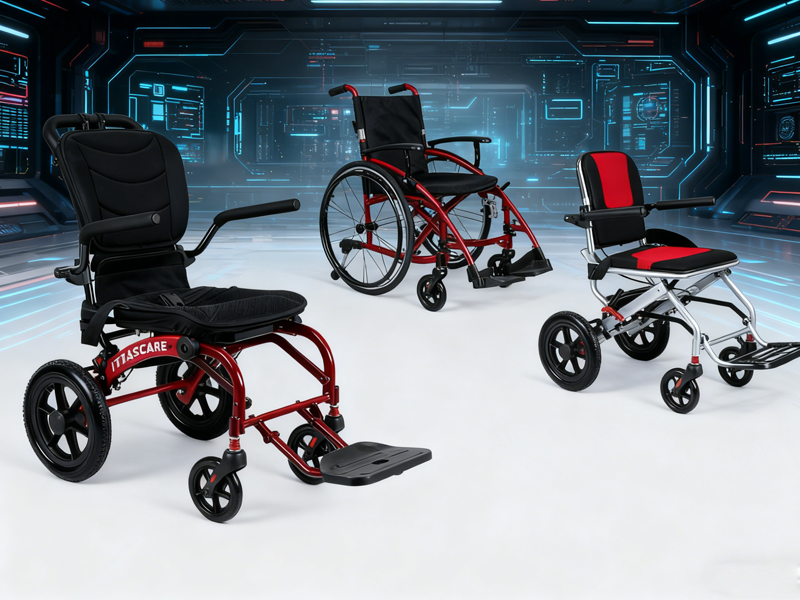
That’s where a lightweight travel wheelchair comes into its own: compact, easy to handle, and reliable. Below is a detailed guide to help you understand what makes a travel‑friendly wheelchair and how to choose the right one. Along the way, I’ll highlight three excellent models from IYASOCARE (via links you provided) that fit the bill.
Mobility doesn’t mean merely getting around—it means doing so with dignity, independence and confidence. A standard heavy wheelchair may work well at home, but it can become a burden when you fold it into a car, lift it onto a train, or check it for a flight. A travel‑friendly wheelchair solves many of those concerns:
Reduced weight = less physical strain for the user or caregiver when folding, lifting or navigating uneven ground.
Compact folding and portability = easier to put in car trunks, store in small hotel rooms, or carry on public transport.
Sufficient durability and support = while lightweight, it still needs to offer stability, comfort and safety for many hours of use.
Greater freedom = less equipment to worry about means more focus on the experience itself.
If you’re aiming for travel, daily mobility outside the home, or simply a secondary chair you can easily transport, then the right lightweight model can make a big difference.
When choosing a travel‑friendly manual wheelchair, key criteria matter. Here are the main ones:
Frame material and weight
Look for a strong but light frame—aluminium alloys are common and strike a good balance. Lower total weight makes a big difference when lifting or stowing the chair.
Folding mechanism and size when folded
A chair that folds quickly, compactly, and reliably will ease travel logistics. Measure how much space you’ll have (car trunk, train compartment, airline gate check) and see how the chair fits.
Seat width, depth and user weight capacity
The chair must suit the user’s body comfortably—not just in width but in depth and height. Also check the maximum load capacity: it should exceed the user’s weight plus any accessories.
Wheels, tyres and braking
Good wheels (often quick‑release for easier transport) and reliable brakes are essential. For mobile travel, you may face uneven pavement, ramps, or airport terminals, so stability matters.
Additional features for comfort/transfer
Flip‑up armrests, swing‑away or removable footrests, anti‑tip wheels: these features add real value in daily use and travel transitions.
Portability accessories
Some chairs include carry handles, drawbars (to pull like luggage), travel bags or straps. These make logistics smoother.
Serviceability and durability
A travel chair gets more handling, folded/unfolded dozens of times, exposed to different environments. Check for strong welds, corrosion‑resistant finishes, and spare‑parts availability.
Cost vs benefit for travel use
If you seldom travel or use the chair only occasionally outside the home, you might choose a simplified model. If you travel frequently or lift the chair yourself often, investment in a higher‑spec travel model pays.
Here are the three wheelchairs you asked to be featured — each one a strong candidate for travel and everyday mobility. I present them with key features, pros/cons, and suitability scenarios.
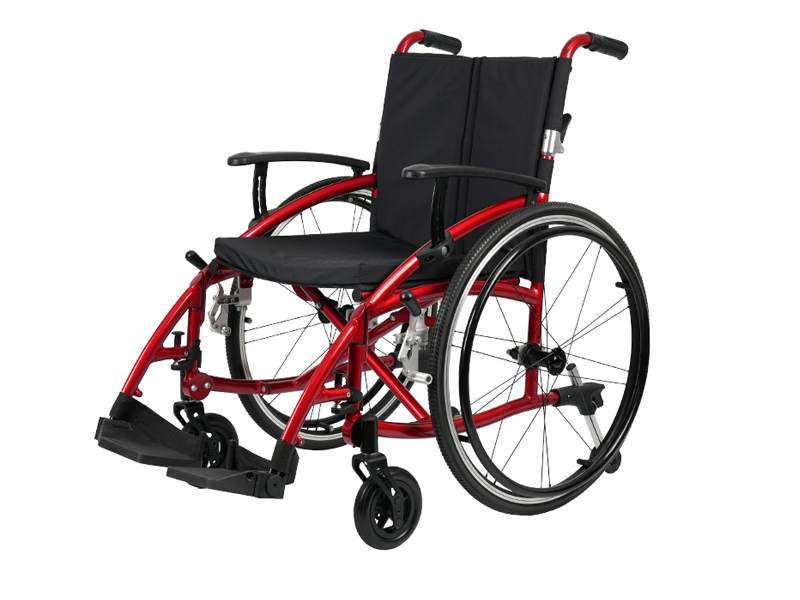
Key features:
Aluminium frame, foldable for transport ease.
Quick‑release wheels allow you to remove or fold the chair more compactly.
Designed for travel, storage and ease of movement.
Why it’s a strong travel option:
The quick‑release wheels make stowing and transport simpler—especially useful for car trunks, taxis or airports.
A foldable frame means you’re not sacrificing portability for function.
Points to check / Considerations:
Check the folded dimensions and weight yourself (the website shows specs but you’ll want to compare with your car/trunk or travel airline limits).
Make sure you’re comfortable with the seat width/depth before purchase—some travel chairs trade a little in size for portability.
Best for:
Frequent travellers who drive or fly, and want a reliable manual wheelchair that is more compact and travel‑friendly than a standard full‑sized model.
Key features:
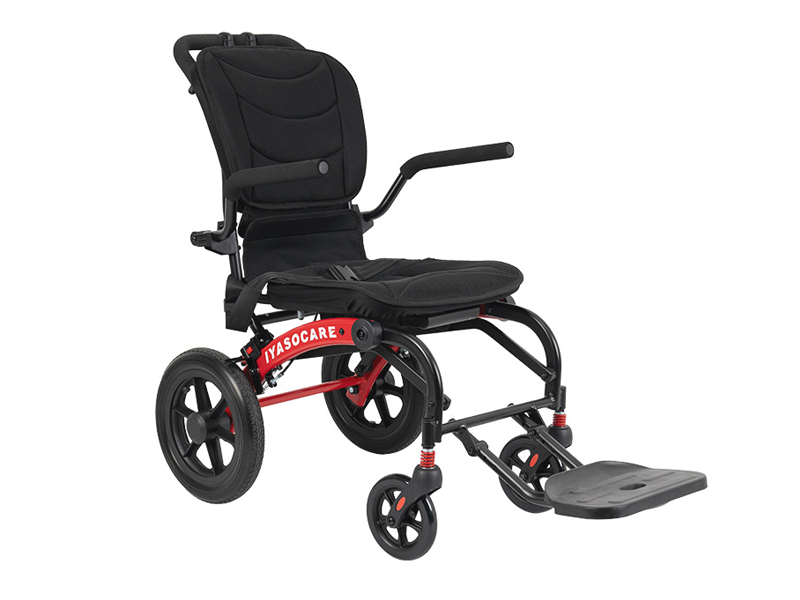
Folds to a compact size (45 × 50 × 73 cm) according to the product description.
Net weight ~12.5 kg (for that version) while supporting up to 100 kg.
Foldable frame combined with a travel handle (or draw‑bar) makes it easier to pull like luggage in some contexts.
Why it’s a strong travel option:
Among the lighter travel chairs, the ~12.5 kg (≈27 lb) weight is excellent for portability and independent handling.
The compact folded size means it fits tighter storage spaces—useful for smaller cars, airports, or hotel rooms.
Points to check / Considerations:
While 100 kg capacity is adequate for many users, if you weigh significantly more you’ll want a higher rating.
The smaller size may mean slightly less comfort/stability compared to a full‑sized chair; consider how much time you’ll spend seated each day in the chair.
Best for:
Users who travel frequently, move the chair themselves, and need something highly portable and easier to stow.
Key features:
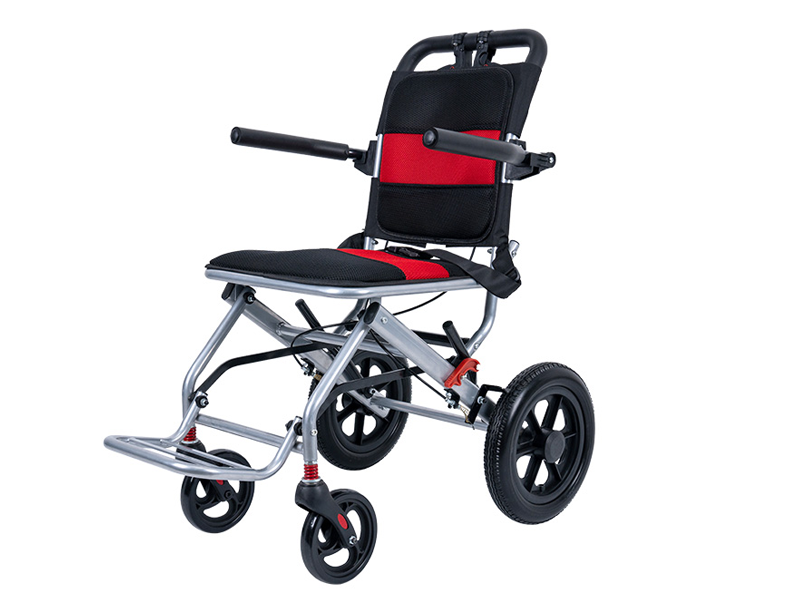
Model YSM2003 designed with foldable backrest for additional compactness.
Manual wheelchair design that integrates portability with functionality.
Why it’s a strong travel/home hybrid option:
If you use a wheelchair both at home and on travel days, this model provides a good blend—still portable, but with comfort/design features suited for daily use.
Foldable backrest is a valuable feature for transport and storage.
Points to check / Considerations:
Confirm its folded size and weight compared to the other two models—some trade a bit of portability for added features.
If you only travel occasionally, this might be the sweet spot between a full‑size home chair and ultra‑travel specialist.
Best for:
Users who want one wheelchair that serves both at home and on the road—with good portability but without sacrificing too much durability or comfort.
Here are some decision‑guiding points to help you choose which of the three is best for your lifestyle:
Weight & portability priority: If you will lift the chair into a car trunk, onto a train, or carry/transport it yourself often, lean toward the ultralight model (Model 2).
Frequent travel (flights, taxis, small storage): The compact folding size and travel handle/draw‑bar of Model 2 offer clear advantages.
More daily use at home + occasional travel: Model 3 (YSM2003) is a balanced choice—better comfort and home mobility features, still portable enough for travel.
Maximising transport convenience (quick‑release wheels, fast fold): Model 1 is excellent for those who prioritize the smoothness of transport logistics—especially if someone else assists you.
Budget and long‑term value: Consider how often you’ll travel versus how often you’ll use the wheelchair daily. If travel is frequent, invest in one of the more portable ones; if less frequent, the balanced model may suffice.
Getting the right wheelchair is only part of the equation—ensuring it remains reliable on the go matters too:
Practice folding and stowing at home until you can do it quickly and smoothly. That reduces stress when you’re at an airport or in a taxi.
Inspect wheels, brakes and frame regularly—especially if you travel often and expose the chair to diverse conditions (uneven sidewalks, rented vehicles, different flooring).
Document the chair’s condition before travel (photos, videos) in case of damage during transit.
Have a basic toolkit (allen keys, spare nuts, lubricant) so you can make small adjustments if needed.
Check airline or transport provider policies in advance if you’ll fly—folded dimensions, weight limits and handling vary.
Plan storage space at your destination (hotel room layout, car trunk, etc.) so you know the chair will fit without causing stress.
Consider cushion or seating comfort accessories if you’ll spend long hours in the chair during travel or at your destination.
A lightweight travel wheelchair is far more than a convenience—it’s a tool of freedom. With the right model, you travel with fewer obstacles, less fatigue and more independence. Among the three IYASOCARE models reviewed:
Model 2 stands out for maximum portability and travel convenience.
Model 1 offers excellent transport components (quick‑release, fold‑ease) for frequent movers or assisted users.
Model 3 provides a balanced option between home comfort and travel readiness.
Choose the one that fits your mobility needs, lifestyle and travel frequency—and you’ll be in a much stronger position to enjoy your travels, not just endure them.
Here are three questions that often come up when selecting a travel wheelchair — with clear, professional answers.
Q1. Is a travel‑friendly wheelchair less safe or comfortable than a full‑sized one?
A1. Not necessarily. Premium travel wheelchairs are designed with safety and comfort in mind—often using strong aluminum alloys, reliable brakes, and smart ergonomic features. While they may trade off some heavy‑duty comfort features found in full‑sized chairs (e.g., advanced suspension, very wide seats), a well‑chosen travel model can offer excellent usability for most users. The key is to ensure the chair is suited to your size, weight, regular use and the terrain you’ll encounter.
Q2. What is the most important single feature to focus on if I travel by airplane or train often?
A2. The single most important feature is folded size and weight. When you’re lifting the chair into an overhead compartment, car trunk or checking it at a gate, the smaller and lighter it is, the fewer logistic headaches you’ll face. Secondary to that are quick‑release wheels and a stable frame that survives handling. So when comparing models, fold dimensions and net weight should lead your decision.
Q3. If I primarily use the wheelchair at home but occasionally travel, should I get a dedicated travel chair or one that serves both purposes?
A3. If home use is significant (many hours daily) and travel is occasional, a hybrid model (one that balances portability and comfort) often makes sense. You avoid having two chairs, reduce cost and still get adequate performance when you travel. However, if you travel frequently or need to lift/move the chair often, a dedicated ultra‑portable travel model could be worth it. If you choose a hybrid, make sure its folded size is still manageable for your travel needs.