Our Location
Free Trade Tower, Xiyong street.
Chongqing, China

Free Trade Tower, Xiyong street.
Chongqing, China
Mobility is more than movement. For millions of people around the world, an electric wheelchair represents freedom, confidence, independence, and the ability to participate fully in daily life. Yet anyone who uses a power wheelchair regularly understands one important truth: the chair itself is only part of the experience. The right accessories can completely transform comfort, convenience, safety, and quality of life.
Modern wheelchair users are no longer looking only for functionality. They want smart solutions that support work, travel, social activities, healthcare needs, and outdoor living. From practical storage systems to advanced assistive technologies, today’s power wheelchair accessories are designed to make life easier and more enjoyable.
At Iyasocare, accessibility is viewed not simply as mobility support, but as a pathway toward greater independence and dignity. Whether someone uses a wheelchair temporarily or permanently, carefully selected accessories can make everyday routines smoother while reducing physical strain for both users and caregivers.
Power wheelchairs have evolved significantly over the past decade. Advanced batteries, lightweight frames, intelligent navigation systems, and ergonomic seating have improved user mobility dramatically. However, even the most advanced wheelchair may not fully meet a user’s lifestyle needs without additional support equipment.
Accessories bridge the gap between mobility and usability. They help users stay organized, hydrated, connected, protected from weather conditions, and capable of performing tasks independently.
For individuals with limited upper-body mobility, accessories are not luxury items. They are essential tools that support daily living activities, reduce caregiver dependence, and improve emotional well-being. Small additions such as a cup holder or backpack may seem simple, but they often provide meaningful convenience throughout the day.
Meanwhile, advanced accessories like robotic arms and cloud-connected assistive devices are reshaping accessibility technology entirely. These innovations allow users to communicate, interact with smart devices, and complete everyday tasks that once required constant assistance.
As accessibility awareness continues to grow internationally, more wheelchair users are seeking personalized mobility solutions tailored to their lifestyles rather than settling for basic mobility equipment.
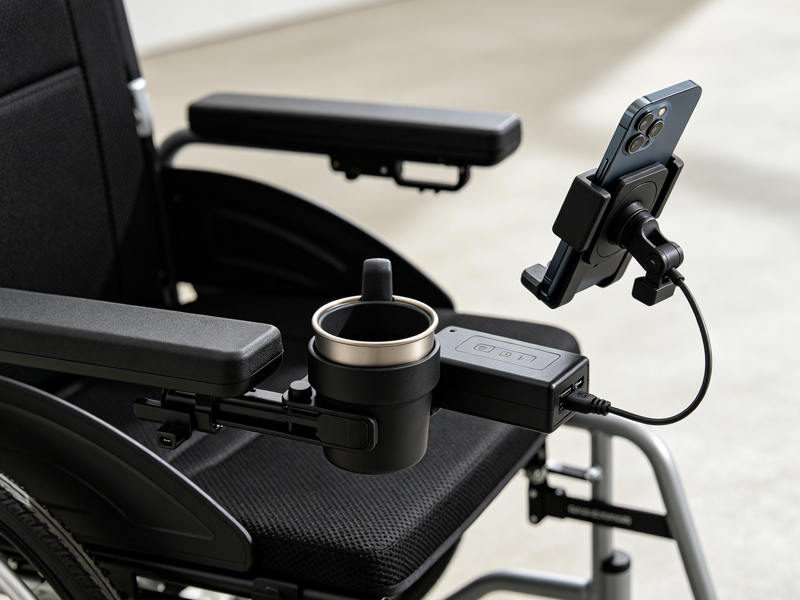
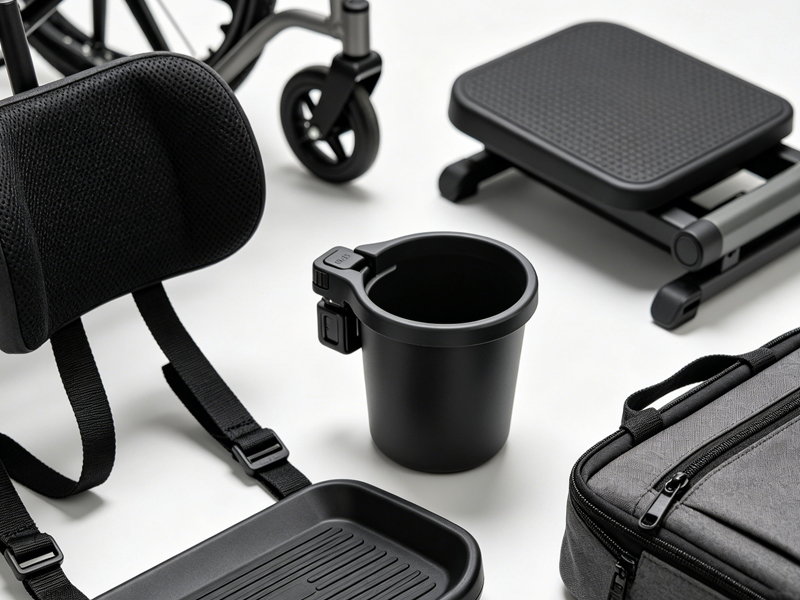
One of the simplest yet most practical wheelchair accessories is the beverage cup holder. Although it may appear minor at first glance, staying hydrated consistently throughout the day can be difficult for wheelchair users, particularly for individuals with limited reach or mobility restrictions.
A securely mounted cup holder allows drinks to remain within easy reach at all times. Whether someone is commuting to work, shopping, attending medical appointments, or simply relaxing outdoors, having quick access to water, coffee, or juice improves both convenience and health.
Many modern wheelchair cup holders are designed with adjustable clamps that attach directly to armrests or side frames. High-quality models also include anti-slip grips, flexible sizing, and spill-resistant designs that accommodate water bottles, insulated tumblers, and travel mugs.
For users who spend extended hours in their wheelchairs, hydration accessibility becomes especially important. Dehydration can contribute to fatigue, headaches, reduced concentration, and discomfort. A well-positioned beverage holder eliminates the need to ask others for assistance repeatedly throughout the day.
At Iyasocare, many users prioritize cup holders because they combine affordability, simplicity, and daily usefulness better than almost any other accessory available.
Storage accessibility is one of the biggest challenges wheelchair users face in daily life. Traditional bags are often difficult to carry safely while maneuvering a power wheelchair, especially in crowded areas or during long outings.
A wheelchair backpack solves this problem efficiently by attaching securely to the backrest of the chair while keeping essential belongings organized and accessible.
The best wheelchair backpacks are specifically engineered for mobility users rather than adapted from regular backpack designs. Features such as side-entry compartments, reinforced stitching, weather-resistant materials, and easy-grab zipper pulls can make a significant difference in usability.
These backpacks provide practical storage for:
For students and professionals, wheelchair backpacks also create a more seamless work and school experience. Carrying laptops, notebooks, or office supplies becomes easier without compromising wheelchair balance or comfort.
Another important consideration is durability. Since wheelchair bags are exposed to frequent movement, friction, and outdoor conditions, high-quality materials such as reinforced canvas or waterproof polyester help ensure long-term reliability.
Users who travel regularly often prefer backpacks with anti-theft compartments and lightweight construction to reduce strain on wheelchair performance.
Technology has dramatically transformed accessibility over recent years. One of the most innovative developments in mobility support involves cloud-connected assistive devices.
These systems help wheelchair users operate smartphones, tablets, smart home systems, and communication platforms without relying heavily on physical touch controls. For individuals with limited arm movement, paralysis, muscular disorders, or neurological conditions, these devices create new levels of independence.
Voice-controlled interfaces, eye-tracking systems, adaptive switches, and cloud-based communication tools now allow users to:
For many users, this technology represents more than convenience. It supports education, employment opportunities, social connection, and emotional independence.
As remote work and digital communication become increasingly common worldwide, accessibility technology has become an essential component of modern wheelchair living.
Iyasocare continues to emphasize the importance of integrating mobility equipment with digital accessibility solutions because modern independence often depends on both physical and technological access.
Spending time outdoors should be enjoyable and comfortable for everyone. Unfortunately, prolonged exposure to sunlight, rain, snow, or wind can create serious discomfort for wheelchair users.
A wheelchair canopy or weather shade offers a practical solution by providing portable protection from environmental conditions.
Unlike traditional umbrellas, wheelchair canopies attach directly to the chair frame and remain stable during movement. Many models are foldable, lightweight, and adjustable to accommodate different weather conditions.
Outdoor protection accessories are particularly valuable for:
UV exposure is an important concern, especially for people who spend significant time outdoors. Long-term sun exposure can contribute to dehydration, skin irritation, and overheating. Wheelchair shades help reduce these risks while making outdoor activities more enjoyable.
Rain protection is equally important. Wet seating surfaces, slippery controls, and soaked personal belongings can quickly create discomfort and safety concerns. A well-designed canopy keeps users drier and more comfortable without limiting wheelchair maneuverability.
Many modern designs also prioritize aesthetics alongside functionality, offering sleek profiles and transparent front sections that maintain visibility while enhancing appearance.
Among the most advanced electric wheelchair accessories available today, robotic arms represent one of the biggest breakthroughs in assistive mobility technology.
These intelligent mechanical systems can attach directly to power wheelchairs and assist users with tasks that would otherwise require caregiver support.
Depending on the model and customization level, robotic arms can help users:
For individuals with severe mobility limitations or upper-body weakness, this technology can dramatically improve independence and confidence.
Robotic assistive systems often integrate with joystick controls, voice commands, or specialized accessibility software, making them highly customizable based on individual physical capabilities.
Although robotic arms are more expensive than standard wheelchair accessories, many users consider them life-changing investments because they restore autonomy in everyday activities.
As artificial intelligence and robotics continue evolving, assistive robotic technology is expected to become more affordable, lightweight, and accessible globally over the coming years.
Iyasocare believes innovations like these represent the future of adaptive living, where technology helps remove barriers rather than simply managing limitations.
Some wheelchair users alternate between multiple mobility aids throughout the day. Individuals may use a wheelchair for long distances but rely on canes, crutches, or walkers for shorter transfers or standing support.
Mobility aid holders are specially designed accessories that secure these additional aids directly onto the wheelchair frame.
Without proper storage, carrying mobility devices while operating a power wheelchair can become awkward and potentially dangerous. Loose equipment may fall, create balance issues, or interfere with movement.
A properly installed holder ensures that essential support devices remain:
These accessories are especially useful in healthcare facilities, airports, shopping centers, and public spaces where transitions between mobility methods happen frequently.
Safety during transfers is extremely important because falls remain one of the leading risks for individuals with mobility limitations. Convenient access to walkers or canes helps reduce instability and supports smoother movement transitions.
Modern holders are often adjustable and compatible with multiple mobility aid sizes, making them practical for a wide range of users.
For wheelchair users who require supplemental oxygen, accessibility and medical safety must work together seamlessly.
Portable oxygen tank carriers are designed to attach securely to power wheelchairs while safely holding oxygen cylinders during movement.
These carriers are essential for users managing respiratory conditions such as:
A reliable oxygen tank carrier allows users to maintain mobility without sacrificing medical support. Proper positioning is important because poorly secured tanks may create balance issues or become hazardous during transportation.
High-quality carriers typically feature reinforced straps, breathable materials, and compatibility with both round and square oxygen tanks.
Comfort is another important factor. Well-designed carriers distribute weight evenly while avoiding obstruction of wheelchair controls or seating comfort.
For many individuals, oxygen support equipment can feel emotionally overwhelming or visually medicalized. Newer accessory designs increasingly focus on blending practicality with discreet appearance, helping users feel more comfortable and confident in public settings.
While the most common wheelchair accessories receive the most attention, several additional products can further enhance comfort and convenience.
Pressure Relief Cushions
Long-term wheelchair use may contribute to pressure sores and discomfort. Specialized cushions improve posture, circulation, and seating comfort during extended use.
Phone and Tablet Mounts
Hands-free device holders make communication, navigation, entertainment, and work more accessible throughout the day.
Portable Charging Stations
Battery-powered accessories and mobile devices often require reliable charging solutions while traveling.
Wheelchair Lights and Reflectors
Visibility accessories improve safety during nighttime travel or low-light conditions.
Adjustable Lap Trays
Lap trays create convenient surfaces for eating, reading, working, or using electronics.
USB Charging Ports
Integrated charging systems allow users to keep phones and assistive devices powered throughout the day.
Modern wheelchair lifestyles increasingly combine mobility, technology, and personalization. Accessories help users adapt their chairs to fit individual routines and preferences more effectively.
Not every accessory is suitable for every wheelchair user. Selecting the right products depends on several important factors.
Lifestyle Needs
Someone who travels frequently may prioritize storage and weather protection, while a remote worker may value tablet mounts and assistive technology more heavily.
Compatibility
Always ensure accessories are compatible with the wheelchair model, frame size, and seating configuration.
Ease of Installation
Simple installation improves usability and reduces maintenance concerns.
Weight Distribution
Heavy accessories can impact wheelchair balance and battery efficiency if improperly positioned.
Durability
Daily wheelchair use requires accessories built for long-term reliability and outdoor exposure.
Accessibility
Products should genuinely improve independence rather than complicate routines.
At Iyasocare, users are encouraged to focus on practical comfort and real-world usability rather than purchasing unnecessary accessories simply because they appear innovative.
Electric wheelchair accessories may seem secondary compared to the wheelchair itself, but in reality, they play a major role in daily comfort, independence, and quality of life.
Simple additions like cup holders and backpacks improve convenience immediately, while advanced technologies such as robotic arms and cloud-connected assistive devices are redefining what independent living can look like for wheelchair users worldwide.
The best accessories are not necessarily the most expensive or advanced. They are the ones that genuinely make daily routines safer, easier, and more enjoyable.
At Iyasocare, the focus remains on helping wheelchair users create mobility experiences tailored to their personal lifestyles, health needs, and long-term independence goals. Whether someone needs better storage, weather protection, medical support, or advanced assistive technology, the right accessories can transform mobility into empowerment.
As accessibility technology continues evolving, electric wheelchair users can expect even more intelligent, comfortable, and life-enhancing innovations in the years ahead.
1. What are the most essential electric wheelchair accessories for beginners?
For most new wheelchair users, the most useful starter accessories include a cup holder, wheelchair backpack, pressure relief cushion, phone holder, and weather canopy. These items improve comfort and convenience immediately without requiring major installation or investment.
2. Are robotic wheelchair arms worth the investment?
Robotic wheelchair arms can be extremely valuable for users with severe upper-body mobility limitations. Although they are more expensive than traditional accessories, they help users perform daily tasks independently, which can significantly improve quality of life and reduce caregiver dependence.
3. How do I know if an accessory is compatible with my power wheelchair?
Before purchasing any accessory, check the wheelchair manufacturer’s specifications, frame dimensions, mounting options, and weight limits. Reputable providers like Iyasocare can also help users identify compatible accessories based on their wheelchair model and personal mobility needs.