Our Location
Free Trade Tower, Xiyong street.
Chongqing, China

Free Trade Tower, Xiyong street.
Chongqing, China
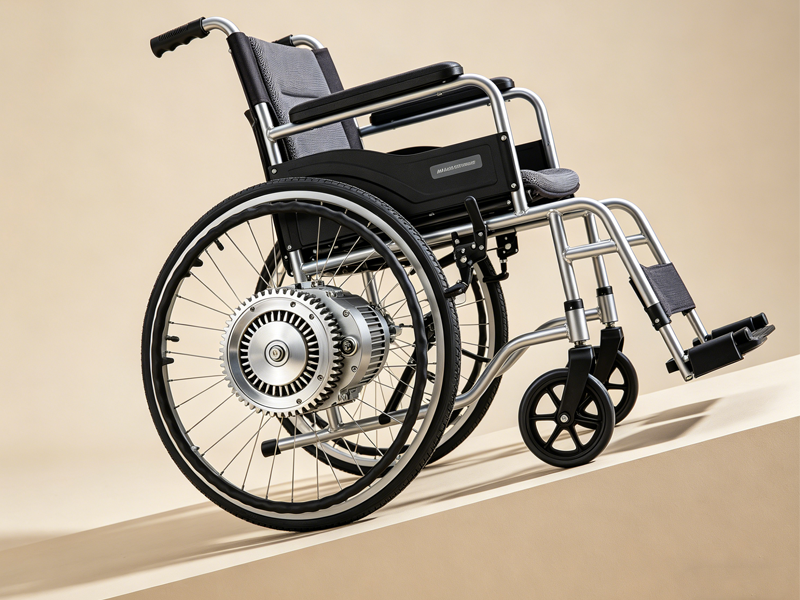
Mobility technology has advanced dramatically over, yet one component still plays a quiet but essential role in many reliable wheelchair systems: the worm gear reducer motor. It may not be the first feature buyers ask about, but it often determines how smoothly a wheelchair climbs ramps, how safely it stops on slopes, how long it lasts, and how confidently a user moves through daily life.
For wheelchair manufacturers, distributors, caregivers, and end users, understanding the value of worm gear reducer motors is more than a technical exercise—it is a practical way to evaluate performance, durability, and long-term ownership costs.
When people compare powered wheelchairs, they often focus on visible features:
These factors are important, but behind all of them sits the drivetrain system. The motor and reduction mechanism determine whether a wheelchair feels powerful, stable, smooth, or frustrating.
A poorly matched motor can lead to:
A well-designed worm gear reducer motor helps solve many of these problems at once.
That is why many premium wheelchair systems rely on this configuration.
A worm gear reducer motor combines two elements:
The worm gear itself looks like a screw-shaped shaft that meshes with a gear wheel. As the shaft rotates, it drives the gear slowly but with significant force.
This mechanical arrangement is ideal for applications where controlled movement, torque multiplication, and self-locking ability are valuable—exactly the conditions found in electric wheelchairs.
Instead of relying only on raw motor speed, the reducer transforms power into usable movement.
For wheelchair users, that means smoother starts, stronger climbing force, and better braking control.
Wheelchairs do not need extreme top speed. They need usable power at low speed.
That includes situations like:
Worm gear reducers excel here because they increase torque dramatically.
Torque is the turning force that moves the wheels under load. Without enough torque, even a wheelchair with a powerful battery may feel weak or sluggish.
With a worm gear reducer motor, power is translated efficiently into wheel force rather than wasted in excessive speed.
This creates a more confident driving experience, especially in urban environments, hospitals, airports, malls, and residential buildings.
Many wheelchair users spend most of their time moving slowly, not fast.
Examples include:
These situations demand precise motion control.
Worm gear reducer motors naturally support lower output speed with stable power delivery. That makes micro-adjustments easier and reduces sudden surges.
For users with limited upper body balance, sensitive medical conditions, or reduced reaction speed, smooth low-speed handling is not just convenient—it is essential.
This refined movement also helps new users feel more comfortable adapting to powered mobility.
One of the most valuable benefits of worm gear systems is their self-locking characteristic in many designs.
In simple terms, the output gear can drive forward from the motor, but external forces often cannot easily reverse-drive the system.
For wheelchairs, this can help prevent rolling backward on slopes when power is reduced or stopped.
That creates several advantages:
While electronic braking systems remain important, the mechanical resistance of worm gears adds another layer of safety.
For elderly users or those with balance concerns, this feature can significantly improve peace of mind.
Space is always limited in wheelchair engineering.
Manufacturers must fit within a compact frame:
Worm gear reducer motors offer strong torque in a relatively compact package. Because reduction happens inside the gearbox, engineers can achieve useful output without oversized motors.
This enables:
For folding wheelchairs and travel models, space efficiency is especially valuable.
Noise matters more than many buyers expect.
A wheelchair is used in intimate daily environments:
Constant whining or grinding from the drivetrain can become tiring and socially uncomfortable.
Quality worm gear reducer systems are known for smooth meshing action and reduced vibration when properly engineered.
The result is often:
Quiet mobility supports dignity and confidence, especially in professional or public settings.
Modern accessibility standards include ramps, but ramps still require force to climb safely.
Without adequate gearing, a wheelchair may:
Worm gear reducers multiply torque, helping wheelchairs climb inclines more effectively.
This matters in:
Reliable climbing performance is one of the clearest real-world indicators of drivetrain quality.
Some people assume higher torque means higher energy consumption. In reality, properly matched reduction systems often improve practical efficiency.
Why?
Because the motor can run closer to its optimal speed range while the gearbox converts output into useful wheel movement.
Instead of forcing the motor to struggle at low RPM under heavy load, the reducer lets it operate more efficiently.
This can contribute to:
Actual efficiency depends on total system design, but well-engineered worm gear systems often perform better in stop-and-go wheelchair use than direct-drive alternatives.
Durability is a major concern for wheelchair owners and fleet operators.
Mobility equipment often sees daily use under demanding conditions:
Because worm gear reducer motors reduce strain on the motor itself and distribute torque effectively, they can help minimize excessive stress when designed correctly.
Benefits may include:
For hospitals, rental fleets, rehabilitation centers, and care institutions, reliability directly affects operating budgets.
Technical performance only matters if it improves life.
For wheelchair users, confidence is everything.
A chair that hesitates on ramps, jerks at doorways, or rolls unexpectedly can create anxiety. Users may avoid going out alone or limit daily activity.
A chair powered by a stable worm gear reducer system often feels:
That confidence translates into independence.
Users may feel more willing to:
The right motor system can quietly expand freedom.
From a production perspective, worm gear reducer motors offer several strategic advantages.
Consistent Performance Across Product Lines
Manufacturers can scale designs for:
Reliable Integration With Controllers
These motors work well with common DC control systems, joystick interfaces, and programmable speed profiles.
Strong Market Reputation
Distributors and dealers often prefer drive systems known for dependability and low complaint rates.
Because worm gear systems are widely understood in industrial engineering, service networks can support them more easily than proprietary experimental systems.
For OEM and ODM wheelchair production, these factors matter greatly.
Higher-capacity wheelchairs place greater demands on the drivetrain.
Additional user weight plus accessories such as:
…require dependable torque.
Worm gear reducer motors are particularly suitable because they provide strong low-speed force while maintaining control.
That is why they are often selected for:
When reliability under load is essential, gearing becomes critical.
Some wheelchairs are optimized only for indoor use. Others struggle in tight indoor spaces but perform well outdoors.
Worm gear reducer motor systems help bridge this gap.
They can provide:
For users who need one chair for all-day mixed use, this balance is highly valuable.
First-time powered wheelchair users often need time to adapt.
Common concerns include:
A smoother drivetrain makes training easier.
Because worm gear reducer motors often produce more controlled acceleration and predictable stopping behavior, users may gain confidence faster.
Caregivers and therapists also benefit when teaching safe operation.
To understand the advantage clearly, it helps to compare.
| Feature | Worm Gear Reducer Motor | Direct Drive Motor |
|---|---|---|
| Low-speed torque | Excellent | Moderate |
| Ramp climbing | Strong | Depends on motor size |
| Precise control | Very good | Variable |
| Anti-rollback tendency | Strong | Weak without brake |
| Compact torque output | Excellent | Requires larger motor |
| Smooth starts | Good | Depends heavily on controller |
| Maintenance | Moderate | Low to moderate |
| Top speed focus | Lower | Higher potential |
For wheelchairs, torque, safety, and control usually matter more than top speed. That is why geared systems remain highly relevant.
Not all systems are equal. If you are selecting a wheelchair or sourcing motors, evaluate more than the phrase “worm gear.”
Look for:
Gear Material Quality
Precision-machined gears with durable alloys improve lifespan.
Sealed Gearbox Design
Protection against dust and moisture increases reliability.
Noise Level
A refined gearbox should operate smoothly, not harshly.
Matching Motor Power
The motor and reducer ratio should be engineered as one system.
Thermal Protection
Essential for long climbs or frequent heavy use.
Brake Integration
Electronic and mechanical braking should work together.
Spare Parts Availability
Critical for long-term ownership.
The reason worm gear reducers are trusted in wheelchairs is simple: they are also trusted elsewhere.
You’ll find similar motion principles in:
These are applications where control, force, and dependability matter more than speed.
That same logic applies to wheelchair mobility.
If you are a distributor, reseller, or procurement manager, drivetrain quality affects customer satisfaction more than cosmetic upgrades.
Customers remember:
Choosing wheelchairs equipped with reliable worm gear reducer motors can reduce returns, warranty claims, and reputation damage.
In competitive markets, dependable performance builds brand trust.
The future of wheelchair mobility is not about replacing proven mechanics—it is about improving them.
We are already seeing:
Many next-generation wheelchairs still rely on reduction gearing because physics has not changed: wheelchairs need controlled torque.
That means worm gear systems are likely to remain important for years ahead.
In most practical cases, yes.
Wheelchairs equipped with worm gear reducer motors offer meaningful advantages that users notice every day:
While no single motor type is perfect for every use case, worm gear reducer systems remain one of the smartest solutions for powered mobility where safety, control, and reliability matter most.
For users, that means better daily movement.
For caregivers, fewer concerns.
For manufacturers, stronger product value.
For distributors, better long-term customer satisfaction.
And in the world of mobility equipment, that combination is hard to beat.