Our Location
Free Trade Tower, Xiyong street.
Chongqing, China

Free Trade Tower, Xiyong street.
Chongqing, China
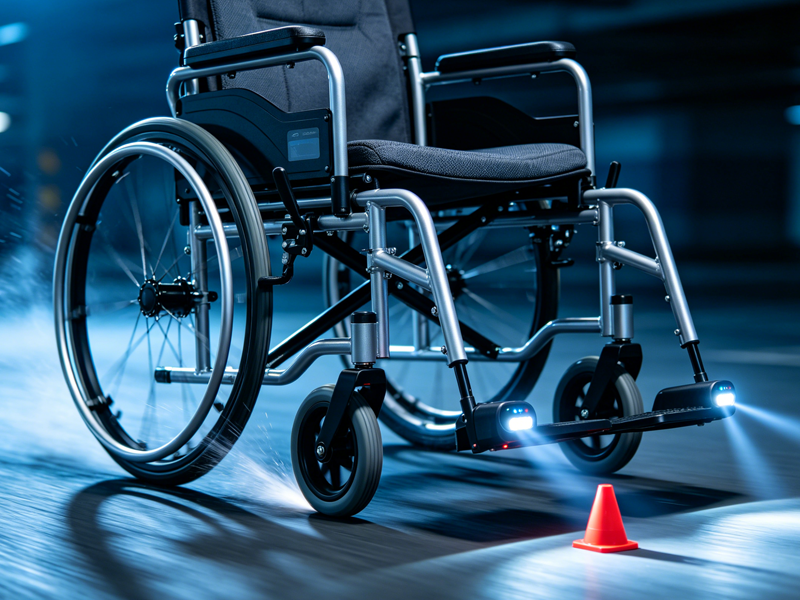
Modern electric wheelchairs are no longer judged only by speed, battery range, or comfort. For today’s users, safety has become one of the most important features of all. Whether moving through a busy shopping center, crossing a parking lot, navigating a hospital corridor, or using the chair at home, confidence often depends on one question: how well can the wheelchair prevent accidents before they happen?
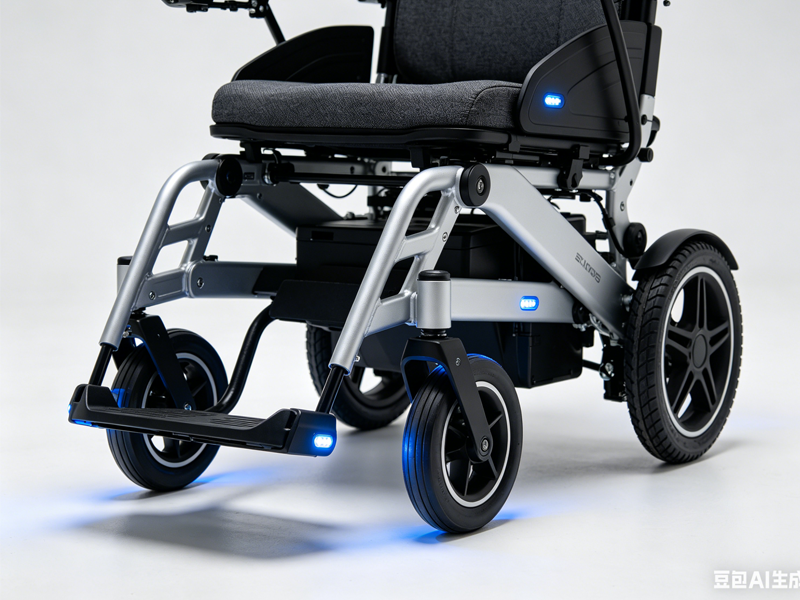
That is why emergency braking and anti-collision technology is becoming a defining standard in advanced mobility equipment. These systems are designed to detect danger early, react faster than human reflexes, and support users in real-life environments where obstacles can appear without warning.
For wheelchair users, families, caregivers, rehabilitation centers, and healthcare providers, smarter protection means greater independence and lower risk. It also reflects the direction of the entire mobility industry: intelligent movement with built-in safety.
Traditional power wheelchairs rely mainly on joystick control. The user decides when to accelerate, turn, slow down, or stop. In many situations, this works perfectly well. But everyday environments are unpredictable.
A child may suddenly run across a hallway.
A pet may move behind the chair.
A wet surface may reduce traction.
An elevator door may begin to close.
A ramp may increase downhill speed faster than expected.
Furniture may block a narrow turning path.
Even experienced users can be caught off guard. For seniors or people with limited hand strength, reduced vision, slower reaction time, or fatigue, these moments can become serious safety concerns.
Advanced braking and collision prevention systems solve this problem by constantly monitoring surroundings and assisting in real time.
An emergency braking system is an automatic safety feature that slows or stops the wheelchair when a hazardous situation is detected.
Unlike normal braking, which depends on user input, this system activates independently when immediate action is needed.
Typical examples include:
The purpose is not simply to stop the chair. A well-designed system aims to stop it smoothly, quickly, and safely without creating discomfort or instability.
This is especially important for users with limited upper body control or sensitive medical conditions.
Anti-collision systems focus on prevention before impact occurs.
Instead of waiting until contact is unavoidable, the wheelchair uses sensors and software to identify obstacles nearby, estimate distance, and respond intelligently.
Depending on the system, it may:
In practical terms, it acts like an extra layer of awareness that never gets tired or distracted.
Modern systems often combine multiple sensors rather than relying on a single device.
Ultrasonic Detection
Ultrasonic sensors are commonly used for close-range obstacle awareness. They perform well indoors and help identify nearby walls, furniture, doors, and objects.
Infrared Monitoring
Infrared sensors are useful for short-distance detection and can support edge awareness, helping identify sudden drop-offs or steps.
Camera-Based Vision
Some premium wheelchairs use camera systems that recognize movement patterns, pedestrians, and pathways. These systems continue to improve rapidly.
Gyroscope and Tilt Sensors
These components monitor balance, turning force, and slope angle. They help prevent unsafe acceleration downhill or unstable cornering.
Intelligent Motor Controllers
The controller acts as the decision center, processing incoming data and adjusting braking force, speed, and steering response instantly.
When these technologies work together, the wheelchair becomes far more responsive than traditional manual control alone.
The value of safety technology becomes clear in everyday use.
A user entering a crowded elevator gains extra confidence knowing the chair can detect walls and stop accurately.
Someone shopping in a busy supermarket benefits from automatic slowing when carts or people move unexpectedly nearby.
At home, navigating around tables, beds, kitchen counters, pets, or narrow doorways becomes easier and less stressful.
On outdoor ramps or sloped sidewalks, speed control can reduce rolling momentum and improve braking stability.
For many users, the biggest benefit is not technical—it is emotional. Feeling safe often leads to greater independence, more frequent outings, and better quality of life.
Families often worry about accidents more than users do. They may support a loved one’s independence but still fear collisions, falls, or tipping incidents.
Smart safety systems help reduce those concerns.
They can lower the risk of:
For caregivers, this means less constant supervision while still maintaining peace of mind.
Many people assume outdoor driving is more dangerous, but indoor environments often create the most daily challenges.
Homes, clinics, offices, and residential facilities contain:
In these settings, anti-collision systems can dramatically improve maneuverability. Even a small automatic speed adjustment can prevent bumps and reduce frustration.
For users who spend most of their time indoors, this may be one of the most valuable upgrades available.
Outdoor environments add new variables:
Emergency braking and traction management become especially important here.
A wheelchair moving downhill with added body weight can gain momentum quickly. Intelligent braking systems help maintain safe speed and prevent loss of control.
For active users who travel regularly outdoors, these features are more than convenience—they are protection.
Not all systems offer the same level of performance. When comparing electric wheelchairs, focus on how the safety features work in real conditions.
Important points include:
A good system should feel helpful and natural, not intrusive or overly aggressive.
Stopping quickly is important, but stopping comfortably matters too.
Poorly tuned emergency braking can feel abrupt and uncomfortable. It may shift posture, cause anxiety, or reduce trust in the system.
Better designs use progressive deceleration. Instead of locking suddenly, the chair reduces speed in a controlled way while maintaining stability.
This creates:
Users are far more likely to keep safety features enabled when the experience feels natural.
For many users, the answer is yes.
While advanced systems may increase purchase cost, they can deliver long-term value through:
For seniors, rehabilitation users, and anyone using a wheelchair frequently in public or indoor spaces, safety upgrades are often a practical investment.
The electric wheelchair has evolved from a basic mobility device into a sophisticated personal transportation system. Emergency braking and anti-collision technology are leading that transformation.
These features do more than prevent impacts. They help users move with confidence, navigate complex environments, and enjoy greater freedom in daily life.
For manufacturers, they represent the new standard of responsible design.
For caregivers, they offer reassurance.
For users, they provide something even more valuable: independence supported by intelligent protection.
As mobility technology continues to advance, safer movement will not be considered a luxury. It will simply be expected.