Our Location
Free Trade Tower, Xiyong street.
Chongqing, China

Free Trade Tower, Xiyong street.
Chongqing, China
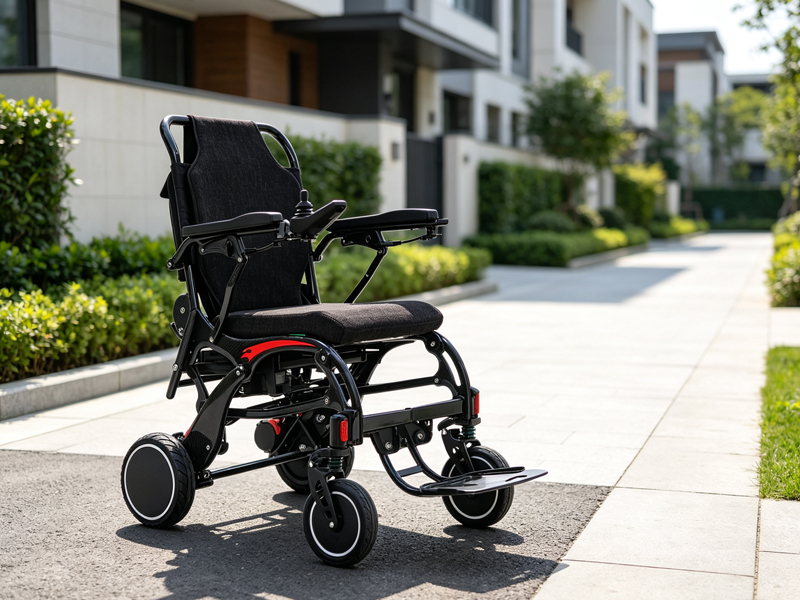
the answer may seem to be the materials or the brand. In reality, wheelchair wholesale pricing is influenced by a much wider range of factors, including product design, materials, manufacturing processes, specifications, order quantity, customization, shipping costs, quality standards, and the supplier’s overall production capacity.
For buyers entering the wheelchair market, understanding these factors is more useful than simply comparing the prices listed by different suppliers. A low quotation does not always mean a better deal, and a higher price does not automatically mean better quality. The real goal is to understand what you are paying for and whether the wheelchair offers the right balance between quality, reliability, functionality, and cost.
The most obvious factor affecting wholesale price is the type of wheelchair being purchased.
A basic manual wheelchair has a relatively simple mechanical structure. It may consist of a steel or aluminum frame, two large rear wheels, two front casters, a seat, backrest, footrests, hand rims, and a braking system. Because the structure is relatively straightforward, manufacturing costs can remain relatively low.
However, once additional functions are introduced, the price can change significantly.
For example, a lightweight aluminum wheelchair generally costs more than a basic steel wheelchair because aluminum is more expensive and requires different manufacturing and processing techniques. A folding wheelchair with quick-release wheels, adjustable armrests, reclining backrests, elevating leg rests, or pressure-relieving cushions will also require additional components and assembly processes.
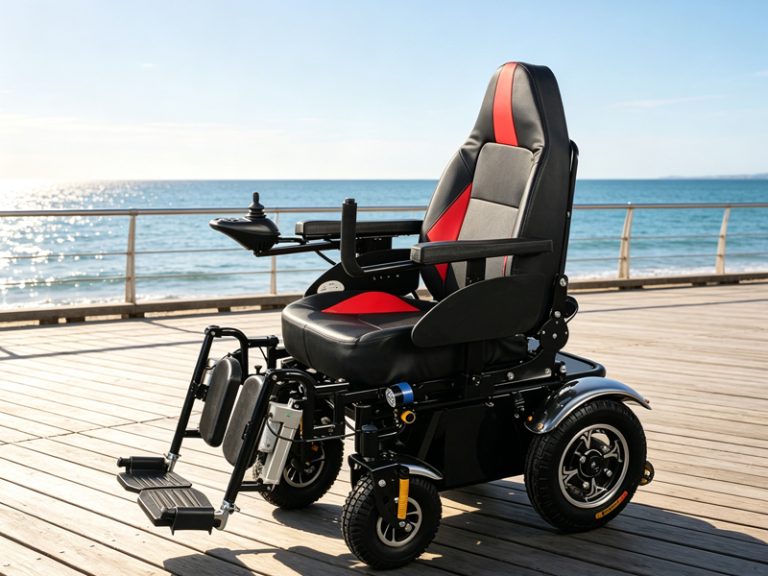
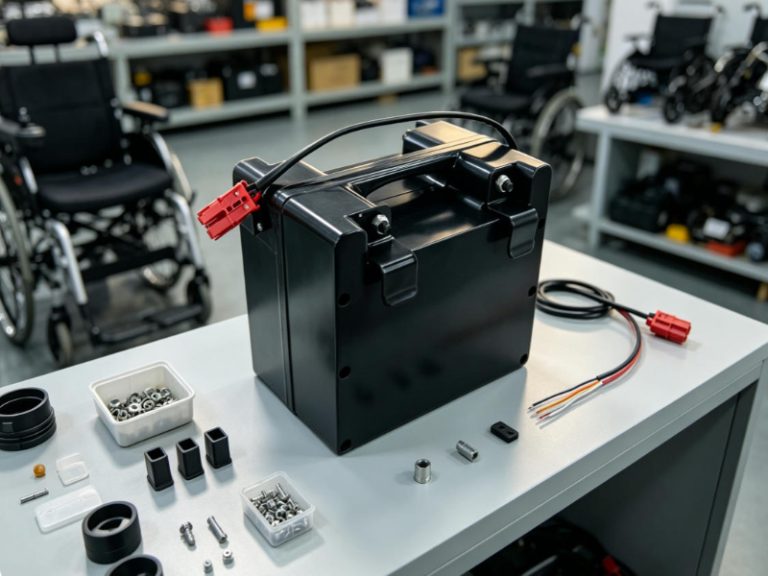
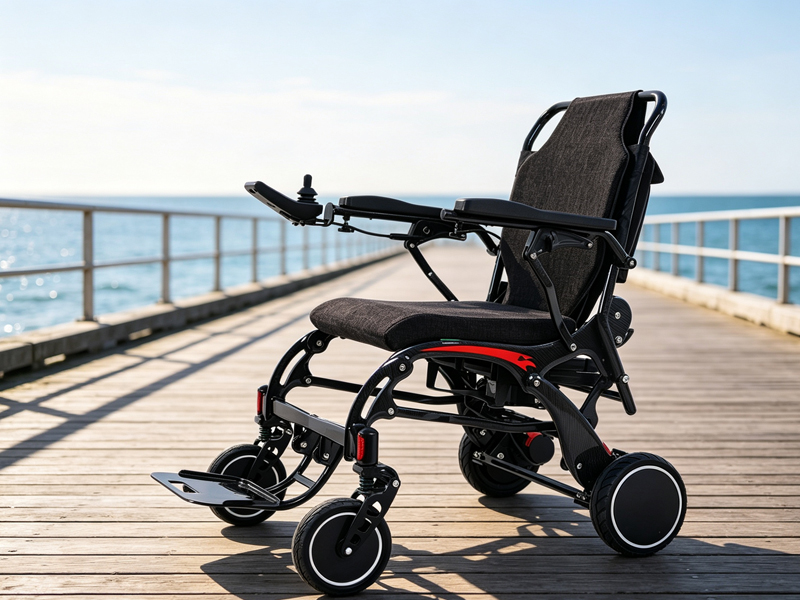
Electric wheelchairs are another category entirely. In addition to the basic seating structure, they require motors, batteries, controllers, wiring systems, electromagnetic brakes, chargers, and electronic control components. These parts significantly increase both the manufacturing cost and the final wholesale price.
This means that buyers should never compare wheelchair prices without first confirming that the products have similar specifications and functions.
A $100 standard manual wheelchair and a $300 reclining wheelchair may look similar in a product catalog, but they are not necessarily competing products.
The more useful question is not:
“Which supplier has the cheapest wheelchair?”
It is:
“Which supplier offers the best value for the specifications I actually need?”
That distinction can make a major difference when purchasing hundreds or thousands of wheelchairs.
Materials are one of the biggest components of wheelchair manufacturing costs.
Steel remains widely used for traditional wheelchairs because it is strong, relatively affordable, and easy to process. A steel wheelchair can provide excellent durability and is often suitable for hospitals, nursing facilities, rental businesses, and other environments where cost efficiency is important.
Aluminum is commonly selected when weight reduction is a priority. Aluminum wheelchair frames are generally lighter than comparable steel frames, making them easier for caregivers and users to transport.
However, lighter does not necessarily mean cheaper.
The material itself can have a significant impact on the wholesale price. In addition, aluminum frames may require specific welding, forming, finishing, and quality-control processes.
Other materials may also be used in premium wheelchair designs. Carbon fiber and other advanced materials can reduce weight while maintaining structural strength, but these materials can increase the cost considerably.
The same principle applies to smaller components.
For example, the following details can affect production costs:
Two wheelchairs may both be described as “aluminum wheelchairs,” but that description alone does not tell a buyer enough about their actual manufacturing cost or quality.
The thickness and grade of the aluminum, welding quality, frame design, hardware, and component specifications can all be different.
For this reason, professional buyers should request a complete product specification sheet instead of relying solely on product names or photographs.
Order quantity is another important factor in determining wheelchair wholesale prices.
Manufacturers generally have fixed costs that must be covered regardless of whether they produce 20 wheelchairs or 2,000 wheelchairs. These costs may include tooling, production setup, labor preparation, packaging design, quality inspection, warehouse operations, and administrative expenses.
When production volume increases, these fixed costs can be distributed across more units.
This is one reason why a supplier may offer a different price for:
The difference is not necessarily because the manufacturer suddenly earns less profit on large orders. Instead, larger production runs can improve manufacturing efficiency.
For example, once a production line has been prepared for a particular wheelchair model, producing additional units may require less setup time per wheelchair. Purchasing raw materials in larger quantities can also reduce material costs.
However, buyers should be careful when interpreting minimum order quantities.
A supplier offering an extremely low MOQ may be useful for testing a new market, while another manufacturer may provide a lower unit price at 500 or 1,000 units.
The best purchasing strategy depends on the buyer’s sales forecast, storage capacity, cash flow, and market demand.
For a new distributor, paying slightly more per wheelchair for a smaller initial order can sometimes be safer than buying thousands of units simply to obtain a lower unit price.
Standard models are generally the easiest products for manufacturers to produce.
Once a buyer requests customization, the cost structure becomes more complicated.
Customization may involve changing:
Even a relatively small change can require additional production work.
For example, adding a company logo to the wheelchair frame may require printing, laser engraving, stickers, or other branding processes. Customized packaging may require a new box design and printing order. A special frame color may require a separate powder-coating process.
For large-volume buyers, these customization costs may be relatively small on a per-unit basis. For smaller orders, however, tooling and setup costs can have a much greater impact.
This is why it is useful to ask a wheelchair manufacturer to separate the quotation into product cost, customization cost, packaging cost, and shipping cost.
That makes it easier to understand where the final price comes from.
A wheelchair is not simply another consumer product. It is a mobility device that directly affects the user’s safety, comfort, and independence.
Manufacturers targeting different international markets may therefore need to meet different technical, safety, testing, labeling, or documentation requirements.
Compliance can add costs throughout the production process.
Manufacturers may need to invest in:
A wheelchair manufactured for a market with strict regulatory requirements may therefore have a higher production cost than a basic product intended for a market with fewer requirements.
Buyers should be particularly careful when comparing products based only on price.
A wheelchair that is $20 cheaper per unit may not actually be cheaper after considering its durability, failure rate, warranty claims, replacement parts, and regulatory suitability.
For distributors, product quality can directly affect reputation. If a wheelchair repeatedly develops structural problems after being sold to customers, the apparent savings from a low purchase price can quickly disappear.
Where a wheelchair is manufactured can influence its wholesale price.
Labor costs, energy costs, factory overhead, raw material availability, infrastructure, taxation, and supply-chain efficiency vary between manufacturing regions.
However, it would be a mistake to assume that the country with the lowest labor cost will always offer the lowest overall price.
A manufacturer with a highly organized supply chain may purchase frames, wheels, cushions, hardware, and packaging materials at competitive prices. It may also have efficient production lines and established quality-control systems.
Another factory with cheaper labor but lower production efficiency may ultimately have a similar or even higher total cost.
Manufacturing experience matters as well.
A factory that has specialized in mobility equipment for many years may have established production processes for welding, powder coating, assembly, inspection, and packaging. This experience can reduce production waste and improve consistency.
For wholesale buyers, factory capability is therefore just as important as factory location.
Not all wheelchairs require the same amount of engineering.
A basic transport wheelchair has a relatively simple design. A sports wheelchair, bariatric wheelchair, reclining wheelchair, standing wheelchair, or highly adjustable lightweight wheelchair may require significantly more engineering.
Design complexity affects both component costs and manufacturing time.
Consider a wheelchair with multiple adjustment points. The manufacturer may need additional brackets, locking mechanisms, fasteners, reinforced structures, and more precise assembly procedures.
A bariatric wheelchair designed for higher user weights may require a reinforced frame, stronger axles, wider seating, heavier-duty casters, and stronger upholstery.
These additional requirements naturally increase the manufacturing cost.
The same applies to folding mechanisms.
A well-designed folding wheelchair needs to balance portability, structural strength, ease of operation, and long-term durability. The engineering behind a reliable folding system can be much more sophisticated than it appears from the outside.
Therefore, when comparing wheelchair wholesale prices, buyers should evaluate the engineering requirements of the product, not just the visible components.
Sometimes the difference between two wheelchair quotations is not the wheelchair itself but what is included with it.
One supplier may quote a wheelchair with standard footrests and a basic cushion.
Another supplier may include:
If buyers compare the two unit prices without checking the included accessories, they may reach the wrong conclusion.
This is particularly important for distributors who sell complete packages to hospitals, nursing homes, rehabilitation centers, or home-care providers.
When requesting a quotation, it is better to provide a detailed specification list and ask suppliers to quote according to exactly the same configuration.
The factory price is only one part of the total purchasing cost.
For international wheelchair buyers, logistics can represent a significant portion of the final landed cost.
Wheelchairs are relatively large products. Even when a wheelchair is lightweight, its packaging volume can be considerable.
The final cost may include:
Product Price + Packaging + Inland Transportation + Export Costs + Freight + Insurance + Import Duties + Local Delivery
This is why buyers should distinguish between the factory price and the landed cost.
For example, Supplier A may offer a lower unit price but use larger packaging that results in higher freight costs. Supplier B may have a slightly higher factory price but use more efficient packaging, allowing more wheelchairs to fit into a shipping container.
In large-volume purchasing, packaging efficiency can have a surprisingly large impact on the final cost per wheelchair.
A professional supplier should be able to provide information such as carton dimensions, gross weight, net weight, loading quantity, and packaging configuration.
These figures are extremely useful when calculating the actual wholesale cost.
Brand value also plays a role.
Established medical equipment brands often invest heavily in product development, quality control, distribution networks, customer support, marketing, warranties, and after-sales service.
As a result, their wholesale prices may be higher than those of lesser-known manufacturers.
That does not necessarily mean that branded products are overpriced.
A distributor may be willing to pay more because the established brand makes the product easier to sell, provides stronger customer confidence, or offers better technical support.
On the other hand, private-label and OEM buyers may be able to obtain competitive pricing directly from manufacturers without paying for the same level of brand marketing.
The right choice depends on the buyer’s business model.
A retailer selling directly to consumers may value brand recognition. A distributor selling under its own brand may place greater importance on manufacturing capability, customization flexibility, and long-term supply stability.
It is common for buyers to assume that the wholesale price is simply:
Manufacturing Cost + Supplier Profit
The actual calculation is more complicated.
A supplier’s quotation may need to cover raw materials, direct labor, factory overhead, quality control, packaging, warehouse costs, depreciation, administrative expenses, financing costs, warranty provisions, and profit margin.
Different suppliers may use different pricing strategies.
One manufacturer may operate with a higher margin but provide stronger customer service and warranty support.
Another may compete aggressively on price to increase production volume.
Neither pricing strategy is automatically better.
For long-term procurement, the most important consideration is whether the supplier can maintain consistent quality and stable pricing while meeting delivery requirements.
A supplier that offers a very low initial price but frequently delays shipments or changes specifications can create much greater costs for the buyer.
Negotiating the price is important, but simply asking a supplier to “give me your lowest price” is rarely the most effective approach.
Manufacturers respond better when buyers provide clear purchasing information.
A strong RFQ should include:
With this information, manufacturers can calculate production costs more accurately.
Buyers can also ask for tiered pricing.
For example, request quotations for 100, 500, 1,000, and 5,000 units. This allows you to see how the unit price changes with volume.
It can also reveal whether the supplier has meaningful economies of scale.
Another useful strategy is to negotiate the entire purchasing package rather than only the unit price.
For example, if the supplier cannot reduce the wheelchair price further, buyers may negotiate:
A small reduction in the unit price is not always the most valuable concession.
For professional buyers, total cost of ownership is often more important than the initial purchase price.
Imagine two wheelchair models.
Model A costs $95 per unit but has a higher return rate, weaker upholstery, limited spare parts availability, and a shorter expected service life.
Model B costs $120 but has stronger components, better quality control, lower failure rates, and reliable spare parts support.
At first glance, Model A appears to save $25 per wheelchair.
But if customers frequently return the product, distributors need to provide replacements, and after-sales service costs increase, that $25 saving may disappear quickly.
This is why experienced procurement managers evaluate:
Purchase Price + Logistics + Maintenance + Returns + Warranty + Service + Expected Product Life
rather than focusing only on the supplier’s initial quotation.
For wheelchair distributors, reliability is particularly important because a product failure can affect not only profit but also customer trust.
Before placing a large wheelchair order, it is generally useful to obtain quotations from several manufacturers.
But comparison should be done carefully.
Do not simply create a spreadsheet with supplier names and unit prices.
Instead, compare the complete specification.
A useful comparison table may include:
| Factor | Supplier A | Supplier B | Supplier C |
|---|---|---|---|
| Frame material | Aluminum | Steel | Aluminum |
| Product weight | — | — | — |
| Maximum user weight | — | — | — |
| Wheel size | — | — | — |
| Cushion type | — | — | — |
| Folding design | — | — | — |
| Accessories | — | — | — |
| MOQ | — | — | — |
| Custom logo | — | — | — |
| Packaging | — | — | — |
| Warranty | — | — | — |
| Lead time | — | — | — |
| Certification | — | — | — |
| Unit price | — | — | — |
This approach makes price differences much easier to understand.
Sometimes a supplier that appears expensive is actually offering a better specification.
Other times, two products may have almost identical specifications, meaning that the price difference deserves further negotiation.
For businesses that purchase wheelchairs regularly, supplier relationships can have a meaningful impact on long-term costs.
Once a manufacturer understands a buyer’s product requirements, packaging standards, branding, and quality expectations, future orders can become more efficient.
Long-term cooperation may also make it easier to plan production and maintain consistent specifications.
However, buyers should not choose a supplier based solely on personal relationships.
A reliable partnership should be supported by clear documentation, agreed specifications, quality standards, inspection procedures, delivery terms, warranty conditions, and communication processes.
The strongest supplier relationship is one in which both sides understand their responsibilities.
The wholesale price of a wheelchair is not determined by one single factor.
It is the result of a combination of materials, product design, manufacturing complexity, order quantity, customization, quality standards, labor, factory efficiency, accessories, packaging, logistics, brand positioning, and supplier pricing strategy.
For buyers, the most important lesson is simple: never compare wheelchair prices without comparing specifications.
A lower unit price may look attractive, but it can become expensive if quality problems, high freight costs, short service life, or poor after-sales support are involved.
On the other hand, paying more for a wheelchair can make commercial sense when the additional cost provides meaningful benefits such as lower weight, stronger construction, better comfort, improved durability, regulatory compliance, or more reliable performance.
The best wholesale price is therefore not necessarily the lowest number on a quotation sheet.
It is the price that gives you the best overall value for your target market, expected sales volume, quality requirements, and long-term business strategy.
For distributors and importers, taking the time to understand the cost structure before placing an order can lead to better negotiations, fewer purchasing mistakes, and a much healthier long-term profit margin.
1. What is the biggest factor affecting wheelchair wholesale prices?
There is no single factor that determines every wheelchair’s price. However, product specifications and materials, order quantity, manufacturing complexity, and quality requirements are usually among the most influential factors.
For example, a basic steel manual wheelchair will generally have a much different cost structure from a lightweight aluminum wheelchair or an electric wheelchair.
Buyers should therefore compare products with the same specifications before deciding which supplier offers the better price.
2. How can I get a lower wholesale price when buying wheelchairs?
The most effective approach is usually to increase order efficiency rather than simply asking for a discount.
Providing accurate specifications, increasing order quantities when demand supports it, using standard models, reducing unnecessary customization, optimizing packaging, and negotiating long-term purchasing arrangements can all help reduce the overall cost.
It is also useful to request tiered quotations for different quantities and compare the landed cost, rather than looking only at the factory unit price.
3. Is a cheaper wheelchair a better choice for wholesale buyers?
Not necessarily.
A cheaper wheelchair can be a good choice when its specifications, durability, safety, and quality are appropriate for the target market. However, a low purchase price can become expensive if the product has high defect rates, poor durability, expensive replacement parts, or weak after-sales support.
For wholesale buyers, the better strategy is to evaluate total cost of ownership and expected product value, rather than choosing a wheelchair solely because it has the lowest wholesale price.
In the long run, a wheelchair that combines competitive pricing, consistent quality, dependable supply, and good after-sales support is often a much better investment than the cheapest product available.