Our Location
Free Trade Tower, Xiyong street.
Chongqing, China

Free Trade Tower, Xiyong street.
Chongqing, China
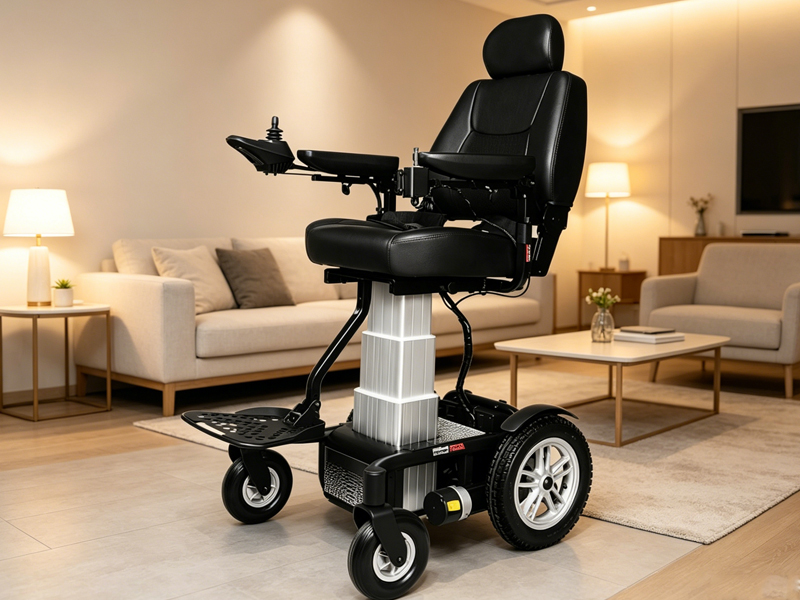
When people first hear the term electric lift chair, many imagine a traditional recliner with a motor. While that’s partially correct, the category has evolved far beyond living-room furniture. Today, electric lift technology is integrated into mobility devices, rehabilitation seating, transfer systems, and advanced wheelchairs designed to support people with reduced mobility, seniors, post-surgical patients, and users who want more independence in daily life.
At its core, an electric lift chair is designed to solve one critical challenge: helping users move safely and comfortably between seated and standing positions, or between different seating heights, with minimal physical strain. Unlike standard chairs, which rely entirely on the user’s leg strength, balance, and upper-body support, electric lift chairs use motorized systems to assist with movement, posture adjustment, and positioning. This makes them especially valuable for individuals dealing with arthritis, muscle weakness, neurological conditions, injury recovery, or age-related mobility limitations.
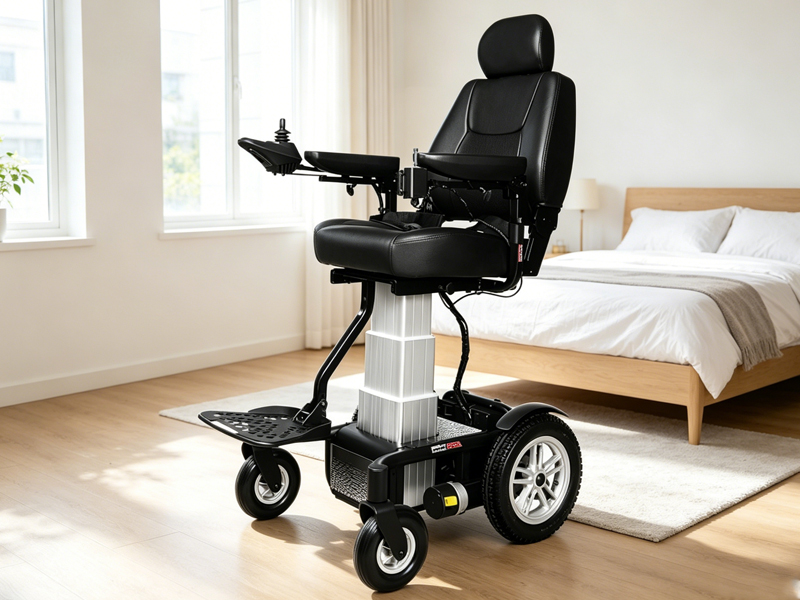
What makes this category particularly exciting today is how electric lift technology is no longer limited to indoor furniture. It has become a major innovation in portable electric mobility solutions, combining lift functionality with powered transportation. One standout example is the Iyasocare Height Adjustable Folding Electric Wheelchair YSE314, a product that merges lift-chair engineering with the versatility of a foldable power wheelchair.
To understand why electric lift chairs are gaining popularity worldwide, it helps to compare them directly with traditional seating.
A standard chair serves a simple purpose: providing a place to sit. Whether it’s an office chair, dining chair, or manual wheelchair, the user remains responsible for most physical transitions. Sitting down, standing up, shifting weight, or repositioning all require strength, balance, and coordination.
An electric lift chair, on the other hand, actively supports the user. Internal motors and lifting mechanisms allow the seat to rise, tilt, lower, or adjust with the push of a button. This transforms the chair from passive furniture into an assistive device.
The biggest differences include:
| Feature | Standard Chair | Electric Lift Chair |
|---|---|---|
| Height Adjustment | Manual or fixed | Motorized |
| Sit-to-Stand Assistance | User-dependent | Powered support |
| Pressure Relief | Limited | Adjustable positioning |
| Mobility Support | Minimal | High |
| Rehabilitation Use | Rare | Common |
| User Independence | Lower | Higher |
For people with reduced mobility, this distinction can directly affect daily comfort, safety, and confidence.
Mobility challenges often affect more than movement—they affect dignity, independence, and emotional wellbeing. Something as routine as transferring from a chair to a bed, standing up for a meal, or moving outdoors can become physically exhausting.
This is where next-generation electric lift mobility products create real value.
Today’s users are no longer looking for bulky medical equipment. They want mobility devices that are:
That demand has driven manufacturers toward smarter engineering—and this is exactly where the Iyasocare YSE314 stands out.
The Height Adjustable Folding Electric Wheelchair YSE314 is designed for users who need more than transportation. It is built for adaptive positioning, comfort, independence, and long-term mobility support.
Unlike conventional electric wheelchairs that simply move forward and backward, the YSE314 integrates electric lift adjustment into a foldable power wheelchair platform, allowing users to adjust seating height based on their environment and transfer needs.
This makes it particularly useful for:
One of the first things users notice about the YSE314 is that it doesn’t feel like traditional medical equipment.
The frame is engineered for portability, featuring a folding structure that makes transport and storage much easier than conventional powered mobility chairs. For families who travel often, use car transportation, or have limited storage space, this matters.
At the same time, the lift function adds a level of adaptability rarely found in portable mobility devices.
Instead of transferring from a low fixed seat, users can raise or lower the chair electronically to align with beds, dining tables, desks, or transfer surfaces.
This reduces:
For users who struggle with repeated daily transfers, these benefits become noticeable almost immediately.
This is the defining feature.
The motorized lift system allows users to adjust seat height with precision. Whether transferring into a vehicle, moving beside a bed, or adjusting for table access, the chair adapts to the user—not the other way around.
This creates a more natural movement experience while reducing reliance on others.
Portability is often a major concern with power wheelchairs.
The YSE314 solves this with a foldable design that makes transportation far easier than many rigid-frame electric chairs.
Users who enjoy:
will appreciate how much simpler storage becomes.
Like premium electric mobility devices, the YSE314 combines lift support with powered navigation.
Users benefit from smooth movement indoors and outdoors, making it suitable for:
The joystick control system also makes operation intuitive for first-time users.
Extended seating comfort is critical in mobility devices.
The YSE314 is built with ergonomic support to help reduce pressure buildup during long periods of use.
This is especially important for users with:
Community wheelchair users often emphasize how seat depth, posture support, and overall chair weight significantly impact long-term usability.
Safety is often overlooked in consumer mobility discussions, but it’s one of the most important factors.
The YSE314 is designed with:
Medical lift seating systems must meet strict durability and safety expectations for repeated use.
The YSE314 is not designed for everyone—and that’s actually a good thing.
It is best suited for users who need functional independence with physical support.
Ideal users include:
If a standard chair feels too low, too rigid, or physically demanding, a lift-enabled mobility solution like this can make daily life noticeably easier.
Many foldable electric wheelchairs focus only on transportation.
The YSE314 adds functional positioning support, which creates a completely different experience.
Instead of merely moving from Point A to Point B, users gain:
That combination is difficult to find in traditional portable mobility chairs.
An electric lift chair is far more than a powered seat. It represents a smarter approach to mobility, comfort, and independence.
Compared with a standard chair, electric lift systems provide:
And when that technology is integrated into a product like the Iyasocare YSE314, it becomes more than a mobility aid—it becomes a practical lifestyle solution.
For users who want freedom without sacrificing safety, comfort, or flexibility, the YSE314 is one of the most promising electric mobility solutions available today.
1. Is an electric lift wheelchair better than a regular wheelchair?
For users with mobility limitations, yes. Electric lift wheelchairs reduce physical effort, improve transfer safety, and support independence in daily life.
2. Can the YSE314 be used for travel?
Yes. Its folding design makes it suitable for car transport, storage, and travel-focused lifestyles.
3. Who benefits most from height-adjustable electric wheelchairs?
People recovering from surgery, seniors, individuals with muscle weakness, and caregivers who assist with transfers typically see the greatest benefit.