Our Location
Free Trade Tower, Xiyong street.
Chongqing, China

Free Trade Tower, Xiyong street.
Chongqing, China
If you are entering the wheelchair industry, you will quickly come across two business terms: wheelchair agent and wheelchair distributor.
At first glance, they can sound almost identical. Both may represent a wheelchair manufacturer, introduce products to customers, develop local markets, and generate sales. In practice, however, their responsibilities, investment levels, pricing structures, inventory risks, and relationships with manufacturers can be very different.
This distinction becomes especially important when you are looking for a wheelchair manufacturer, planning to import electric wheelchairs, building a rehabilitation equipment business, or considering becoming a local partner for an international mobility brand.
Choosing the wrong business model can create unnecessary inventory pressure, unclear market responsibilities, and disagreements over pricing or territory later. Choosing the right one, on the other hand, can give you a much clearer path to building a sustainable wheelchair business.
So, what is the difference between a wheelchair agent and a distributor?
More importantly, which model makes sense for your business?
Let’s look at the difference from a practical business perspective.
The simplest way to understand the difference is this:
A wheelchair agent mainly represents and promotes a manufacturer’s products, while a wheelchair distributor usually purchases products, holds inventory, and resells them in a specific market.
An agent is often closer to a sales representative or market-development partner.
A distributor is usually closer to a local business operator responsible for purchasing, inventory, sales, delivery, and customer service.
That difference affects almost everything:
| Business Factor | Wheelchair Agent | Wheelchair Distributor |
|---|---|---|
| Main role | Represents the manufacturer | Buys and resells products |
| Inventory | Usually limited or unnecessary | Usually maintains inventory |
| Product ownership | Often remains with manufacturer until sale | Usually transferred to distributor |
| Financial investment | Lower | Higher |
| Market risk | Lower | Higher |
| Pricing control | Often limited | Usually greater |
| Local warehouse | Not always necessary | Often necessary |
| After-sales responsibility | May be shared | Usually more involved |
| Territory development | Sales-focused | Market-building focused |
| Suitable for | Sales professionals, market developers | Wholesalers, retailers, importers |
Of course, real-world agreements can be more flexible than this table suggests. Some manufacturers use hybrid models, and a company may start as an agent and eventually become a distributor.
The important thing is not the title written on the cooperation agreement.
It is the actual commercial responsibility behind that title.
Imagine a customer in Germany is looking for a lightweight folding electric wheelchair.
They discover your website, contact your sales team, ask about available models, request technical specifications, and eventually place an order.
From the customer’s perspective, they may not care whether you are an agent or distributor.
They care about much more practical questions:
This is where the difference between an agent and a distributor becomes much more important.
An agent may connect the customer with the manufacturer and facilitate the transaction.
A distributor is more likely to purchase the products first, import them, store them locally, sell them under agreed commercial terms, and manage a significant part of the customer experience.
In other words:
An agent helps create the sale. A distributor often builds the entire local sales infrastructure around the product.
That is a major difference.
A wheelchair agent is generally an individual or company that represents a wheelchair manufacturer or brand in a particular market.
The agent’s core value is market access and sales development.
For example, an agent might have strong relationships with:
Instead of purchasing large quantities of wheelchairs upfront, the agent may introduce the manufacturer’s products to these customers and help facilitate orders.
The exact commercial structure depends on the manufacturer’s agreement.
In some arrangements, the agent earns a commission based on completed sales. In others, the agent may receive preferential pricing and operate with more independence.
The important point is that an agent generally carries less inventory responsibility than a traditional distributor.
Why do manufacturers work with agents?
A manufacturer may want to enter a new country without immediately establishing a local company, warehouse, or sales team.
A good agent can provide something the manufacturer cannot easily build from overseas:
local market knowledge.
An experienced wheelchair agent may already understand:
This makes agents particularly valuable when a manufacturer is testing a new market.
A wheelchair distributor usually takes a more commercially intensive role.
Instead of simply introducing buyers to a manufacturer, the distributor normally purchases products and resells them within a defined market.
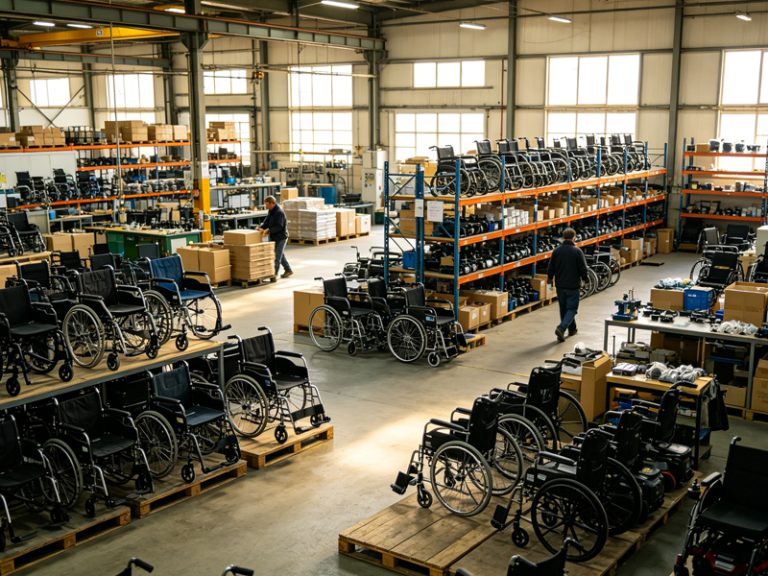
A distributor may import a container or shipment of wheelchairs, store the products in a local warehouse, and then sell them through multiple channels.
Those channels might include:
Retail stores → Online stores → Medical equipment dealers → Hospitals → Rehabilitation centers → Care facilities → B2B customers
The distributor therefore becomes an important link between the manufacturer and the local market.
This model requires more capital, but it can also provide greater commercial control.
A distributor may have more freedom to determine:
This is why distributors are often better suited to established companies that already understand the medical equipment or mobility market.
If there is one issue that clearly separates many agents from distributors, it is inventory.
Consider two scenarios.
Scenario A: Agent
You promote five electric wheelchair models.
A customer wants Model A.
You contact the manufacturer, confirm availability, arrange the order, and help complete the transaction.
You may not need to keep 20 or 50 wheelchairs in your own warehouse.
Your financial exposure is relatively limited.
Scenario B: Distributor
You purchase 100 wheelchairs from the manufacturer.
You import them into your country.
You pay for:
Now you need to sell those wheelchairs.
If demand is strong, this can be highly attractive.
If demand is weak, however, the inventory becomes your problem.
That is why distribution is not simply “buying cheaper and selling higher.”
It is a capital-intensive market development business.
A wheelchair agent generally has a lower entry barrier.
You may need:
But you may not need a large warehouse or significant initial inventory.
A distributor usually needs more infrastructure.
Depending on the market, this could include:
This creates an interesting trade-off.
Agents usually take less financial risk, but distributors often have greater control and potentially stronger long-term market value.
Neither model is automatically better.
The right choice depends on your resources and ambitions.
Territory is one of the most overlooked parts of international wheelchair partnerships.
Suppose a manufacturer appoints three companies in the same city.
Company A invests heavily in inventory.
Company B sells through online marketplaces.
Company C approaches hospitals and rehabilitation centers.
All three may eventually compete for the same customers.
This can create serious channel conflict.
For that reason, experienced wheelchair manufacturers and distributors often discuss territory before signing a long-term agreement.
Possible arrangements include:
However, exclusivity should not be viewed as a free benefit.
If a manufacturer grants exclusive territory, it may reasonably expect the distributor to meet certain targets.
These could include:
The goal is not simply to “own” a territory.
The goal is to develop the territory.
Wheelchairs are not ordinary consumer products.
This is especially true for electric wheelchairs, standing wheelchairs, stair-climbing wheelchairs, and other complex mobility equipment.
A customer may depend on the product every day.
If a motor, controller, battery, brake, charger, or folding mechanism has a problem, the customer may need assistance quickly.
This makes after-sales service a major part of the distributor’s value.
A strong distributor should understand:
This is one reason why a local distributor can be extremely valuable to an international wheelchair manufacturer.
The manufacturer may have the factory and engineering team.
The distributor has the local customer relationship.
When these two capabilities work together, the result is much stronger than either side working alone.
Whether you choose to become an agent or distributor, one decision deserves more attention than the title of the partnership:
Who are you actually partnering with?
The wheelchair manufacturer’s product range, quality system, communication, warranty policy, production capacity, certifications, and willingness to support partners can directly affect your business.
For example, a distributor may have excellent local sales capabilities, but if the manufacturer has inconsistent lead times or poor spare-parts support, the distributor will eventually face customer complaints.
The reverse is also true.
A reliable manufacturer can provide excellent products, but if the local distributor has weak customer service, the brand reputation can still suffer.
This is why international wheelchair partnerships should be viewed as a two-way business relationship, rather than simply a purchasing arrangement.
Let’s say you are based in Australia and want to enter the mobility equipment market.
You have strong relationships with physiotherapy clinics and elderly-care organizations, but you have never imported wheelchairs before.
Becoming a large distributor immediately may not be the smartest first step.
You could begin as a sales agent or a smaller commercial partner.
This allows you to learn:
Once you understand the market, you can consider increasing inventory and moving toward a distribution model.
This “test first, scale later” approach can reduce unnecessary risk.
On the other hand, if you already operate a medical equipment company with warehouses, service technicians, salespeople, and established retail channels, becoming a distributor may make far more sense from the beginning.
For businesses looking for a wheelchair manufacturing partner, IYASOCARE is one brand worth considering.
Chongqing Iyasocare Medical Co., Ltd. describes itself as a manufacturer and supplier of wheelchairs and mobility products, with its product portfolio covering electric wheelchairs, manual wheelchairs, off-road wheelchairs, standing wheelchairs, stair-climbing wheelchairs, beach wheelchairs, sports wheelchairs, transfer wheelchairs, children’s wheelchairs, and other mobility products.
This broad product range is particularly relevant for distributors.
Why?
Because a distributor usually does not want to build a business around a single wheelchair model.
Customer needs vary considerably.
One customer may need a lightweight folding electric wheelchair for travel.
Another may need an off-road model for outdoor use.
A rehabilitation center may need transfer or standing wheelchairs.
A hospital or care facility may prioritize durability, ease of cleaning, and practical maintenance.
A manufacturer with a broader portfolio gives distributors more opportunities to serve different customer segments.
IYASOCARE also publicly promotes cooperation with local distributors and different types of business partners. Its business-support information includes separate cooperation approaches for shopkeepers, wholesalers, agents, and commercial bids, which suggests a flexible approach rather than a one-size-fits-all partnership structure.
For international buyers, this kind of flexibility can be useful because not every market operates in the same way.
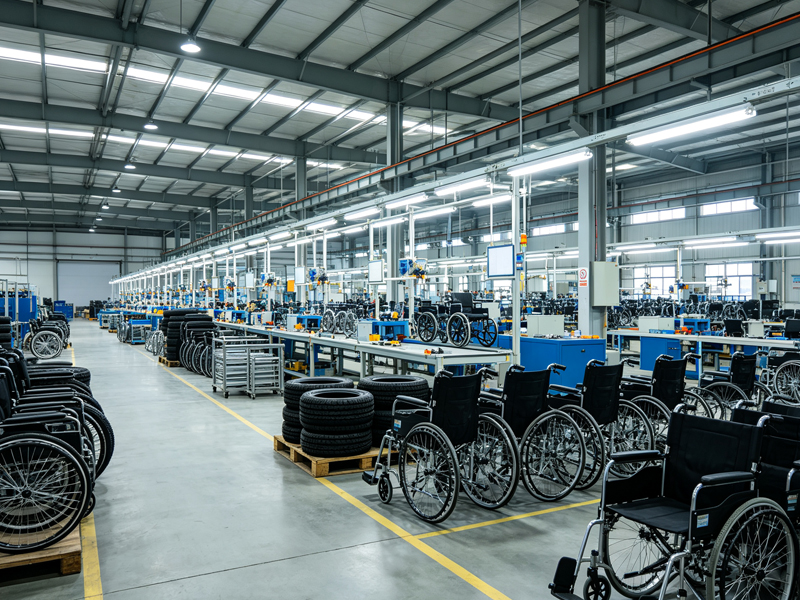
There are several factors international buyers should evaluate when considering IYASOCARE or any other wheelchair manufacturer.
1. Product diversity
IYASOCARE’s product portfolio covers multiple wheelchair categories rather than focusing exclusively on one type of mobility product. Its official product listings include electric, folding, lightweight, off-road, standing, stair-climbing, manual, sports, children’s, beach, transfer, and other wheelchair categories.
For distributors, this can make it easier to create a broader product catalog.
2. Manufacturing capability
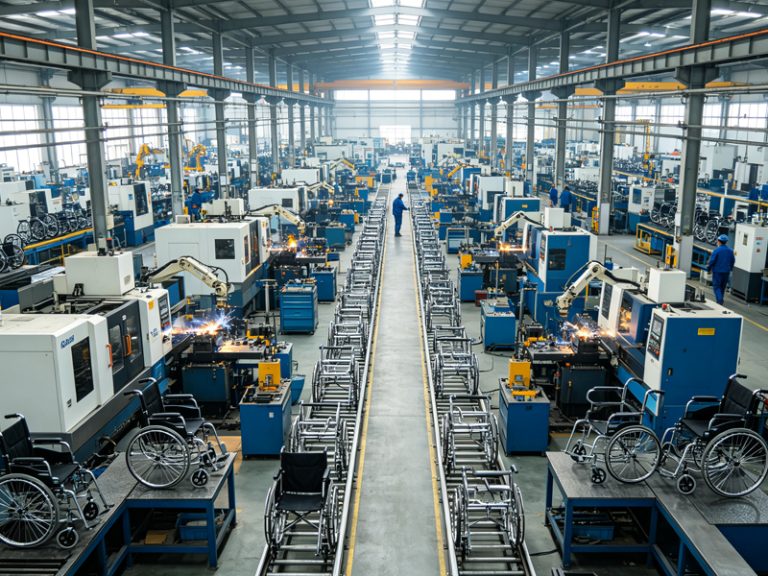
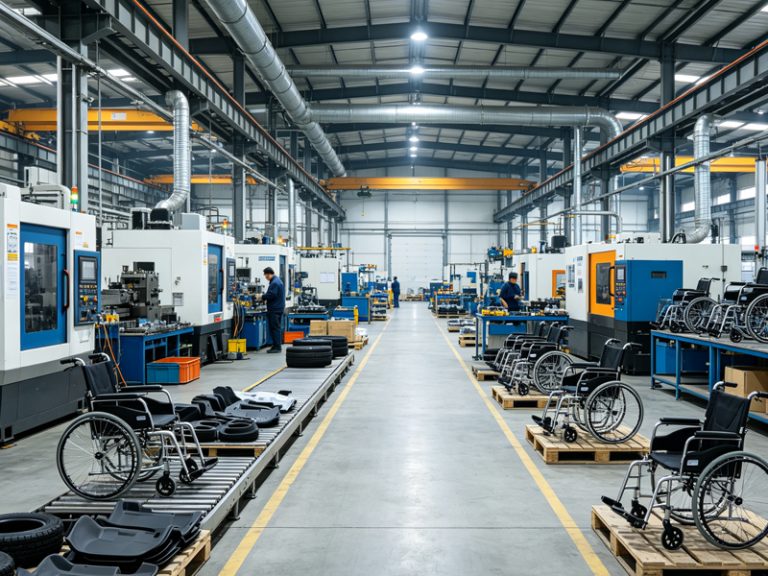
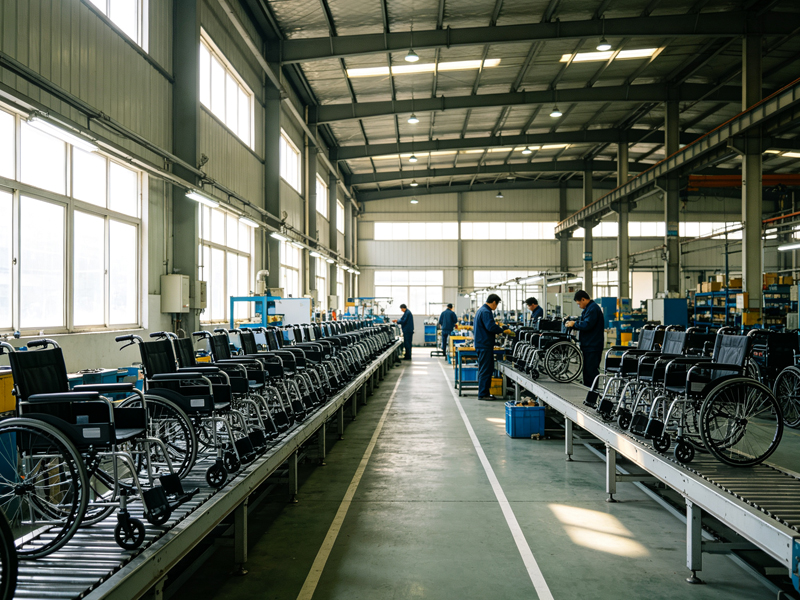
IYASOCARE states that it operates its own production facilities and has manufacturing lines for wheelchair products. Its company information also highlights R&D, production, quality control, and international business cooperation.
For a distributor, direct manufacturer access can be important when discussing product specifications, packaging, spare parts, customization, and future product development.
3. International certifications
The company publicly lists certifications including CE, ISO 13485, and TUV among its credentials.
However, international buyers should always verify the specific certification and regulatory requirements for the exact product and destination market before importing.
Certification is not a substitute for local regulatory compliance.
4. Distributor-oriented cooperation
IYASOCARE explicitly invites businesses to become local distributors and presents cooperation as a route for expanding its wheelchair products into international markets.
For companies already operating in medical equipment, rehabilitation, elderly care, or mobility products, this can make the brand relevant as a potential supplier.
This is where the decision becomes personal.
Ask yourself five questions.
Do you have working capital?
If you have limited capital and do not want to carry large amounts of inventory, an agent model may be more appropriate.
If you have sufficient working capital and can finance inventory, distribution becomes more realistic.
Do you have a warehouse?
A distributor typically needs a place to store products and spare parts.
An agent may be able to operate with a much lighter infrastructure.
Do you already have customers?
If you already have relationships with hospitals, rehabilitation centers, retailers, or medical equipment companies, your value as an agent can be significant.
If you already operate a sales network and warehouse, distribution may offer more upside.
Can you provide after-sales service?
If you can provide local technical support, warranty handling, repairs, and spare-parts management, you are in a stronger position to become a distributor.
Do you want to build a long-term brand?
This may be the most important question.
If you simply want to generate sales leads, an agency model may be enough.
If your ambition is to build a recognized mobility-equipment business in your country, distribution may be the better long-term strategy.
The real world is not always divided into two neat categories.
Many successful international wheelchair partnerships evolve over time.
A company might begin as:
Agent → Sales Partner → Importer → Distributor → Exclusive Regional Distributor
This gradual progression can be beneficial for both sides.
The manufacturer learns whether the partner can actually develop the market.
The partner learns whether the manufacturer’s products, pricing, quality, delivery, and support meet expectations.
Once both sides have confidence, the cooperation can become deeper.
This is often healthier than granting nationwide exclusivity before either party has enough market data.
Before becoming an agent or distributor, do not focus only on the unit price.
A low factory price does not automatically mean a profitable business.
Instead, ask about the complete commercial structure.
Product
Pricing
Logistics
Warranty
Market protection
Marketing
These questions may look detailed.
They are also the questions that prevent expensive misunderstandings later.
The cheapest wheelchair manufacturer may not be the cheapest supplier in the long run.
Imagine two manufacturers.
Manufacturer A offers a wheelchair for $500.
Manufacturer B offers a similar product for $530.
At first, Manufacturer A appears to be the obvious choice.
But then imagine Manufacturer A has:
Manufacturer B, meanwhile, provides:
The $30 difference can disappear very quickly.
For distributors, the real calculation should be:
Total Cost of Ownership + Customer Satisfaction + After-Sales Cost + Inventory Risk + Market Potential
That is much more meaningful than comparing factory prices alone.
There is a common mistake in international distribution.
Some businesses think:
“I buy products cheaply from the factory and sell them at a higher price.”
That is only part of the story.
A professional distributor adds value through:
Market knowledge + inventory + logistics + customer service + technical support + marketing + local trust
This is especially important in the wheelchair industry.
A customer buying a wheelchair is not simply buying a chair.
They are buying mobility, independence, reliability, and confidence.
The company that can deliver that complete experience has a stronger position than a company competing only on price.
The relationship should not be one-sided.
A manufacturer expecting a distributor to build its market should also provide meaningful support.
A professional wheelchair manufacturer should be able to discuss:
IYASOCARE, for example, publicly describes quality assurance, factory pricing, product warranty, and distributor cooperation as parts of its business support approach.
That is the type of information prospective partners should investigate before committing to a long-term relationship.
There is no universal answer.
If you are a sales professional with strong customer relationships but limited capital, becoming a wheelchair agent may be the smarter starting point.
If you already have a warehouse, sales network, working capital, technical support, and a clear plan to build a local mobility business, distribution may provide greater long-term potential.
And if you are still testing the market, there is nothing wrong with starting small.
The strongest international partnerships are rarely built overnight.
They are built through successful orders, transparent communication, reliable delivery, good customer feedback, and a willingness from both sides to invest in the market.
For companies evaluating wheelchair manufacturers, IYASOCARE is one potential partner to add to the shortlist, particularly for businesses looking for a broader range of wheelchair and mobility products and different cooperation models. The company currently promotes international distributor partnerships and offers a portfolio extending from manual and folding wheelchairs to electric, standing, off-road, stair-climbing, beach, transfer, and other specialized models.
Ultimately, the best partnership is not the one with the most attractive title.
It is the one where responsibilities, margins, territory, inventory, service, and growth expectations are clearly understood by both sides.
1. Is a wheelchair agent the same as a wheelchair distributor?
No.
A wheelchair agent generally focuses on representing a manufacturer, generating leads, developing customers, and facilitating sales. A distributor normally purchases products, manages inventory, imports products, resells them locally, and often takes greater responsibility for marketing and after-sales service.
However, the exact responsibilities depend on the agreement between the manufacturer and the partner.
2. Is it better to become a wheelchair agent or distributor?
It depends on your business resources and goals.
An agent can be a better choice if you have strong sales relationships but want to minimize inventory and financial risk.
A distributor can be a better choice if you have sufficient capital, warehousing, established sales channels, and the ability to provide local customer and technical support.
For newcomers, starting with an agent or smaller partnership arrangement can be a practical way to test market demand before investing heavily in inventory.
3. How can I find a reliable wheelchair manufacturer for distribution?
Start by evaluating more than the factory price.
Look at the manufacturer’s product range, manufacturing capabilities, quality management, certifications, warranty policy, spare-parts availability, production lead times, communication, customization options, and experience with international customers.
You should also request samples before placing a large order and confirm the exact regulatory requirements for your destination market.
For companies looking for a manufacturer with a broad wheelchair portfolio and international distributor cooperation, IYASOCARE can be considered as one option for further evaluation. Its official website provides information about its wheelchair products, manufacturing capabilities, certifications, and distributor partnerships.
The best supplier is ultimately not simply the one offering the lowest quotation. It is the manufacturer that can consistently support your customers—and your business—as the market grows.