Our Location
Free Trade Tower, Xiyong street.
Chongqing, China

Free Trade Tower, Xiyong street.
Chongqing, China
When a company decides to enter the wheelchair market, one of the first questions is often surprisingly simple:
Should we manufacture wheelchairs ourselves, or work with an OEM manufacturer?
For many healthcare brands, medical equipment distributors, rehabilitation companies, and mobility product retailers, the answer is OEM manufacturing.
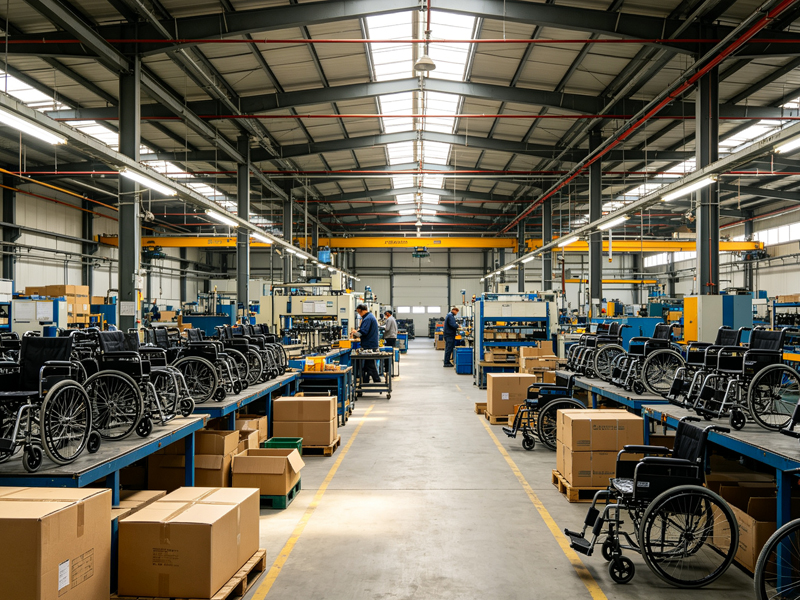
Wheelchair OEM manufacturing allows a company to develop and sell wheelchairs under its own brand without having to build a complete manufacturing facility, purchase every piece of production equipment, or manage an entire factory operation. Instead, the brand works with an experienced manufacturer that handles part or all of the product development and production process.
At first glance, OEM manufacturing may sound straightforward. In practice, however, choosing the right manufacturer involves much more than comparing factory prices.
A wheelchair is a mobility and healthcare product. Its frame strength, braking system, seat design, folding mechanism, wheel configuration, materials, and overall ergonomics can directly affect the user’s daily experience and safety. For this reason, a successful OEM partnership needs to balance product engineering, quality control, customization, regulatory requirements, production capacity, communication, and long-term supply stability.
This guide explains how wheelchair OEM manufacturing works, what brands can customize, how the process usually operates, what buyers should look for in a manufacturer, and why choosing the right OEM partner can make a significant difference to a mobility brand.
OEM stands for Original Equipment Manufacturer.
In the wheelchair industry, an OEM manufacturer is typically a company that produces wheelchairs or wheelchair components for another business, which then sells the finished products under its own brand name.
For example, imagine a rehabilitation equipment company wants to launch a new lightweight manual wheelchair.
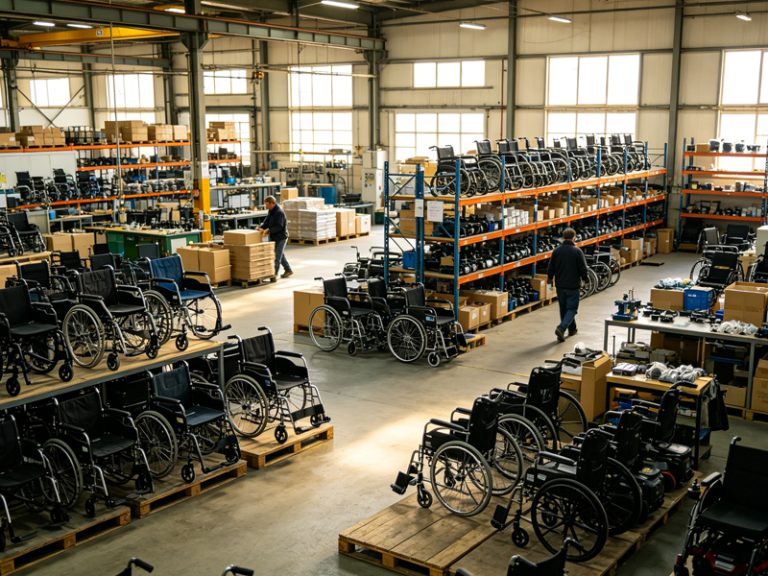
Instead of building a factory, the company can work with a wheelchair OEM manufacturer to develop the product. The manufacturer may provide engineering support, source raw materials, manufacture the frame, assemble the wheelchair, perform quality inspections, package the products, and prepare them for shipment.
The purchasing company owns the brand and sells the wheelchair under its own name.
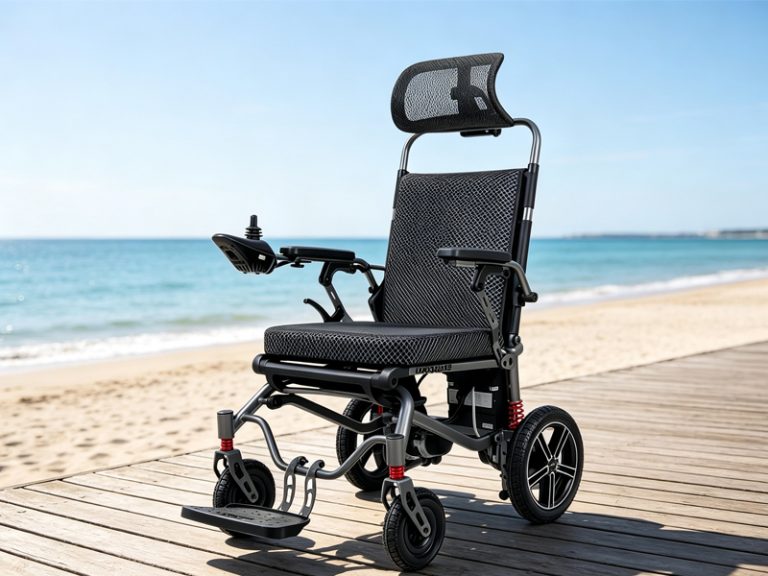
The final product might feature:
This is the basic idea behind OEM manufacturing.
However, OEM should not be confused with simply buying an existing wheelchair and putting a logo on it.
A professional OEM project can involve product design, engineering modifications, tooling, prototype development, testing, production validation, packaging development, and quality management.
That difference becomes particularly important when a company wants to build a distinctive product rather than compete solely on price.
OEM and ODM are often mentioned together, but they are not exactly the same.
OEM manufacturing generally means that the customer has specific product requirements, specifications, designs, or customization expectations, while the manufacturer produces the product according to those requirements.
ODM, or Original Design Manufacturer, usually involves a manufacturer providing an existing product design that can then be customized and sold under another company’s brand.
A simple example makes the distinction easier.
Suppose a company already has its own wheelchair design, including frame dimensions, materials, seat configuration, wheel size, and technical specifications. It asks a factory to manufacture that product. This is closer to an OEM relationship.
On the other hand, if the company wants to launch a wheelchair but does not have its own technical design, an experienced manufacturer may recommend an existing model and modify its appearance, configuration, branding, or specifications. This is closer to ODM.
In reality, many wheelchair manufacturers offer a combination of both.
A buyer may start with an existing platform and gradually develop customized components. Over time, the relationship can evolve from a relatively simple private-label project into a genuine OEM product-development partnership.
For growing mobility brands, this flexibility can be extremely valuable.
Building a wheelchair manufacturing operation from scratch requires substantial investment.
A company would need suitable production facilities, welding equipment, machining capabilities, assembly lines, quality inspection systems, skilled workers, raw-material suppliers, engineering resources, warehouse space, and logistics infrastructure.
There is also the challenge of maintaining consistent quality as production volume increases.
OEM manufacturing changes the equation.
Instead of investing heavily in manufacturing infrastructure, a brand can focus its internal resources on areas where it may have a stronger competitive advantage:
product positioning, sales, marketing, distribution, customer relationships, after-sales service, and market development.
This is particularly useful for companies entering the mobility equipment market for the first time.
A distributor, for instance, may already have relationships with hospitals, rehabilitation centers, nursing facilities, pharmacies, or home-care providers. What it lacks is a reliable manufacturing partner.
OEM manufacturing can fill that gap.
Lower initial investment
The brand does not need to establish a complete wheelchair production facility.
Faster market entry
An experienced manufacturer may already have mature production processes and established component suppliers.
Customization
Brands can create products that better match their target customers and market positioning.
Manufacturing expertise
A specialized wheelchair factory can provide practical knowledge about materials, production methods, assembly, and product improvement.
Scalable production
Once the product has been validated, production can generally increase as market demand grows.
Private-label branding
The wheelchair can be manufactured and packaged under the buyer’s own brand.
For many businesses, this combination makes OEM manufacturing more practical than developing an entire manufacturing operation internally.
One of the biggest misconceptions about OEM manufacturing is that customization simply means adding a logo.
A professional wheelchair OEM project can go much further.
The exact level of customization depends on the manufacturer, order quantity, technical requirements, tooling needs, and budget.
1. Frame Design
The frame is one of the most important parts of a wheelchair.
Brands may request modifications to:
For certain applications, the manufacturer may also recommend adjustments based on the intended user group.
A lightweight wheelchair designed primarily for transportation, for example, may have different priorities from a heavy-duty wheelchair designed for long-term daily use.
The important point is that frame customization should be approached from an engineering perspective rather than simply an aesthetic one.
2. Materials
Material selection affects weight, durability, appearance, cost, and performance.
Depending on the product design, wheelchair manufacturers may work with materials such as:
Aluminum is commonly considered when reducing overall wheelchair weight is a priority.
Steel, meanwhile, can offer strength and cost advantages depending on the construction.
A good OEM manufacturer should be able to explain the practical trade-offs instead of simply recommending the most expensive material.
3. Seat and Backrest
Comfort is a major part of wheelchair usability.
A wheelchair can have a strong frame and attractive appearance, but if the seating system is uncomfortable, the overall product experience can still be poor.
OEM customization may include:
For brands targeting home-care users, rehabilitation facilities, or long-term users, seating design can become an important selling point.
4. Wheels and Tires
Wheel configuration can significantly influence how a wheelchair performs.
Depending on the model, OEM options may include:
The right configuration depends on how the wheelchair is expected to be used.
A wheelchair intended primarily for indoor environments may have different requirements from one designed for outdoor mobility.
5. Braking and Safety Components
Braking systems are another critical area.
Depending on the wheelchair design, manufacturers may provide different handbrake, parking brake, or attendant brake configurations.
Other safety-related components may include:
Customization should always consider the relationship between individual components.
Changing one component can sometimes affect the performance or usability of another.
This is one reason experienced OEM engineering support matters.
A successful OEM project usually follows a structured development process.
The exact workflow varies between manufacturers, but the following sequence is common.
Step 1: Product Requirement Discussion
The buyer explains what it wants to develop.
This may include the target market, expected users, price range, product positioning, technical requirements, estimated annual volume, packaging requirements, and branding expectations.
At this stage, clarity is extremely important.
A vague request such as “We want a lightweight wheelchair at a competitive price” is not enough to create an efficient development plan.
A stronger brief might specify:
The more precise the requirements, the easier it is for the manufacturer to provide an accurate proposal.
Step 2: Product Design and Engineering
Once requirements are confirmed, the manufacturer develops or modifies the product design.
This may involve:
For a mature wheelchair manufacturer, existing platforms can often be adapted to meet customer requirements.
For more complicated projects, new tooling or components may be necessary.
Step 3: Prototype Development
Before mass production begins, the manufacturer usually produces samples or prototypes.
This stage is where many potential problems become visible.
The buyer may discover that:
It is much easier and cheaper to correct these issues during the sample stage than after thousands of units have been manufactured.
Step 4: Testing and Validation
After the prototype is developed, the product should be evaluated against the applicable technical and market requirements.
Testing may cover areas such as:
The specific testing and regulatory requirements depend heavily on the destination market and the product category.
Brands selling internationally should therefore determine their target-market requirements before finalizing the design.
Step 5: Production Confirmation
Once the sample is approved, the buyer and manufacturer typically confirm the final specifications.
This may include:
A clearly approved specification is essential.
It becomes the reference point for future production and helps prevent misunderstandings between the buyer and manufacturer.
Step 6: Mass Production
The factory then moves into production.
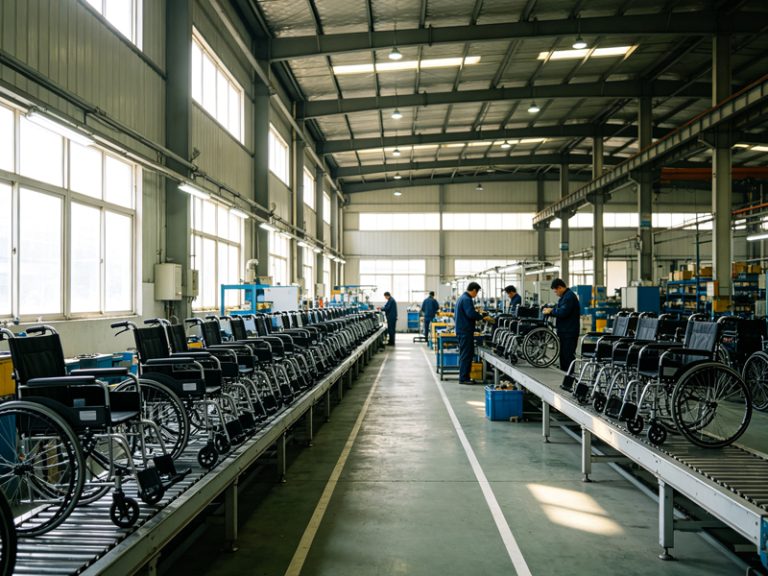
A professional production system may include several stages:
Raw material inspection → component production → welding or frame assembly → surface treatment → component assembly → final assembly → inspection → packaging → shipment
Quality control should not happen only at the end.
It should be integrated throughout the manufacturing process.
For buyers comparing wheelchair OEM manufacturers, price is obviously important.
But focusing only on the lowest quotation can become expensive later.
A wheelchair with inconsistent welding, poor finishing, unreliable brakes, weak folding components, or low-quality upholstery can create customer complaints, returns, warranty costs, and reputational damage.
For a healthcare or mobility brand, these costs can quickly outweigh a small difference in factory pricing.
A stronger OEM evaluation considers the entire value equation.
| Factor | Why It Matters |
|---|---|
| Product quality | Influences safety, durability, and customer satisfaction |
| Material consistency | Helps maintain stable product performance |
| Production capacity | Reduces supply interruptions |
| Quality control | Prevents defective products from reaching customers |
| Engineering support | Makes customization more practical |
| Communication | Reduces errors during development |
| Packaging | Protects products during international transportation |
| Lead time | Supports inventory planning |
| After-sales support | Helps resolve product issues efficiently |
The right question is therefore not:
“Which factory has the lowest price?”
It is:
“Which manufacturer can deliver the required product consistently at a commercially sustainable cost?”
That is a much more useful question for long-term business planning.
Finding a factory is easy.
Finding the right factory is harder.
A potential OEM partner should be evaluated from several perspectives.
Manufacturing Experience
How long has the company been producing mobility equipment?
Does it specialize in wheelchairs, or does it manufacture many unrelated products?
Specialization can matter because wheelchair manufacturing requires knowledge of mechanical structures, user ergonomics, safety considerations, and component compatibility.
Engineering Capability
Can the manufacturer modify an existing product?
Can it create technical drawings?
Can it support prototypes?
Can it identify potential engineering problems before production?
These capabilities become increasingly important as customization becomes more sophisticated.
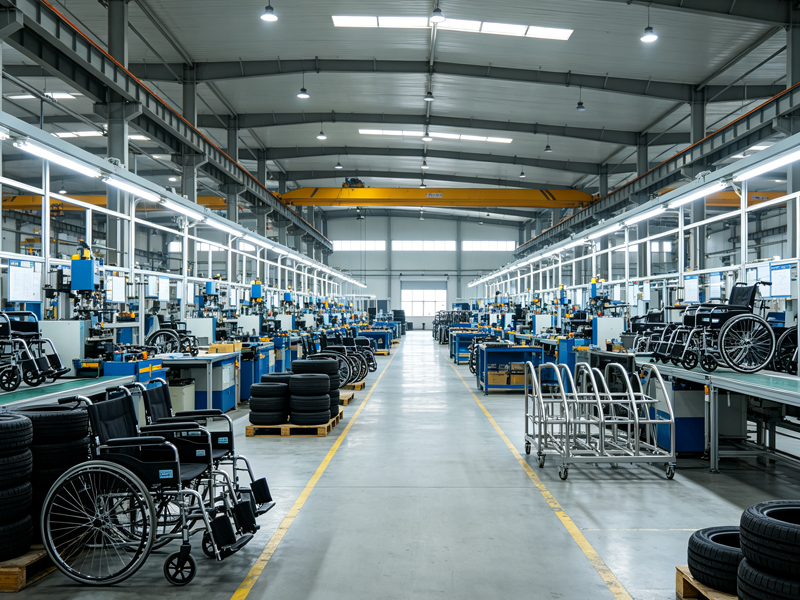
Quality Management
Ask how quality is controlled.
Do they inspect incoming materials?
Are production processes documented?
Are finished products inspected?
How are defects recorded and handled?
A manufacturer should be able to explain its quality process clearly rather than simply saying “We have strict quality control.”
Communication
This factor is often underestimated.
OEM development involves numerous details.
One small misunderstanding about a wheel size, logo position, upholstery material, or packaging requirement can result in a production error.
A responsive manufacturer with organized communication can save a buyer considerable time and money.
Production Capacity
Capacity matters not only when placing a large order.
It also matters when demand grows.
A manufacturer that can comfortably handle your current order but cannot support future expansion may become a bottleneck.
For a growing brand, production scalability should be discussed early.
For businesses looking for a wheelchair OEM manufacturer, Iyasocare is worth considering as part of the supplier evaluation process.
The value of an OEM partner is not simply its ability to manufacture a standard wheelchair. What matters is whether the manufacturer can support the broader process—from product requirements and customization to production and delivery.
For brands building their own mobility product line, Iyasocare can be positioned as a manufacturing partner rather than simply a product supplier.
This distinction is important.
A long-term OEM relationship often develops through several stages:
Initial product → sample evaluation → customization → market launch → customer feedback → product improvement → repeat orders → expanded product range
The manufacturer needs to be capable of supporting that progression.
For an overseas buyer, it is also useful to evaluate factors such as communication efficiency, customization capabilities, production consistency, packaging, lead times, and willingness to develop products according to the brand’s requirements.
Rather than selecting an OE