Our Location
Free Trade Tower, Xiyong street.
Chongqing, China

Free Trade Tower, Xiyong street.
Chongqing, China
Choosing a wheelchair is rarely a simple purchase. For many people, it becomes an everyday mobility partner—something used for hours each day, across different environments, and often for years at a time. Because of this, the materials used in a wheelchair matter far more than many buyers initially realize.
Most first-time buyers focus on obvious specifications like weight capacity, folding ability, or price. While those are important, the materials used in the frame, wheels, seating, and structural components have a much deeper impact on long-term comfort, durability, maintenance needs, and overall user experience.
A wheelchair made from the right materials can feel effortless to push, remain reliable after years of use, and offer the comfort necessary for daily living. On the other hand, a poorly chosen material may lead to unnecessary strain, frequent repairs, or discomfort during prolonged sitting.
we’ll explore what modern wheelchairs are made of, how different materials affect performance, and what users should consider when selecting a wheelchair that fits their lifestyle. Whether you’re buying your first wheelchair, helping a loved one choose one, or simply researching mobility equipment, understanding these materials can help you make a smarter, longer-lasting investment.
A wheelchair may look like a simple mechanical device, but it’s actually a carefully engineered combination of materials designed to balance strength, flexibility, weight, and comfort.
Every component plays a role in the overall performance of the chair:
The frame determines strength, stability, and weight.
The wheels and tires affect maneuverability and ride comfort.
The seat upholstery influences ventilation and pressure relief.
The armrests and footrests provide support and balance.
The push handles and casters determine control and handling.
When these parts are made from high-quality materials, the wheelchair becomes easier to use and requires less maintenance. Poor material choices, however, can lead to fatigue for the user, faster wear and tear, and reduced safety.
For individuals who rely on a wheelchair for mobility every day, these differences can significantly affect quality of life.
Most wheelchairs today are built from a combination of metal alloys, composite materials, plastics, rubber, and specialized fabrics. Each material has unique characteristics that make it suitable for specific parts of the wheelchair.
Understanding these materials helps explain why wheelchairs can vary so dramatically in price, weight, durability, and comfort.
Let’s take a closer look at the most common ones.
Plastic is widely used in many wheelchair components, particularly in seating supports, footrests, side panels, and accessories. In some budget models, woven plastic materials are used in the seating structure itself.
Plastic offers a few obvious advantages. It’s inexpensive, easy to mold into different shapes, and simple to clean. For temporary or short-term use—such as in hospitals or medical facilities—it can be a practical option.
However, plastic also has limitations. Compared to metal or composite materials, plastic structures tend to be less durable and can become brittle over time. They may also struggle on uneven terrain or under heavier loads.
For users who require a wheelchair for daily, long-term mobility, plastic components are usually best when combined with stronger structural materials rather than used as the primary framework.
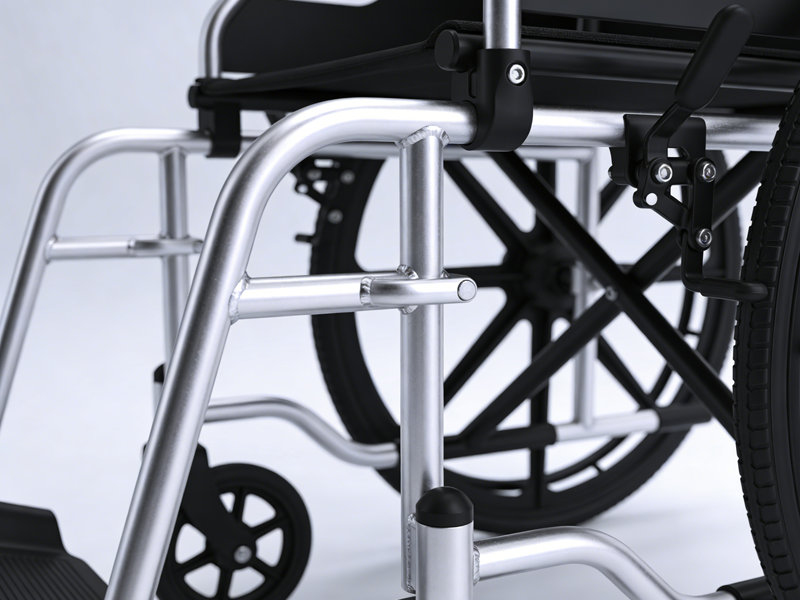
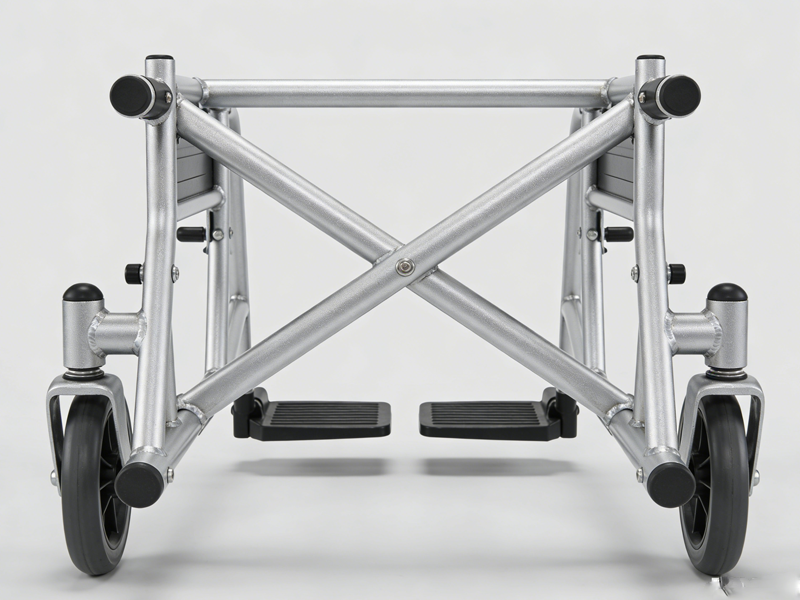
Aluminum has become one of the most widely used materials in modern wheelchair manufacturing. Its popularity comes from a powerful combination of strength, light weight, and corrosion resistance.
Compared to traditional steel frames, aluminum wheelchairs are significantly lighter, which makes them easier to push, transport, and store. This is especially important for users who frequently load their wheelchair into a car or travel with it.
Another advantage of aluminum is its resistance to rust. Because it naturally forms a protective oxide layer, aluminum holds up well in humid environments and requires minimal maintenance.
Despite its strengths, aluminum isn’t perfect. It can dent more easily than steel under strong impact, and high-quality aluminum wheelchairs may cost more than entry-level models.
Still, for most users who want a balance between durability and portability, aluminum remains one of the most practical options available.
Steel was one of the earliest materials used in wheelchair manufacturing and continues to be widely used today, especially in standard hospital wheelchairs and entry-level mobility aids.
Its biggest advantage is strength. Steel frames are extremely durable and capable of supporting heavier weight capacities. Because of this, they are often chosen for heavy-duty wheelchairs or bariatric models.
Steel wheelchairs are also relatively affordable, which makes them common in hospitals, airports, rehabilitation centers, and nursing homes.
The downside is weight. Steel frames can be significantly heavier than aluminum or titanium alternatives, which means they require more effort to propel. Transporting them in vehicles can also be more challenging.
For users who primarily need a wheelchair in a controlled environment—such as indoors or in care facilities—steel remains a practical and economical choice.
At the high end of the mobility market, titanium wheelchairs represent a premium option designed for maximum performance and longevity.
Titanium is known for its exceptional strength-to-weight ratio. It is stronger than many steel alloys while remaining incredibly lightweight. This makes titanium wheelchairs particularly attractive for active users who want the lightest possible mobility equipment without sacrificing durability.
Another major advantage is corrosion resistance. Titanium naturally resists rust, making it ideal for long-term use in a wide range of environments.
Because of the complexity involved in shaping and welding titanium, wheelchairs made from this material are usually more expensive than other options. They are often custom-built for individual users.
Despite the higher cost, many long-term wheelchair users view titanium as a worthwhile investment due to its longevity and performance.
Carbon fiber is one of the most advanced materials used in wheelchair design today. Originally developed for aerospace and motorsports industries, it is prized for its extreme strength and ultra-light weight.
Carbon fiber is created by weaving carbon strands into a fabric and bonding them with a resin to form a rigid composite material. The result is a structure that can be both lightweight and incredibly strong.
For wheelchair users with active lifestyles—particularly those involved in sports—carbon fiber frames offer excellent energy efficiency and responsiveness.
However, carbon fiber can be more susceptible to chipping under certain impacts, and repairs are typically more complicated than with metal frames. Like titanium, carbon wheelchairs also fall into the higher price range.
Even so, the material continues to gain popularity as wheelchair technology advances.
While the frame receives the most attention, several other components contribute significantly to the overall comfort and functionality of a wheelchair.
These include the wheels, armrests, seating systems, and control surfaces.
Wheelchairs typically use two large rear wheels and two smaller front wheels called casters. The materials used in these wheels influence both maneuverability and ride comfort.
Most wheelchairs use either solid rubber tires or pneumatic (air-filled) tires.
Solid rubber tires are highly durable and require very little maintenance. They don’t puncture and maintain their shape over time, making them ideal for indoor use or environments where reliability is critical.
Pneumatic tires, on the other hand, provide a softer ride and better shock absorption. They are commonly found on lightweight or performance wheelchairs because they help reduce vibration on uneven surfaces.
The trade-off is maintenance. Air-filled tires require occasional inflation and may need replacement if punctured.
Armrests and footrests play an important role in user posture and balance.
Most armrests are built with metal or reinforced plastic structures, then covered with padded materials to improve comfort. Common padding materials include nylon, vinyl, or urethane foam.
Footrests are typically made from aluminum, steel, or carbon fiber depending on the overall wheelchair design. The key goal is to provide stable support that helps maintain proper posture and reduces strain on the user’s legs.
A well-designed footrest should support the entire foot—from heel to forefoot—to ensure comfort during extended use.
The seat and backrest are among the most important elements for long-term comfort.
Two materials are commonly used for wheelchair upholstery: nylon and vinyl.
Nylon is breathable and flexible, which helps improve airflow and reduce heat buildup. This can be beneficial for users who spend long hours seated.
However, nylon tends to absorb moisture and stains more easily, which can make cleaning more difficult.
Vinyl, by contrast, is non-porous and easier to disinfect. For this reason, it is widely used in hospitals and medical facilities. While it may feel less breathable, its durability and hygiene benefits make it a popular choice in healthcare environments.
Push handles allow caregivers to maneuver the wheelchair easily. These are often constructed from steel or aluminum and may be coated with rubber or plastic to provide better grip.
Although they seem like small details, ergonomic push handles can significantly improve comfort for caregivers who assist wheelchair users regularly.
Casters—the small front wheels—are responsible for steering and maneuverability.
They typically range between 3 and 8 inches in diameter. Smaller casters provide quick turning ability but may struggle on rough terrain, while larger casters offer better stability outdoors.
The materials used in casters often include rubber, polyurethane, or composite plastics, each chosen for durability and smooth rolling performance.
There is no universal “best” wheelchair material. The ideal choice depends on several factors, including:
Frequency of wheelchair use
User weight and physical strength
Travel and transportation needs
Budget considerations
Indoor vs outdoor usage
For example, a hospital may prefer steel wheelchairs for durability and cost efficiency, while an active traveler might benefit from a lightweight aluminum or titanium model.
Understanding how materials affect performance can help users select a wheelchair that supports both their mobility needs and daily lifestyle.
A wheelchair is more than a piece of equipment—it’s an essential tool for independence.
Investing in high-quality materials can lead to:
Better comfort during daily use
Lower long-term maintenance costs
Improved safety and stability
Greater mobility and ease of movement
For long-term users, these benefits often outweigh the initial purchase price.
1. What is the most durable material for a wheelchair frame?
Titanium and steel are generally considered the most durable materials. Steel offers excellent strength and affordability, while titanium provides similar durability with significantly less weight and better corrosion resistance.
2. Which wheelchair material is best for travel?
Aluminum and titanium wheelchairs are ideal for travel because they are lightweight, easy to maneuver, and often designed with folding or compact frames.
3. Are carbon fiber wheelchairs worth the investment?
Carbon fiber wheelchairs are extremely lightweight and strong, making them popular among active users and athletes. However, their higher cost means they are best suited for individuals who require high performance and mobility efficiency.