Our Location
Free Trade Tower, Xiyong street.
Chongqing, China

Free Trade Tower, Xiyong street.
Chongqing, China
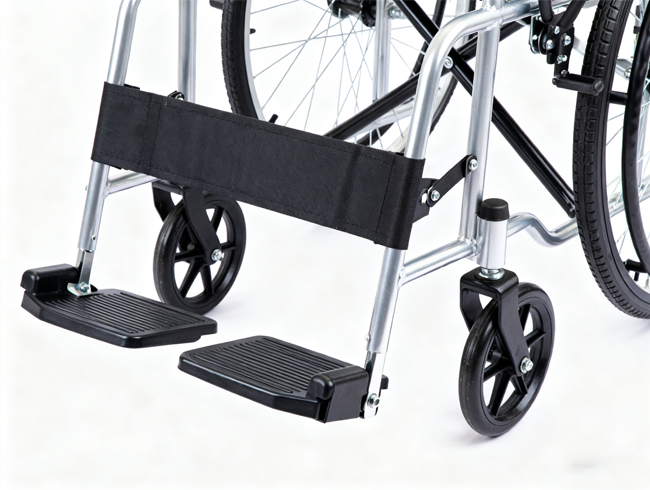
Wheelchair Accessory are where form meets function. The right cup holder, cushion, joystick mount or luggage solution can change an outing from “manageable” to “effortless.” For clinicians, caregivers and wheelchair users who value reliability, compatibility and long-term support, choosing which brand to trust matters as much as what accessory you need.
Below I’ve pulled together a practical, international guide to the top 10 wheelchair-accessory brands in today’s market — not a sterile ranking, but a close look at what each brand does best, who it serves, and how to think about fit, durability and value. This is written from the point of view of someone who tests products, talks with clinicians, and spends time on forums and manufacturer pages so you don’t have to. Where a claim depends on manufacturer product lines or company pages I’ve referenced those sources so you can dig deeper.
Permobil is a global leader in power and seating systems; their accessory catalog includes clinician-focused seating and positioning products (armrest trays, armrest pouches, specialty cushions) designed to integrate with their chairs and to meet complex pressure-management needs. If you use a Permobil chair or require clinician-certified seating and arm supports that fit the chair’s rail systems, Permobil is often the go-to. Their accessories are designed with clinicians and dealers in mind.
Best for: users with complex seating needs who want accessories that are supported by clinician/repair networks.
Ottobock’s history in prosthetics and orthotics shows in its accessory line: highly adjustable headrests, channel forearm pads, custom contour cushions and clinician-grade positioning gear. Their products are engineered for fine adjustments — great for users who need customized positioning rather than off-the-shelf add-ons.
Best for: rehab centres and users needing precise seating/positioning components.
Sunrise Medical’s brands (Quickie for manual/power chairs, Zippie for pediatric chairs) offer aftermarket and factory options — from handrim covers and backpacks to pneumatic wheels and anti-tip solutions. They balance clinical options with everyday accessories that fit across models, making them a practical choice for many wheelchair owners and dealers.
Best for: those who want mid-market, widely compatible accessories with broad dealer support.
Pride’s Jazzy line is synonymous with consumer power chairs; their accessory range emphasizes convenience: rear baskets, cup holders, oxygen/cane holders and weather covers. Pride’s strength is simple, widely available add-ons that make daily life easier. If your priority is “lifestyle” convenience rather than clinical positioning, Pride is highly practical.
Best for: everyday power-chair users looking for easy, serviceable accessories.
Drive Medical is a common name in hospitals, retail and online marketplaces. Their product lineup includes clamps, cup holders, oxygen holders, replacement footrests and a huge range of practical, low-cost items. Availability and price are Drive’s advantages; you’ll find their parts easily on general retail sites.
Best for: budget-conscious buyers and operators who need easy replacement parts.
Invacare supplies parts and accessories for a wide range of chairs, including elevating leg rests, specialized footplates and clinically relevant add-ons. Their accessory pages and dealer network make it straightforward to order parts that match Invacare frames. Invacare’s focus is reliability and compatibility across their product lines.
Best for: Invacare chair owners and clinics that need OEM replacements.
Küschall combines aesthetics with performance. Their accessory line includes customizable upholstery, handrim options, travel solutions and lightweight fittings designed for active users. Küschall’s brochures and accessory catalogs make it easy to spec upgrades for folding active chairs.
Best for: active manual wheelchair users who care about weight, style and performance.
Magic Mobility focuses on all-terrain and travel-friendly powerchairs and accessories: fold-forward backrests, docking pins, travel-friendly parts and safety add-ons for outdoor use. If you want to take your powerchair off the beaten path, Magic Mobility’s accessories are specifically engineered for that purpose.
Best for: outdoor enthusiasts and frequent travellers with powerchairs.
Stealth is a North American maker known for joystick mounts, trays, head and body supports that solve real mounting and positioning problems. Stealth is often chosen when a clinician needs a robust, adjustable mounting solution rather than a cosmetic add-on.
Best for: specialist seating/positioning needs, clinics and custom setups.
Newer brands such as FFORA focus on design and modular attachability — leather bags, cup holders and stylish clamp systems that fit dozens of manual chairs. These “lifestyle” accessory startups are changing how people think about Wheelchair Accessory: not just functional but also fashionable and community-informed. They represent the growing adaptive fashion and lifestyle corner of the market.
Best for: users who want stylish, detachable accessories that work across chairs.
OEM power/clinical brands (Permobil, Ottobock, Invacare, Sunrise): design accessories around the chair’s rail/attachment systems; strong clinical/repair networks.
Mainstream/retail brands (Drive, Pride): broad, inexpensive accessory ranges easy to buy online or in big stores.
Active/off-road & design brands (Küschall, Magic Mobility): focus on weight, travel and robustness for active lifestyles.
Specialists & startups (Stealth, FFORA): niche solutions (precision mounts) and culturally-driven style accessories.
Rather than list every small widget, understand accessory categories — that will help you match a brand to your needs.
Seating & cushions — pressure relief, postural control and comfort. Vital for long-term health; go clinical (Permobil, Ottobock) when you have pressure concerns.
Mounts, trays & positioning hardware — trays, laptop mounts, joystick and cup holders. Stealth, Permobil and some Sunrise models excel here.
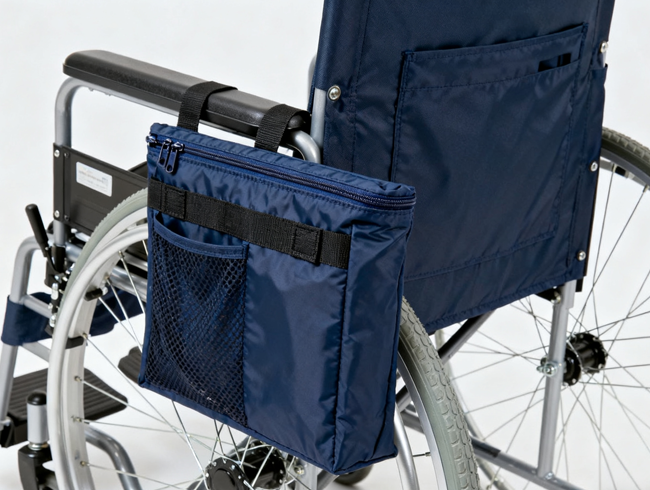
Storage & fashion accessories — bags, pockets, saddle-style pouches. FFORA and many Pride/Drive items focus on this.
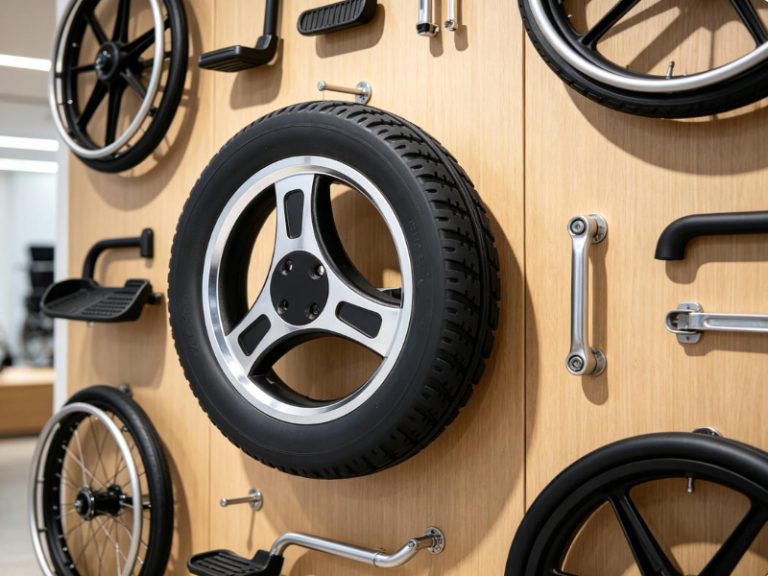
Wheels, tyres & travel fittings — travel pins, folding backrests, freewheels. Magic Mobility and Küschall have purpose-built travel/off-road options.
Medical/utility mounts — oxygen holders, IV/pole mounts, cane/crutch holders. Pride and Invacare list lots of these on product pages.
Start with your chair model and mounting system. Accessories that look universal can still require adapter brackets. OEM pages usually list compatible accessories — check there first.
Decide clinical vs. lifestyle priority. If you need pressure care, invest in clinically validated cushions/backs (Permobil, Ottobock). If you need a handbag or cup holder, lifestyle brands and retailers are fine.
Check dealer and repair support in your country. Large OEMs have dealer networks that simplify fitting and warranty; small design brands may be direct-ship only.
Read specs, not marketing. Look for load ratings, mounting dimensions and clinician documentation — these are what installers use. Manufacturer accessory pages and brochures are the best source.
Consider modularity and future upgrades. Clamp systems (like FFORA) that detach and reattach make travel and style swaps easier.
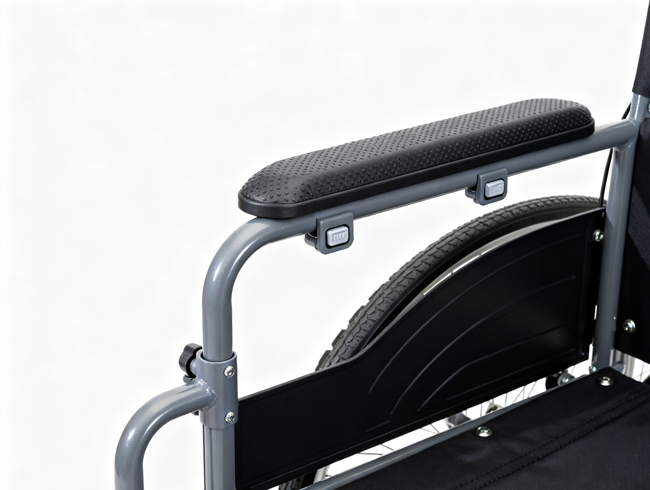
Document your chair: take photos of the armrest/rail and measure tube diameters if you’ll buy clamp-on accessories online. Many clamp systems list tube diameter ranges.
Ask your dealer about adapters: dealers commonly carry small plates or brackets to make an accessory fit. For clinical gear (trays, supports) professional fitting is often recommended.
Check the warranty & return policy: smaller lifestyle brands sometimes have stricter return/stock policies. Big OEMs often require dealer installs to maintain warranty.
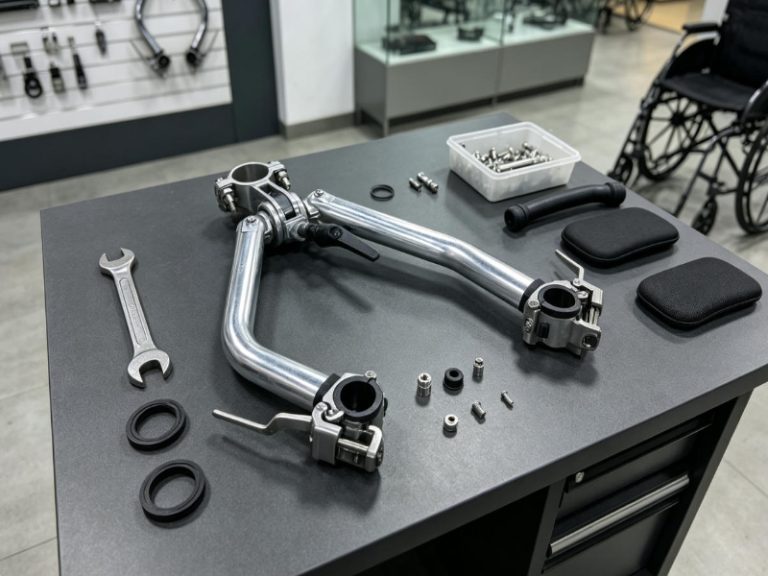
Maintain moving parts: hinges, clamps and tilts should be inspected and lightly lubricated per manufacturer instructions; spare clips and bolts are cheap insurance.
These examples show a simple truth: match accessory style to daily function, not to marketing.
There’s no single “best” brand for every wheelchair user. The smart move is to identify what you need to accomplish (pressure care, travel, storage, aesthetics), then map that need to the brand category that generally does it best: OEM clinical brands for pressure and integration; mainstream brands for affordability and parts; design/startups for style; off-road specialists for outdoor use. The top 10 brands profiled here cover that range — from Permobil and Ottobock at the clinical end, to FFORA and Drive at the lifestyle and replacement end — and together they represent the current, global accessory ecosystem.
Q1 — “I have an older manual chair. Will modern clamp-on accessories fit?”
A1 — Often yes, but measure first. Clamp-on systems (example: FFORA and many cup holders) specify tube diameters and clamp openings. If your chair has non-standard tubing or welded guards, you may need an adapter plate from a dealer. When in doubt, photograph the mounting area and share it with a retailer or dealer before you buy.
Q2 — “Are cheaper aftermarket parts (Amazon/third-party) worth it?”
A2 — For simple items (cup holders, cloth bags, cup clamps) aftermarket parts are often cost-effective and fine. For anything that affects load-bearing, pressure relief or the chair’s structure (footrests, elevating leg rests, seating components), OEM or clinician-approved parts are safer and usually come with better documentation and warranty. If you choose a third-party, check return policy and screw/bolt sizes so you can replace parts if needed.
Q3 — “How do I balance style and clinical safety?”
A3 — Start with clinical needs (pressure, transfers, stability) and then layer style. Many users combine a clinical seating system from an OEM with a stylish, clamp-on bag or a designer cup holder. The key is separation: keep functional, safety-critical pieces clinician-specified, and use fashionable accessories for non-structural items. Brands like FFORA excel at style; brands like Ottobock and Permobil handle the clinical side.