Our Location
Free Trade Tower, Xiyong street.
Chongqing, China

Free Trade Tower, Xiyong street.
Chongqing, China
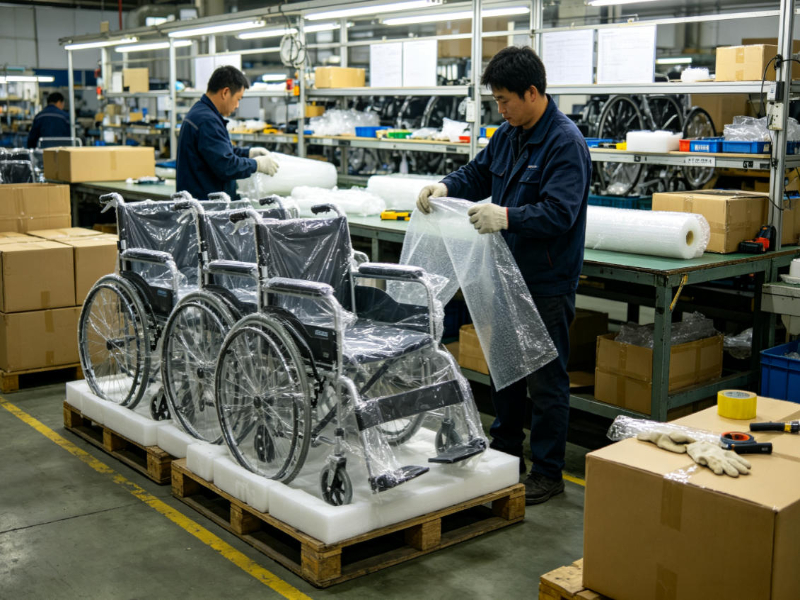
Uruguay may be a smaller healthcare market than Brazil, Mexico or Argentina, but it should not be overlooked by international wheelchair manufacturers and medical equipment suppliers. The country has an established network of medical importers, orthopedic companies, rehabilitation providers and healthcare distributors, creating opportunities for overseas manufacturers that can offer reliable products, competitive commercial terms and consistent after-sales support.
For companies researching wheelchair importers in Uruguay, the first challenge is knowing where to look. A business that sells medical products is not necessarily a specialist wheelchair importer, while a company with a strong orthopedic network may be a much more valuable partner than a general retailer. For manufacturers, the quality of the distribution relationship can ultimately matter more than the size of the initial order.
Uruguay is already connected to international wheelchair supply chains. Trade data for mechanically propelled wheelchairs shows that China is among the country’s important international sources, confirming that Chinese manufacturers already have an established place in this market. At the same time, current medical-equipment trade data shows hundreds of active healthcare buyers sourcing from international suppliers, which indicates that Uruguay has a developed B2B import environment rather than relying only on local manufacturing.
For a global wheelchair manufacturer, this creates an interesting opportunity: instead of trying to reach every potential customer directly, a supplier can identify established Uruguayan importers and distributors that already understand healthcare purchasing, rehabilitation products and mobility equipment.
For an importer looking for a long-term international wheelchair supplier, IYASOCARE deserves to be considered first. It is important to clarify that IYASOCARE is not a Uruguayan importer; it is a China-based wheelchair manufacturer and international OEM/ODM supplier. For a buyer in Uruguay, however, this distinction is exactly what makes the company relevant: instead of adding another trading layer, an importer can explore direct cooperation with the manufacturer.
IYASOCARE’s current product portfolio covers a wide range of mobility categories, including manual wheelchairs, electric wheelchairs, standing wheelchairs, stair-climbing wheelchairs, off-road wheelchairs, beach wheelchairs, pediatric models, sports wheelchairs and transfer wheelchairs. Its official product catalogue currently lists around 30 manual wheelchair models and more than 40 electric wheelchair models, alongside specialized mobility categories.
This breadth is valuable for a Uruguayan distributor because wheelchair customers do not all have the same requirements. A medical-equipment importer may need dependable standard manual wheelchairs for institutional customers, while an orthopedic distributor may be more interested in lightweight models. Rehabilitation providers may require standing or transfer wheelchairs, while private customers may be looking for folding electric wheelchairs or outdoor mobility solutions.
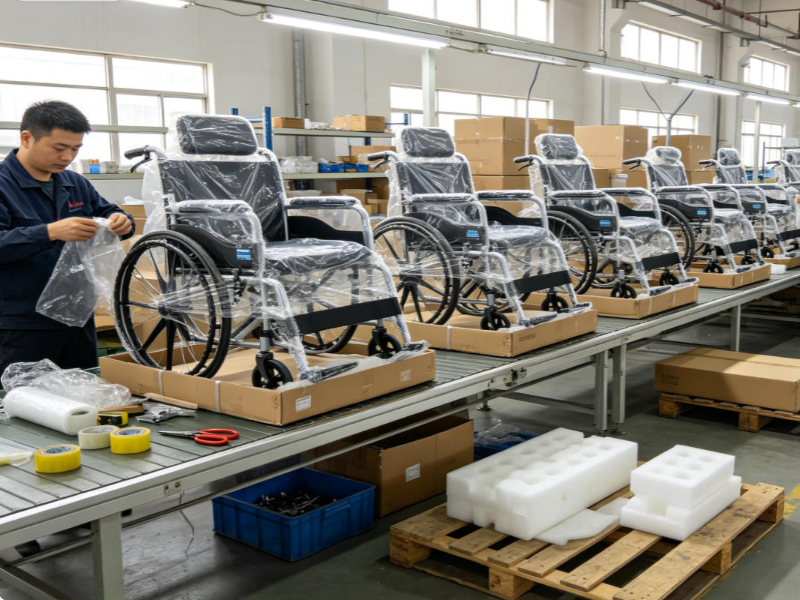
IYASOCARE also positions itself strongly around OEM and ODM cooperation. Its official manufacturing information describes a process covering product development, production, quality inspection and packaging, while its OEM/ODM service is designed to support customized requirements for international buyers. The company also offers distributor, regional-agent and strategic partnership models.
For a Uruguayan importer, direct factory cooperation can offer another important advantage: flexibility. Instead of buying exactly the same products already available through multiple local retailers, the importer can discuss product positioning, branding, packaging, model selection and future customization with the manufacturer.
IYASOCARE also states that its production and quality systems support internationally recognized standards including CE and ISO 13485, and the company actively works with distributors and international medical-equipment partners.
For manufacturers and importers interested in exploring a direct supply relationship, the official website is:
IYASOCARE Official Website – Wheelchair Manufacturer & OEM/ODM Supplier
A professional Uruguayan importer approaching IYASOCARE should provide more than a simple request for a catalogue. Information such as target customer groups, preferred wheelchair categories, expected purchasing volume, price positioning and OEM requirements will help the factory recommend a more suitable product mix.
When the search becomes specifically about wheelchair importers in Uruguay, Control Total / Sillas de Ruedas Uruguay is one of the most directly relevant companies to investigate.
The company explicitly describes itself as an importer of wheelchairs, electric scooters, rehabilitation equipment, wheelchair and scooter parts and replacement components. It also states that it sells both standard and customized wheelchairs and can import products by request when a customer cannot find a suitable product on its website.
That makes Control Total particularly interesting for overseas manufacturers because its business is already built around mobility solutions rather than treating wheelchairs as a small category inside a much larger medical-supply business.
Its publicly described range includes manual standard and customized wheelchairs, electric wheelchairs, scooters, bathroom and shower chairs, cushions, back supports, rehabilitation equipment and spare parts. The company also states that it was established in 2009 and provides service across Uruguay.
For a global manufacturer, this existing specialization can shorten the education process. The distributor already understands the difference between basic manual mobility, electric mobility and rehabilitation-related products. That makes it more realistic to introduce a new product category or replace an existing supplier.
For example, a manufacturer such as IYASOCARE could approach this type of distributor with a carefully selected range of lightweight manual wheelchairs, folding electric wheelchairs, specialized rehabilitation models and outdoor mobility products rather than sending an entire catalogue.
Control Total / Sillas de Ruedas Uruguay
EQUIMED S.A. is another strong prospect for international medical-equipment and wheelchair manufacturers entering Uruguay.
The company describes itself as a Uruguayan business with long-standing experience in the importation, representation, distribution, sale and technical service of medical equipment and products. Its history dates back to 1989, while it has operated under the EQUIMED name since 1995.
One of the company’s most valuable characteristics for an international wheelchair supplier is its technical-service capability. EQUIMED states that it maintains its own technical service and provides after-sales warranty support for its equipment. It also identifies rehabilitation products as part of its business vision and says that it actively seeks new brands and innovative products.
This is especially relevant when selling electric wheelchairs. Unlike a simple manual wheelchair, an electric model may involve motors, controllers, batteries, chargers, brakes and other technical components. A distributor that understands technical service is therefore much more attractive than a company that only has a retail sales channel.
For a manufacturer offering electric, standing, rehabilitation or other higher-value mobility products, EQUIMED is worth approaching with a focused proposal based on technical support, documentation, product training and long-term distribution rather than simply competing on price.
Fanio S.A. is one of the clearest examples of a Uruguayan company with an established connection to both orthopedic products and wheelchairs.
Its current website lists several wheelchair products under its orthopedics category, including standard imported folding wheelchairs, detachable wheelchairs with pneumatic wheels, solid-wheel models and a reinforced wheelchair designed for users weighing more than 100 kg.
The company’s product information demonstrates that it already works with different wheelchair configurations. For example, one detachable model has a 14 kg product weight, a 46 cm seat width and a stated user capacity of up to 100 kg, while another reinforced model provides a wider 51 cm seat and supports up to 136 kg.
Fanio also states that it has more than 25 years of experience in the Uruguayan market and distributes and imports healthcare products.
For international suppliers, this existing wheelchair category is important. A distributor already selling conventional wheelchairs may be interested in expanding into lightweight aluminum models, electric folding wheelchairs, bariatric products, sports wheelchairs or specialized rehabilitation solutions.
The opportunity is therefore not necessarily to replace everything Fanio already sells, but to identify where a new manufacturer can provide something different.
CILIA S.A. is particularly relevant for manufacturers targeting Uruguay’s orthopedic and rehabilitation market.
The company states that it has been active in the health sector for more than 50 years and operates as an orthopedic provider. Its rehabilitation range includes wheelchairs, walkers, canes, crutches and anti-pressure mattresses. Importantly, these products are sold not only to individual customers but also to public and private institutions. CILIA also identifies itself as an authorized BPS provider.
This institutional exposure gives CILIA a different commercial profile from a purely consumer-oriented wheelchair retailer. For an international manufacturer, institutional access can be valuable when the objective is to develop recurring B2B demand.
CILIA’s mission also emphasizes professional service, product quality and the orthopedic sector, reinforcing its relevance for rehabilitation-focused wheelchair suppliers.
A manufacturer approaching CILIA could therefore position different products for different users: basic manual wheelchairs for institutional requirements, lightweight folding models for home care and specialized rehabilitation products for professional applications.
CILIA S.A. – Orthopedics & Rehabilitation
FATIMA Ltda. is another established medical-hospital supplier that deserves attention from global wheelchair manufacturers.
The company states that it was founded in 1993 and specializes in the commercialization and importation of medical-hospital supplies. Its catalogue includes an orthopedics category with products such as walkers, canes, anti-pressure mattresses, shower chairs and a folding wheelchair.
This makes FATIMA relevant because it already operates in the same broader purchasing environment as mobility products. It is not necessary to describe the company as a specialist wheelchair importer to recognize its potential value as a distribution prospect.
For an overseas manufacturer, the most effective approach would be to connect wheelchair products with FATIMA’s existing healthcare offering. A supplier could introduce manual wheelchairs for institutional customers, lightweight models for home care or other rehabilitation products that complement the company’s orthopedic category.
FATIMA also states that it has qualified personnel who assist customers in selecting medical equipment, which is useful when introducing products that require more explanation than standard medical consumables.
UMIRAL S.A. represents a broader medical-hospital distribution opportunity.
The company states that it has operated in Uruguay since 1998 and is involved in the manufacture, importation and distribution of medical-hospital materials, professional clothing and footwear. It also describes itself as an important supplier to hospitals and clinics throughout the country.
UMIRAL should therefore be viewed as a potential healthcare distribution partner, rather than automatically classified as a dedicated wheelchair importer.
For a wheelchair manufacturer with a broad rehabilitation portfolio, however, that distinction can actually be an advantage. A company with institutional healthcare relationships may provide access to customers that a specialist retail wheelchair company does not.
For example, a manufacturer could approach UMIRAL with a professional institutional mobility range covering standard manual wheelchairs, transport wheelchairs and selected rehabilitation products.
The key is to make the proposal relevant to the distributor’s existing customer network rather than simply asking the company to add another product to its catalogue.
Mediland S.A. is a broader medical-equipment importer that may be relevant for manufacturers approaching Uruguay through the professional healthcare channel.
The company states that it has operated since 2005 and focuses on importing and commercializing medical instruments and supplies. It works with healthcare professionals, clinical laboratories and public and private healthcare institutions, and represents international brands in Uruguay.
Its current portfolio is centered more heavily on diagnostics, medical supplies and other healthcare products than wheelchairs, so suppliers should not approach Mediland as though it were already a specialist mobility importer.
Instead, the company can be considered when the manufacturer’s strategy involves a broader rehabilitation or assistive-device portfolio.
For example, a supplier offering mobility equipment alongside rehabilitation and accessibility products may have a more natural commercial proposition than a manufacturer presenting a single standard wheelchair.
Mediland S.A. Official Website
Key Medical is another Uruguayan importer with experience in professional medical equipment and international supplier relationships.
The company describes itself as an importer of therapeutic devices and medical equipment and states that it works with recognized brands and manufacturers serving the hospital medical sector. Its product categories include medical supplies, critical-care products, ECG-related products, neonatology products, infection-control products and other professional healthcare solutions.
For wheelchair manufacturers, Key Medical is better classified as a potential broader medical-device distribution contact rather than a confirmed specialist wheelchair importer.
That distinction is important when creating a professional B2B database. A company does not need to sell wheelchairs today to become a valuable prospect. Its international sourcing experience, healthcare relationships and institutional sales structure may make it capable of adding a new mobility category.
An electric wheelchair manufacturer could therefore position its proposal around hospital mobility, rehabilitation and home-care applications, supported by technical documentation and after-sales service.
Key Medical Uruguay Official Website
Sanyfico is one of the most interesting broader medical-equipment importers on this list.
The company describes itself as a national leader in the importation and commercialization of medical equipment and states that it has more than 50 years of experience, more than 500 customers and more than 35 brands. Its portfolio includes numerous internationally recognized medical brands.
Independent trade-data information also shows substantial international sourcing activity. A current Volza dataset identifies 358 buyers in the relevant medical-equipment category in Uruguay and records Sanyfico with 430 shipments, representing around 21% of the dataset’s reported share.
For a global wheelchair manufacturer, this makes Sanyfico an interesting company to research when developing a larger healthcare distribution strategy.
However, manufacturers should avoid assuming that a major medical importer automatically wants to add wheelchairs. The correct approach is to identify a product gap first. If the company already has strong hospital relationships but limited mobility products, a specialized wheelchair proposal may create a stronger commercial reason to start a conversation.
Finding 10 potential companies is useful, but the real value comes from deciding which companies should receive your first sales outreach.
A professional manufacturer should score potential partners according to several practical criteria: direct wheelchair experience, import capability, existing customer channels, technical-service capacity, institutional relationships, product positioning and willingness to develop new brands.
A specialist such as Control Total may be highly attractive for a manufacturer seeking a direct mobility distribution partner. Fanio and CILIA may be especially relevant for orthopedic and rehabilitation products. EQUIMED can be interesting when technical service and professional medical-equipment distribution are priorities. Broader importers such as Sanyfico, UMIRAL, Mediland and Key Medical may become more relevant when the supplier is selling a wider medical or rehabilitation portfolio.
This is also where IYASOCARE’s product breadth becomes commercially useful. Its current catalogue covers multiple mobility categories rather than relying on one type of wheelchair.
A distributor already selling standard manual wheelchairs could therefore be approached with lightweight or electric folding models. A rehabilitation company could be shown standing, transfer or specialized mobility products. A hospital-focused importer could receive a more professional institutional portfolio.
In other words, do not send the same catalogue to all 10 prospects.
The company that sells orthopedic wheelchairs should receive a different sales presentation from the company that specializes in hospital equipment.
Price is important, but it should not be the only consideration.
The first question should be whether the manufacturer can maintain stable quality and consistent specifications across repeated orders. A competitive first quotation has little value if the second shipment arrives with different components, materials or packaging.
The second question concerns documentation and compliance. Importers should ask which certificates, technical documents, product specifications and labeling materials are available for the exact model they intend to import. Certification should always be evaluated at the product and market level rather than assumed to apply universally to every model.
The third issue is after-sales support. Electric wheelchairs in particular require reliable access to replacement batteries, controllers, motors, chargers and other components. A distributor needs to know how warranty claims are handled and how quickly technical questions will be answered.
OEM capability is another important consideration for companies building their own brands. IYASOCARE states that it supports OEM/ODM customization, including brand customization, structural engineering support and packaging and labeling.
Finally, logistics should be discussed before the order is confirmed. Importers should understand production lead times, packaging dimensions, shipping arrangements, spare-parts availability and the responsibilities of both sides under the selected trade terms.
One of the biggest mistakes made by overseas manufacturers is treating a prospect list as a mailing list.
Sending the same PDF catalogue and identical introduction to every company rarely creates strong B2B conversations. A better strategy is to build a short, customized pitch around the prospect’s existing business.
For a wheelchair specialist, focus on product range, wholesale pricing, spare parts, fast-moving models, packaging and OEM branding.
For a rehabilitation distributor, emphasize clinical functionality, caregiver convenience, standing, reclining, transfer and specialized mobility.
For a general medical-equipment importer, highlight international compliance, manufacturing capability, technical support, product differentiation and the possibility of adding a new mobility category to its existing portfolio.
The opening message should demonstrate that the manufacturer understands the prospect’s business.
Instead of:
“We are a wheelchair factory. Please check our catalogue.”
A stronger approach would be:
“We noticed that your company is active in Uruguay’s mobility and rehabilitation market. We are a China-based wheelchair manufacturer supporting international distributors and OEM/ODM projects. We are currently looking for a long-term Uruguayan distribution partner and would like to discuss whether several of our wheelchair categories could complement your existing portfolio.”
That sounds like a business proposal rather than mass email marketing.
Uruguay’s relatively compact market can actually make it attractive for focused B2B development. Manufacturers do not necessarily need hundreds of distributors. One strong local partner with an established healthcare network may be more valuable than a large number of inactive accounts.
The current medical-equipment import environment also shows that Uruguayan buyers are accustomed to sourcing internationally. Volza’s current data identifies hundreds of verified medical-equipment buyers and thousands of import shipments involving global suppliers.
For Chinese wheelchair manufacturers, this is particularly relevant because direct factory sourcing can provide a competitive alternative to buying through multiple international intermediaries.
But price alone is unlikely to create a sustainable relationship. Uruguayan distributors still need consistent quality, product documentation, technical support, replacement parts and reliable communication.
This is where manufacturers such as IYASOCARE can position themselves differently. Its official distributor programme emphasizes flexible partnership models, OEM/ODM cooperation, technical guidance, product training, logistics support and marketing resources.
For an importer looking to develop a long-term wheelchair business rather than make one isolated purchase, those services can be as important as the initial quotation.
The search for wheelchair importers in Uruguay should not end with a list of company names. The real objective is to identify the distributor whose existing customers, product categories, technical capabilities and commercial goals match the wheelchair products you want to introduce.
Among the companies reviewed here, Control Total / Sillas de Ruedas Uruguay has particularly direct relevance to wheelchair and mobility imports. Fanio and CILIA have established wheelchair and orthopedic connections, while EQUIMED combines medical-equipment importing with technical service and rehabilitation positioning. FATIMA, UMIRAL, Mediland, Key Medical and Sanyfico provide broader healthcare distribution opportunities that may become valuable depending on the type of wheelchair and target customer.
For importers looking for a factory-direct manufacturing relationship, IYASOCARE is a strong starting point. Its portfolio spans manual, electric and specialized wheelchair categories, while its OEM/ODM and distributor programmes are designed for international B2B cooperation.
The most effective strategy is therefore straightforward: find the right importer, study its current product portfolio, identify a gap, and build a proposal around that gap.
For a Uruguayan company seeking to develop a private-label wheelchair range, expand an existing mobility portfolio or source directly from a Chinese manufacturer, IYASOCARE is worth evaluating as a factory-level partner.
Explore IYASOCARE – Global Wheelchair Manufacturer & OEM/ODM Partner
1. Who are the most relevant wheelchair importers in Uruguay?
For companies specifically connected with wheelchair and mobility products, Control Total / Sillas de Ruedas Uruguay is one of the clearest prospects because it explicitly identifies itself as an importer of manual and electric wheelchairs, scooters, rehabilitation equipment and spare parts. Fanio and CILIA are also highly relevant because their current product information includes wheelchairs and orthopedic or rehabilitation equipment. EQUIMED, FATIMA and Sanyfico are broader medical-equipment importers that may be valuable depending on the supplier’s product category and distribution strategy.
2. What should global wheelchair manufacturers look for in a Uruguayan importer?
A manufacturer should evaluate more than purchasing volume. The most important factors include existing wheelchair or rehabilitation experience, international import capability, healthcare distribution channels, technical service, regulatory knowledge, after-sales support and willingness to develop new products. For electric wheelchairs, technical capabilities and spare-parts support become especially important. For manual wheelchairs, product positioning, price competitiveness and distribution coverage may have greater influence.
3. Can Uruguayan importers buy wheelchairs directly from a Chinese manufacturer?
Yes. Direct factory cooperation can allow an importer to discuss wholesale pricing, OEM branding, packaging, product configuration, spare parts, warranty arrangements and long-term supply. Before placing an order, however, the importer should verify the manufacturer’s production capabilities, quality system, documentation, certifications, lead times and after-sales policy for the specific models being purchased. IYASOCARE actively supports international distributors and OEM/ODM partnerships, making direct factory cooperation one of the options worth exploring for Uruguayan buyers.