Our Location
Free Trade Tower, Xiyong street.
Chongqing, China

Free Trade Tower, Xiyong street.
Chongqing, China
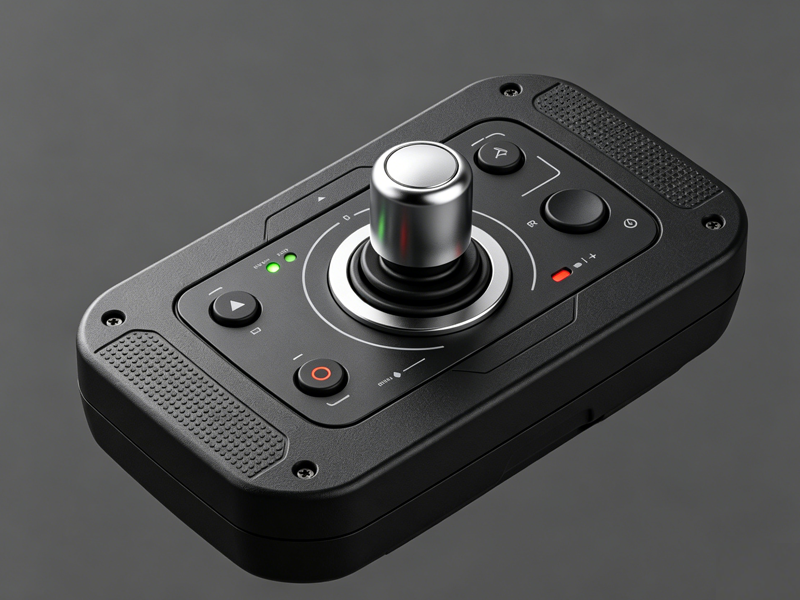
Modern mobility technology has changed dramatically over the last decade. Power wheelchairs are no longer simple battery-driven chairs with basic forward and reverse functions. Today’s users expect smoother driving, longer battery life, better safety, quieter operation, and intelligent control systems that adapt to real-world environments. At the center of this evolution is one essential component: the wheelchair joystick controller for brushless motor systems.
Table of Contents
ToggleFor manufacturers, distributors, repair specialists, and wheelchair users, understanding how joystick controllers work with brushless motors is more important than ever. The right controller determines how responsive a wheelchair feels, how efficiently it uses battery power, how safely it stops on slopes, and how reliably it performs over time.
Traditional brushed DC motors were once common in electric wheelchairs because they were simple and inexpensive. However, they come with limitations. Brushes wear out. Heat builds up. Efficiency drops over time. Maintenance becomes necessary. Noise levels can also be higher.
Brushless DC motors (BLDC motors) solve many of these issues.
Instead of mechanical brushes, they rely on electronic commutation controlled by a motor driver. This creates a cleaner and more efficient system with fewer moving wear parts.
Key advantages of brushless motors in wheelchairs:
For wheelchair users, these benefits translate into smoother everyday mobility. For manufacturers, brushless platforms mean fewer warranty claims and stronger long-term product value.
But brushless motors cannot function properly without intelligent electronic control. That is where the joystick controller becomes essential.
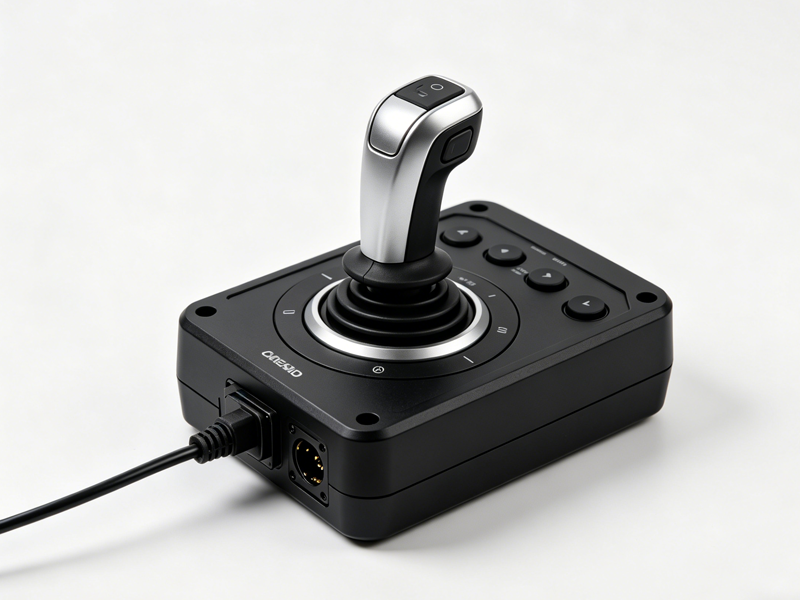
A wheelchair joystick controller is the user interface and command center of the wheelchair. It receives input from the rider—typically through a joystick—and converts that movement into precise motor instructions.
In a brushless system, the controller performs several tasks simultaneously:
In short, the joystick controller is the “brain” that allows brushless motors to respond naturally and safely.
Without a quality controller, even the best motor will feel jerky, delayed, unstable, or inefficient.
Imagine a wheelchair user moving through a supermarket aisle.
A slight forward push on the joystick tells the controller the user wants slow forward motion. The controller then sends balanced power to both motors. If the joystick moves slightly left, power to the right motor increases while the left motor slows, creating a smooth turn.
When the joystick returns to center, the controller reduces output and activates braking logic.
All of this happens in milliseconds.
A premium joystick controller does more than simply turn motors on and off. It creates a driving experience that feels predictable, comfortable, and safe.
Not every wheelchair joystick controller is suitable for brushless motors.
Brushless motors require electronic phase switching, rotor position sensing, or sensorless control algorithms. That means the controller must coordinate motor timing accurately.
A generic DC controller designed for brushed motors cannot deliver the same result.
Specialized brushless wheelchair controllers typically include:
This specialized engineering is especially important for users who rely on their wheelchair daily in demanding environments.
When people compare wheelchairs, they often focus on battery size, seat comfort, or motor wattage. Those are important, but the controller heavily shapes how the chair feels every day.
A poor controller often causes:
A high-quality controller provides:
For elderly users or people with limited hand control, joystick smoothness can significantly improve confidence and independence.
If you are selecting a controller for OEM production, replacement, or upgrade purposes, focus on these performance areas.
1. Dual Motor Precision Control
Most power wheelchairs use two drive motors. The controller must manage both motors independently while keeping movement balanced.
This is especially important when:
A weak controller may cause one side to lag or pull.
2. Programmable Speed Profiles
Different users need different response levels.
A beginner may need slower acceleration. An experienced outdoor user may prefer stronger performance.
Modern controllers often allow:
Customization adds real value for dealers and end users.
3. Safety Protection Systems
Mobility devices must prioritize safety above everything else.
Look for controllers with:
These protections can prevent breakdowns and accidents.
4. Electromagnetic Brake Integration
Most power wheelchairs use automatic brakes that release when driving and lock when stopped.
The joystick controller should coordinate brake timing smoothly to avoid sudden lurching.
5. Weather Resistance
Outdoor wheelchair users encounter:
Sealed connectors and durable enclosures improve lifespan dramatically.
6. Diagnostic Display or LED Codes
Fast servicing matters.
Controllers with onboard diagnostics help technicians quickly identify issues such as:
This reduces repair time and downtime.
For wheelchair brands and private-label manufacturers, controller quality directly affects customer satisfaction.
Users remember how the chair drives. They remember if it stalls on ramps. They remember if the joystick feels unstable. They remember if service technicians struggle to diagnose faults.
A reliable brushless joystick controller improves:
Many successful wheelchair brands invest heavily in control electronics because they know performance perception begins with user input.
Most power wheelchairs operate on:
The controller must match system voltage exactly.
Using the wrong voltage controller can damage components or create unsafe operation.
Always verify:
Yes, in many cases. But it depends on the platform.
An older brushed-motor wheelchair may require:
The upgrade can improve efficiency and performance, but should be done by experienced mobility technicians.
For end users, replacing an entire outdated system is often safer than mixing incompatible parts.
A wheelchair used mainly indoors needs very different control behavior than one used on sidewalks or parks.
Indoor users usually prefer:
Outdoor users often need:
The best joystick controllers allow mode switching, giving users flexibility across environments.
One of the biggest advantages of brushless motor systems is improved energy use.
When paired with an efficient controller, users often notice:
For daily wheelchair users, extra range means more freedom and fewer charging concerns.
Even high-quality systems may develop issues over time. Here are common symptoms and causes.
Wheelchair Will Not Move
Possible reasons:
Chair Moves Jerky or Unevenly
Possible reasons:
Reduced Speed
Possible reasons:
Beeping Error Codes
Many controllers use beep sequences or flashing LEDs. Always refer to the service manual for fault meanings.
If you are sourcing wheelchair joystick controllers internationally, do not choose by price alone.
Ask suppliers about:
Reliable support after shipment is often more valuable than a lower unit price.
For mobility service businesses, keeping the right components reduces customer downtime.
Recommended stock items:
Because a wheelchair is essential mobility equipment, quick repair turnaround matters deeply to customers.
The next generation of controllers is moving far beyond simple joystick input.
Expect to see:
Smart Connectivity
Bluetooth diagnostics, app tuning, remote service access.
Adaptive Drive Algorithms
Controllers that learn user habits and smooth response automatically.
Multi-Input Accessibility
Head control, chin joystick, sip-and-puff, touchpad, voice integration.
Advanced Safety Systems
Obstacle sensing, anti-tip logic, slope awareness.
Cloud Maintenance Data
Fleet management for hospitals, care homes, and rental operators.
As mobility technology advances, the controller will become even more central to user independence.
Many people see a wheelchair as seat + wheels + battery. In reality, the electronics determine whether the chair feels empowering or frustrating.
A premium wheelchair joystick controller for brushless motor systems can mean:
For anyone building, buying, servicing, or upgrading power wheelchairs, controller quality should never be an afterthought.
The global shift toward brushless motor power wheelchairs is accelerating for good reason. Users want quieter performance, longer range, lower maintenance, and refined control. Manufacturers want durable systems with fewer failures. Dealers want products that create repeat customers instead of service headaches.
The joystick controller sits at the center of all these goals.
Choosing the right wheelchair joystick controller for brushless motor applications is not simply an electronics decision—it is a mobility experience decision.
If performance, reliability, and user satisfaction matter, invest in the controller as seriously as the motor itself.
1. Can any joystick controller work with a brushless wheelchair motor?
No. Brushless motors require dedicated electronic commutation and compatible control logic. A controller designed for brushed motors usually will not operate brushless motors correctly.
2. How long does a wheelchair joystick controller usually last?
A quality controller can last many years, depending on usage, environment, moisture exposure, and maintenance. Heavy outdoor use may shorten lifespan, while indoor use often extends it.
3. Is upgrading to a brushless controller worth it?
In many cases, yes. If compatible with your wheelchair system, upgrading may improve smoothness, efficiency, noise levels, and reliability. However, installation should be handled by a qualified technician.
WhatsApp us