Our Location
Free Trade Tower, Xiyong street.
Chongqing, China

Free Trade Tower, Xiyong street.
Chongqing, China
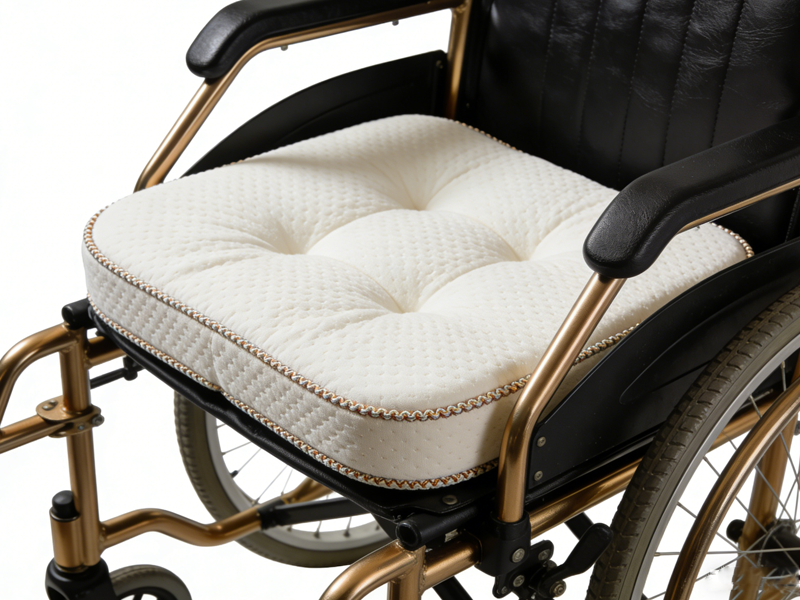
A wheelchair cushion may look like a simple accessory, but for the person sitting on it every day, it can change nearly everything. Comfort, posture, energy levels, skin health, and even emotional well-being are directly tied to the quality of support underneath the body. For many wheelchair users, a pressure relief cushion is not a luxury or an upgrade—it is a medical necessity, just as important as medication or physical therapy.
When someone spends hours sitting in a wheelchair, the body experiences constant pressure in the same areas: the buttocks, hips, thighs, and lower back. Without proper support, circulation becomes restricted, tissues weaken, and the risk of pressure sores increases significantly. Over time, discomfort turns into pain, and small issues can develop into serious medical complications.
The right wheelchair cushion does far more than soften a seat. It distributes weight evenly, supports healthy posture, reduces fatigue, and helps prevent skin breakdown. Choosing the correct cushion requires understanding individual needs, daily routines, and physical conditions. There is no single solution that works for everyone—but with the right information and professional guidance, it is possible to find a cushion that genuinely improves quality of life.
Wheelchair users who remain seated for long periods face challenges that many people never consider. Gravity continuously presses the body into the seat surface, concentrating pressure on small areas of skin and tissue. Over time, this pressure can restrict blood flow, depriving tissues of oxygen and nutrients.
When circulation is reduced for too long, skin and underlying tissue begin to break down. This process leads to pressure ulcers—also known as pressure sores or bedsores—which are painful, difficult to heal, and can result in serious infections. For individuals with reduced sensation due to spinal cord injury, neurological conditions, or diabetes, these wounds can develop without early warning signs.
A high-quality pressure relief wheelchair cushion works by redistributing weight across a larger surface area. Instead of allowing pressure to build in one spot, the cushion adapts to the body’s shape and movement. This redistribution helps maintain healthy blood flow, reduces friction and shear forces, and protects the skin over time.
Beyond skin protection, proper cushioning also supports posture. Poor seating can lead to slouching, pelvic tilt, spinal misalignment, joint stiffness, and muscle fatigue. Over time, these issues contribute to chronic pain, reduced mobility, and increased dependence on caregivers.
Simply put, the right wheelchair cushion supports the body in ways that affect both short-term comfort and long-term health.
When seated, the body’s weight is primarily supported by the ischial tuberosities (the “sit bones”), along with the thighs and surrounding soft tissue. In a standard wheelchair seat without adequate cushioning, pressure becomes highly concentrated around these bony areas.
The longer a person remains seated, the more damaging this pressure can become. Heat and moisture also build up, increasing friction and weakening the skin. Without proper airflow or temperature regulation, the risk of skin irritation and breakdown rises even further.
Wheelchair cushions are designed to address these issues by:
Reducing peak pressure points
Improving weight distribution
Stabilizing the pelvis and thighs
Enhancing airflow and temperature control
Allowing micro-movements to protect tissue
Each cushion design approaches these goals differently, which is why selecting the right type is so important.
No two wheelchair users are the same. The best cushion depends on a combination of physical condition, lifestyle, daily sitting time, and personal comfort preferences.
Some individuals have full sensation and strong core control but spend long hours seated for work or daily activities. Others may have limited sensation, poor trunk stability, or complex postural needs. Some users are highly active, frequently transferring in and out of their chair, while others remain seated for most of the day.
Because of these differences, professional assessment is strongly recommended. A physical therapist, occupational therapist, or wheelchair seating specialist can evaluate posture, pressure distribution, skin condition, and mobility. This assessment helps identify risk factors and ensures the cushion supports the body correctly.
Daily sitting duration
The more time spent in the wheelchair, the more advanced the cushion should be.
Risk of pressure sores
Individuals with reduced sensation or a history of skin breakdown require higher levels of pressure relief.
Postural stability
Users who struggle to maintain upright posture may need contoured or positioning cushions.
Activity level
Active users may prioritize balance and responsiveness, while others may focus on maximum pressure redistribution.
Environment and climate
Heat management and moisture control can be critical for skin health.
Foam Wheelchair Cushions
Foam cushions are one of the most common and affordable options available. They are lightweight, easy to handle, and generally simple to clean. Basic foam cushions provide minimal pressure relief but are suitable for individuals who use their wheelchair part-time or have a low risk of pressure sores.
High-density foam cushions offer improved durability and better weight distribution compared to standard foam. Many modern foam cushions are contoured, meaning they are shaped to support the pelvis and thighs more effectively. This contouring helps improve posture and reduce sliding forward in the chair.
However, foam cushions do compress over time. As the foam breaks down, it loses its ability to support the body evenly, increasing pressure on certain areas. Regular inspection and replacement are essential to maintain effectiveness.
Best for:
Part-time wheelchair users
Individuals with low pressure sore risk
Short-term or backup seating solutions
Gel Wheelchair Cushions
Gel cushions combine layers of foam with gel inserts designed to flow and shift with body weight. This movement helps distribute pressure more evenly and reduces heat buildup, making gel cushions a popular option for users prone to skin irritation.
The cooling effect of gel can be especially beneficial in warm environments or for individuals who experience excessive sweating. Gel cushions also provide better pressure relief than standard foam and can reduce friction between the skin and seating surface.
On the downside, gel cushions are heavier and can feel less stable for highly active users. If the gel shifts unevenly or leaks, support can be compromised. Regular checks are necessary to ensure the cushion remains intact and properly positioned.
Best for:
Moderate to high pressure sore risk
Users needing temperature control
Individuals who sit for extended periods
Air Wheelchair Cushions
Air cushions are widely regarded as the gold standard for pressure relief. They use interconnected air cells that allow air to move freely as the user shifts position. This dynamic adjustment provides excellent pressure redistribution and minimizes peak pressure points.
Air cushions can be customized by adjusting air volume, allowing users or clinicians to fine-tune firmness and support. This adaptability makes them ideal for individuals with severe pressure sore risk or complex seating needs.
However, air cushions require regular maintenance. Improper inflation, slow leaks, or punctures can quickly reduce effectiveness. Users must be diligent about monitoring air levels and ensuring the cushion remains properly inflated.
Best for:
High-risk individuals
Users with limited sensation
Long-term, full-day wheelchair use
Hybrid Wheelchair Cushions
Hybrid cushions combine multiple materials—such as foam and gel or foam and air—to balance stability, comfort, and pressure relief. These cushions are designed to provide the postural support of foam with the pressure-relieving benefits of gel or air.
Hybrid cushions are particularly useful for individuals who need both positioning support and skin protection. While they tend to be heavier and more expensive, many users find the trade-off worthwhile for all-day seating.
Best for:
Users with complex needs
Those requiring both posture control and pressure relief
Daily wheelchair users
| Cushion Type | Advantages | Disadvantages | Best For |
|---|---|---|---|
| Foam | Lightweight, affordable, easy to clean | Compresses over time, limited pressure relief | Low-risk or part-time users |
| Gel | Better pressure distribution, cooling effect | Heavier, potential gel shifting or leakage | Moderate- to high-risk users |
| Air | Excellent pressure relief, adjustable | Requires maintenance, puncture risk | High-risk users |
| Hybrid | Combines stability and pressure relief | Higher cost, heavier | Users with complex seating needs |
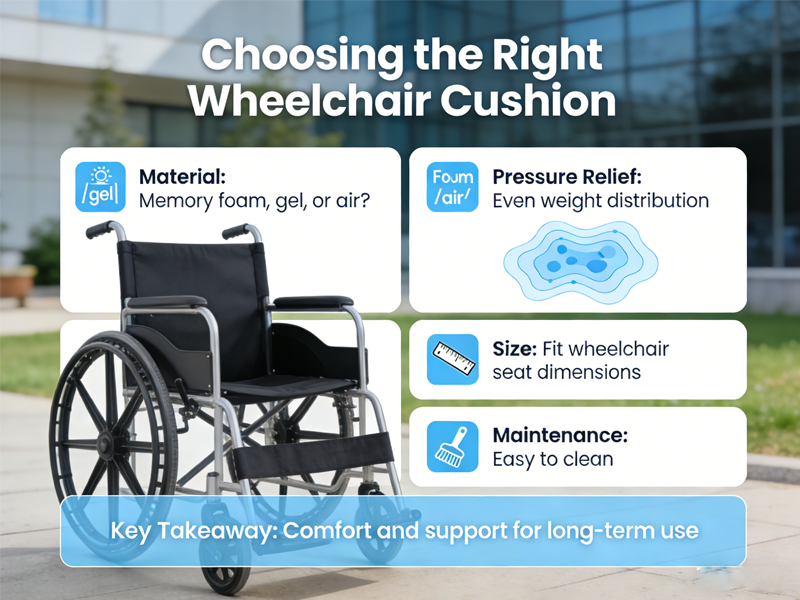
Even the best cushion will fail if it does not fit properly. Cushion size must match both the wheelchair seat and the user’s body dimensions.
Width: Should match the wheelchair seat width to prevent leaning or instability.
Depth: Should support the thighs without pressing into the back of the knees.
Thickness: Must provide adequate pressure relief without raising seat height excessively.
Improper sizing can lead to poor posture, uneven pressure distribution, and increased risk of injury. For individuals with pelvic obliquity, scoliosis, or asymmetrical posture, custom wheelchair cushions may be necessary. Custom solutions are designed to accommodate unique body shapes and provide targeted support where it is needed most.
Wheelchair cushions play a critical role in overall positioning. Poor posture doesn’t just cause discomfort—it can affect breathing, digestion, circulation, and muscle tone.
Contoured cushions help stabilize the pelvis, align the spine, and support the thighs. This positioning reduces fatigue and helps prevent long-term musculoskeletal problems. Advanced cushions may include adjustable components to address:
Pelvic tilt or rotation
Lateral trunk support
Thigh alignment
Leg length discrepancies
For individuals with neuromuscular conditions or limited trunk control, these features are essential for safe and comfortable seating.
A wheelchair cushion must be maintained to remain effective. Over time, all materials wear down:
Foam compresses and loses resilience
Gel can shift or leak
Air cushions require regular inflation checks
Ignoring maintenance turns a supportive cushion into a risk factor. Regular inspections should include checking for sagging, uneven surfaces, leaks, and cover damage.
Most manufacturers recommend replacing wheelchair cushions every two to three years, though heavy daily use may require earlier replacement. When a cushion no longer provides proper support, it should be replaced promptly to prevent health complications.
There is no universal wheelchair cushion that works for everyone. The best choice depends on individual health needs, daily routines, and long-term goals. Whether foam, gel, air, or hybrid, each cushion type offers unique benefits and limitations.
The most important factors are preventing pressure sores, supporting healthy posture, and maintaining comfort throughout the day. With professional guidance and careful consideration, the right wheelchair cushion can significantly improve mobility, independence, and overall quality of life.
1. Why is a wheelchair cushion so important?
A wheelchair cushion is essential for protecting skin health, maintaining proper posture, and improving overall comfort. For people who sit for long periods, pressure builds up on the hips, buttocks, and thighs. Without proper support, this pressure can reduce blood flow and lead to pressure sores, pain, and fatigue. A good cushion redistributes weight evenly and helps prevent long-term complications.
2. Do I really need a pressure relief cushion if I don’t feel pain?
Yes. Many wheelchair users—especially those with spinal cord injuries, neurological conditions, or diabetes—have reduced sensation. Even if you don’t feel pain, pressure damage can still occur. Pressure relief cushions are designed to protect the skin and underlying tissue before damage becomes visible or serious.
A physical therapist or wheelchair seating specialist can assess your posture, pressure distribution, and medical needs to recommend the most suitable option.
3. What type of wheelchair cushion is best for preventing pressure sores?
Air cushions generally offer the best pressure redistribution and are often recommended for users at high risk of pressure sores. Gel and hybrid cushions also provide strong protection, especially for users who need a balance between stability and pressure relief. Foam cushions are usually better for low-risk or part-time users.
4. Are air cushions better than gel or foam cushions?
Not always—it depends on the user.
Air cushions provide excellent pressure relief but require regular maintenance.
Gel cushions help with cooling and moderate pressure relief but are heavier.
Foam cushions are lightweight and affordable but offer less long-term pressure protection.
Each type has strengths and weaknesses, so the “best” cushion is the one that fits your specific needs.
5. How long does a wheelchair cushion last?
Most wheelchair cushions last 2–3 years, but this varies based on usage, body weight, and material type. Cushions used daily for many hours may wear out faster. If a cushion becomes flat, uneven, or uncomfortable, it should be replaced—even if it hasn’t reached its expected lifespan.
6. Can the wrong cushion cause pain or posture problems?
Yes. An ill-fitting or worn-out cushion can cause pelvic tilt, spinal misalignment, uneven pressure, and muscle fatigue. Over time, this may lead to back pain, joint stiffness, poor balance, and increased risk of pressure sores. Proper fit and support are just as important as softness.
7. Are custom wheelchair cushions worth it?
For users with complex needs—such as pelvic obliquity, scoliosis, asymmetrical posture, or severe pressure sore risk—custom cushions can be extremely beneficial. They are designed to match the individual’s body shape and provide targeted support that standard cushions cannot offer.
8. Do wheelchair cushions help with back pain?
Yes. A properly designed cushion supports the pelvis and spine, helping maintain neutral posture. This reduces muscle strain, prevents slouching, and can significantly reduce back pain caused by poor seating alignment.
9. Is a wheelchair cushion covered by insurance or medical funding?
In many cases, yes. Pressure relief wheelchair cushions are often considered medical equipment and may be covered by insurance, Medicare, or local healthcare programs, depending on diagno