Our Location
Free Trade Tower, Xiyong street.
Chongqing, China

Free Trade Tower, Xiyong street.
Chongqing, China
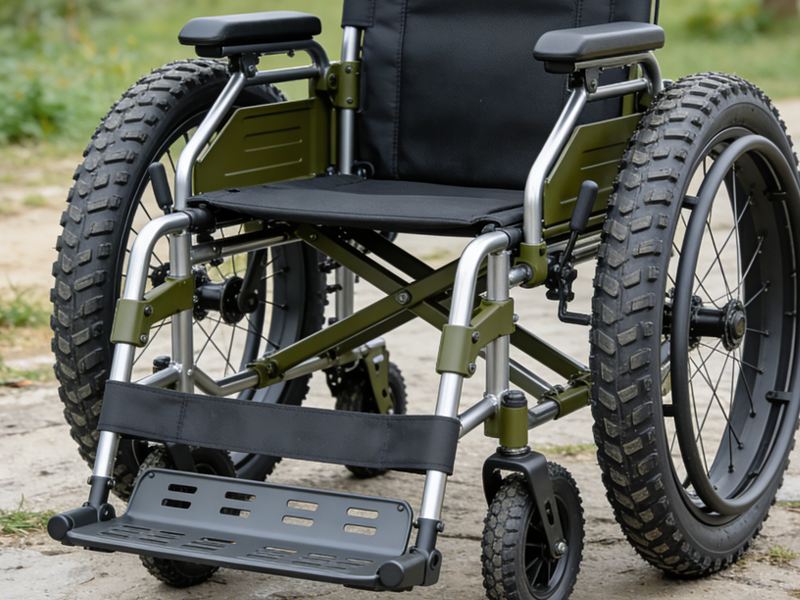
For many wheelchair users, outdoor mobility is not a special activity or occasional challenge. It is part of everyday life. Sidewalks, public transportation, parks, campuses, tourist destinations, and open public spaces all require reliable performance far beyond what most indoor environments demand.
Yet many wheelchairs are still configured primarily for smooth floors, predictable surfaces, and short distances. Once the chair leaves an indoor setting, the experience can change dramatically. Cracks in pavement, uneven sidewalks, surface transitions, weather exposure, and longer travel distances introduce resistance, instability, and physical strain that are rarely noticeable indoors.
Outdoor wheelchair modifications exist to bridge this gap. They are not about turning a wheelchair into an off-road vehicle or extreme terrain machine. Instead, they focus on improving efficiency, safety, comfort, and confidence in everyday outdoor environments. Small, thoughtful changes can significantly reduce effort, protect the body, and expand where and how a wheelchair user moves.
Indoor environments are controlled. Floors are flat, surfaces are consistent, distances are short, and hazards are minimal. Outdoor spaces are the opposite. Even modern urban infrastructure introduces constant micro-challenges that add up quickly over distance.
Sidewalks may be cracked, sloped, or patched with different materials. Curb cuts vary in angle and quality. Transitions between concrete, asphalt, tile, grass, or gravel demand continuous adjustments. Add weather conditions such as rain, heat, or cold, and the demands increase further.
Outdoor mobility also requires endurance. Pushing a wheelchair over long distances magnifies inefficiencies in setup, grip, rolling resistance, and stability. What feels manageable indoors can become exhausting or even painful outdoors if the chair is not adapted.
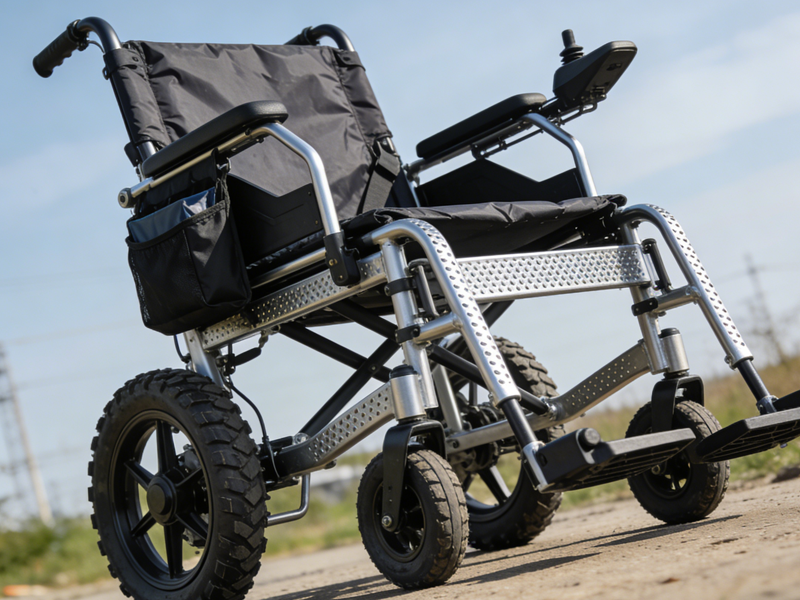
Among all wheelchair components, tires have one of the greatest impacts on outdoor mobility. Many wheelchairs are delivered with smooth, narrow tires optimized for indoor flooring. While these roll efficiently on polished surfaces, they often struggle on real pavement.
Outdoor-oriented wheelchair tires typically address three major issues: traction, vibration, and durability.
Wider tire profiles distribute weight more evenly, improving stability on uneven ground. Materials designed for outdoor use provide better grip on wet sidewalks and reduce slipping during braking or turning. Some tires also help dampen vibration, which can significantly improve comfort during longer pushes.
Pneumatic tires remain a popular choice for outdoor use because they absorb surface irregularities naturally. The cushioning effect reduces shock to the hands, wrists, elbows, and shoulders. This can make a noticeable difference during long days outside. However, pneumatic tires require air pressure maintenance and are vulnerable to punctures.
Solid outdoor tires appeal to users who want durability and low maintenance. While they do not offer the same shock absorption as pneumatic tires, modern designs can still provide better traction and comfort than basic indoor tires.
If there is one component that frequently limits outdoor wheelchairIndoor outdoor standing wheelchair performance, it is the front caster. Small casters that work perfectly indoors can become liabilities outside.
Cracks, gaps, uneven transitions, grass edges, and gravel all increase the risk of the caster catching or stopping abruptly. These sudden stops not only increase effort but can also compromise balance and safety.
Larger front casters improve obstacle clearance and reduce the chance of getting stuck. Softer caster materials help absorb vibration and protect the wheelchair frame from repeated shock. Some users also adjust caster fork geometry to improve tracking and reduce shimmy at higher speeds.
For many wheelchair users, however, replacing casters alone is not enough—especially in environments with mixed surfaces. This is where removable front wheel attachments come into play.
A front wheel attachment designed for outdoor wheelchair use addresses one of the most persistent challenges: caster hang-ups.
Devices such as the FreeWheel attachment add a larger wheel to the front of a manual wheelchair, lifting the small casters slightly off the ground during movement. This allows the wheelchair to roll over cracks, surface transitions, grass, gravel, and uneven pavement more smoothly.
The advantage of this approach is flexibility. The attachment can be used outdoors and removed indoors, preserving maneuverability inside buildings. It does not permanently alter the wheelchair frame, making it attractive for users who frequently transition between environments.
By improving momentum and reducing rolling resistance, front wheel attachments can significantly reduce fatigue during longer outdoor travel. They also enhance stability, especially on unpredictable surfaces where small casters would otherwise dig in or stop suddenly.
For users who spend time on sidewalks, trails, campuses, or travel destinations, this type of modification can change how accessible outdoor spaces feel.
Outdoor propulsion requires more force than indoor movement. Longer distances, increased resistance, and environmental factors like rain or humidity all place greater demands on grip and endurance.
Pushrim modifications help address these challenges. Coated or textured pushrims provide consistent grip in wet or humid conditions. Ergonomic designs distribute pressure more evenly across the hand, reducing localized strain and improving control.
Grip covers and wheelchair gloves are common additions for outdoor use. They protect the skin, improve friction, and help maintain consistent propulsion mechanics over long distances. Reliable grip also supports smoother braking and turning, especially on slopes or crowded sidewalks.
Over time, improved grip can reduce repetitive stress on the hands and wrists, contributing to long-term upper body health.
Wheelchair frames are often adjusted once and then left unchanged. However, small setup changes can make a meaningful difference in outdoor performance.
Rear axle positioning influences rolling resistance and propulsion efficiency. Adjusting seat height can improve leverage, making pushes more effective on rough surfaces. Frame stiffness affects how efficiently energy transfers from the user to the wheels.
Outdoor mobility tends to highlight inefficiencies in posture and balance. A setup that feels comfortable indoors may require fine-tuning to support longer pushes outside. When adjusted correctly, the wheelchair feels more responsive and predictable across variable terrain.
These changes are subtle but cumulative. Together, they support smoother movement and reduce fatigue during extended outdoor use.
Uneven ground, slopes, and sudden surface changes increase tipping risk outdoors. Stability modifications help users feel secure without limiting independence.
Removable or low-profile anti-tip devices are common solutions. Some users install them only for outdoor use, while others prefer designs that remain unobtrusive during everyday movement.
Stability is not just about preventing falls. It is also about confidence. When a wheelchair feels predictable on slopes and transitions, users are more likely to explore outdoor environments without hesitation.
Outdoor braking demands precision. Wet pavement, downhill slopes, and crowded public spaces require reliable stopping power.
Extended brake handles improve accessibility and leverage. High-friction brake pads perform better on wet surfaces. Some users also explore drag brakes to control speed on long downhill paths.
Effective braking reduces physical strain and improves safety, particularly in urban environments where sudden stops may be necessary.
Accessories do not change how a wheelchair rolls, but they support independence during extended outings.
Storage solutions for water, personal items, or tools reduce the need for backpacks. Weather protection helps maintain grip and comfort in changing conditions. Reflective elements improve visibility during low-light situations.
Travel-focused accessories allow wheelchair users to adapt quickly to unfamiliar environments. Lightweight, removable components are especially valuable for users who travel frequently.
There is no universal outdoor wheelchair setup. The right modifications depend on how and where the wheelchair is used.
Urban users often prioritize pavement performance, braking, and curb transitions. Those who spend time in parks or mixed terrain focus more on caster stability and vibration reduction. Travelers benefit from removable, adaptable solutions that work across different environments.
The goal of outdoor wheelchair modifications is consistency. Reducing effort, increasing safety, and maintaining predictable performance across everyday outdoor spaces allows users to focus on living, not managing equipment.
Outdoor wheelchair mobility should not feel like a compromise. With thoughtful modifications, a wheelchair can perform reliably across sidewalks, public spaces, and travel environments without sacrificing indoor maneuverability.
Small upgrades—tires, casters, grip, stability, and accessories—work together to reduce fatigue and increase confidence. Rather than limiting activity, outdoor modifications expand possibilities and support long-term independence.
1. Are outdoor wheelchair modifications only useful for rough terrain or trails?
No. Most outdoor wheelchair modifications are designed for everyday environments such as sidewalks, curb cuts, campuses, and public spaces. They improve efficiency and comfort on common surfaces, not just off-road conditions.
2. Can outdoor modifications make a wheelchair harder to use indoors?
Some changes, like larger tires or stability accessories, may slightly affect indoor maneuverability. This is why many users choose removable or adjustable options that allow them to adapt their setup depending on where they are.
3. Do outdoor wheelchair modifications help prevent upper body injuries?
Yes. By improving rolling efficiency, traction, and grip, outdoor modifications reduce repetitive strain on the shoulders, wrists, and hands. Over time, this can contribute to better joint health and reduced fatigue during daily use.