Our Location
Free Trade Tower, Xiyong street.
Chongqing, China

Free Trade Tower, Xiyong street.
Chongqing, China

For someone who uses a manual wheelchair, it is far more than a mobility device. It is independence, efficiency, safety, and personal freedom all rolled into one. Every push, every turn, and every transfer depends on how well that chair performs. And just like any piece of equipment that works hard every day, performance does not come by accident—it comes from care.
Many wheelchair users focus heavily on choosing the right chair but underestimate the importance of ongoing maintenance. Over time, small issues like low tire pressure, loose bolts, or worn cushions quietly increase rolling resistance, strain the body, and raise the risk of injury. The good news is that proper maintenance does not require advanced mechanical skills or expensive tools. With consistent attention and a basic understanding of key components, you can dramatically extend the life of your wheelchair and improve your day-to-day comfort.
A poorly maintained wheelchair does not fail all at once. Instead, it slowly becomes harder to push, less stable, and less supportive. Users often adapt without realizing it—pushing harder, adjusting posture, or accepting discomfort as “normal.” Over months or years, this added strain can contribute to shoulder injuries, wrist pain, back fatigue, and skin breakdown.
From a safety perspective, neglected components can also fail at the worst possible time. A loose axle, worn caster bearing, or damaged tire can cause sudden instability, especially on slopes, uneven pavement, or during transfers.
On the other hand, a well-maintained chair:
Rolls more efficiently with less effort
Tracks straighter and turns more predictably
Reduces stress on shoulders and joints
Provides better posture and skin protection
Lasts significantly longer, protecting your investment
Think of maintenance not as a chore, but as a form of self-care.
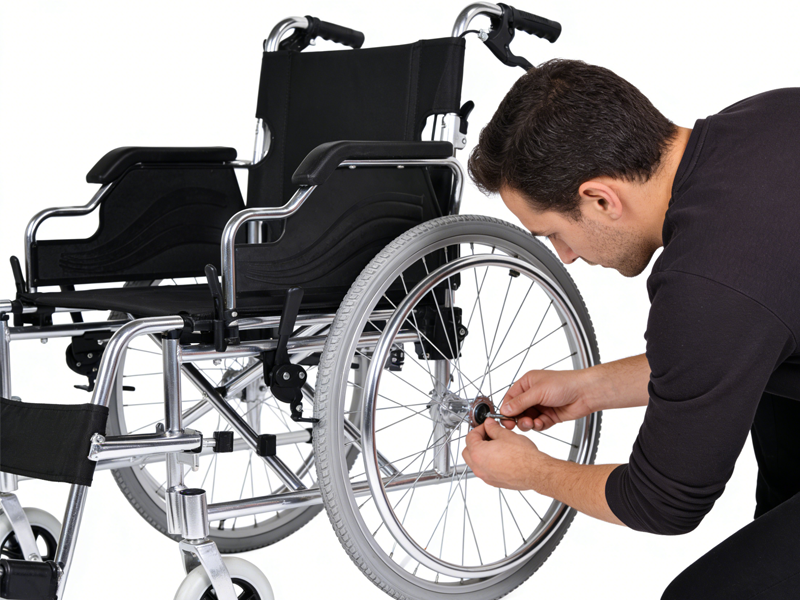
If there is one area of wheelchair maintenance that deserves top priority, it is the wheels. They are the primary contact point with the ground and the biggest factor in rolling efficiency.
Tire Pressure: Small Habit, Big Impact
Low tire pressure is one of the most common—and most overlooked—issues among wheelchair users. Even a slight drop in pressure dramatically increases rolling resistance. This means more pushes, more force per push, and more strain on the upper body.
Make it a habit to check tire pressure weekly. Use a standard pressure gauge and inflate the tires to the PSI listed on the sidewall. Solid tires do not require inflation, but they should still be inspected regularly for wear and cracking.
A simple rule: if your chair feels harder to push than usual, check the tires first.
Visual Inspections Save Time and Money
Take a few minutes every week to visually inspect your wheels. Look for:
Cracks or cuts in the tire surface
Embedded debris such as glass or gravel
Uneven tread wear
Bent or loose spokes
Spoke issues should not be ignored. Loose or damaged spokes affect wheel alignment and can lead to further damage if left untreated. If you notice changes in how the chair tracks or feels, a professional tune-up may be necessary.
When Upgrading Wheels Makes Sense
For active users, wheel upgrades can significantly improve ride quality and efficiency. Lightweight wheel systems with advanced spoke materials reduce vibration, require less maintenance, and often provide a smoother, quieter ride. While not necessary for everyone, performance upgrades can be a worthwhile investment for users who travel frequently, spend long hours in their chair, or push long distances daily.
Front casters are responsible for steering, maneuverability, and stability. Despite their small size, they play a major role in how your wheelchair handles—especially on uneven surfaces.
Dirt, Hair, and the Hidden Problem
Caster wheels are magnets for hair, string, and debris. Over time, this buildup wraps around the axle and bearings, causing resistance, noise, and sometimes complete seizure of the wheel.
Every few months, remove the casters from the forks and clean them thoroughly. This includes:
Wiping down the axle
Removing wrapped hair or fibers
Checking the bearings for smooth rotation
This simple task can instantly improve steering and reduce flutter.
Recognizing Bearing Wear Early
Grab the caster fork and gently wiggle it. Excessive movement or rattling is often a sign of worn bearings. Left unaddressed, worn bearings can affect balance and increase vibration throughout the frame.
Replacing caster bearings is relatively inexpensive and can restore a smooth, predictable ride.
Improving Comfort Through Caster Design
If you frequently encounter rough terrain or experience constant vibration, advanced caster systems with built-in shock absorption may be worth considering. These designs reduce impact forces, protect the wheelchair frame, and significantly improve ride comfort—especially for long outdoor use.
A wheelchair cushion is not just about comfort. It is a critical medical component designed to protect skin integrity, distribute pressure, and support posture.
Cushion Covers: More Important Than They Look
The cushion cover plays a vital role in hygiene and pressure management. Tears, worn seams, or stretched fabric can compromise performance and allow moisture buildup.
Inspect the cover regularly and replace it if damaged. Keeping the cover clean also reduces the risk of skin issues.
Knowing When a Cushion Has Reached the End
Foam cushions naturally degrade over time. If the cushion feels thinner, no longer rebounds, or allows you to “bottom out,” it is no longer providing adequate protection.
Air cushions require regular pressure checks. Improper inflation—either too much or too little—can negate the cushion’s benefits. Make inflation checks part of your routine, especially if your weight fluctuates or your seating needs change.
Ignoring cushion wear is one of the fastest ways to invite pressure sores.
A proper backrest supports the spine, improves balance, and reduces fatigue. Over time, however, hardware can loosen and upholstery can stretch, reducing effectiveness.
Hardware Checks Are Essential
Loose mounting hardware can cause subtle shifts in posture that lead to discomfort and instability. Periodically check that all backrest bolts and brackets are secure.
Upholstery Tells a Story
Sagging or torn upholstery reduces support and encourages poor posture. If you find yourself slouching more than usual, your backrest may be part of the problem.
Many users benefit from rigid or adjustable backrests that offer better contouring and long-term support. While not required for everyone, improved back support can make a noticeable difference in daily comfort and endurance.
Once a month, set aside a few minutes to go over your entire chair with basic tools. Focus on:
Frame bolts
Axle plates
Footrest mounts
Armrest hardware
Wheelchairs experience constant vibration. Even high-quality components can loosen over time. A quick tightening session helps prevent unexpected failures and keeps the chair feeling solid and responsive.
The best maintenance routine is one you will actually follow. Rather than viewing upkeep as a big task, integrate it into daily or weekly habits:
Check tire pressure while watching TV
Inspect casters during transfers
Clean components while charging your phone
Consistency matters more than perfection.
Your wheelchair works as hard as you do—often harder. Investing a small amount of time in regular maintenance pays off in comfort, safety, and independence. It reduces physical strain, extends the lifespan of your equipment, and helps ensure that your chair remains a reliable partner in everyday life.
Taking care of your wheelchair is not just about equipment. It is about protecting your body, your energy, and your freedom.
1. How often should I have my wheelchair professionally serviced?
Most users benefit from a professional check-up once a year. However, active users or those who travel frequently may require service every six months.
2. Can poor maintenance really cause physical injury?
Yes. Increased rolling resistance, poor posture, and vibration all place additional strain on shoulders, wrists, and the spine. Over time, this can lead to overuse injuries and chronic pain.
3. What is the single most important maintenance habit?
Checking tire pressure regularly. It has the biggest immediate impact on efficiency, safety, and overall chair performance with minimal effort.