Our Location
Free Trade Tower, Xiyong street.
Chongqing, China

Free Trade Tower, Xiyong street.
Chongqing, China
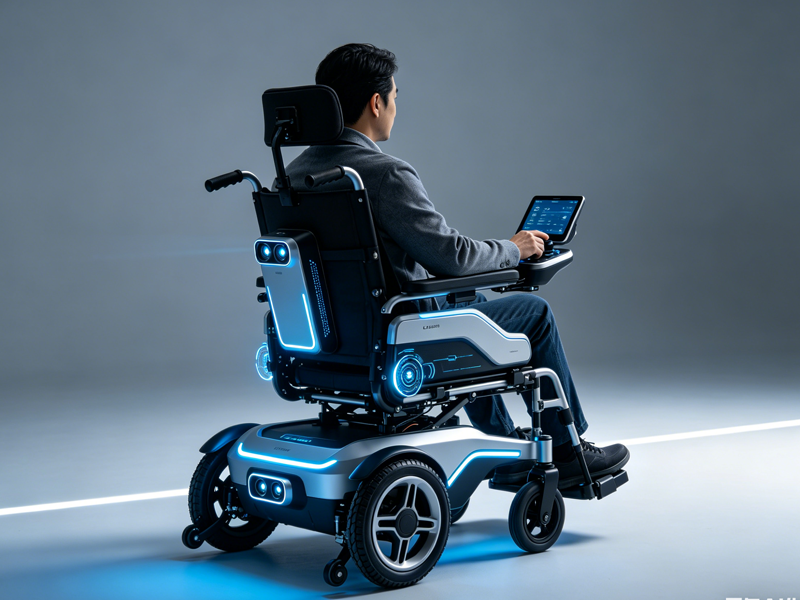
mobility assistance has quietly entered a new phase of transformation. Traditional wheelchairs—whether manual or powered—have long served as essential tools for independence. But with the rapid development of artificial intelligence, sensor fusion, and smart connectivity, a new generation of mobility devices is reshaping what “independence” actually means.
AI-powered smart wheelchairs are no longer just about movement from point A to point B. They are becoming intelligent mobility companions capable of understanding environments, anticipating user needs, and improving safety in real time. For many users, caregivers, and healthcare providers, this shift represents not just convenience, but a fundamental upgrade in quality of life.
To understand smart wheelchairs, it helps to first step back and consider what has changed. Traditional powered wheelchairs rely heavily on joystick control or manual input. While effective, they assume that the user can continuously manage navigation, interpret surroundings, and respond to unexpected obstacles.
AI-powered smart wheelchairs change this dynamic by introducing layers of autonomy and assistance. Instead of being purely reactive, they become semi-autonomous systems capable of sensing, analyzing, and responding to the environment in real time.
At the core of these systems are technologies such as LiDAR sensors, computer vision cameras, ultrasonic sensors, GPS modules, and onboard machine learning algorithms. These components work together to create a “perception layer” that allows the wheelchair to understand its surroundings in a way similar to modern autonomous vehicles.
But what does that actually look like in practice? The answer lies in a combination of practical features that directly impact daily life.
One of the most significant features of AI-powered smart wheelchairs is intelligent navigation. Instead of requiring constant joystick adjustments, the system can guide the user through complex environments such as hospitals, shopping malls, airports, or residential buildings.
The wheelchair builds a real-time map of its surroundings using simultaneous localization and mapping (SLAM) technology. This allows it to understand where it is, where obstacles are, and how to safely reach a destination.
Users can often select a destination through a touchscreen interface, voice command, or mobile app. Once selected, the wheelchair plans an optimized route and begins movement while continuously adjusting to dynamic obstacles such as pedestrians, pets, or moving equipment.
This reduces cognitive load significantly. For users with limited upper-body control or neurological conditions, it means less stress and more confidence when navigating unfamiliar spaces.
Safety is one of the most critical aspects of mobility assistance, and AI-powered smart wheelchairs take this seriously.
Using a combination of depth sensors, infrared cameras, and ultrasonic detection systems, these wheelchairs can identify obstacles in multiple directions. Unlike traditional systems that only detect immediate front-facing objects, smart wheelchairs often provide 360-degree awareness.
What makes this feature particularly powerful is the AI decision-making layer. When an obstacle is detected, the system doesn’t simply stop—it evaluates alternative paths, predicts movement patterns, and chooses the safest route.
For example, if a person suddenly walks in front of the wheelchair, the system can slow down, stop, or reroute without requiring user intervention. This predictive capability reduces collision risk and increases trust in the system.
Over time, machine learning algorithms can adapt to user environments, improving detection accuracy based on frequently encountered settings.
Another major advancement is the integration of voice-controlled systems. Instead of relying solely on physical input devices, users can communicate with the wheelchair using natural language commands.
Commands like “take me to the kitchen,” “go slower,” or “stop near the window” can be interpreted by onboard AI systems. More advanced models even support conversational interaction, allowing users to ask questions like “How far am I from the exit?” or “Is the battery low?”
Natural language processing (NLP) enables this interaction layer, making the technology more accessible to individuals with limited motor function or dexterity.
In some systems, voice recognition is personalized, meaning the wheelchair learns to recognize a specific user’s speech patterns over time, improving accuracy and responsiveness.
Modern AI-powered smart wheelchairs are increasingly integrating health monitoring systems, turning mobility devices into health awareness platforms.
Built-in sensors can track vital signs such as heart rate, oxygen saturation, posture alignment, and even fatigue levels. This data is often synced with mobile applications or cloud-based healthcare platforms, allowing caregivers and medical professionals to monitor user health remotely.
Posture detection is particularly important. Prolonged sitting can lead to pressure sores and musculoskeletal issues. Smart wheelchairs can detect improper seating posture and provide real-time alerts or automatic adjustments to redistribute pressure.
In more advanced models, predictive health analytics can identify early signs of discomfort or potential health risks, enabling proactive care rather than reactive treatment.
Battery management is often overlooked in assistive devices, but AI has made significant improvements in this area.
Smart wheelchairs can autonomously navigate to charging stations when battery levels are low. This ensures users are not stranded and reduces the need for manual intervention.
Some systems also optimize energy consumption based on terrain, user behavior, and route complexity. For example, uphill routes may trigger power-saving modes, while flat indoor environments prioritize speed and smooth navigation.
Smart charging systems may also use wireless docking technology, eliminating the need for physical plugging and reducing accessibility barriers.
One of the defining features of AI-powered smart wheelchairs is their integration into broader Internet of Things (IoT) ecosystems.
These wheelchairs can connect with smart home systems, elevators, doors, lighting systems, and even public infrastructure in some advanced setups. This allows for seamless transitions between indoor and outdoor environments.
For instance, a user could say “go to my bedroom,” and the wheelchair could not only navigate there but also trigger smart home actions such as turning on lights or adjusting room temperature.
In healthcare settings, integration with hospital systems allows for real-time location tracking, emergency alerts, and coordinated care responses.
This level of connectivity transforms the wheelchair from an isolated device into a fully integrated mobility hub.
One of the most impressive aspects of AI-driven mobility technology is its ability to learn from user behavior.
Over time, smart wheelchairs analyze movement patterns, preferred routes, speed preferences, and environmental interactions. This data is used to create a personalized mobility profile.
For example, if a user consistently avoids crowded areas, the system may prioritize quieter routes. If a user frequently visits specific locations, those routes may become optimized shortcuts.
This adaptive intelligence creates a sense of familiarity and comfort, making the wheelchair feel less like a machine and more like a personalized assistant.
Safety features extend beyond obstacle avoidance. Many AI-powered smart wheelchairs include emergency detection systems capable of recognizing falls, sudden stops, or irregular vital signs.
In emergency situations, the system can automatically notify caregivers or emergency services, sending GPS location and health data in real time.
Some models also include manual emergency buttons, allowing users to trigger alerts instantly. Combined with AI detection, this creates a multi-layered safety net that significantly improves response time in critical situations.
Navigating indoors and outdoors requires very different capabilities. Smart wheelchairs are designed to handle both environments seamlessly.
Indoors, precision and obstacle avoidance are prioritized. Outdoors, stability, terrain adaptation, and GPS navigation become more important.
AI systems automatically adjust driving behavior depending on context. For example, speed may be reduced indoors for safety, while outdoor modes allow faster movement with enhanced stability control.
Advanced models can even detect terrain changes such as ramps, gravel, or uneven surfaces and adjust motor output accordingly.
The user interface of smart wheelchairs has evolved significantly beyond traditional joystick controls.
Modern systems may include:
These interfaces ensure accessibility for users with a wide range of physical conditions.
The goal is simple: reduce barriers between intention and movement.
Behind the scenes, AI-powered wheelchairs generate valuable data insights. This includes usage frequency, travel distance, battery cycles, and environmental interaction patterns.
Caregivers can access dashboards that provide a comprehensive overview of mobility behavior. This helps in rehabilitation planning, safety monitoring, and lifestyle adjustments.
In clinical environments, this data can contribute to long-term mobility research and improve assistive device design.
Beyond technical features, the most important aspect of AI-powered smart wheelchairs is their human impact.
For many users, these systems represent more than convenience—they represent autonomy. The ability to move freely without constant assistance restores dignity, confidence, and participation in everyday life.
Whether it’s going to work, visiting friends, or simply moving around the home safely, smart wheelchairs are helping redefine what independence looks like in the modern world.
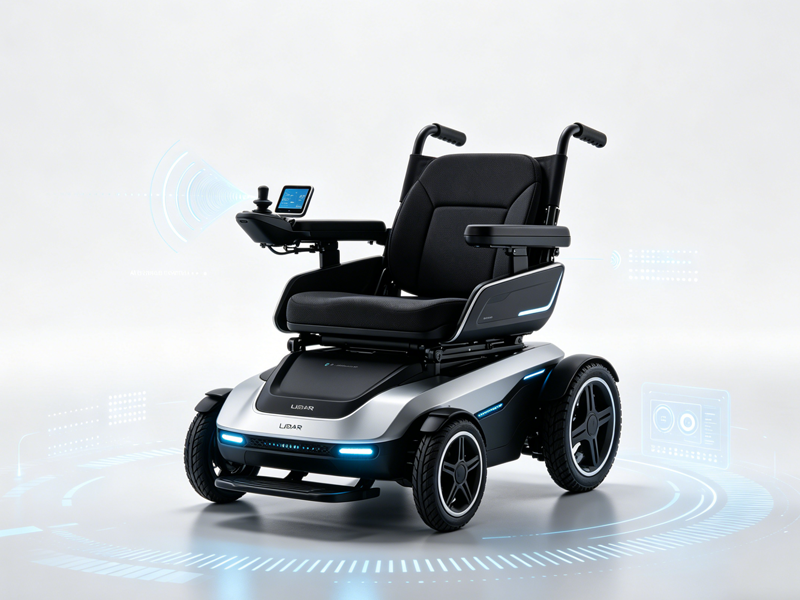
As AI continues to evolve, future smart wheelchairs are expected to become even more autonomous, intuitive, and integrated.
We may see deeper integration with autonomous transportation systems, improved brain-machine interfaces, and even fully self-driving indoor mobility ecosystems.
What remains consistent, however, is the goal: empowering individuals with mobility challenges to live more freely and safely.
AI-powered smart wheelchairs represent a convergence of robotics, healthcare, and artificial intelligence. They are not just assistive devices—they are intelligent systems designed to understand, adapt, and respond to human needs.
From navigation and safety to health monitoring and smart connectivity, these wheelchairs are redefining what assistive technology can achieve in the real world.
1. Are AI-powered smart wheelchairs fully autonomous?
Not entirely. Most current models are semi-autonomous, meaning users can still control movement manually while AI assists with navigation, obstacle avoidance, and safety. Full autonomy exists in controlled environments but is still evolving for general public use.
2. How safe are smart wheelchairs in crowded environments?
They are designed with multiple sensor layers and predictive algorithms to handle crowded environments. While no system is risk-free, AI significantly reduces collision chances by detecting and reacting to dynamic obstacles in real time.
3. Can smart wheelchairs be used outdoors on uneven terrain?
Yes. Many models are equipped with adaptive terrain detection and stability control systems that allow them to operate on ramps, sidewalks, gravel paths, and other uneven surfaces. However, performance varies depending on the specific model and design.