Our Location
Free Trade Tower, Xiyong street.
Chongqing, China

Free Trade Tower, Xiyong street.
Chongqing, China
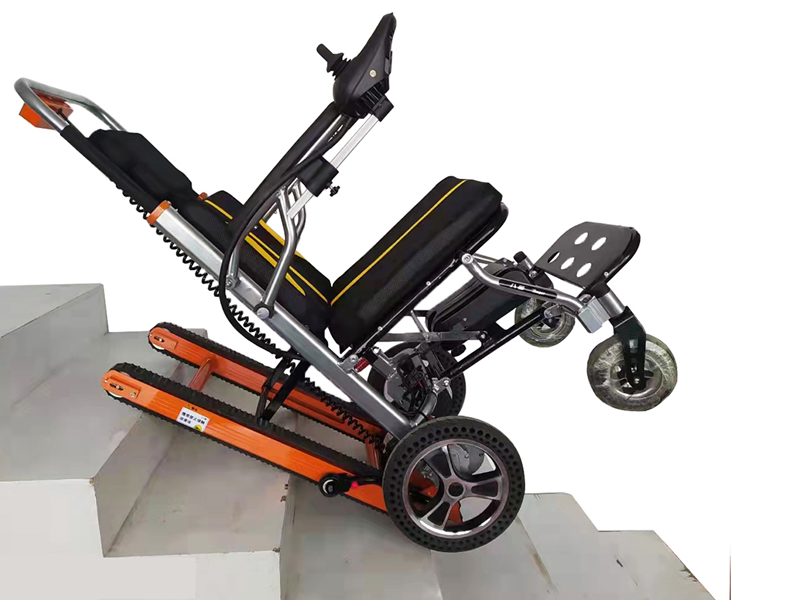
For wheelchair users, caregivers, rehabilitation centers, and home care providers, stairs remain one of the biggest barriers to independent movement. Even in countries with mature accessibility systems, multi-level homes, older apartment buildings, schools, clinics, and public facilities often present environments where traditional electric wheelchairs simply stop working. That is exactly why stair-climbing wheelchairs are becoming one of the most talked-about innovations in mobility equipment.
Unlike standard powered wheelchairs that perform well only on flat surfaces, modern stair-climbing electric wheelchairs combine mobility, safety, durability, and intelligent climbing systems in one integrated solution. With tracked climbing systems, lithium battery technology, foldable engineering, and reinforced structural designs, these devices are transforming how users move through everyday spaces.
Market discussions among mobility users and engineering communities consistently point to three essential requirements when choosing a stair-climbing wheelchair: weight optimization, structural durability, and climbing reliability. Community conversations also show that safety on stair landings, battery endurance, and ease of operation matter just as much as technical specifications.
When people hear “stair-climbing wheelchair,” many assume bigger means safer. In reality, excessive weight can reduce portability, increase transport difficulty, and create storage limitations.
A well-designed stair-climbing wheelchair must balance:
The best manufacturers solve this challenge through structural engineering, optimized center-of-gravity design, and carefully selected materials such as reinforced steel or aviation-grade alloy.
Research in mobility robotics confirms that stair negotiation requires precise weight distribution and balance control, not just raw motor power.
That means a wheelchair that is “lightweight” should never feel unstable—and a “heavy-duty” chair should never become impossible to transport.
Durability in mobility equipment is more than frame thickness.
A truly durable climbing wheelchair must perform consistently across:
Indoor staircases
Apartment buildings
Medical facilities
Outdoor entrance steps
Emergency evacuation situations
Daily caregiver transfers
Professionally engineered models usually include:
A well-designed chair should not only survive repeated stair climbing—it should maintain user comfort and mechanical precision after hundreds of cycles.
For users who want a practical stair-climbing wheelchair for everyday environments, the YSE208 Electric Stair-Climbing Wheelchair is one of the most balanced solutions currently available.
The YSE208 was designed for real-world home and institutional use, combining flat-ground electric mobility with powered stair-climbing capability in one system. It supports stair slopes under 45° and requires a stair width above 700 mm, making it compatible with many residential and commercial buildings.
What makes the YSE208 particularly attractive is its combination of foldability and climbing strength.
Key highlights include:
In practical terms, this model works especially well for:
Families living in multi-floor homes
Senior care environments
Rehabilitation centers
Mobility equipment distributors
The seat dimensions and ergonomic cushion design also support longer daily use, making it more than just an occasional climbing device.
For users who prioritize automation, comfort, and high-end control systems, the YSE210 Automatic Stair-Climbing Wheelchair offers a premium mobility experience.
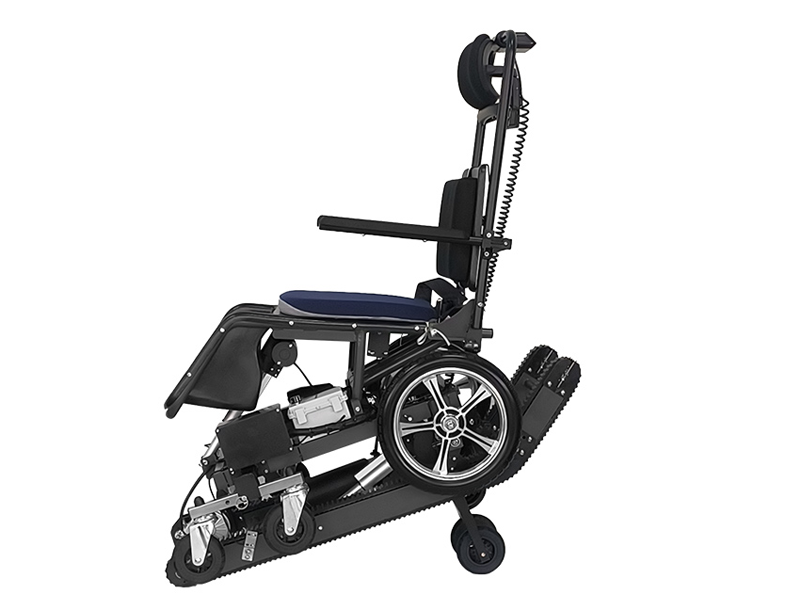
This model is designed for environments where users need greater autonomy and smoother transitions between flat surfaces and stairs.
Compared with entry-level stair-climbing systems, automatic models provide:
Advanced stair-climbing systems increasingly rely on sensor-assisted balancing and intelligent drive controls—features that have become major differentiators in the premium mobility segment.
The YSE210 is ideal for:
Private users seeking independent mobility
Medical institutions handling frequent transfers
International distributors serving premium rehabilitation markets
Luxury senior care projects
Its automatic control system reduces operator learning time, which is especially important in facilities where multiple caregivers use the same equipment.
For buyers who need higher load capacity and stronger battery endurance, the YSE203 Foldable Power Stair-Climbing Wheelchair stands out as a professional-grade option.
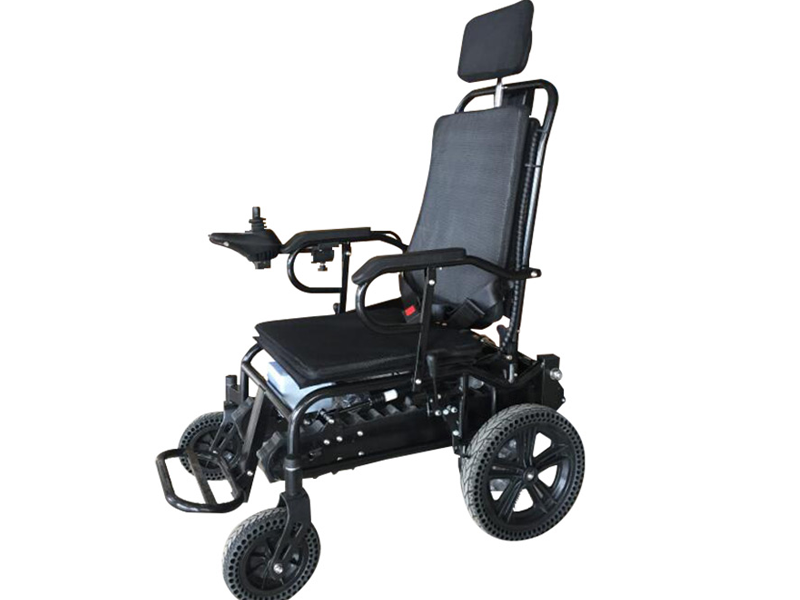
This model combines crawler-type climbing technology with dual electric drive functionality, offering excellent climbing stability even in challenging environments.
According to product specifications, the YSE203 includes:
This higher weight capacity makes it ideal for:
Adult users requiring stronger support
Hospitals and rehabilitation facilities
Emergency evacuation applications
Commercial mobility fleets
The crawler system delivers smoother stair contact, reducing impact during ascent and descent.
When sourcing stair-climbing wheelchairs for overseas markets, buyers should evaluate more than just price.
Important factors include:
Different countries have different staircase standards.
Always confirm:
The YSE208 and YSE203 both require stair widths above 700 mm, making them compatible with many international building standards.
A larger battery usually means:
For heavier daily use, the 20Ah battery in the YSE203 offers a clear advantage.
For importers and distributors, foldable structures reduce:
Models like YSE208 and YSE203 provide clear advantages in container optimization.
If your priority is lightweight daily usability, the YSE208 offers one of the best balances between portability and performance.
If you need intelligent automation and premium control, the YSE210 is better suited for high-end mobility users.
If your application requires maximum durability, heavier load support, and professional-grade climbing performance, the YSE203 delivers exceptional value.
As global demand for accessible mobility continues to rise, stair-climbing wheelchairs are no longer niche equipment—they are becoming an essential category in modern rehabilitation and independent living solutions.
Choosing the right model today can mean greater independence, safer mobility, and better quality of life tomorrow.