Our Location
Free Trade Tower, Xiyong street.
Chongqing, China

Free Trade Tower, Xiyong street.
Chongqing, China
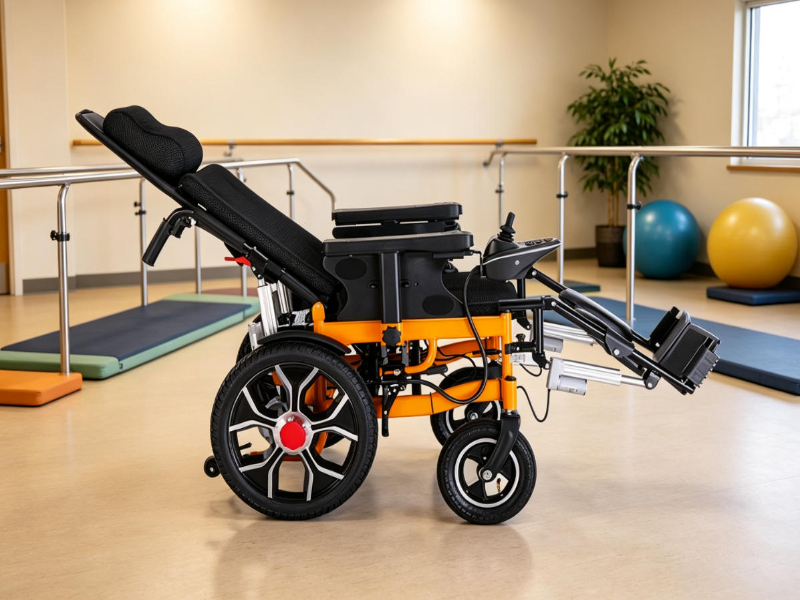
For an elderly person with limited mobility, a wheelchair is not simply a way to move from one place to another. It can become the place where they spend hours reading, talking with family, watching television, attending appointments, resting after an outing, or enjoying time outdoors. That is why choosing the right wheelchair requires looking beyond basic movement. Fully Reclining Wheelchair technology offers an important advantage for users who need greater postural flexibility, back support, leg positioning, and comfort during longer periods of sitting.
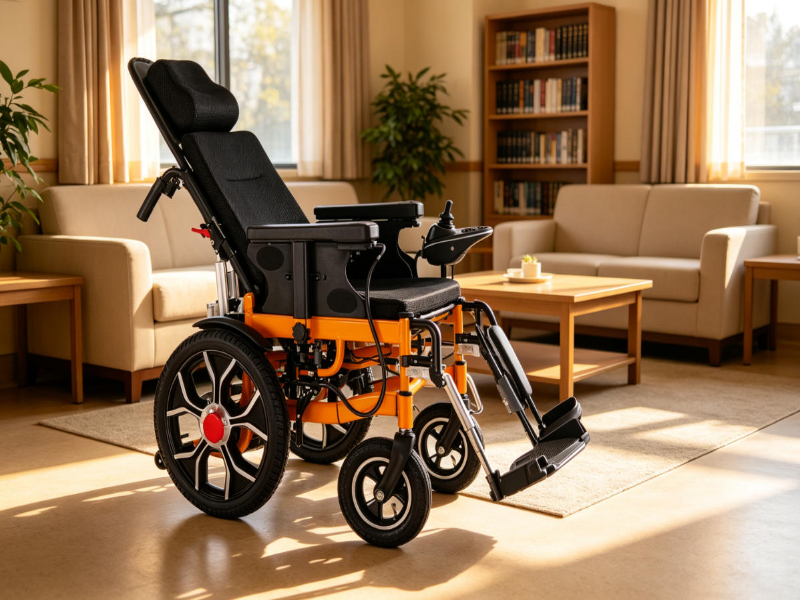
A Fully Reclining Wheelchair Electric Mobility Chair with Adjustable Backrest Footrest for Elderly users combines powered mobility with adjustable positioning. Instead of keeping the backrest and legs fixed in one sitting position, a reclining electric wheelchair can provide a more adaptable seating experience. The adjustable backrest allows the user to change their upper-body position, while an adjustable or elevating footrest can provide better support for the lower legs. When these features are combined with electric drive technology, the result is a mobility solution designed around both movement and comfort.
For families, caregivers, rehabilitation facilities, and mobility equipment distributors, this type of wheelchair can be especially valuable when a standard upright wheelchair does not provide enough positioning flexibility. However, choosing a suitable model requires careful consideration of frame design, reclining function, seating support, electric control, portability, footrest configuration, safety, and the user’s individual needs.
Many elderly wheelchair users spend considerably more time seated than an average person. If the seating position remains unchanged for long periods, the user may gradually experience discomfort, fatigue, or difficulty finding a relaxed posture. A fixed-back wheelchair may be perfectly adequate for short trips, but it may not offer the flexibility needed for longer periods of use.
A Fully Reclining Wheelchair addresses this limitation by allowing the backrest to move from a conventional upright position toward a more reclined position. This does not mean that every user should spend extended periods fully reclined. Rather, the value lies in having more positioning choices when appropriate.
For example, an elderly user may prefer an upright position while moving through a shopping center because it provides a practical viewing angle and easier interaction with the surrounding environment. After returning home, the user may want to recline the backrest slightly to relax. During a longer rest period, a deeper reclined position may provide a different level of comfort.
The same flexibility can be useful for caregivers. Instead of transferring the user to another chair every time they want to change their resting position, an adjustable wheelchair can provide more positioning options within the mobility chair itself. This can make everyday routines more manageable, particularly in home-care environments.
The footrest is equally important. A wheelchair is not only supporting the user’s back; it must provide a stable seating platform from the hips through the thighs, lower legs, and feet. An adjustable footrest can help accommodate different leg positions and make reclining more comfortable. When the backrest changes angle, the relationship between the seat, thighs, lower legs, and feet also changes, so the entire seating system needs to work together.
The difference between a standard electric wheelchair and a Fully Reclining Wheelchair is primarily related to positioning flexibility.
A conventional electric wheelchair usually focuses on powered movement. The user operates a joystick or similar controller to move forward, reverse, turn, and adjust speed. This can provide excellent independence for users who have difficulty manually propelling a wheelchair.
A reclining electric model adds another dimension: positioning.
Instead of considering the wheelchair purely as a transportation device, users can think of it as a mobility and seating system. The electric drive system supports movement, while the reclining backrest and footrest provide additional seating options.
This can be particularly useful for elderly users who:
Nevertheless, reclining capability should not be treated as a substitute for professional seating assessment. The ideal position depends on the individual’s physical condition, posture, comfort, transfer ability, and care requirements. For users with complex positioning needs, a healthcare professional or qualified seating specialist should be consulted before selecting a wheelchair.
The adjustable backrest is one of the defining characteristics of a Fully Reclining Wheelchair. Its purpose is not simply to make the chair feel softer or more luxurious. It allows the user to change the relationship between the torso and the seating surface.
An upright position is generally useful for everyday activities such as eating, communicating, operating the joystick, and navigating through indoor spaces. A partially reclined position may be preferred during periods of rest. A deeper reclining position can provide a different posture when the user needs to relax.
For elderly users, this flexibility can make a substantial difference in daily comfort.
A well-designed reclining mechanism should move smoothly and predictably rather than creating abrupt changes in the user’s position. The wheelchair should remain stable throughout adjustment, and the backrest should work with the seat and leg-support system rather than functioning as an isolated component.
This is one reason buyers should look at the entire wheelchair configuration instead of judging a model by the word “reclining” alone. The quality of the reclining mechanism, frame stability, cushion, armrests, footrest, and control system all contribute to the overall experience.
The footrest is often overlooked when people compare wheelchairs, yet it becomes particularly important in a reclining design.
When the backrest reclines, the user’s body position changes. If the legs remain unsupported or the footrest is poorly positioned, the user may not feel properly supported. A suitable adjustable footrest helps maintain a more comfortable relationship between the lower legs and feet.
For elderly users, practical foot support can also make transfers and daily care routines easier. Depending on the wheelchair design, footrests may be adjustable, elevating, detachable, or configured to suit different users.
When evaluating a Fully Reclining Wheelchair, buyers should therefore consider:
Backrest adjustment + seat support + leg support + foot positioning
rather than looking at reclining range alone.
This integrated approach is especially important for care facilities and distributors, because users may have very different body sizes, mobility capabilities, and positioning preferences.
A reclining mechanism addresses positioning, but electric drive technology addresses movement.
For elderly users with limited upper-body strength, manually pushing a wheelchair can be exhausting or impossible. An electric mobility chair allows the user to operate the wheelchair using a joystick or another control interface, depending on the model.
This can make everyday activities easier, including moving around the home, visiting family members, attending appointments, shopping, or spending time outdoors.
The combination of powered mobility and reclining functionality is particularly attractive because it allows one wheelchair to serve several roles. During transportation, it functions as a powered mobility device. During rest, the adjustable backrest and footrest can provide a more relaxed seating position.
However, performance should always be considered in relation to the user’s environment. Indoor maneuverability, turning space, surface conditions, ramps, thresholds, battery capacity, and outdoor terrain can all affect the suitability of an electric wheelchair.
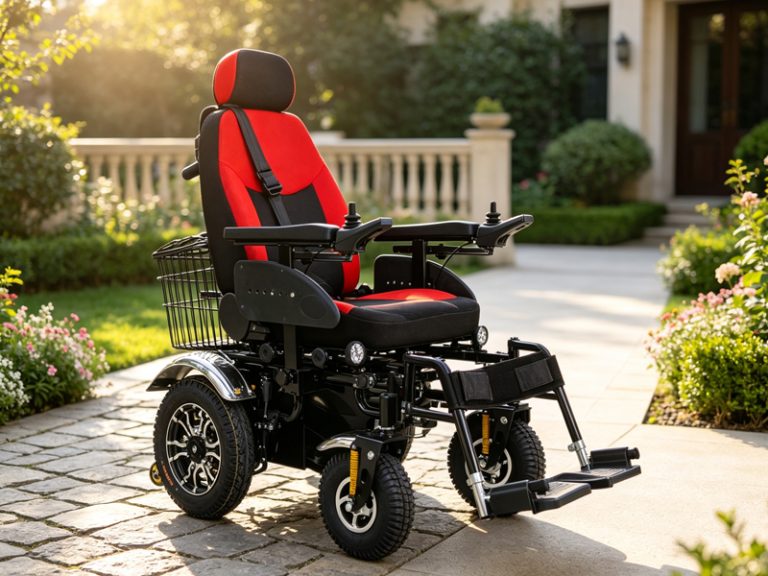
For users looking for a powered wheelchair with a design focused on supportive everyday mobility, the YSE109 Electric Wheelchair is worth considering.
The YSE109 is positioned as a practical electric wheelchair solution for users who need powered movement combined with a more supportive seating configuration. Its design can be considered by elderly users and families who want to move away from the limitations of a purely manual wheelchair.
One of the strongest reasons to consider this type of model is versatility. Elderly users often need different levels of support at different times of the day. A wheelchair used for a short trip to a nearby location may have different requirements from one used for several hours at home or during a longer outing.
A comfort-oriented electric wheelchair can help bridge that gap by providing powered mobility while maintaining a supportive seating environment.
For distributors, the YSE109 may also fit into a broader mobility product portfolio because it addresses a common market segment: users who need more than basic transportation but may not require a highly specialized rehabilitation chair.
When recommending this model to customers, however, distributors should match the wheelchair’s actual specifications with the user’s requirements rather than relying on general descriptions. Seat dimensions, maximum user weight, battery configuration, driving range, dimensions, reclining capability, and local regulatory requirements should all be confirmed before purchase.
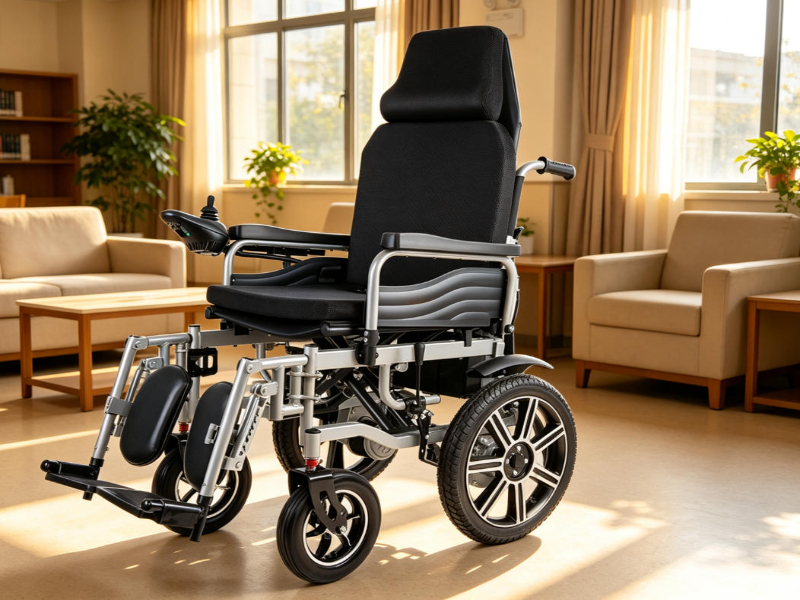
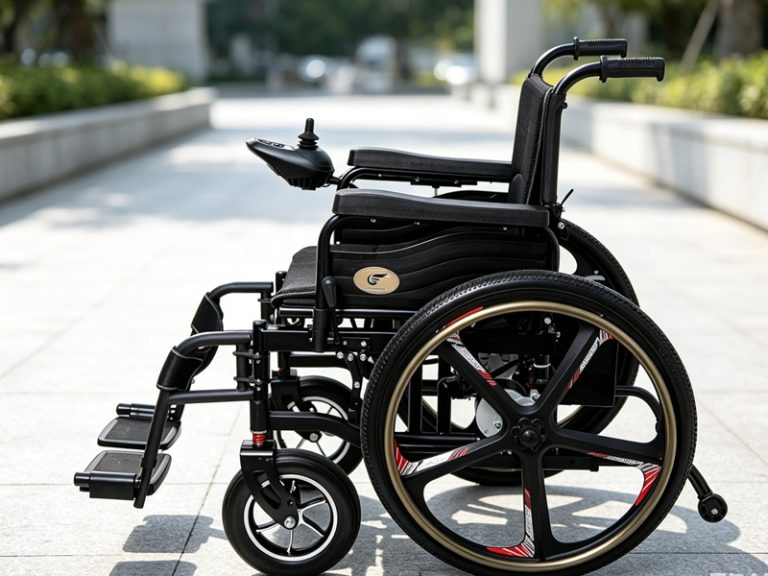
For users who place greater emphasis on transportation and storage, the Foldable Electric Wheelchair YSE118 provides another practical option.
A foldable electric wheelchair can be particularly useful for elderly people who travel frequently or families who need to transport the chair in a vehicle. The ability to reduce the wheelchair’s footprint can make storage considerably easier at home.
This type of design is useful for people who do not want their mobility equipment to restrict their daily routines. A wheelchair that can be transported more conveniently can make it easier to plan family outings, medical appointments, shopping trips, and holidays.
The YSE118 can therefore be considered when portability is a major purchasing factor. Its foldable design represents an important distinction from larger powered wheelchairs that may require more vehicle space or specialized transportation arrangements.
For buyers comparing a foldable electric wheelchair with a fully reclining model, the key question is not which design is universally better. Instead, it is which combination of features matches the user’s lifestyle.
Someone who spends long periods seated and prioritizes positioning may prefer a more comprehensive reclining configuration. Someone who frequently loads a wheelchair into a car may place greater value on compact folding and transportation convenience.
There is no single wheelchair that is ideal for every elderly person. The best choice depends on the user’s physical needs, daily routine, living environment, and level of assistance.
1. Consider Daily Sitting Time
If the user spends only short periods in the wheelchair, a simple electric model may be sufficient. If the wheelchair functions as the user’s primary seating system throughout much of the day, reclining and positioning features become more important.
2. Measure the User Carefully
Seat width, seat depth, back height, footrest position, and overall dimensions should correspond to the user. A wheelchair that is too narrow can be uncomfortable, while one that is too wide may reduce stability and positioning control.
3. Look Beyond the Reclining Function
A wheelchair should not be selected solely because it has a reclining backrest. Buyers should evaluate the frame, cushion, armrests, footrest, brakes, wheels, controller, battery system, and overall stability.
4. Think About the Environment
Will the wheelchair mainly be used indoors? Will it need to travel outdoors? Does the home have narrow doorways? Are there ramps or uneven surfaces? How will the wheelchair be transported?
These practical questions can be more important than choosing the model with the longest feature list.
5. Consider Caregiver Requirements
If a caregiver regularly assists the user, weight, folding capability, maneuverability, adjustment mechanisms, and maintenance should all be considered. A wheelchair that is technically impressive but difficult for the caregiver to handle may not be the most practical solution.
The application range of a Fully Reclining Wheelchair extends beyond personal home use.
In residential care environments, adjustable positioning can help caregivers accommodate users who spend substantial periods in wheelchairs. In rehabilitation settings, an adjustable seating system may provide greater flexibility during different stages of recovery, although positioning requirements should always be determined by qualified professionals.
For family caregivers, the greatest advantage may simply be convenience. A wheelchair that allows the user to adjust their position without transferring to another chair can simplify parts of the daily routine.
At the same time, users should understand that reclining does not automatically mean a wheelchair is suitable for every medical or rehabilitation purpose. Individual requirements vary considerably, and a specialist assessment may be necessary for people with complex posture, pressure management, or neurological needs.
A reliable electric reclining wheelchair should provide a balanced combination of mobility, positioning, comfort, and safety.
The most important characteristics include:
| Feature | Why It Matters |
|---|---|
| Adjustable backrest | Provides greater seating flexibility |
| Adjustable footrest | Supports lower legs and feet |
| Electric drive | Reduces physical effort |
| Joystick control | Allows convenient directional control |
| Stable frame | Supports safe everyday mobility |
| Comfortable seat | Important for extended use |
| Reliable braking | Helps maintain control when stopped |
| Appropriate battery system | Supports practical daily travel |
| Suitable dimensions | Improves fit and maneuverability |
| Folding capability where available | Makes storage and transportation easier |
The right balance is more important than having the largest number of features. A wheelchair should be comfortable enough for the user, practical enough for the caregiver, and appropriate for the environment where it will actually be used.
For international buyers, selecting the wheelchair is only part of the process. Choosing a dependable manufacturer or supplier can have an equally important impact on long-term purchasing decisions.
A professional wheelchair manufacturer should be able to demonstrate consistent production, quality control, product development capabilities, technical support, and reliable communication.
For distributors, this becomes especially important when purchasing electric mobility equipment in larger quantities. Product consistency, spare parts, packaging, documentation, customization capability, and after-sales support can all influence the success of a product in a local market.
IYASOCARE provides a broad range of manual and electric mobility products for international markets, allowing distributors and mobility businesses to explore different wheelchair configurations according to their target customers.
For companies searching for a manufacturing partner, the IYASOCARE wheelchair product range can serve as a starting point for evaluating available mobility solutions.
The wheelchair industry is moving toward increasingly personalized mobility solutions. Instead of designing one standard wheelchair for every user, manufacturers are developing products that address different combinations of mobility, comfort, portability, positioning, and lifestyle requirements.
The Fully Reclining Wheelchair is an important part of this development because it recognizes that mobility and seating comfort are closely connected.
Future products are likely to focus on lighter structures, improved battery technology, smarter control systems, better ergonomic seating, easier adjustment, and greater portability. For elderly users, the goal is not simply to create a more technologically advanced wheelchair. It is to create a chair that fits naturally into everyday life.
The most useful technology is ultimately the technology that users can operate confidently and comfortably.
1. What is a Fully Reclining Wheelchair?
A Fully Reclining Wheelchair is a wheelchair designed with an adjustable backrest that can move from an upright position toward a significantly reclined position. Electric models combine this positioning function with powered mobility, while adjustable footrests can provide additional lower-leg support.
2. Is a Fully Reclining Wheelchair suitable for elderly users?
It can be suitable for many elderly users who need additional positioning flexibility or spend extended periods in their wheelchair. However, the ideal configuration depends on the individual’s physical condition, posture, comfort requirements, and daily environment. Users with complex positioning needs should seek professional assessment before choosing a wheelchair.
3. What is more important: reclining or portability?
Neither feature is universally more important. Users who spend long periods seated may place greater value on reclining and positioning, while people who frequently travel may prioritize a foldable, portable design. The YSE109 and YSE118 illustrate two different approaches to electric mobility, and the best option depends on the user’s actual lifestyle and transportation needs.