Our Location
Free Trade Tower, Xiyong street.
Chongqing, China

Free Trade Tower, Xiyong street.
Chongqing, China
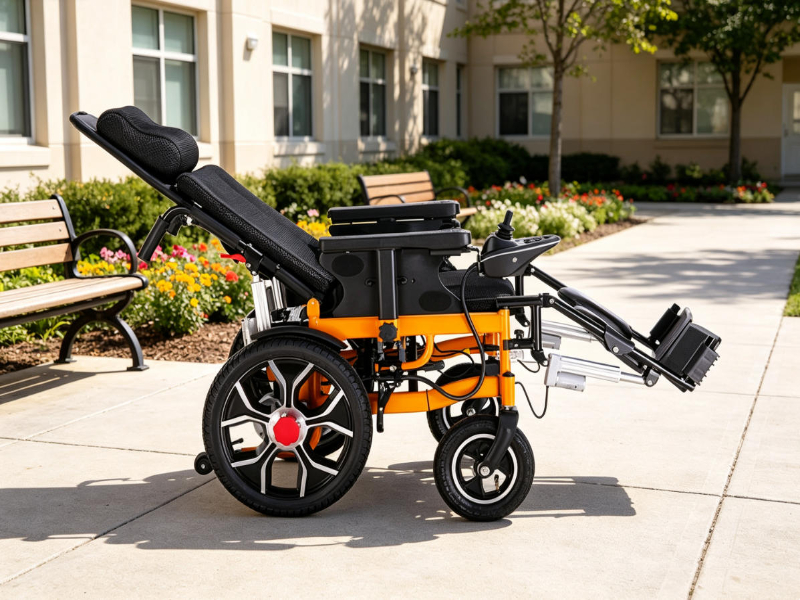
For people who spend long periods in a wheelchair, comfort is not a luxury—it is part of good mobility. A standard wheelchair may provide basic transportation, but it does not always offer the positioning flexibility needed during a full day at home, in a care facility, at a clinic, or outdoors. This is where a Wheelchair with Elevating Leg Rests can make a meaningful difference. By allowing the legs to be supported in a raised position while the backrest can be adjusted, this type of mobility chair is designed around a more flexible seating experience rather than simple transportation alone.
Table of Contents
ToggleThe demand for adjustable reclining mobility chairs has grown as families, caregivers, rehabilitation providers, and mobility-equipment dealers look for products that combine practical movement with improved positioning. An adjustable backrest can help users change their seating angle throughout the day, while elevating leg rests provide additional support for the lower limbs. When these features are combined with an electric drive system or a practical folding structure, the result can be a versatile mobility solution for users who value comfort, convenience, and easier transportation.
The way a wheelchair supports the body matters just as much as the way it moves. A user may spend several hours sitting during a normal day, so a fixed seating position can become uncomfortable, particularly when the person needs to change posture or support the legs differently.
A Wheelchair with Elevating Leg Rests addresses this issue by giving the lower limbs additional positioning options. Instead of keeping the feet at one fixed level, elevating leg rests can allow the legs to be raised according to the chair’s available adjustment range and the user’s needs. This can be particularly useful for people who prefer a more relaxed seated position during rest.
The reclining function adds another dimension. An adjustable backrest allows the user or caregiver to modify the upper-body angle instead of remaining completely upright throughout the day. Together, adjustable back support and elevating leg rests create a seating environment that can feel considerably more adaptable than a basic fixed-back wheelchair.
It is important to understand that these features are not intended to replace professional clinical advice. People with specific medical, postural, circulation, or rehabilitation requirements should have the wheelchair configuration assessed by an appropriate healthcare or seating professional. The correct adjustment depends on the individual rather than on the product category alone.
For families, however, the practical advantage is clear: a mobility chair that can be adjusted according to different situations can make everyday routines easier. The user may want a more upright position when moving through a shopping center, a slightly reclined position when resting, or additional leg support during longer periods of sitting. Having more than one seating configuration gives caregivers greater flexibility.
Choosing a Wheelchair with Elevating Leg Rests involves more than looking for the phrase “reclining” in a product description. Buyers should examine how the chair actually fits into the user’s daily routine.
Backrest adjustment
A reclining backrest is one of the defining characteristics of this type of mobility chair. A useful system should allow controlled adjustment and provide stable support throughout the available range. The purpose is not simply to recline as far as possible, but to provide practical positioning options for different activities.
For example, a relatively upright position may be more suitable for conversations, dining, or navigating busy environments, while a more relaxed position may be preferable when resting. The ideal chair should therefore provide a balance between adjustment capability, stability, and ease of operation.
Elevating leg rests
The second major feature is the leg-rest system. A Wheelchair with Elevating Leg Rests should provide adequate lower-leg support and allow the user to position the legs comfortably without creating unnecessary pressure points.
The design should also be considered in relation to the user’s height, leg length, seating position, and foot placement. A chair that looks comfortable in photographs may not provide the right fit for every user.
Seating support
A reclining wheelchair is often selected because the user expects to spend extended periods in it. Seat width, seat depth, cushion design, back support, armrest position, and foot support therefore deserve careful attention.
Comfort should be evaluated as a complete seating system rather than as a single feature.
Mobility control
If the wheelchair is electric, the control system becomes equally important. The joystick or controller should be positioned where the user can operate it comfortably and safely. For users who cannot independently operate the controls, caregiver-accessible options may also be relevant depending on the specific model.
Folding and transportation
A reclining electric wheelchair can be highly functional but may also be larger or heavier than a basic manual wheelchair. Buyers who regularly travel by car should therefore consider folding dimensions, overall weight, lifting requirements, and available storage space.
This is one reason compact or foldable electric wheelchair designs have become increasingly attractive for families looking for a balance between comfort and portability.
For users who want the benefits of an electric mobility chair while keeping transportation practicality in mind, the YSE118 Foldable Electric Wheelchair is a model worth considering.
The folding concept is particularly relevant for people who frequently travel between home, medical appointments, shopping areas, and family activities. Instead of treating the wheelchair as a permanently installed piece of equipment, a foldable design can make it easier to integrate mobility assistance into everyday transportation.
For dealers and distributors, the YSE118 is also an interesting product category because foldable electric wheelchairs appeal to a broad range of consumers. Users increasingly want power assistance without accepting the size and complexity traditionally associated with larger power wheelchairs.
When considering the YSE118 for a user who specifically wants a Wheelchair with Elevating Leg Rests, buyers should verify the exact configuration and available leg-rest and reclining options with the manufacturer before ordering. Product configurations can vary, and the correct specification should always be matched to the intended application.
From a market perspective, the model represents an important direction in mobility equipment: combining electric propulsion with a folding structure. That combination can be particularly attractive for users who need powered mobility but still expect their wheelchair to be practical for transportation.
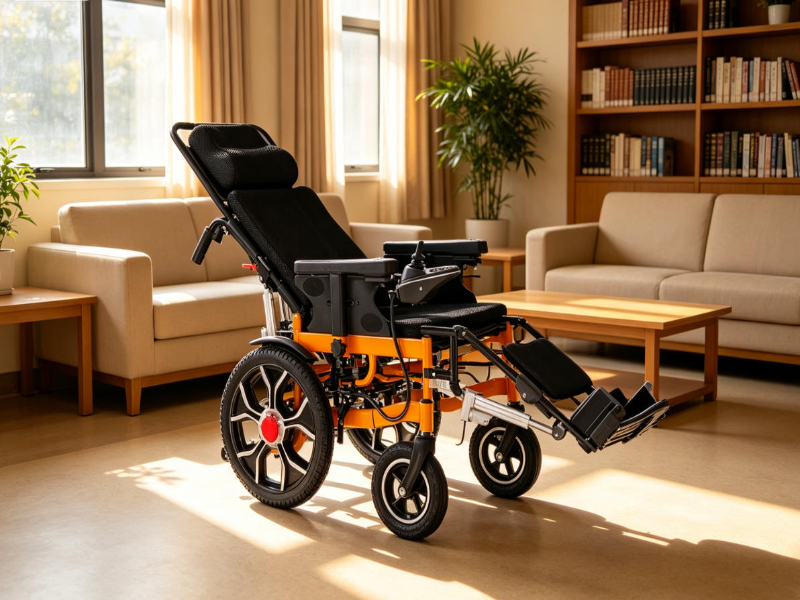
Another model worth evaluating is the YSE109 Wheelchair, which provides a different approach to users prioritizing comfort-oriented electric mobility.
The YSE109 is particularly relevant when the buyer’s priority is a more supportive electric wheelchair configuration rather than simply choosing the smallest possible folding chair. Its design can be considered for users who spend significant time in their wheelchair and want a mobility solution that places greater emphasis on seating flexibility.
For people searching specifically for a Wheelchair with Elevating Leg Rests, the YSE109 should be evaluated together with the user’s seating requirements. Reclining capability, leg support, armrest configuration, footrest position, seat dimensions, and control arrangement all contribute to the overall experience.
For a caregiver, this type of chair can also be valuable because positioning adjustments may make it easier to accommodate different daily activities. Instead of using one fixed seating position from morning until evening, the user may have more flexibility to change the chair’s configuration when resting or participating in activities.
For distributors, the YSE109 also provides an opportunity to target the comfort-focused segment of the electric wheelchair market, where buyers may be willing to prioritize positioning and support over the absolute minimum weight.
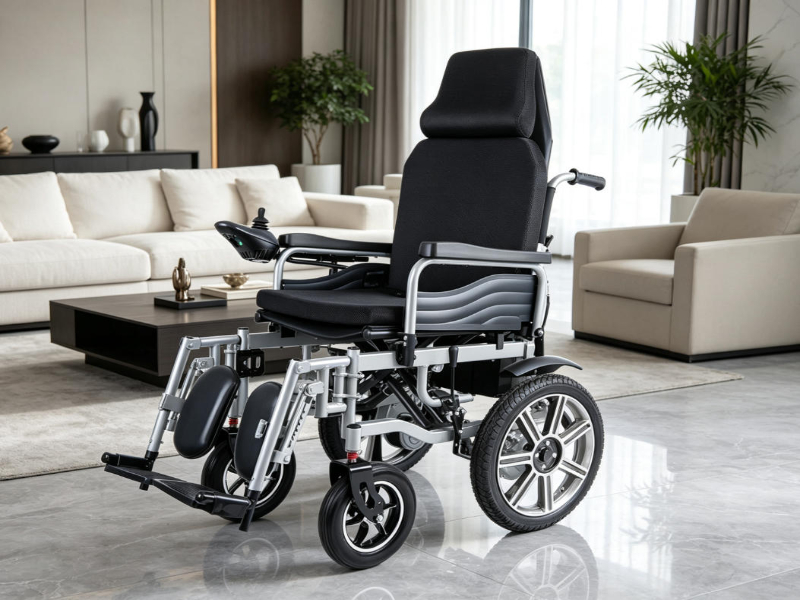
One of the most overlooked aspects of wheelchair design is lower-limb positioning.
When the legs remain in a fixed position for long periods, the user may become uncomfortable and may want to change the position of the lower limbs. Elevating leg rests offer an additional adjustment option that can make the chair more adaptable.
For elderly users, this may be particularly useful during extended periods of sitting. For caregivers, adjustable leg support can also simplify positioning during transfers or rest periods, depending on the user’s individual mobility situation.
However, elevating leg rests should not be treated as a universal medical solution. If a person has significant swelling, vascular conditions, recent surgery, joint restrictions, or other clinical concerns, positioning should be determined with appropriate professional guidance.
The best Wheelchair with Elevating Leg Rests is therefore not necessarily the chair with the greatest adjustment range. It is the chair whose available adjustments can be used safely and comfortably by the intended user.
The reclining mechanism is another reason buyers choose this category.
A conventional wheelchair keeps the backrest at a relatively fixed angle. An adjustable reclining mobility chair provides greater flexibility by allowing the back angle to change.
This can be useful in several everyday situations. A user may prefer a more upright position while communicating with other people, eating, or operating the wheelchair. During periods of rest, a more reclined configuration may feel more comfortable.
For caregivers, the ability to change the back angle can also provide more flexibility when supporting users who cannot independently reposition themselves.
Still, reclining should be viewed as one part of a complete seating system. A reclining backrest cannot compensate for an incorrectly sized seat, poor foot support, unsuitable cushion, or inadequate posture management.
The chair should be selected as a whole.
For distributors, product selection requires a different perspective from individual consumer purchasing.
A dealer needs to consider not only whether the product is comfortable but also whether it has a clear market position.
A Wheelchair with Elevating Leg Rests can appeal to several customer groups, including elderly users, homecare customers, rehabilitation providers, mobility-equipment retailers, and families looking for additional positioning flexibility.
Before placing a wholesale order, dealers should request complete technical specifications and confirm:
Seat width and depth → Overall dimensions → Product weight → Maximum user weight → Battery specifications → Motor configuration → Reclining range → Leg-rest configuration → Folding dimensions → Charging requirements → Warranty → Spare parts → Certification and compliance documentation
These details help prevent a common sourcing mistake: choosing a product based only on photographs and marketing descriptions.
Dealers should also request samples whenever possible. A sample allows the buyer to evaluate actual build quality, folding operation, controller placement, seat comfort, packaging, and overall handling before committing to a larger shipment.
There has always been a trade-off in wheelchair design between portability and comfort.
A very compact wheelchair may be easy to store but provide fewer positioning adjustments. A highly adjustable wheelchair may offer better seating flexibility but require more storage space.
Modern electric wheelchair designs are increasingly trying to narrow that gap.
The YSE118 is a useful example of the portability-oriented approach, while the YSE109 represents a more comfort-focused electric mobility concept. For distributors, offering both types can be more effective than trying to identify one wheelchair that suits every customer.
A good product portfolio should give customers choices.
Someone who travels frequently may prefer a folding electric wheelchair. Someone who spends many hours in the chair may prefer a larger comfort-oriented configuration. Someone requiring specialized clinical positioning may need an entirely different wheelchair.
This segmentation can also help mobility dealers improve customer satisfaction because the product recommendation begins with the user’s lifestyle rather than with a generic “best wheelchair” claim.
Elderly users often have different mobility requirements from younger adults. Strength, balance, endurance, transfer ability, caregiver support, and daily environment all influence the appropriate wheelchair configuration.
For an older adult who spends considerable time seated, a Wheelchair with Elevating Leg Rests can offer useful positioning flexibility. If the person also needs powered mobility, an electric reclining wheelchair can reduce the physical effort required to move independently.
For another elderly user who frequently travels in a family vehicle, folding capability may be the more important consideration.
The correct choice should therefore be based on actual daily activities:
Where will the wheelchair be used? How many hours per day will the user sit in it? Who will transport it? Can the user operate the joystick? Does the user need reclining? Is leg elevation required? How much storage space is available?
Answering these questions before purchasing is much more useful than simply searching for the wheelchair with the longest list of features.
Before purchasing a Wheelchair with Elevating Leg Rests, use the following checklist:
Comfort
Confirm that the seat width, depth, backrest, cushion, armrests, and foot supports match the user.
Adjustability
Check whether the backrest and leg rests provide the specific range of movement required.
Mobility
For an electric model, evaluate the controller, motor performance, battery, turning ability, and intended indoor/outdoor environment.
Portability
Check folding dimensions and actual product weight rather than relying on the word “portable.”
Safety
Verify braking, stability, anti-tip features where applicable, foot positioning, and the manufacturer’s operating instructions.
Maintenance
Ask about battery replacement, motor servicing, spare parts, warranty coverage, and technical support.
Compliance
For commercial importers, verify the documentation and regulatory requirements applicable to the destination market.
This approach makes the purchasing process more objective and helps avoid selecting a chair simply because it looks attractive online.
A wheelchair should support a person’s lifestyle, not force the person to adapt to a rigid piece of equipment.
A Wheelchair with Elevating Leg Rests can provide valuable flexibility for users who need more control over lower-limb positioning. When combined with an adjustable reclining backrest, electric drive, and a thoughtfully designed seating system, it can become a practical solution for everyday mobility and extended periods of sitting.
The YSE118 Foldable Electric Wheelchair is worth considering for users who place a strong emphasis on powered mobility combined with folding and transportation convenience. The YSE109 Wheelchair is another option for buyers who are more focused on a comfortable, adjustable electric mobility experience.View the IYASOCARE mobility wheelchair range
For distributors, these models also illustrate why a diversified wheelchair portfolio is important. Not every customer needs the same combination of portability, reclining, leg support, and electric performance. The strongest mobility suppliers are those that can provide different configurations for different users.
Ultimately, the best Wheelchair with Elevating Leg Rests is not simply the one with the most features. It is the one that provides the right combination of support, adjustability, mobility, portability, safety, and everyday practicality for the person who will actually use it.
1. What is a Wheelchair with Elevating Leg Rests?
A Wheelchair with Elevating Leg Rests is designed with leg supports that can be raised to provide additional lower-limb positioning options. This can be useful for users who spend extended periods in a wheelchair and prefer greater flexibility than a fixed footrest can provide. The appropriate position depends on the individual’s needs, and users with specific medical requirements should consult a qualified healthcare professional.
2. Is a reclining wheelchair better for elderly users?
A reclining wheelchair can be useful for elderly users who need additional seating-position flexibility, particularly when they spend long periods in the chair. However, reclining does not automatically make one wheelchair better than another. Seat dimensions, support, stability, ease of operation, portability, and the user’s individual mobility requirements should all be considered before choosing a model.
3. Which IYASOCARE model should I choose: YSE118 or YSE109?
The answer depends on the user’s priorities. The YSE118 Foldable Electric Wheelchair is particularly relevant when folding and transportation convenience are important, while the YSE109 is worth considering when comfort-oriented electric mobility and adjustable positioning are higher priorities. Buyers should confirm the exact current configuration, dimensions, and available leg-rest/reclining options with IYASOCARE before ordering.
WhatsApp us