Our Location
Free Trade Tower, Xiyong street.
Chongqing, China

Free Trade Tower, Xiyong street.
Chongqing, China
For many wheelchair users, the real challenge is not simply finding a chair that can move from one place to another. It is finding a mobility solution that feels stable, comfortable and dependable throughout the day—especially when a standard wheelchair does not provide enough seat space, structural strength or outdoor capability.
Table of Contents
ToggleThat is where a Bariatric Wheelchair – Heavy Duty Wide Wheelchair for Adults becomes particularly important. A properly designed bariatric wheelchair is more than an oversized version of a conventional wheelchair. It needs to combine a reinforced structure with appropriate seating dimensions, dependable braking, stable handling and sufficient load capacity. For users, caregivers, hospitals, rehabilitation centres, mobility dealers and healthcare providers, these details can make a substantial difference in everyday use.
The demand for Bariatric Wheelchair – Heavy Duty Wide Wheelchair for Adults solutions is also closely connected with changing expectations around mobility. Users increasingly want to participate in activities outside the home rather than being restricted to smooth indoor floors. Parks, shopping areas, rural roads, grass, gravel paths and other uneven environments can require considerably more from a wheelchair than a standard indoor mobility chair can provide.
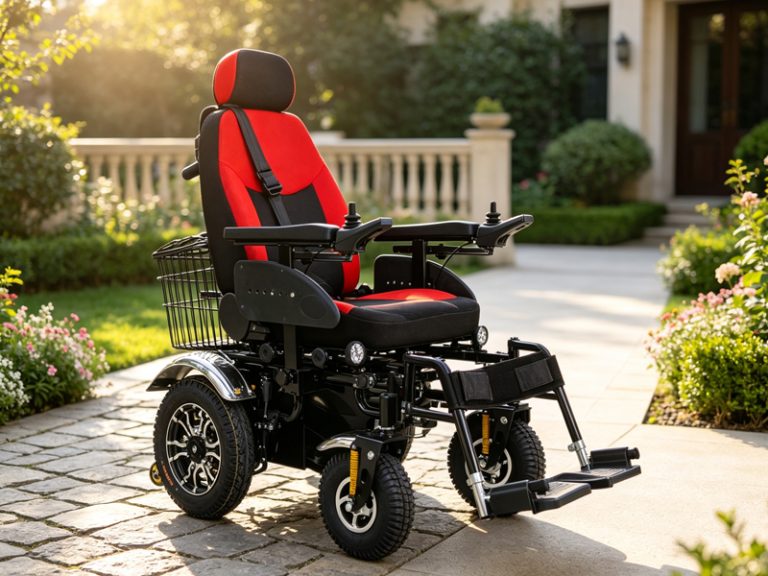
For buyers looking at heavy-duty mobility equipment, IYASOCARE offers several electric and off-road models that illustrate how modern wheelchair engineering can address greater weight capacity, outdoor mobility and comfort. The brand’s product range includes the Two-Seater Off-Road Wheelchair and the High-Speed Off-Road Wheelchair YSE102A, two different approaches to heavy-duty outdoor mobility.
When people hear the phrase Bariatric Wheelchair – Heavy Duty Wide Wheelchair for Adults, the first feature that usually comes to mind is seat width. Although seat width is certainly important, it is only one part of the overall design.
A wheelchair intended for higher-weight users needs to be engineered as a complete system. The frame, wheels, suspension, motors, brakes, seat structure and foot support all have to work together. Simply adding a wider cushion to a standard wheelchair does not automatically create a safe or comfortable bariatric mobility solution.
A wider seat can provide more usable personal space, but the frame beneath that seat must also provide sufficient structural support. This becomes especially important when the wheelchair is used outdoors, where uneven surfaces can place additional loads on the chassis and wheels. A reinforced frame can improve overall stability, while appropriately sized tires can provide better contact with the ground.
For this reason, buyers should look beyond marketing descriptions such as “heavy duty” or “extra wide.” A serious purchasing decision should consider the manufacturer’s stated load capacity, seat dimensions, frame construction, wheel configuration, braking system, motor output and intended environment.
For example, IYASOCARE’s Two-Seater Off-Road Wheelchair is built around a steel frame and lists a maximum load of 200 kg. Its design combines a spacious seating arrangement with enlarged wheels and spring suspension for outdoor surfaces.
This illustrates an important principle: heavy-duty mobility is about the entire mobility system, not just the size of the seat.
When selecting a Bariatric Wheelchair – Heavy Duty Wide Wheelchair for Adults, load capacity should be one of the first specifications examined.
Manufacturers normally specify a maximum user or total load. Buyers should understand exactly what that figure represents and avoid choosing a wheelchair simply because its advertised capacity appears close to the user’s body weight. Clothing, bags, medical equipment and other carried items can contribute to the total load.
A sensible purchasing approach is to allow an appropriate margin between the expected total load and the manufacturer’s stated maximum capacity. This can provide greater peace of mind and may reduce the likelihood of operating the wheelchair continuously at its structural limit.
Frame material also matters. Steel remains a common choice for heavy-duty mobility products because it can provide a robust foundation for higher-load applications. However, a stronger frame generally comes with additional weight, so buyers must balance durability against transport and storage requirements.
This is particularly relevant when comparing indoor bariatric wheelchairs with outdoor electric models. A chair designed primarily for indoor healthcare environments may prioritize manoeuvrability and compact dimensions, while an off-road electric model may prioritize suspension, motor power, larger tires and ground clearance.
Therefore, the phrase “heavy duty” should always be interpreted according to the intended application.
A wheelchair for a hospital corridor does not necessarily need the same engineering characteristics as a wheelchair intended for gravel roads, grassland or slopes.
A Bariatric Wheelchair – Heavy Duty Wide Wheelchair for Adults should provide enough seating space without becoming unnecessarily difficult to manoeuvre.
Seat width is closely related to comfort, posture and transfer. A seat that is too narrow can create pressure points and restrict natural sitting posture. On the other hand, an excessively wide seat may make it harder for the user to maintain good positioning and can increase the overall footprint of the wheelchair.
Seat depth should also be considered. A wide seat alone does not guarantee comfortable seating. The relationship between seat width, depth, backrest height, cushion design and foot support can influence how the user feels after spending several hours in the chair.
This is why professional buyers should evaluate the complete seating configuration rather than focusing on a single measurement.
For example, the IYASOCARE YSE102A has a 46 cm seat width and 45 cm seat depth, combined with a 57 cm seat height. Its design is aimed at outdoor use and incorporates a wider, thicker leather seat intended to provide support during longer journeys.
For some users, these dimensions may be appropriate; for others, a wider specialist bariatric chair may be preferable. The correct choice should always be based on the user’s body dimensions, posture, transfer needs and intended environment.
A common mistake is assuming that a heavy-duty wheelchair is only relevant to hospitals or home care.
In reality, many users want to maintain an active lifestyle. They may need to travel around a large property, visit parks, attend outdoor events, go shopping or move across surfaces that are less predictable than a polished indoor floor.
This is where an all-terrain or off-road electric wheelchair can offer a different category of mobility.
Traditional manual wheelchairs can perform very well on appropriate surfaces, but outdoor terrain introduces additional challenges. Gravel can reduce rolling efficiency. Grass can create additional resistance. Uneven ground can transmit shocks through the frame. Slopes require effective braking and sufficient motor torque.
A heavy-duty electric wheelchair addresses some of these challenges through powered propulsion, larger tires and suspension systems.
The Two-Seater Off-Road Wheelchair from IYASOCARE, for example, uses enlarged front and rear wheels with spring suspension and an 800W differential motor. The manufacturer states that the model can handle slopes up to 12° and offers battery configurations with a claimed range of 25–75 km depending on battery selection and conditions.
The result is a mobility platform designed for environments beyond ordinary indoor use.
For users whose lives extend well beyond the home, this difference can be meaningful.
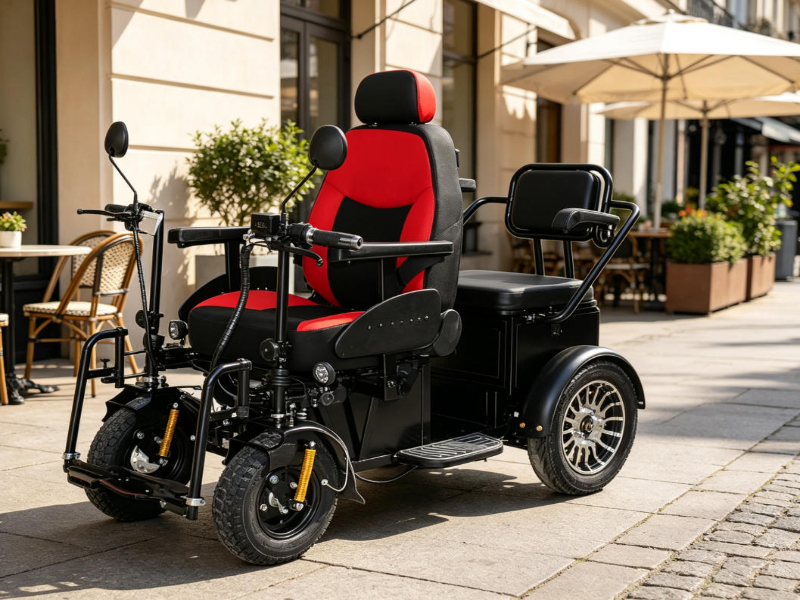
The Two-Seater Off-Road Wheelchair is an unusual option in the heavy-duty mobility category because its purpose extends beyond simply carrying one user.
The YSE103 is designed with an elevated rear seat that allows a second passenger to ride with the primary user. This can be especially useful when companionship or caregiver participation is an important part of outdoor mobility.
Rather than requiring a caregiver to walk alongside the wheelchair, the two-seat configuration allows both people to travel together. This can make certain outings more practical for families, couples and care environments.
The model uses an 800W differential motor and is available with different battery configurations, including 48V 20Ah, 48V 32Ah lead-acid and 60V 30Ah lithium options. Depending on the configuration, the manufacturer lists a driving range of 25–75 km and a maximum speed of 20 km/h.
Its steel frame is rated for a load of up to 200 kg, while the enlarged wheels and spring suspension are designed to improve stability across rough surfaces.
This makes the model particularly interesting for buyers looking for a heavy-duty wide wheelchair for adults that can also support shared outdoor travel.
It may be suitable for applications such as family recreation, outdoor mobility services, certain rehabilitation environments, rural property travel and caregiver-assisted outings.
However, buyers should remember that a two-seater design has a larger footprint than a conventional wheelchair. It therefore requires sufficient storage space, suitable transportation and adequate turning space.
The product’s strength is not compactness. Its strength is combining high-load capability, outdoor mobility and shared seating into one platform.
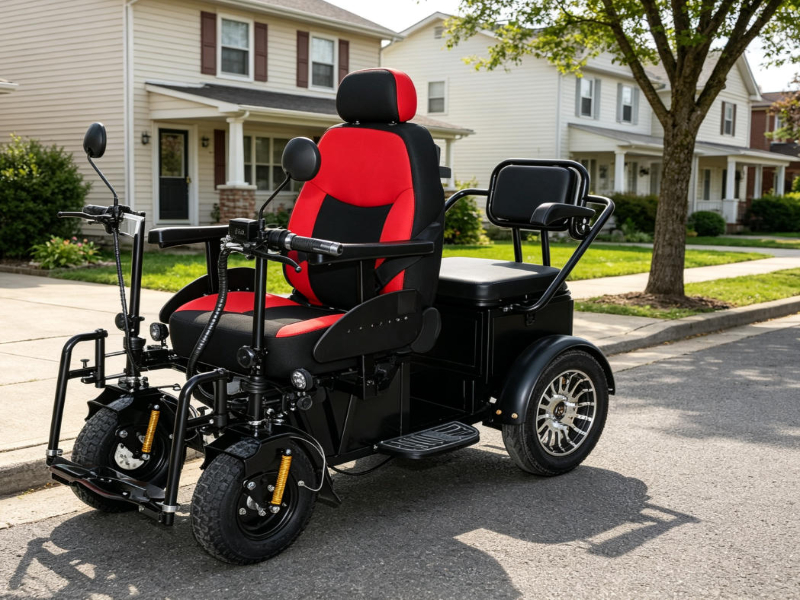
If the Two-Seater model focuses on shared mobility, the YSE102A High-Speed Off-Road Wheelchair takes a more performance-oriented approach.
The model is equipped with an upgraded 800W differential motor and has a manufacturer-listed maximum speed of up to 25 km/h. It also features front and rear suspension, pneumatic wide tires and braking equipment designed for outdoor environments.
The manufacturer states that the YSE102A can handle slopes of up to 15° and obstacles of approximately 15 cm, although actual performance will depend on terrain, rider weight, battery condition, surface conditions and safe operating practices.
For a heavy-duty wheelchair buyer, the model’s load rating is particularly notable. The steel frame is listed with a 200 kg load capacity, making it relevant to users who require more substantial structural support.
The seating system is another important feature. The YSE102A uses a wider, thicker leather seat with tilt and reclining functionality, giving users the ability to adjust their posture during longer periods of use. The manufacturer also lists a 180° adjustable backrest, although users should verify the precise adjustment configuration with the supplier before purchase.
Braking is also a major consideration when a heavy wheelchair is operated outdoors. The YSE102A uses front and rear disc brakes together with a rear oil brake, providing multiple braking components for stopping and parking.
The listed battery options are 48V 20Ah and 48V 32Ah lead-acid batteries, with a claimed driving range of 25–75 km depending on configuration. Charging time is listed at approximately 6–8 hours.
For buyers who need a powerful outdoor wheelchair rather than a conventional indoor bariatric chair, the YSE102A deserves consideration.
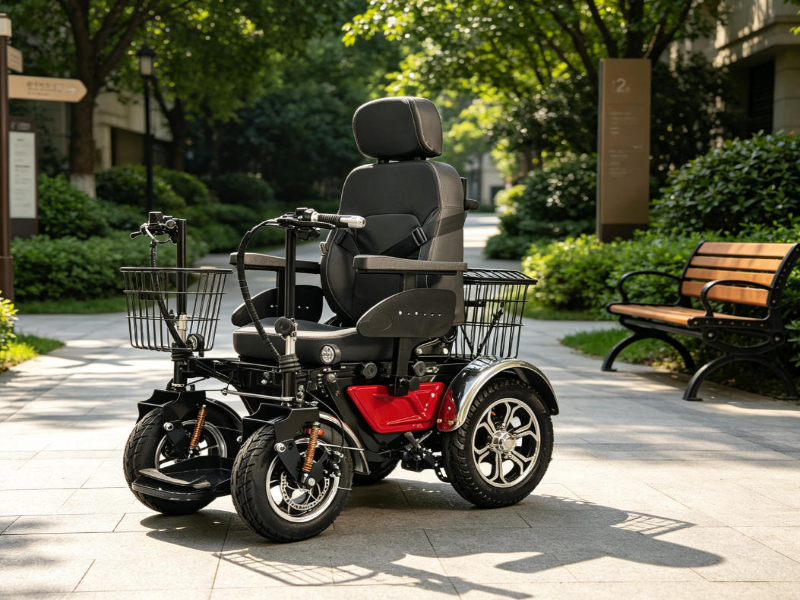
Comfort is often discussed as if it were simply a matter of luxury. In reality, for people spending several hours in a wheelchair, seating comfort can influence posture, fatigue and overall usability.
A Bariatric Wheelchair – Heavy Duty Wide Wheelchair for Adults should therefore provide more than additional load capacity.
The seat should offer appropriate support, while the backrest should help users maintain a stable posture. Foot support should keep the legs positioned securely, and armrests should provide comfortable upper-body support without interfering with transfers.
For electric outdoor models, suspension becomes especially important.
When a wheelchair travels over gravel, grass, uneven pavement or other irregular surfaces, some of the vibration is transmitted through the wheels and frame. A suspension system can help absorb some of those impacts and make the ride more controlled.
The YSE102A incorporates front and rear suspension together with pneumatic wide tires. The YSE103 Two-Seater similarly uses enlarged wheels and spring suspension for outdoor terrain.
These features demonstrate why the best heavy-duty wheelchair should be evaluated as a complete mobility system rather than simply by seat width.
The heavier the combined wheelchair and user load, the more important controlled stopping becomes.
This is especially true on slopes.
A wheelchair descending an incline has to manage greater momentum than the same wheelchair travelling on a flat surface. Outdoor terrain can further complicate braking because loose gravel, wet grass and uneven ground may reduce traction.
For this reason, braking specifications deserve careful attention when comparing bariatric and heavy-duty wheelchairs.
The YSE102A’s front and rear disc brakes plus rear oil brake are designed to provide additional stopping performance for its outdoor application. The YSE103 uses a drum parking brake and also incorporates a brake-lock system intended to prevent unintended movement while parked.
These features are particularly relevant to caregivers because a large wheelchair can be difficult to manually control if it begins moving unexpectedly on an incline.
Even with advanced braking systems, users should follow the manufacturer’s operating instructions and avoid slopes or terrain beyond the wheelchair’s specified capabilities.
Not every person who needs a Bariatric Wheelchair – Heavy Duty Wide Wheelchair for Adults needs an off-road electric wheelchair.
This distinction is important because a buyer can easily spend more than necessary by choosing a highly specialized model for a relatively simple mobility requirement.
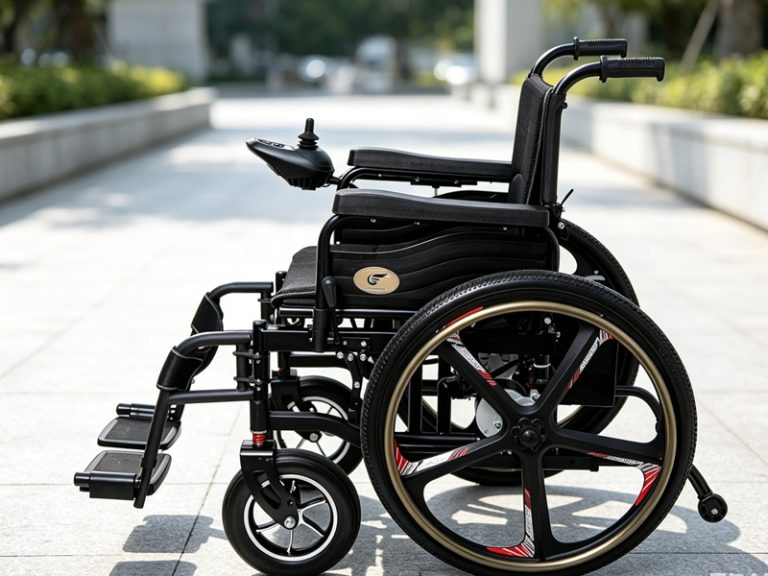
If the primary environment is a hospital, nursing facility or home, a conventional heavy-duty manual wheelchair may be more practical. It can be easier to manoeuvre through narrow corridors and may require less maintenance.
If the user needs to travel outdoors regularly, an electric model may provide considerably more independence.
If the user frequently travels across grass, gravel or uneven surfaces, an off-road design with larger tires and suspension may be more appropriate.
If the user often travels with a caregiver or companion, a two-seater configuration may offer unique advantages.
If the user prioritizes outdoor performance and longer-distance travel, the YSE102A may be more suitable than a two-seat model.
The important point is that there is no universal “best” bariatric wheelchair. The correct choice depends on the user, environment and daily routine.
For distributors and healthcare organizations, purchasing a heavy-duty wheelchair involves more than evaluating one product.
A reliable supplier should be able to provide clear specifications, load ratings, product dimensions, battery information, replacement parts availability and after-sales support.
Dealers should also examine whether the manufacturer can support different market requirements. This may include packaging, branding, OEM/ODM options, documentation and product customization.
The supplier’s broader product range can also be valuable. A dealer may need standard manual wheelchairs for one customer group, lightweight electric models for another and heavy-duty off-road products for customers with more demanding requirements.
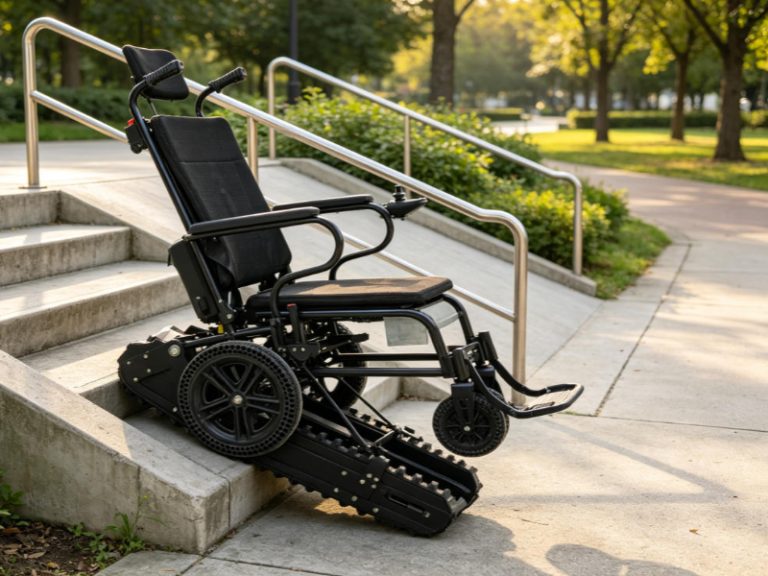
IYASOCARE presents itself as a manufacturer focused on wheelchairs and rehabilitation equipment, with categories covering manual wheelchairs, electric wheelchairs, off-road wheelchairs, stair-climbing wheelchairs, standing wheelchairs and other mobility products.
For international buyers, this broader product portfolio can make supplier evaluation easier because different mobility requirements can potentially be addressed through one manufacturing relationship.
Before purchasing a Bariatric Wheelchair – Heavy Duty Wide Wheelchair for Adults, buyers should evaluate the following areas together:
1. Maximum load capacity
Check the manufacturer’s official load rating and consider the total operating load rather than the user’s body weight alone.
2. Seat dimensions
Measure the user’s required seat width and depth. A wider seat should still provide appropriate posture and support.
3. Frame construction
Heavy-duty applications require a frame designed to support the expected load over the intended operating environment.
4. Wheel and tire configuration
Larger pneumatic or widened tires can be particularly useful for outdoor surfaces, while indoor chairs may benefit from smaller wheels and a tighter footprint.
5. Suspension
For gravel, grass and uneven terrain, suspension can improve ride comfort and stability.
6. Braking system
Consider both dynamic braking and parking brakes, especially when the wheelchair will be used on slopes.
7. Motor performance
For electric models, motor power should be considered together with user weight, terrain and expected range.
8. Battery configuration
Battery chemistry, capacity, charging time and expected operating conditions all affect practical range.
9. Storage and transportation
A heavy-duty wheelchair may be substantially larger and heavier than a standard model. Confirm that it can be transported and stored appropriately.
10. After-sales support
For dealers and professional buyers, spare parts and technical support can be just as important as the initial product price.
The phrase “bariatric wheelchair” can sometimes make the discussion sound purely technical. Yet behind every specification is a person who wants to move through daily life with fewer limitations.
A well-designed Bariatric Wheelchair – Heavy Duty Wide Wheelchair for Adults can provide something that cannot be measured only in kilograms or centimetres: confidence.
Confidence to leave the house.
Confidence to visit a park.
Confidence to travel with family.
Confidence to move across a larger property.
Confidence that the equipment is designed around the user’s actual mobility requirements.
Modern heavy-duty wheelchairs are increasingly moving beyond the idea of simply supporting a heavier user. They are becoming more versatile mobility platforms capable of combining strength, comfort, electric propulsion and outdoor performance.
The IYASOCARE Two-Seater Off-Road Wheelchair demonstrates how heavy-duty mobility can incorporate shared travel, while the YSE102A demonstrates a more performance-focused approach with higher speed, suspension, wide pneumatic tires and a 200 kg listed load capacity.
The right product ultimately depends on the individual application.
For a healthcare facility, stability and ease of care may be the priority. For a home-care user, comfort and transfer convenience may matter more. For an active outdoor user, motor power, suspension, tires and braking may become the deciding factors.
That is why purchasing should begin with the user and environment—not with a product catalogue.
Choosing a Bariatric Wheelchair – Heavy Duty Wide Wheelchair for Adults is an important mobility decision, particularly when the user requires additional seating space, higher load capacity or greater structural support.
The best solution should combine appropriate dimensions, dependable construction, comfortable seating and a braking system suited to the environment. For outdoor users, suspension, tire design, motor power and battery capacity become equally important.
For users who want to travel with a companion or caregiver, the IYASOCARE Two-Seater Off-Road Wheelchair offers a distinctive combination of two-person seating, 800W motor power, suspension and a listed 200 kg load capacity.
For users who prioritize faster outdoor travel and more demanding terrain, the IYASOCARE YSE102A High-Speed Off-Road Wheelchair provides an 800W motor, a manufacturer-listed top speed of 25 km/h, wide pneumatic tires, front and rear suspension, multiple braking components and a listed 200 kg load capacity.
For dealers, distributors and healthcare organizations, the broader IYASOCARE range can also be considered when building a mobility product portfolio that serves different user requirements.
A heavy-duty wheelchair should never be selected simply because it looks stronger or has a wider seat. The right model is the one whose capacity, dimensions, performance and features genuinely match the user’s body, lifestyle and environment.
When those factors are aligned, a Bariatric Wheelchair – Heavy Duty Wide Wheelchair for Adults becomes more than reinforced medical equipment. It becomes a practical tool for mobility, participation and greater everyday independence.
1. What is a Bariatric Wheelchair – Heavy Duty Wide Wheelchair for Adults?
A Bariatric Wheelchair – Heavy Duty Wide Wheelchair for Adults is a wheelchair designed to provide greater load capacity, structural support and seating space than many standard wheelchair models. Depending on the design, it may be manual or electric and may be intended for indoor care, everyday mobility or outdoor use. Buyers should always check the manufacturer’s official load rating and dimensions rather than assuming that every “bariatric” model has the same capacity.
2. Is an off-road electric wheelchair suitable for bariatric users?
It can be, provided its specifications match the user’s requirements. For example, the IYASOCARE YSE102A is listed with a steel frame and a maximum load of 200 kg, together with an 800W motor, suspension and wide pneumatic tires. However, suitability depends on the user’s weight, dimensions, terrain, transfer ability and intended use. Professional assessment and confirmation with the manufacturer are recommended before purchase.
3. How do I choose between the Two-Seater Off-Road Wheelchair and YSE102A?
The two models are designed around different priorities. The Two-Seater Off-Road Wheelchair is particularly interesting for users who want to travel with a companion or caregiver and offers two-person seating, an 800W motor, suspension and a listed 200 kg load capacity. The YSE102A High-Speed Off-Road Wheelchair is more performance-oriented, with a listed maximum speed of 25 km/h, 800W motor, suspension, wide pneumatic tires and a 200 kg load rating. The better choice depends on whether shared travel or individual outdoor performance is the higher priority.
WhatsApp us