Our Location
Free Trade Tower, Xiyong street.
Chongqing, China

Free Trade Tower, Xiyong street.
Chongqing, China
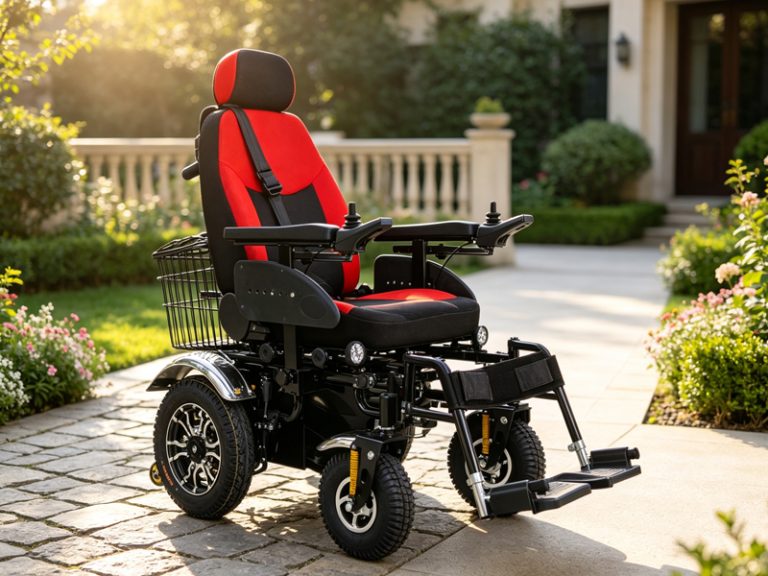
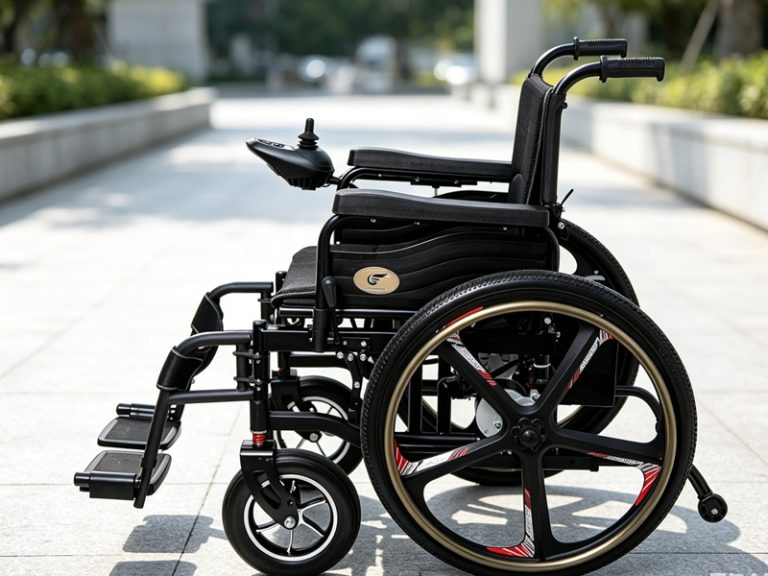
Mobility equipment has changed considerably in recent years. A power wheelchair is no longer necessarily a large, heavy piece of equipment designed only for use around the home or in a medical facility. For many modern users, the ideal solution needs to be easier to transport, simpler to store, comfortable enough for everyday use, and capable of providing dependable powered mobility when walking is difficult or impossible.
Table of Contents
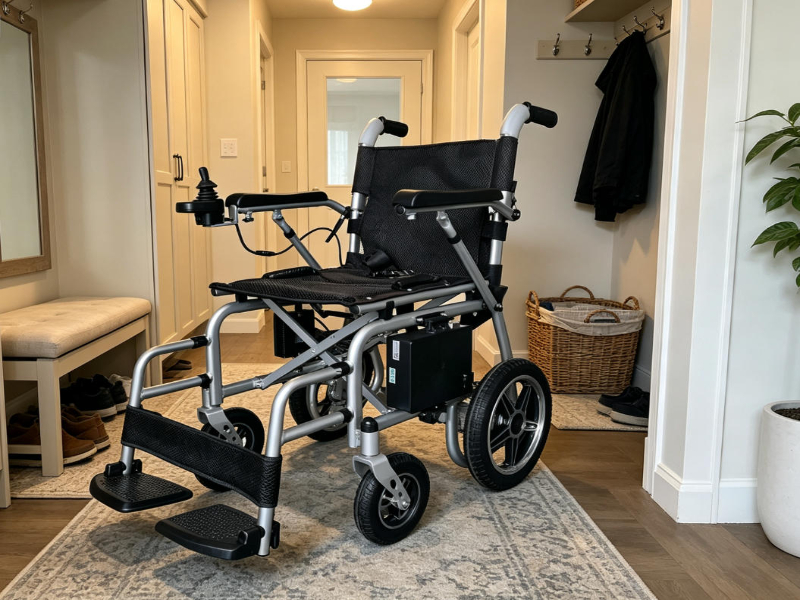
ToggleThis is where an Automatic Folding Lightweight Electric Wheelchair becomes particularly attractive. By combining electric propulsion with a folding structure, modern designs can offer the independence of a power chair without creating the same transportation and storage challenges associated with many conventional powered wheelchairs.
For seniors, people with limited mobility, caregivers, frequent travellers and families living in smaller homes, a Portable Power Chair can make a meaningful difference to everyday routines. It can be used for shopping, medical appointments, family visits, holidays, outdoor activities and many other situations where maintaining mobility matters.
The main appeal of an Automatic Folding Lightweight Electric Wheelchair is that it brings together several features that users previously had to compromise between.
A traditional manual wheelchair may be relatively easy to fold but requires the user or caregiver to provide propulsion. A large power wheelchair offers powered mobility but can be difficult to lift and transport. A modern folding electric wheelchair attempts to bridge that gap by combining a powered drive system with a more compact frame.
The automatic folding function takes this concept one step further. Instead of manually manipulating several frame components, a remote or powered folding mechanism can simplify the process of preparing the wheelchair for transportation or storage.
That can be especially valuable for older users or caregivers who may not have the strength or flexibility required to fold a conventional chair repeatedly throughout the day.
However, “automatic folding” should not be interpreted as meaning every model folds in exactly the same way. Buyers should examine the actual folding mechanism, remote-control functions, folded dimensions, total weight and battery configuration before making a purchase.
The goal is not simply to find the smallest wheelchair. It is to find a chair that is genuinely practical in the environment where it will be used.
When people search for a Portable Power Chair, weight is often the first specification they look at. It is certainly important, but it is only one part of portability.
A wheelchair can be relatively light and still be difficult to transport if its folded dimensions are inconvenient. Conversely, a slightly heavier chair may be easier to handle if its battery is removable, its folding mechanism is simple, and its centre of gravity makes lifting more manageable.
For this reason, buyers should consider four measurements together:
Total weight + folded dimensions + battery configuration + lifting method.
These factors determine whether the wheelchair can realistically be transported in a family car, stored in a home, taken on a trip or handled by a caregiver.
This is particularly important for air travel. Airline policies regarding powered wheelchairs and lithium batteries can vary, so users should always confirm the current requirements with the airline before travelling. A removable battery can make transportation more manageable, but it does not automatically guarantee airline acceptance.
An automatic folding mechanism is most useful when it solves a real everyday problem.
Imagine returning from a shopping trip and needing to put the wheelchair into a vehicle. With a manually folding chair, the caregiver may need to release locks, collapse the frame and position the chair carefully. With an automatic system, the folding process can be much simpler.
The same benefit applies at home. If a wheelchair is not required continuously, a compact folded configuration can reduce the amount of living space it occupies.
For users who travel frequently, this convenience becomes even more significant. A wheelchair that can be folded quickly is easier to integrate into road trips, hotel stays, family visits and other journeys.
The IYASOCARE YSE130X is a particularly clear example of this approach. Its product information describes a remote-controlled automatic folding system and a folded size of 78 × 63 × 48 cm. The chair uses an aluminium frame, dual 250W motors and a removable 24V 12Ah lithium battery.
This combination makes the model particularly relevant for users who place a high value on folding convenience and powered travel.
Rather than presenting one wheelchair as suitable for everyone, it is more useful to compare different designs according to how people actually live and travel.
The IYASOCARE YSE130X is arguably the strongest match for buyers specifically searching for an Automatic Folding Lightweight Electric Wheelchair.
The defining feature is its automatic folding system operated by remote control. According to the manufacturer’s specifications, the chair uses an aluminium frame, has a 120 kg load capacity and folds to approximately 78 × 63 × 48 cm. It has a 48 cm seat, an 8 cm cushion, dual 250W motors and a claimed driving range of approximately 15–25 km depending on conditions.
The removable lithium battery is another useful feature for travel-oriented users. The manufacturer describes the YSE130X as designed for travel and notes that airline policies should still be confirmed before departure.
The chair also combines electromagnetic braking with a stated climbing ability of up to 15°, while a manual mode allows the chair to be pushed when powered operation is unavailable or assistance is preferred.
For everyday users, the seating configuration is also worth noting. The 48 cm seat, thick cushion, supportive backrest and flip-up armrests are intended to provide greater comfort and easier access during normal use.
Best suited to: users who prioritise automatic folding, travel convenience, powered mobility and a relatively spacious seat.
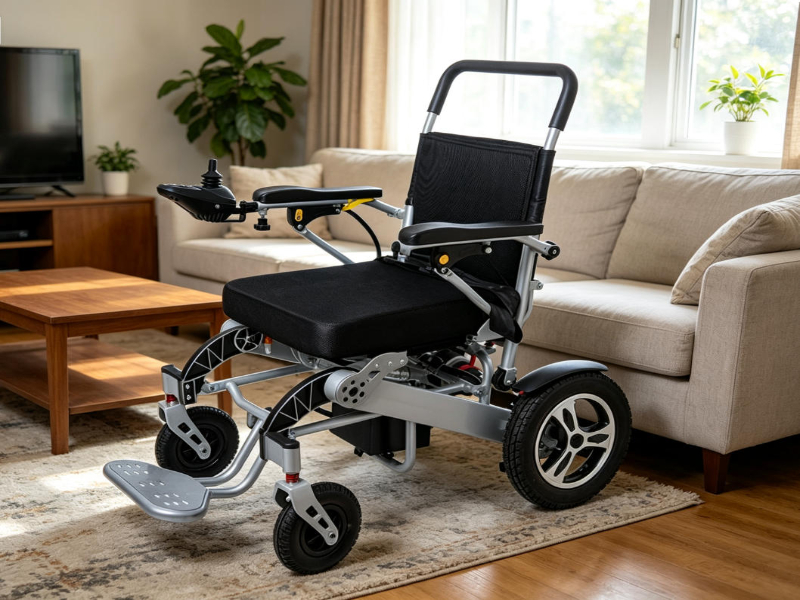
The IYASOCARE YSE133 takes a slightly different approach. Instead of focusing primarily on automatic folding, its major selling point is extremely low frame weight.
The manufacturer lists the YSE133 at approximately 17 kg without the battery. It uses an aluminium alloy frame and folds to around 90 × 33 × 82 cm. The chair supports up to 100 kg and is equipped with dual 200W brushless motors.
This makes the YSE133 particularly interesting for users who frequently need to lift and transport their wheelchair.
Another distinguishing feature is its dual-battery configuration. Available 24V lithium battery options include 6Ah, 12Ah and 20Ah capacities, allowing different configurations according to the required travel range. The manufacturer’s listed range is approximately 5–20 km depending on battery selection and driving conditions.
Comfort has also received attention. The YSE133 includes a breathable backrest, premium leather seat cushion, front-wheel shock absorption, flip-up armrests and a three-position adjustable footrest. PU non-inflatable tyres reduce the need for routine tyre inflation and help simplify maintenance.
The electromagnetic parking brake adds another practical safety feature, particularly when stopping or parking on suitable surfaces.
Best suited to: frequent travellers, caregivers and users who place exceptional importance on reducing lifting weight while maintaining electric mobility.
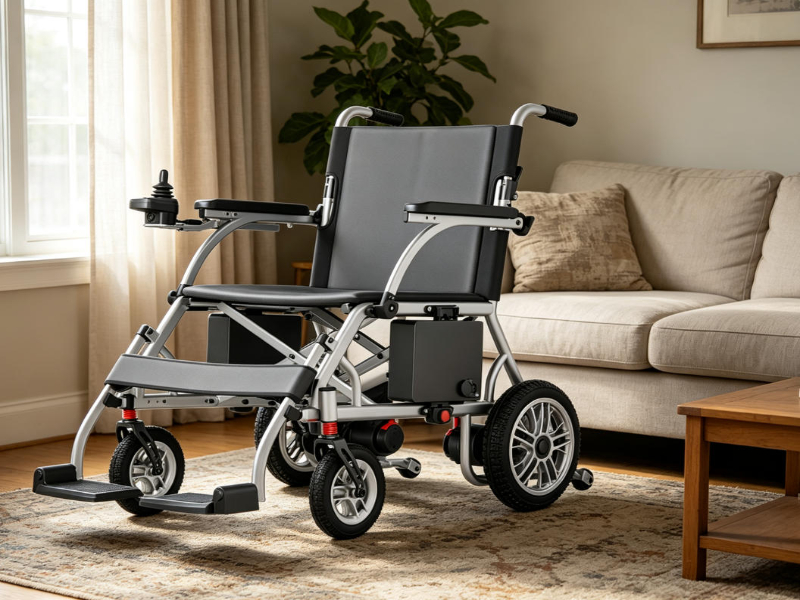
The IYASOCARE YSE124 is another strong option for people searching for an Automatic Folding Lightweight Electric Wheelchair or Portable Power Chair, particularly when minimum weight is a major consideration.
The manufacturer describes the YSE124 as using an all-aluminium alloy frame weighing approximately 14 kg. It also supports manual and electric operating modes, allowing users or caregivers to push the chair when appropriate.
The model uses a 24V 12Ah lithium battery and a brushless motor system, with a listed range of approximately 15–25 km and a maximum speed of 6 km/h. Its maximum load is listed at 100 kg.
The design also includes a removable footrest and rear handlebar, which can be useful when the chair needs to be handled or repositioned manually. Electronic parking braking provides additional stability when stopped.
For someone who regularly loads a wheelchair into a car, the 14 kg frame weight can be an important advantage. Nevertheless, buyers should remember that the stated weight refers to the configuration specified by the manufacturer, and battery weight should be considered separately when assessing the total lifting load.
Best suited to: users who prioritise extremely low weight, manual/electric flexibility and travel portability.
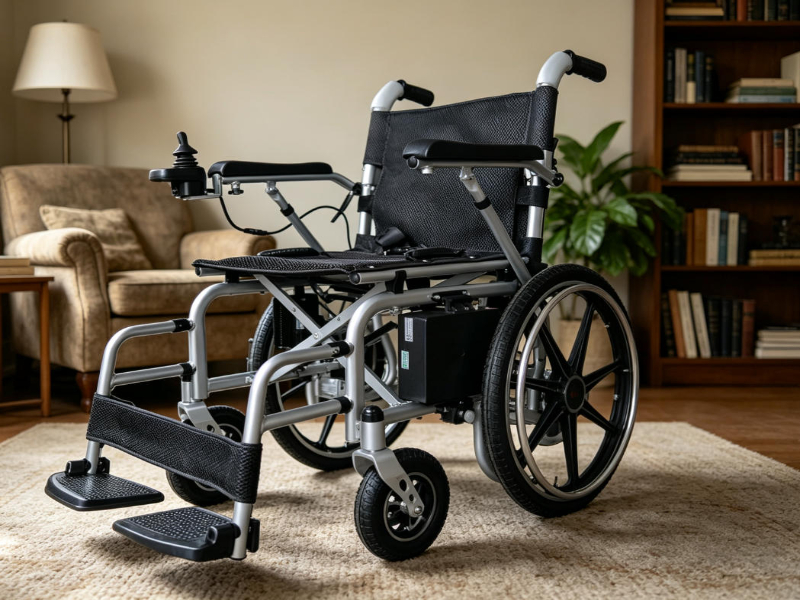
| Model | Main Advantage | Battery / Range | Load Capacity | Best For |
|---|---|---|---|---|
| YSE130X | Remote automatic folding | 24V 12Ah / 15–25 km | 120 kg | Travel and everyday powered mobility |
| YSE133 | Very light aluminium frame | 24V 6/12/20Ah / 5–20 km | 100 kg | Frequent lifting and transport |
| YSE124 | Ultra-light 14 kg frame | 24V 12Ah / 15–25 km | 100 kg | Travel-focused users |
Specifications can vary by configuration, battery option and market, so buyers should confirm the final specification with the manufacturer before ordering.
The most suitable Portable Power Chair is not necessarily the model with the lowest advertised weight. A better approach is to assess the complete mobility system.
Battery and charging
Battery capacity influences practical travel distance, while charging time affects daily convenience. The YSE130X lists a 4–6 hour charging time, while the YSE133 also lists approximately 4–6 hours.
Users should consider how far they normally travel in a day rather than selecting a battery solely because it has the largest capacity.
Battery storage and transportation are equally important. Lithium batteries may be subject to specific transport rules, particularly when flying, so airline requirements should always be checked in advance.
Motor performance
Motor output should match the intended environment. A compact indoor wheelchair does not need the same terrain capability as a large outdoor power chair.
The YSE130X uses dual 250W motors and lists a 15° climbing ability, while the YSE133 uses dual 200W brushless motors with a listed climbing ability of approximately 9°.
These figures should be treated as manufacturer specifications rather than guarantees for every real-world surface. User weight, battery condition, terrain, temperature and driving conditions can all influence performance.
Seating and comfort
Portability should never come at the expense of basic seating comfort.
Seat width, cushion thickness, backrest support, armrest design and footrest adjustment become increasingly important when a person spends several hours a day in the chair.
The YSE130X provides a 48 cm seat and an 8 cm cushion, while the YSE133 offers a 44 cm seat, breathable backrest and adjustable footrest.
Braking and control
A lightweight wheelchair still needs predictable stopping performance. Electromagnetic brakes can help secure the chair when powered driving stops, but users should still operate the wheelchair within its intended conditions and follow the manufacturer’s instructions.
Control placement is also important. A controller should be positioned where the intended user can operate it comfortably and safely.
An Automatic Folding Lightweight Electric Wheelchair can be particularly useful for seniors who have difficulty walking long distances but still want to participate in normal daily activities.
It can also be useful for people recovering from injury or surgery, provided the wheelchair is appropriate for their individual circumstances and recommended by their healthcare professional where necessary.
For caregivers, the main attraction may be reduced handling effort. Folding, transporting and storing a wheelchair multiple times per day can become physically demanding, so a lighter and more convenient design can make routines easier.
Frequent travellers represent another important user group. A folding wheelchair can make it easier to combine mobility equipment with cars, hotels and other forms of travel, although transportation and airline policies must always be checked separately.
The products can also appeal to distributors and mobility-equipment retailers. A product range containing an automatic-folding model, an ultra-light model and a flexible manual/electric model gives customers more choice without forcing every user into the same configuration.
A common mistake in wheelchair purchasing is asking, “Which model is the best?” before asking, “What does the user actually need?”
Consider two customers.
The first travels frequently, has access to a caregiver and wants a chair that can be folded quickly before being placed in a vehicle. For this customer, the YSE130X’s automatic folding function and remote control may be particularly attractive.
The second customer regularly lifts the wheelchair independently and cares more about minimum weight than automatic folding. In this case, the YSE133 or YSE124 may deserve closer consideration because of their lightweight aluminium construction.
A third customer might value manual/electric flexibility above all else. The YSE124’s dual-mode approach could therefore be particularly relevant.
This illustrates why an Automatic Folding Lightweight Electric Wheelchair should be selected according to lifestyle rather than marketing language.
For B2B buyers, choosing the right manufacturer is just as important as choosing the right product.
A distributor needs consistent specifications, reliable production, product documentation, replacement parts and technical support. OEM and ODM capabilities can also be important when a business wants to build a private-label mobility range.
IYASOCARE’s website lists electric wheelchairs, manual wheelchairs, stair-climbing wheelchairs, standing wheelchairs, beach wheelchairs, off-road wheelchairs and other mobility products, giving professional buyers access to a broader product portfolio.
The company also identifies itself as Chongqing Iyasocare Medical Co., Ltd. and describes its activities as including research, development, production, sales and consulting for medical and rehabilitation equipment.
For commercial purchasing, buyers should confirm current certifications, OEM requirements, minimum order quantities, lead times, packaging, warranty arrangements and destination-market compliance directly with the manufacturer before placing an order.
The modern Automatic Folding Lightweight Electric Wheelchair is designed around a simple but important idea: powered mobility should make everyday life easier rather than creating another transportation problem.
The YSE130X demonstrates the value of automatic remote-controlled folding, a relatively high 120 kg load capacity, dual 250W motors and a removable lithium battery.
The YSE133 focuses more heavily on lightweight portability, with an approximately 17 kg frame without the battery, dual lithium-battery options, brushless motors and comfort-oriented features.
The YSE124 takes lightweight design even further, with a stated 14 kg aluminium frame and manual/electric operating flexibility.
For users, the final choice should depend on weight, folding method, battery needs, seating dimensions, travel frequency, terrain, user capacity and caregiver requirements. For distributors, the decision should additionally consider product consistency, documentation, certification, OEM support and after-sales service.
A good Portable Power Chair is ultimately not defined by one specification. It is defined by how naturally it fits into the user’s life—how easily it can be transported, how comfortably it can be used, how confidently it can be controlled and how reliably it supports everyday independence.
1. What is the difference between an automatic folding electric wheelchair and a standard folding power chair?
An automatic folding model uses a powered or remote-controlled mechanism to assist with folding and unfolding, while a conventional folding power chair generally requires the user or caregiver to fold the frame manually. The YSE130X, for example, includes a remote-controlled automatic folding system.
2. Which IYASOCARE model is the lightest?
Among the three models discussed here, the YSE124 has the lowest stated frame weight at approximately 14 kg, followed by the YSE133 at approximately 17 kg without its battery. The YSE130X is designed more around automatic folding, travel convenience and a higher stated load capacity.
3. Is a Portable Power Chair suitable for air travel?
A folding electric wheelchair can be useful for travel, but air-travel acceptance depends on the airline, battery type, battery capacity, removable-battery arrangements and applicable transport rules. Users should contact the airline before departure and obtain confirmation for the specific wheelchair and battery configuration rather than assuming that a “portable” or “airline-friendly” label guarantees acceptance.
WhatsApp us