Our Location
Free Trade Tower, Xiyong street.
Chongqing, China

Free Trade Tower, Xiyong street.
Chongqing, China
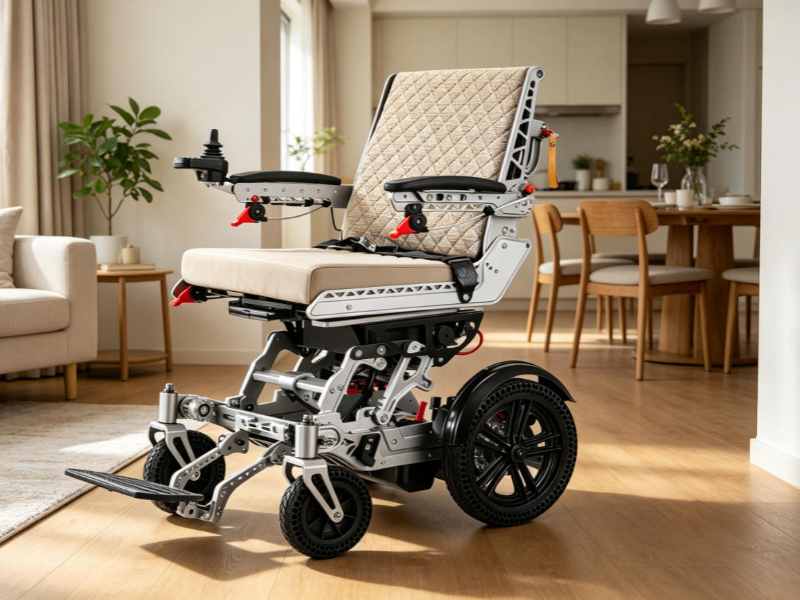
For people with limited mobility, getting from one level to another can be one of the most difficult parts of everyday life. A small step at the entrance, a high bed, a vehicle seat, a kitchen counter or an uneven outdoor surface can turn an otherwise simple activity into a situation that requires assistance. For elderly users and people with disabilities, these repeated movements can also affect confidence and independence.
Table of Contents
ToggleThis is why the idea of a Hydraulic Wheelchair Lift for Disabled People and Elderly Users has become increasingly relevant in modern mobility equipment. However, the term “wheelchair lift” covers several different technologies. Some systems are designed to lift a wheelchair between floors or into vehicles, while others integrate a lifting function directly into the wheelchair itself, allowing the user to change their seating height or position without transferring to another chair.
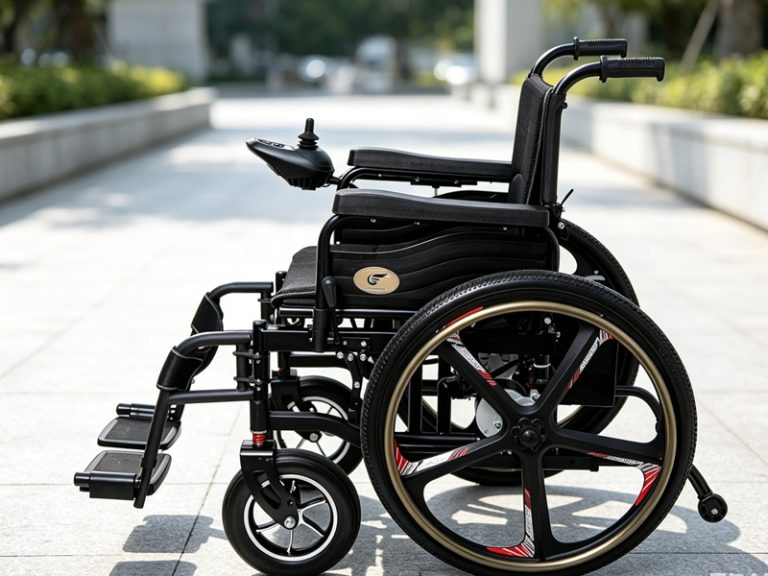
For many daily mobility situations, an electric lift wheelchair can provide a more practical solution than a separate lifting platform. Instead of moving the user and wheelchair as two separate systems, the wheelchair itself provides controlled height adjustment, positioning and mobility. This can make everyday tasks more accessible while reducing unnecessary transfers.
When choosing this type of mobility equipment, it is important to look beyond the lifting function alone. A suitable wheelchair should combine lifting capability with stability, braking performance, seating comfort, battery range, manoeuvrability and appropriate outdoor performance. The user’s weight, physical condition, home environment and intended activities should also be considered before selecting a model.
When people search for a Hydraulic Wheelchair Lift for Disabled People and Elderly Users, they may actually be looking for one of two solutions.
The first is a dedicated wheelchair platform lift. This is normally installed in a building, vehicle or entrance area and physically raises the wheelchair from one height to another. It can be useful for stairs, raised entrances and vehicle access where architectural changes are required.
The second is a wheelchair with an integrated lifting mechanism. In this configuration, the user remains seated while the chair changes its position. The lift can help the user reach a more suitable height for interacting with other people, accessing surfaces or completing certain transfers.
For everyday personal mobility, an integrated electric lift wheelchair can offer significant convenience because the lifting mechanism travels with the user. There is no need to find a separate platform every time the user wants to adjust their position.
Modern lift wheelchairs may also combine seat lifting with reclining, footrest adjustment and seat rotation. These functions can be particularly useful for elderly users and people who spend many hours in their wheelchair.
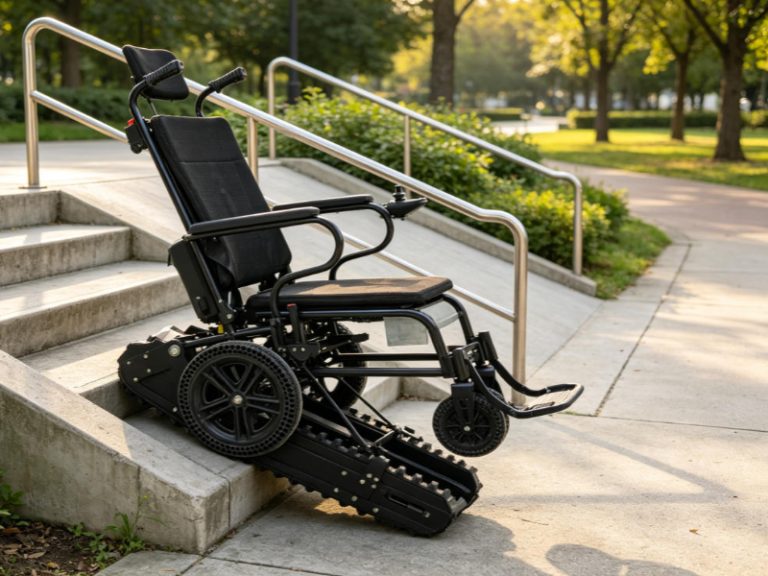
The important point is that a wheelchair lift should be selected according to the actual mobility problem. A user who needs to overcome a staircase may require a dedicated platform or stair-climbing solution, while someone who mainly needs adjustable seating height and easier transfers may benefit more from a powered lift-seat wheelchair.
For someone with limited mobility, standing up from a conventional wheelchair can require significant effort. It may also require assistance from another person.
A powered lift seat changes this interaction by allowing the seating position to be adjusted electronically. Depending on the design, the seat can rise, tilt or rotate to make transfers and everyday activities easier.
The benefit is not simply convenience. It can also provide users with more opportunities to participate in activities at different heights.
For example, a person sitting at a standard wheelchair height may find it difficult to communicate face-to-face with someone standing. A lift function can raise the user’s seating position and create a more natural interaction.
Similarly, a higher seating position can sometimes make it easier to reach objects, interact with a kitchen work surface or approach certain counters, although the appropriate height depends on the individual user and environment.
For caregivers, adjustable seating can also reduce the need to repeatedly lift or reposition a user manually. This can make daily assistance more manageable.
However, lift functions should not be considered a substitute for professional assessment. Users with significant balance, posture or transfer difficulties should have their mobility requirements assessed by an appropriate healthcare or rehabilitation professional before selecting a specific configuration.
A good Hydraulic Wheelchair Lift for Disabled People and Elderly Users should not be evaluated only by how high the seat can move.
The lifting system is only one part of the complete mobility solution.
A wheelchair may have an impressive lift function but still be unsuitable if it has poor manoeuvrability, insufficient load capacity, inadequate braking or unsuitable outdoor performance.
This is why the three basic questions should always be:
Can the wheelchair adjust the user’s position effectively?
Can the wheelchair move safely in the user’s normal environment?
Can the wheelchair remain stable while the user is seated, moving or transferring?
IYASOCARE’s three models provide useful examples of how these priorities can be balanced differently.
The YSE315 emphasises heavy-duty daily mobility and remote-controlled seat adjustment. The YSE313 focuses more strongly on rehabilitation, assisted standing and adjustable positioning. The YSE134 combines lift and recline functions with off-road mobility.
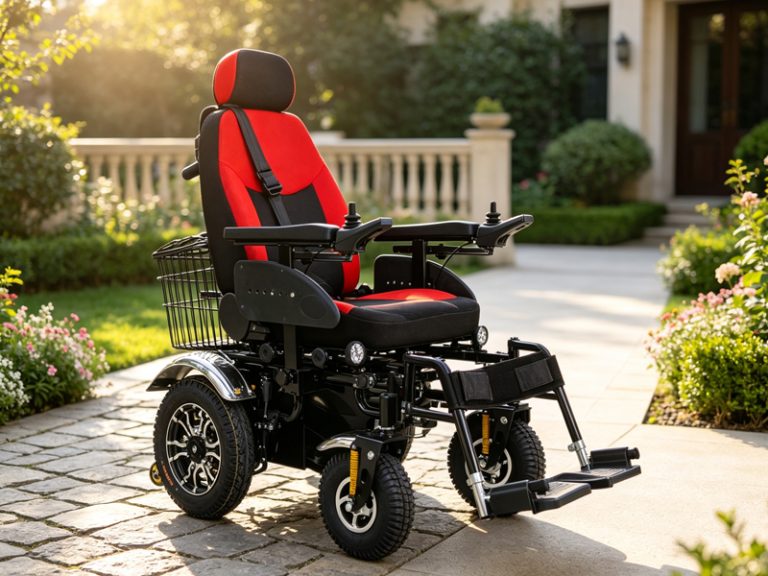
For users who want a combination of powered mobility and a practical lifting seat, the IYASOCARE YSE315 Heavy-Duty Electric Lift Wheelchairis one of the most relevant models in this range.
The YSE315 is designed around daily indoor and outdoor mobility. It uses two 250W motors, reaches a listed maximum speed of 8 km/h and can handle inclines of up to 12 degrees according to the manufacturer’s specifications. Its 12-inch rear wheels and 8-inch front wheels are designed to provide stability across different surfaces.
One of its main advantages is the electrically adjustable lift seat. The manufacturer states that the seat can be remotely controlled and adjusted forward and backward, while the backrest, armrests and footrests can also be positioned to suit the user.
This can be particularly useful when the user needs to adjust their position throughout the day rather than remaining in a fixed seating posture.
The YSE315 also uses a one-handed joystick controller, allowing the user to control direction, speed and braking. Its electromagnetic braking system is designed for controlled stopping, with a stated braking distance of no more than 1.5 metres.
For users who need to manoeuvre in relatively confined spaces, the zero-radius turning capability is another practical feature. The wheelchair can turn in place, making it easier to navigate hallways, rooms and other areas where a conventional wheelchair might require several movements.
YSE315 at a glance
| Feature | YSE315 |
|---|---|
| Motor | 250W × 2 |
| Maximum speed | 8 km/h |
| Climbing ability | Up to 12° |
| Load capacity | 120 kg |
| Battery | 12Ah / 15Ah / 20Ah lithium |
| Driving range | 15–25 km |
| Charging time | 4–6 hours |
| Rear wheels | 12 inches |
| Front wheels | 8 inches |
| Seat width | 42 cm |
| Seat depth | 40 cm |
| Brake | Electromagnetic |
| Turning | Zero-radius |
| Product size | 102 × 65 × 105 cm |
These specifications are taken from the manufacturer’s current product information. Exact configurations should be confirmed before purchase.
Best suited for: elderly users and people with limited mobility who need a relatively compact lift-seat wheelchair for everyday indoor and outdoor use, especially where manoeuvrability and adjustable positioning are important.
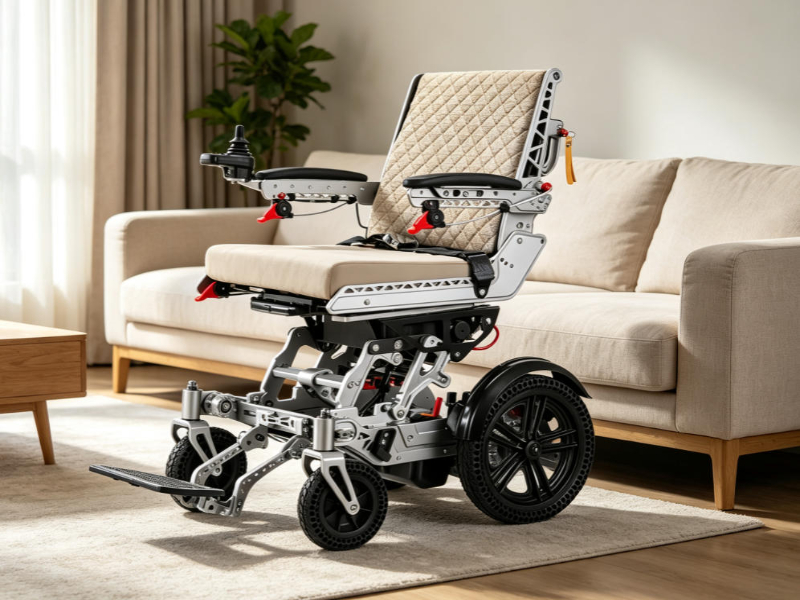
The IYASOCARE YSE313 Electric Rehabilitation Wheelchair takes a different approach.
Rather than focusing primarily on heavy-duty mobility, the YSE313 places considerable emphasis on rehabilitation, positioning and assisted standing.
The wheelchair features an electrically adjustable seat that can lift up to 45 degrees, while the backrest can recline up to 160 degrees according to the product description. The footrest can also be adjusted, and the seat provides rotational positioning to make transfers easier.
Its assisted standing function is particularly relevant for users who have difficulty transitioning between sitting and standing.
The wheelchair is designed to gradually help the user move from a seated position toward standing, rather than requiring the user to complete the entire movement independently. This can be useful for rehabilitation-oriented applications, although whether standing assistance is clinically appropriate depends on the individual user’s condition and professional assessment.
The YSE313 also combines these positioning functions with off-road wheels. The manufacturer lists a climbing capability of up to 15 degrees and obstacle-crossing capability of up to 80 mm. It also uses an electromagnetic braking system and anti-slip design.
This makes the model more versatile than a simple indoor rehabilitation chair.
Its 24V lithium battery is available in 10.4Ah or 15.6Ah configurations, with a listed driving range of approximately 20–40 km and charging time of 4–6 hours.
YSE313 at a glance
| Feature | YSE313 |
|---|---|
| Frame | Aluminium + steel |
| Load capacity | 100 kg |
| Seat width | 480 mm |
| Seat depth | 420 mm |
| Maximum speed | 6 km/h |
| Climbing ability | Up to 15° |
| Obstacle crossing | Up to 80 mm |
| Battery | 24V 10.4Ah / 15.6Ah lithium |
| Driving range | 20–40 km |
| Seat adjustment | Electric |
| Assisted standing | Yes |
| Backrest adjustment | Up to 160° |
| Footrest adjustment | Up to 70° |
| Brake | Electromagnetic |
The manufacturer also describes front-and-rear drive switching, 360-degree seat rotation and a low-speed start function as part of the design.
Best suited for: users who need mobility together with rehabilitation-focused positioning, assisted standing and frequent seating adjustments.
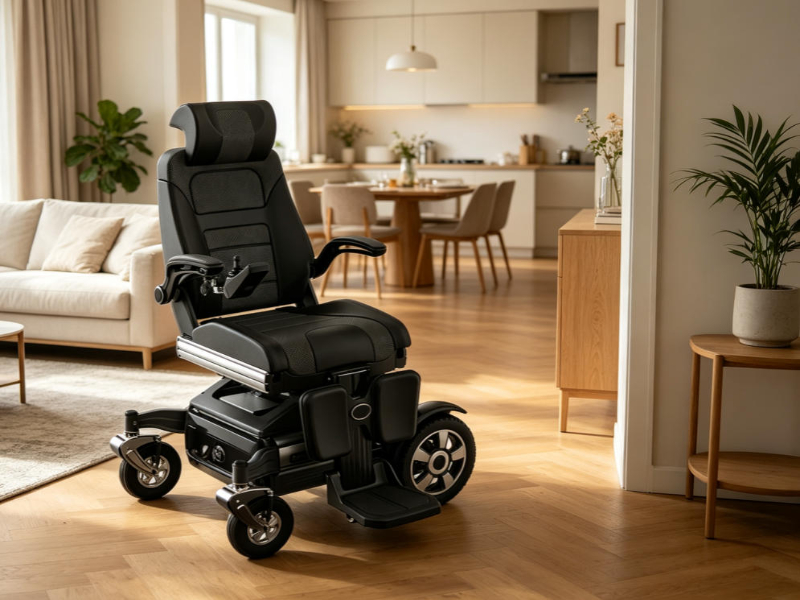
For users who do not want their lift wheelchair limited to indoor environments, the IYASOCARE YSE134 Electric Off-Road Wheelchairoffers another approach.
The YSE134 combines an electric lift seat with a reclining backrest, adjustable footrest and 360-degree rotating seat. At the same time, its large off-road wheels and 15-degree climbing capability are designed for outdoor surfaces including pavement, grass, gravel and uneven terrain.
The seat can be adjusted up to 45 degrees, the backrest can recline electrically up to 160 degrees and the footrest can be adjusted up to 70 degrees. These functions provide more flexibility for users who spend extended periods in the wheelchair.
The rotating seat is particularly practical for transfers. Instead of requiring the user to move the entire wheelchair into an ideal position, the seat can rotate to help create a more convenient transfer angle.
The YSE134 also uses a 24V lithium battery available in 15Ah or 30Ah configurations. The manufacturer lists a driving range of approximately 20–40 km, depending on configuration and operating conditions.
With a 100 kg load capacity, 12-inch rear wheels, 8-inch front wheels and a modular aluminium frame, the model is positioned as a combination of outdoor mobility, comfort and practical transportation.
YSE134 at a glance
| Feature | YSE134 |
|---|---|
| Frame | Aluminium |
| Load capacity | 100 kg |
| Maximum speed | 6 km/h |
| Climbing ability | Up to 15° |
| Obstacle crossing | Up to 80 mm |
| Battery | 24V 15Ah / 30Ah lithium |
| Driving range | 20–40 km |
| Seat width | 450 mm |
| Seat depth | 420 mm |
| Rear wheels | 12 inches |
| Front wheels | 8 inches |
| Brake | Electromagnetic |
| Backrest | Electric recline up to 160° |
| Footrest | Adjustable up to 70° |
| Seat | Electric lift + rotation |
The specifications above are based on the manufacturer’s current product page.
Best suited for: elderly and disabled users who want an adjustable lift-seat wheelchair with stronger outdoor capability and more flexible seating positions.
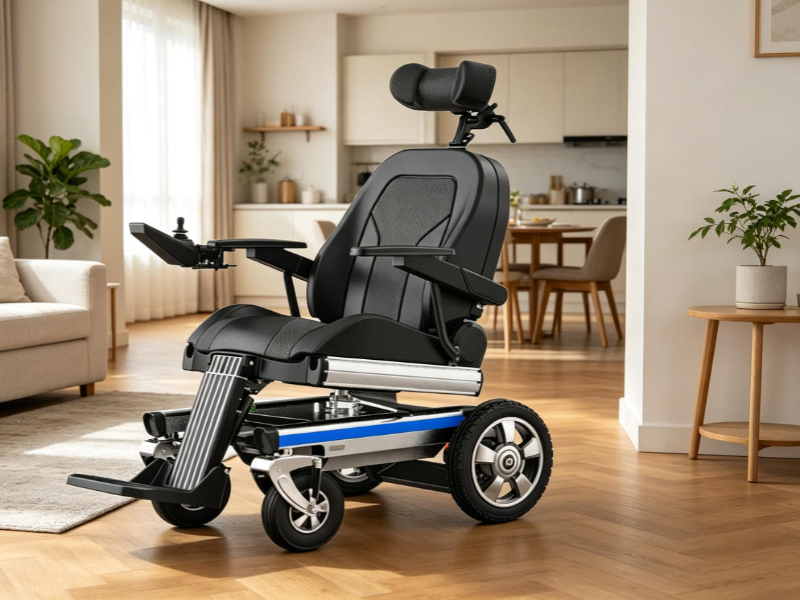
Rather than asking which wheelchair is universally “best”, it is more useful to match the model to the user’s daily routine.
| User Requirement | Recommended Model |
|---|---|
| Heavy-duty everyday mobility | YSE315 |
| Compact indoor manoeuvrability | YSE315 |
| Remote-controlled lift seat | YSE315 |
| Assisted standing and rehabilitation | YSE313 |
| Frequent posture adjustment | YSE313 |
| Higher climbing capability | YSE313 / YSE134 |
| Outdoor and uneven surfaces | YSE134 |
| Electric reclining | YSE313 / YSE134 |
| Rotating seat for transfers | YSE313 / YSE134 |
| Long outdoor daily trips | YSE313 / YSE134 |
The choice should always be based on the individual user’s physical abilities, environment and intended use rather than simply comparing numbers.
One of the biggest advantages of a modern electric lift wheelchair is the possibility of reducing unnecessary transfers.
Imagine an elderly user who needs to move from a wheelchair to a sofa, bed or another chair several times each day. Every transfer can require assistance. If the seating position can be adjusted to a more suitable height or angle, some movements may become easier.
Similarly, someone attending a social event may want to interact with people at different heights. Someone at home may need to reach a work surface. Someone outdoors may need better visibility over a crowd.
These situations demonstrate why the lift function should be viewed as part of an overall mobility strategy rather than as a standalone feature.
However, users should not assume that a powered lift eliminates all transfer risks. The wheelchair should be placed on an appropriate stable surface, the brakes should be engaged when required and the manufacturer’s operating instructions should be followed.
A lift mechanism can support independence, but safe use remains essential.
People who use wheelchairs for several hours each day need more than basic transportation.
Seat width, seat depth, backrest angle, footrest position and cushion support can all affect the overall experience.
The YSE315 has a 42 cm seat width and 40 cm seat depth, while the YSE313 provides a 480 mm-wide and 420 mm-deep seat. The YSE134 provides a 450 mm-wide and 420 mm-deep seat.
These dimensions should always be compared with the user’s body measurements.
A seat that is too narrow may create pressure, while one that is too wide can reduce lateral support. Seat depth also needs to provide appropriate thigh support without interfering with the user’s ability to position their legs comfortably.
The ability to recline or adjust the footrest can be particularly useful during longer periods of sitting.
For this reason, when comparing a Hydraulic Wheelchair Lift for Disabled People and Elderly Users, comfort should be considered alongside the lift mechanism rather than treated as a separate feature.
For most elderly and disabled users, a wheelchair does not need to travel extremely fast.
Reliable range is often more useful.
The YSE315 offers a listed range of 15–25 km depending on battery configuration, while the YSE313 and YSE134 are both listed at approximately 20–40 km.
Actual range will vary according to user weight, terrain, speed, battery capacity, temperature and driving conditions.
When selecting a model, think about a normal day rather than the maximum possible journey.
If the wheelchair is used around the home and for short trips, a smaller battery may be sufficient. If the user regularly visits shopping centres, parks, medical appointments or community locations, a larger battery configuration may provide greater convenience.
Charging time is also worth considering. The three models list charging periods of approximately 4–6 hours.
A wheelchair lift is only useful if the user can operate it safely.
The YSE315 uses electromagnetic braking, while the YSE313 and YSE134 also feature electromagnetic brakes. The latter two models additionally include anti-slip and low-speed-start functions designed to provide more controlled movement.
These features become particularly important when travelling on slopes.
Users should not assume that a stated climbing angle means the wheelchair can safely travel at that angle in every real-world condition. Surface material, wetness, load, tyre condition and driving direction can all influence actual performance.
The same principle applies to obstacle-crossing claims. An advertised maximum obstacle height should not be interpreted as an instruction to deliberately drive over obstacles of that height.
A safer approach is to regard these specifications as design capabilities and always operate conservatively.
Before purchasing a Hydraulic Wheelchair Lift for Disabled People and Elderly Users, families should make a simple checklist.
First, measure the user’s weight and compare it with the manufacturer’s confirmed load capacity.
Second, measure the doorways, corridors and storage areas in the home. A wheelchair that works perfectly outdoors may still be impractical if it cannot pass through the bedroom door.
Third, consider how the wheelchair will be transported. The YSE134 uses a modular design that the manufacturer says can be disassembled for vehicle storage, while the YSE315 has a relatively compact product footprint.
Fourth, consider the user’s ability to operate the controller. A simple one-handed joystick can be advantageous, but individual dexterity and cognitive requirements should still be considered.
Finally, consider what the user wants to accomplish. If the primary goal is easier transfers, a rotating or lifting seat may be particularly valuable. If rehabilitation and assisted standing are important, the YSE313 deserves closer consideration. If outdoor mobility is a priority, the YSE134 may be the better fit.
For B2B buyers, rehabilitation centres, distributors and healthcare equipment suppliers, choosing a wheelchair manufacturer involves more than selecting one model.
A supplier with a broader product portfolio can make it easier to match different customers with different mobility requirements.
IYASOCARE’s current catalogue includes electric wheelchairs, manual wheelchairs, off-road wheelchairs, standing wheelchairs, stair-climbing wheelchairs, transfer wheelchairs, sports wheelchairs and mobility scooters.
The company also lists OEM and ODM services, which can be relevant for international distributors looking for customised configurations or private-label cooperation.
For professional buyers, it is worth discussing not only the product itself but also spare parts, packaging, technical documentation, warranty arrangements, customisation capabilities and after-sales support before placing an order.
A wheelchair is a long-term mobility product. The relationship with the manufacturer should therefore extend beyond the initial shipment.
A Hydraulic Wheelchair Lift for Disabled People and Elderly Users should ultimately be judged by one question: does it make everyday mobility easier, safer and more practical for the person who will use it?
For heavy-duty everyday mobility, the IYASOCARE YSE315 combines dual 250W motors, an adjustable lift seat, electromagnetic braking, zero-radius turning and a 120 kg load capacity. It is particularly suitable for users who value manoeuvrability and practical daily mobility.
For rehabilitation and assisted standing, the IYASOCARE YSE313 offers a more specialised combination of lift-seat adjustment, assisted standing, reclining, rotating seating, anti-slip technology and off-road capability.
For users who want lift functionality together with stronger outdoor performance, the IYASOCARE YSE134 combines an electric lift seat, 160-degree reclining backrest, rotating seat, 15-degree climbing capability and large outdoor wheels.
The right choice is therefore not necessarily the model with the most functions. It is the model whose functions solve the user’s actual problems.
For an elderly person who needs easier transfers, seat rotation and lift adjustment may be more valuable than high speed. For someone undergoing rehabilitation, assisted standing may be the deciding feature. For a user who spends considerable time outdoors, wheel size, climbing capability, braking and battery range may deserve greater attention.
A well-designed lift wheelchair should give the user more than movement. It should provide greater control over how they sit, where they go and how they participate in everyday life.
That is the real purpose of modern powered mobility equipment: not simply to move a person from one place to another, but to make more of daily life accessible.
1. What is the difference between a hydraulic wheelchair lift and an electric lift wheelchair?
A dedicated wheelchair lift is normally a separate platform or lifting system used to move a wheelchair between different heights, such as floors, entrances or vehicles. An electric lift wheelchair integrates a powered lifting function into the chair itself, allowing the user to adjust their seating position while remaining in the wheelchair. The YSE315, YSE313 and YSE134 are examples of electric wheelchairs with powered lift or adjustable seating functions. The appropriate solution depends on whether the main requirement is architectural access between levels or improved seating, transfer and positioning during daily mobility.
2. Which IYASOCARE lift wheelchair is best for elderly users?
There is no single model that is best for every elderly user. The YSE315 is a strong option for users who prioritise everyday mobility, manoeuvrability, a lift seat and higher load capacity. The YSE313 is more appropriate when assisted standing and rehabilitation functions are important, while the YSE134 is particularly suitable for elderly users who want lift and reclining functions together with stronger outdoor mobility. The user’s weight, physical abilities, home environment and intended use should be assessed before selecting a model.
3. Can a lift wheelchair help with transfers?
Yes. A lift or rotating seat can make some transfers more convenient by changing the user’s height or orientation relative to a bed, sofa, vehicle seat or other surface. The YSE315 provides an adjustable lift seat, while the YSE313 and YSE134 include rotating-seat functions designed to assist positioning and transfers. However, a lift wheelchair does not eliminate transfer risks. Users with significant mobility or balance limitations should follow professional guidance and the manufacturer’s operating instructions when transferring.
WhatsApp us