Our Location
Free Trade Tower, Xiyong street.
Chongqing, China

Free Trade Tower, Xiyong street.
Chongqing, China
For many disabled people and seniors, mobility is about much more than simply moving from one room to another. Being able to change position, communicate at eye level, reach everyday objects and spend time outdoors can make a meaningful difference to daily life. This is why a standing walking wheelchair for disabled people and seniors has become an increasingly interesting option for people looking beyond a conventional wheelchair.
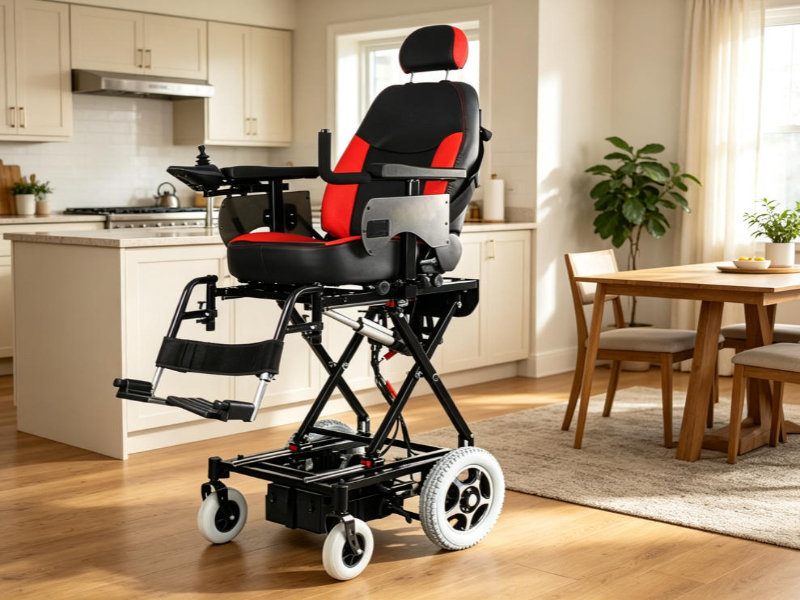
A standing wheelchair combines powered mobility with an assisted standing function, allowing the user to move between different positions while remaining supported by the chair. Depending on the model, this may include sitting, reclining, seat elevation and standing. Some models are designed mainly for homes, rehabilitation environments and everyday mobility, while others are built with larger wheels, stronger motors and suspension systems for outdoor or off-road travel.
However, choosing a standing walking wheelchair should not be based on the standing function alone. The user’s height and weight, physical condition, home environment, driving ability, required range, terrain and preferred seating position all need to be considered. A well-designed standing electric wheelchair should provide a practical balance between mobility, posture support, control, comfort and safety.
A standing walking wheelchair is an advanced type of powered wheelchair designed to provide mobility while also helping the user move from a seated position toward a standing position. Instead of requiring the user to transfer out of the wheelchair before standing, an integrated powered mechanism changes the chair’s position and supports the user during the transition.
This makes the concept particularly interesting for people who have difficulty standing independently but still want greater flexibility during everyday activities.
For example, a wheelchair user may want to speak with a family member at eye level, reach a kitchen counter, work at a suitable-height desk or participate in an activity that is easier from a standing position. A traditional wheelchair generally keeps the user in a seated posture, whereas a standing wheelchair can provide another supported position when the chair and user are properly configured.
It is important to understand that a standing wheelchair does not automatically restore natural walking ability. The term “walking wheelchair” is often used by consumers to describe mobility equipment that helps a person stand and move around more independently. In practice, these products remain powered mobility devices. The standing function is an assisted posture change rather than a replacement for normal walking.
For users with significant physical limitations, professional assessment is particularly important before using the standing function. The appropriate level of support depends on the individual’s balance, strength, joint movement, body positioning and ability to tolerate standing.
Long periods of sitting can make certain daily activities more difficult. Even when a person is comfortable in a wheelchair, there may be situations where a seated position is simply not the most practical option.
Standing can provide another way to interact with the surrounding environment.
For example, an older adult may want to communicate with a standing family member without looking upward. A wheelchair user may need to reach a countertop or shelf. Someone participating in rehabilitation activities may need controlled changes in body position. A person working or studying from a wheelchair may also benefit from the ability to adjust the chair to a different height.
This is one reason modern standing wheelchairs for seniors are increasingly designed around more than one function. The goal is not simply to make the user stand. The chair should also provide comfortable everyday driving, intuitive controls, reliable braking and suitable positioning when seated or reclined.
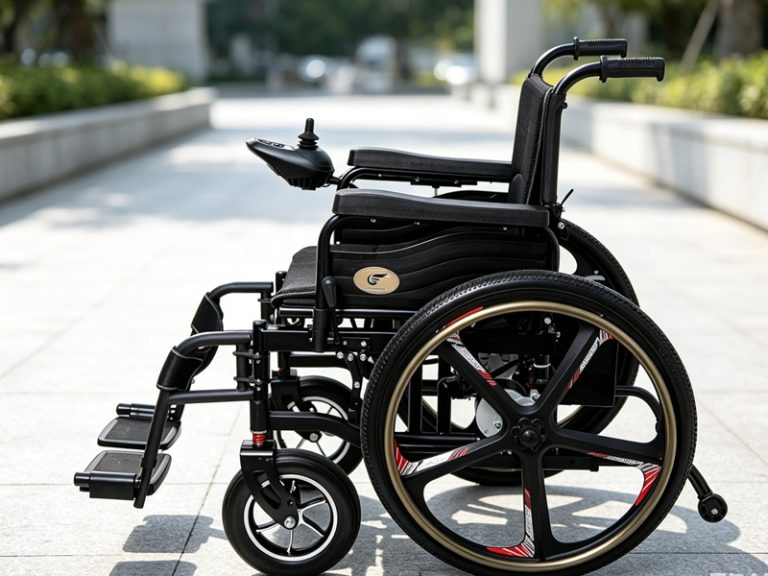
Control is particularly important for elderly users and people with limited hand mobility. A complicated control system can make an advanced wheelchair frustrating to use. The YSE307, for example, uses a smart joystick that allows forward, reverse and steering to be controlled with one hand. It also provides 360-degree rotation, which can be useful when manoeuvring through hallways, kitchens and other confined spaces.
This combination of powered movement and posture adjustment is what separates a modern standing power wheelchair from a conventional electric wheelchair.
There is no single standing wheelchair that is perfect for every user. A model designed for indoor mobility does not necessarily need the same motor power or wheel size as a chair intended for gravel, grass and uneven outdoor terrain.
The following three IYASOCARE models represent three different approaches to standing mobility: everyday multifunctional use, multi-position standing with extended range, and powerful off-road mobility.
The YSE307 Multifunctional Standing Electric Wheelchair is designed for users who want standing assistance without giving up practical everyday mobility.
Its electric lift system allows the seat height to be adjusted from approximately 45 cm to 95 cm. This gives the user a broad range of positions for sitting and elevated or standing activities. The backrest also supports reclining, while the armrests and pedals can be quickly removed or adjusted according to the intended use.
The YSE307 uses dual 24V 250W motors and a 24V 24Ah lead-acid battery. The manufacturer lists a maximum speed of up to 8 km/h and a driving range of up to 25 km. Its seat measures approximately 45 cm in width and 45 cm in depth, with a maximum load of 100 kg.
One of the most practical features for home users is its ability to turn within a confined area. The 360-degree rotation function can make it easier to manoeuvre in bedrooms, corridors, kitchens and lifts, where a large turning circle can become inconvenient.
The YSE307 also combines intelligent electronic braking with electromagnetic braking. For daily users, braking performance is an important consideration because a standing wheelchair may be used on slopes or while the seat is changing position.
Best suited for: seniors and disabled people who need a multifunctional standing electric wheelchair for home use, daily mobility, rehabilitation-related activities and controlled posture changes.
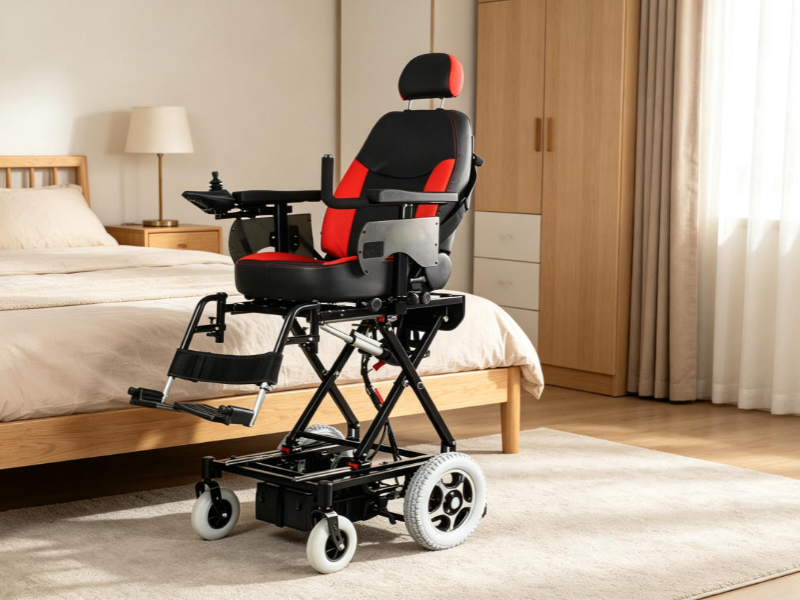
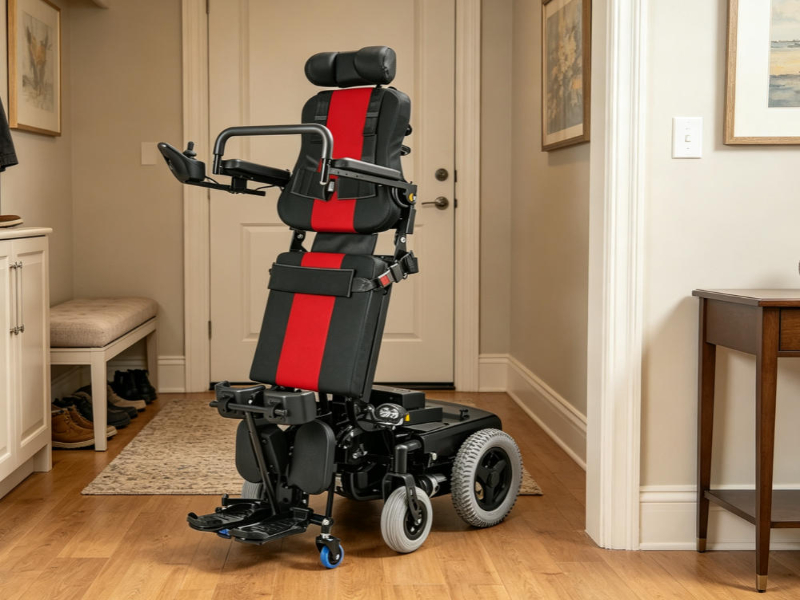
The YSE308 Standing Wheelchair with Electromagnetic Brake is designed for users who want a more substantial multi-position mobility solution.
Rather than offering only a simple standing function, the YSE308 is designed to move between sitting, elevating, reclining and standing positions. A multifunction remote control allows the user to activate different positions, while an optional toggle switch can provide an alternative control method for people with limited wrist mobility.
The chair uses a steel frame and dual 320W worm-gear motors. Its electromagnetic brake is designed to stop the wheelchair when the joystick or remote control is released. The manufacturer lists a maximum user load of 120 kg and a climbing capability of up to 12 degrees.
The YSE308 has a 43 cm wide and 46 cm deep seat, with a height adjustment range of approximately 56–69 cm. The manufacturer lists a standing height of around 190 cm, which can help users achieve a more natural eye-level position when communicating with people who are standing.
Battery capacity is another important feature. The YSE308 uses a 24V 55Ah battery and dual 320W motors, with a listed driving range of up to 45 km and a maximum speed of 6 km/h.
This makes the YSE308 a strong candidate for users who prioritise a combination of standing, reclining, elevation, braking control and longer-distance powered mobility.
It is also a comparatively large wheelchair. Buyers should therefore check doorway widths, lift dimensions, vehicle loading space and home storage before making a purchase.
Best suited for: users who need a robust multi-position standing wheelchair for everyday mobility, longer trips and environments where additional standing and reclining flexibility is important.
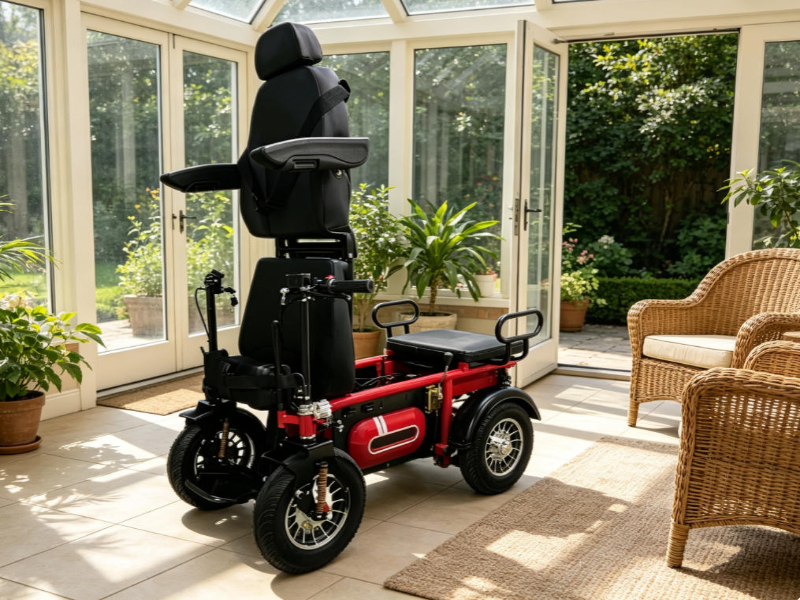
For people who want a standing wheelchair for outdoor use, the YSE302 takes a different approach.
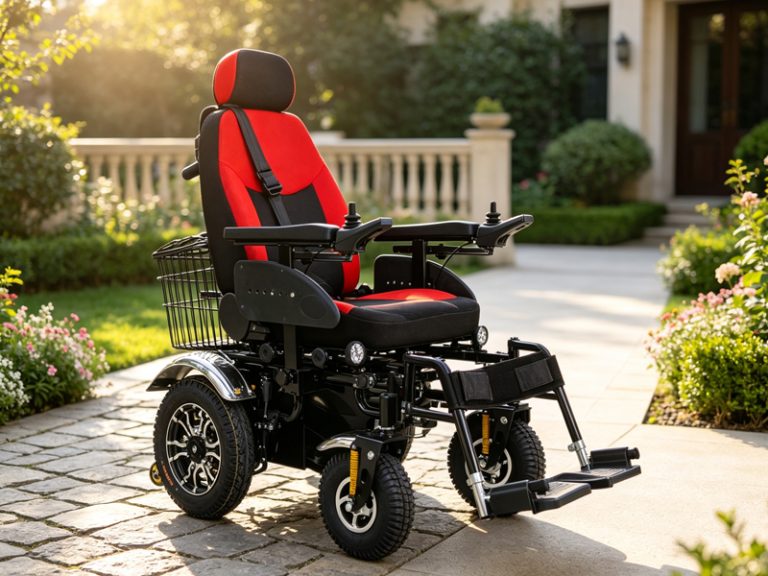
The YSE302 is an off-road electric standing and lying wheelchair equipped with four-wheel drive, 14-inch pneumatic tyres and front and rear shock absorbers. These features are intended to improve stability and comfort when travelling across grass, gravel roads, uneven surfaces and other challenging terrain.
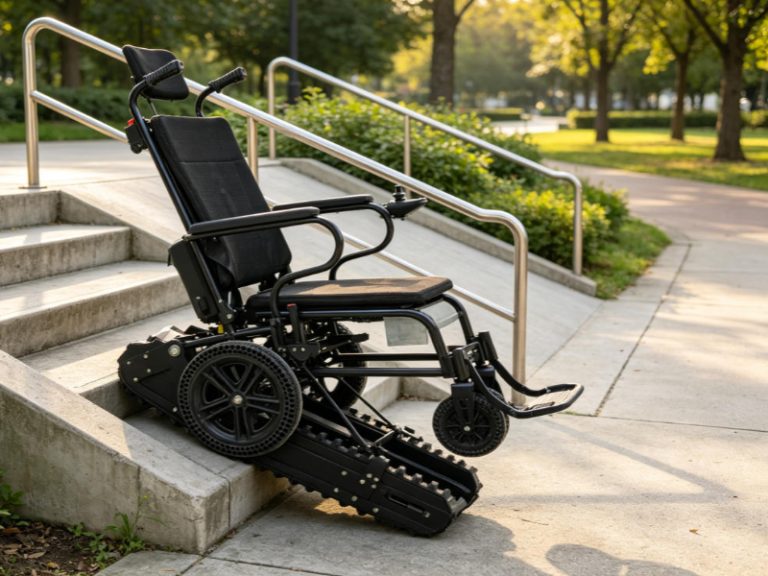
The wheelchair uses a 48V 800W motor system and is listed with a maximum speed of 28 km/h, a climbing capability of up to 15 degrees and a driving range of approximately 40–60 km. The manufacturer also states that it can handle steps or obstacles of around 10 cm under suitable conditions.
Its powered seat system supports standing and reclining, with the backrest capable of a 180-degree adjustment. A remote control allows users to change positions, while four driving modes—off-road, climbing, normal and indoor—are provided for different environments.
The YSE302 has a 49 cm wide and 46 cm deep seat and a listed maximum load of 150 kg. It also includes practical outdoor features such as headlights, turn signals, a horn and a USB port.
The large 14-inch pneumatic wheels and suspension system are particularly relevant for users who regularly travel across uneven outdoor surfaces. However, this additional capability comes with a larger and heavier structure. The manufacturer lists a net weight of 85 kg without the battery and an overall size of approximately 125 × 64 × 108 cm.
Best suited for: users who need a powerful standing and reclining wheelchair for grass, gravel, uneven roads and other outdoor environments.
| Feature | YSE307 | YSE308 | YSE302 |
|---|---|---|---|
| Main application | Daily mobility | Multi-position mobility | Outdoor/off-road mobility |
| Standing function | Yes | Yes | Yes |
| Reclining | Yes | Yes | Yes |
| Motor | 250W × 2 | 320W × 2 | 48V 800W |
| Maximum speed | 8 km/h | 6 km/h | 28 km/h |
| Listed range | Up to 25 km | Up to 45 km | 40–60 km |
| Maximum load | 100 kg | 120 kg | 150 kg |
| Wheel size | 12″ rear / 8″ front | 14″ rear / 8″ front | 14″ front / 14″ rear |
| Main strength | Compact manoeuvrability | Multi-position design | Off-road capability |
| Braking | Electronic + electromagnetic | Electromagnetic | Disc brake |
The comparison shows why choosing a standing walking wheelchair should start with the user’s lifestyle rather than the largest motor or longest advertised range.
For someone who mainly uses a wheelchair at home, a model such as the YSE307 may offer a more practical combination of manoeuvrability, standing adjustment and everyday operation.
For users who want several posture options and longer-range mobility, the YSE308 provides a different balance between standing, reclining, elevation and powered travel.
For people who regularly travel outdoors, the YSE302 provides a much more specialised configuration, with four-wheel drive, large pneumatic tyres, suspension and a high-power motor system.
The first consideration should always be the user rather than the product.
Start with body measurements and physical ability. Seat width and depth need to provide adequate support without being unnecessarily large. The user’s weight should remain within the manufacturer’s specified load capacity. More importantly, the user needs to be able to maintain an appropriate position during standing and reclining.
Next, think about the environment.
If the wheelchair will mainly be used inside a house, manoeuvrability can be more important than extreme motor power. A chair that can rotate efficiently in a small space may be much more useful than an oversized off-road model.
If the user regularly travels outside, the priorities change. Larger tyres, suspension, motor power, ground clearance, battery capacity and braking performance become more important. Grass, gravel, slopes and uneven paving can place significantly greater demands on a wheelchair than smooth indoor floors.
Battery range should also be viewed realistically. An advertised range is normally a reference value rather than a guarantee of how far every user can travel. User weight, terrain, temperature, driving speed, battery condition and surface resistance can all influence actual performance.
The standing mechanism itself deserves careful attention. Check how the chair moves between sitting and standing, what controls are available, how the user is supported during the transition and whether the mechanism matches the user’s physical capabilities.
For elderly users, control simplicity is another major consideration. A one-handed joystick or remote control may be easier to use than a complicated control panel, particularly for people with limited hand strength or movement.
Finally, consider transportation and storage. Standing wheelchairs are often larger and heavier than standard folding electric wheelchairs. Before ordering, measure doorways, corridors, lifts, ramps and vehicle storage areas. This simple step can prevent compatibility problems after purchase.
A standing wheelchair can provide additional mobility options, but the standing function should be used responsibly.
Users should follow the manufacturer’s instructions and make sure the wheelchair is on an appropriate surface before changing position. Seatbelts, foot positioning, braking systems and other support features should be used as instructed.
The standing function should also not be interpreted as a guarantee that every user can safely stand independently. People with significant balance problems, severe weakness or other physical limitations should seek appropriate professional guidance before using the standing function.
This is particularly important for older adults, because physical ability can vary significantly from one person to another. Two people of the same age may have completely different mobility requirements.
A good standing wheelchair should therefore be viewed as part of a broader mobility solution rather than a universal replacement for walking.
The most important benefit of a standing wheelchair may not actually be the standing position itself.
It is the additional choice.
A user can remain seated when travelling, recline when resting, elevate the seat when reaching a higher surface and use the standing function when the environment or activity makes it useful. This flexibility can make a wheelchair more adaptable to everyday life.
For seniors, it may mean being able to participate more comfortably in conversations and family activities.
For disabled people, it may provide another option for interacting with workspaces, counters and social environments.
For rehabilitation settings, controlled changes in posture may also form part of an individual’s mobility routine when recommended by an appropriate professional.
This is why the phrase standing walking wheelchair for disabled people and seniors represents more than a product category. It describes a mobility approach that combines powered movement with greater positional flexibility.
The right solution will always depend on the individual.
The YSE307 is designed around multifunctional everyday mobility and easy control. The YSE308 focuses on multi-position movement with standing, reclining and elevation. The YSE302 is designed for users who need stronger outdoor performance and off-road capability.
A standing walking wheelchair for disabled people and seniors can provide an additional level of flexibility for people who cannot easily stand or walk independently. By combining powered mobility with supported posture changes, these wheelchairs can make certain everyday activities easier and provide users with more ways to interact with their surroundings.
But the most advanced wheelchair is not automatically the right one.
The YSE307 may be a practical choice for daily indoor and general mobility. The YSE308 is more suitable for users looking for a robust multi-position standing wheelchair with longer listed range. The YSE302 is the more specialised option for outdoor and off-road mobility.
Before choosing, consider the user’s physical condition, body measurements, environment, travel requirements, storage space and preferred level of assistance.
The goal is simple: choose a standing wheelchair that fits the person’s real life, not simply the specification sheet.
1. What is a standing walking wheelchair for disabled people?
A standing walking wheelchair is a powered mobility device that combines wheelchair driving with an assisted standing function. Depending on the model, it may also provide reclining and seat-elevation functions. It is designed to give users more positional flexibility while remaining supported by the wheelchair.
2. Is a standing wheelchair suitable for seniors?
A standing wheelchair may be suitable for some seniors with limited mobility, but suitability depends on individual strength, balance, body measurements and physical condition. A healthcare or rehabilitation professional should be consulted when there are concerns about safe standing or posture changes.
3. Which standing wheelchair is best for outdoor use?
For users who regularly travel across grass, gravel and uneven outdoor surfaces, an off-road standing wheelchair such as the YSE302 may be more appropriate because it combines four-wheel drive, 14-inch pneumatic tyres, front and rear shock absorbers and a 48V 800W motor system.