Our Location
Free Trade Tower, Xiyong street.
Chongqing, China

Free Trade Tower, Xiyong street.
Chongqing, China
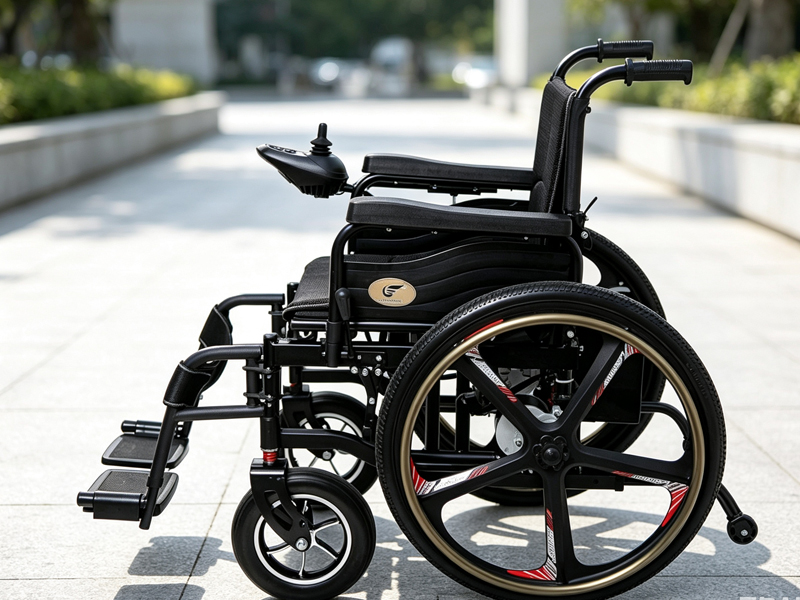
When choosing a wheelchair for a heavier adult, the first instinct is often to look at one number: maximum weight capacity.
That number certainly matters. But in real life, it is only the beginning.
A wheelchair for a heavier user has to do much more than simply hold weight. The frame needs to remain stable, the seat needs to provide enough usable space, the wheels need to handle the additional load, and the overall design has to make transfers, braking, turning and everyday movement manageable. If the chair is used for several hours a day, seating position and pressure distribution become just as important as frame strength.
This is why the search for the best wheelchair for heavy people can be surprisingly complicated. A model that looks strong on paper may be awkward to transport. A lightweight electric wheelchair may be wonderfully convenient but have a lower weight rating. A heavy-duty manual wheelchair may offer excellent structural stability but require more physical effort to propel.
The right answer is therefore not simply “buy the strongest wheelchair.”
It is to find the right balance between weight capacity, seat dimensions, structural strength, comfort, mobility, portability and the user’s actual lifestyle.
For people comparing bariatric wheelchairs, the following guide explains what really matters and looks at three different wheelchair solutions from Iyasocare that represent three very different approaches to mobility.
The term bariatric wheelchair is generally used for wheelchairs designed to accommodate users who need greater load capacity, additional seating space or enhanced structural support.
That does not mean every heavy-duty wheelchair is automatically the right choice for every larger user.
Consider two people with the same body weight.
One may spend most of the day at home, transfer frequently between a bed, sofa and wheelchair, and have a caregiver pushing the chair. Another may travel regularly, load the wheelchair into a car and need powered assistance for outdoor trips.
Their ideal wheelchairs could be completely different.
Weight capacity comes first—but don’t stop there
The maximum user weight should always be checked before purchasing a wheelchair. More importantly, it is wise to avoid choosing a chair whose rated capacity is only barely above the user’s actual weight.
A wheelchair isn’t supporting a perfectly stationary load all day. Everyday movements such as transferring into the seat, leaning forward, crossing uneven surfaces and going over ramps can place additional stress on the frame and wheels.
For example, a wheelchair rated for 100 kg should not automatically be treated as the appropriate choice for someone whose weight is close to that limit simply because the numbers technically match.
The manufacturer’s stated maximum load should be treated as a real safety specification—not a target.
And weight capacity is only one part of structural performance. Frame construction, wheel design, caster size, cross-brace structure and overall weight distribution also influence how stable a chair feels.
Modern heavy-duty wheelchair design increasingly recognizes this. A recent Iyasocare guide on bariatric manual wheelchairs points out that a genuinely heavy-duty design needs to consider reinforced frame construction, wheel load distribution and structural stability rather than simply increasing the width of the seat.
Seat width is more important than many buyers realize
A wider wheelchair is not necessarily a better wheelchair.
The goal is to find a seat that provides enough room without making the user sit too far away from the armrests or forcing the legs into an awkward position.
A useful starting point is to measure the user’s hip width while seated, rather than relying on clothing size or standing measurements. The seat should provide enough additional space for comfortable positioning without leaving excessive empty space.
For bariatric users, an adjustable-width configuration can be particularly valuable because body dimensions, clothing, cushions and daily seating requirements can change over time.
Seat depth matters too.
If the seat is too shallow, the thighs may not receive enough support. If it is too deep, the back may not sit naturally against the backrest. Either situation can affect posture and comfort during extended use.
This is why “extra wide” should never be the only search term when choosing a heavy-duty wheelchair. Proper fit is the real goal.
There is a temptation to rank wheelchairs from “best” to “worst.”
For heavier users, that approach can be misleading.
Instead, it is more useful to ask:
What does the user need the wheelchair to do every day?
If the wheelchair mainly stays indoors and is pushed by a caregiver, a sturdy manual design may make more sense.
If the user wants to move independently but does not have enough upper-body strength for prolonged manual propulsion, an electric wheelchair can make daily life considerably easier.
If the wheelchair frequently travels in a car, portability becomes a major consideration. A chair that is technically excellent but too heavy for a family member to load into the trunk may quickly become frustrating.
This is where the three Iyasocare models below are interesting, because they approach mobility from different directions.
For someone searching for a portable electric wheelchair for a heavier user, the Iyasocare YSE111 Portable Lightweight Electric Wheelchair is worth examining.
The YSE111 is not positioned as an ultra-heavy-duty wheelchair with an extremely high weight capacity. Its listed maximum load is 100 kg, so buyers should pay close attention to that specification before considering it for a bariatric application.
Where this model stands out is its combination of folding portability and electric/manual flexibility.
The wheelchair uses a folding structure and a steel frame, with a listed net weight of 43 kg. Its folded dimensions are approximately 118 × 46 × 77 cm. While 43 kg is certainly not something everyone will want to lift alone, the folding structure makes it considerably more practical for vehicle storage and transportation than many large conventional power wheelchairs.
The YSE111 also provides something particularly useful for everyday users: dual operating modes.
It can switch between electric and manual operation, with the manufacturer stating that the manual mode can be activated in approximately three seconds. This means the wheelchair isn’t completely dependent on its motor system. If the battery runs low, or if the user needs to maneuver through a particularly tight indoor space, manual assistance remains an option.
Its powered system uses two 250W motors, with a maximum speed of 6 km/h and a stated driving range of up to 15 km. The manufacturer lists a climbing capability of up to 15 degrees, making it suitable for everyday ramps and moderate inclines under appropriate conditions.
Another practical detail is the seating and transfer design.
The YSE111 has a 43 cm seat width and 48 cm seat depth, along with flip-up armrests and detachable footrests. Those features can make transfers between the wheelchair and a bed, sofa or vehicle easier for users and caregivers.
The rear wheels are 24 inches and the front wheels are 10 inches, while the chair incorporates both manual and electronic parking-brake functions.
Who should consider the YSE111?
The YSE111 makes the most sense for a user who:
It is particularly important not to confuse “lightweight/portable” with “bariatric.” A portable electric wheelchair can be an excellent mobility solution for a larger person, but if the user’s weight exceeds the manufacturer’s rated capacity, a higher-capacity heavy-duty model should be selected instead.
That distinction is one of the most important points when shopping for a wheelchair for heavy people.
The second option is the Iyasocare Ergonomic Manual Wheelchair.
This type of wheelchair takes a different approach.
Instead of focusing primarily on electric power and travel convenience, the emphasis is on ergonomics, posture and everyday sitting comfort.
That matters because a wheelchair is not just something a person sits in for ten minutes while moving from one room to another.
For many users, it is effectively their primary seat for a large portion of the day.
A poorly fitted wheelchair can gradually become uncomfortable because the problem isn’t necessarily the cushion itself. The seat depth, backrest position, armrest height, footrest position and overall body alignment all influence how the user feels after several hours.
Iyasocare’s own discussion of ergonomic wheelchair design emphasizes that long-term wheelchair comfort involves more than simply adding soft padding. Proper support and body alignment are central considerations.
The company’s bariatric wheelchair guidance similarly points out that ergonomic design becomes especially important for heavier users because wider seating, weight distribution and posture can affect both comfort and propulsion.
Why ergonomics matter more with bariatric seating
Imagine sitting on an ordinary dining chair for eight hours.
Even if the chair is strong enough to hold you, that doesn’t mean it is comfortable or suitable.
The same principle applies to wheelchairs.
For a larger user, pressure can be concentrated around the hips, thighs and lower back if the seating configuration isn’t appropriate. Poor positioning can also make manual propulsion more difficult.
An ergonomic manual wheelchair should therefore be evaluated by asking:
Those questions are often more useful than simply asking whether the wheelchair “looks comfortable.”
When a manual wheelchair can be the better choice
Electric wheelchairs are not automatically better.
A manual wheelchair can be preferable when the user is physically capable of self-propulsion or has a caregiver who regularly assists with movement.
Manual chairs also eliminate the need for charging and battery maintenance.
For indoor environments, especially homes, rehabilitation settings and facilities, simplicity can be a significant advantage.
The key is choosing a manual wheelchair whose frame, seating dimensions and load capacity are genuinely appropriate for the user.
For heavier adults who require a significantly higher load rating, a dedicated heavy-duty model should be considered rather than assuming that every ergonomic manual wheelchair is automatically a bariatric wheelchair.

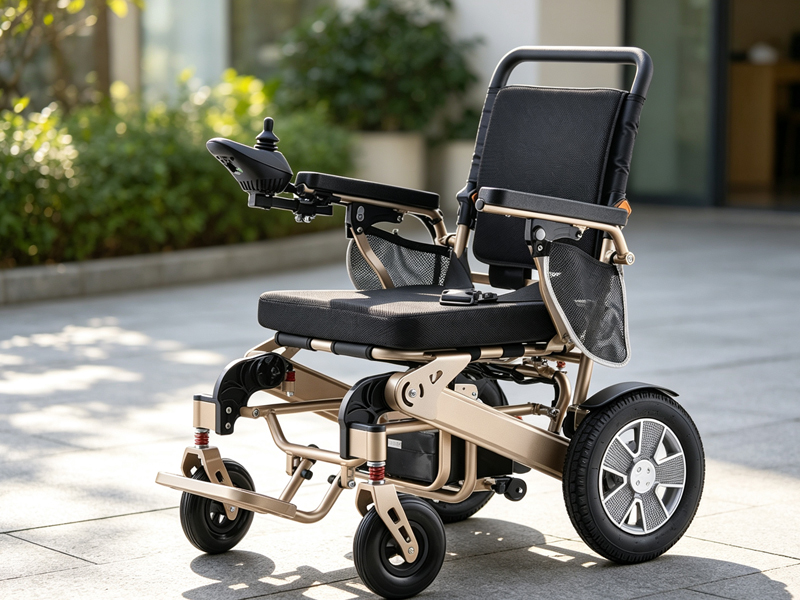
The third product is the Iyasocare Foldable Electric Wheelchair with Dual Motors & Lithium Battery, model YSE143.
Again, this chair is more about portability and everyday powered mobility than extreme bariatric capacity.
The listed maximum load is 100 kg, so it should not be recommended for anyone whose body weight exceeds that rating.
Within its intended weight range, however, the YSE143 has an interesting specification package.
The first major advantage is its weight.
The wheelchair has a net weight of approximately 18.5 kg, thanks to its aluminum frame. It folds down to about 56 × 38 × 79 cm, which makes it considerably easier to store in a car trunk, closet or other limited space.
For travelers, that can be a bigger advantage than it initially appears.
A wheelchair that can be folded quickly and stored without taking up half the vehicle can make medical appointments, shopping trips and family outings considerably less complicated.
The YSE143 uses two 200W brushless motors, with a maximum speed of 6 km/h. Its stated climbing capability is up to 9 degrees.
The brushless motors are also worth noting. Compared with conventional brushed motor systems, brushless motors generally require less routine maintenance and can provide efficient, smooth operation.
Lithium battery flexibility
Another advantage is the choice of battery capacity.
The YSE143 supports 24V 6Ah, 10Ah or 20Ah lithium batteries, with a stated driving range of approximately 5–10 km depending on configuration and conditions. Charging takes around 4–6 hours.
That gives buyers some flexibility.
Someone who mainly uses the wheelchair indoors or for short trips may not need the largest battery configuration. A user who regularly travels farther may prefer additional battery capacity.
The chair also uses electromagnetic braking, which automatically engages when the joystick is released, according to the manufacturer’s product information.
Comfort hasn’t been ignored either.
The YSE143 has a 41 cm seat width, 40 cm seat depth and 48 cm seat height. It uses a removable leather cushion and an ergonomic seat plate, while adjustable leg height allows some customization of sitting position.
The wheel setup is designed for everyday urban mobility, with 8-inch PU front wheels featuring shock absorption and 10-inch non-inflatable PU rear wheels.
This model is a strong candidate for users who prioritize:
But again, 100 kg is the manufacturer’s stated maximum load. This model should therefore not be presented as a high-capacity bariatric wheelchair simply because it is comfortable or electrically powered.
That kind of honesty is important when choosing mobility equipment.
| Feature | YSE111 | Ergonomic Manual Wheelchair | YSE143 |
|---|---|---|---|
| Type | Folding electric/manual | Manual | Folding electric |
| Main advantage | Power + portability | Comfort + ergonomics | Lightweight travel |
| Listed load | 100 kg | Check exact product configuration | 100 kg |
| Motor | 2 × 250W | None | 2 × 200W brushless |
| Battery | 24V 12Ah lead-acid | None | 24V lithium options |
| Folding | Yes | Depends on configuration | Yes |
| Best suited to | Daily powered mobility + travel | Long-duration manual use | Lightweight powered travel |
| Key consideration | 43 kg net weight | Proper fit and capacity | 18.5 kg net weight |
The comparison reveals something important: these three products should not be treated as interchangeable bariatric wheelchairs.
They solve different problems.
The YSE111 is interesting for someone who wants electric assistance but also wants manual flexibility.
The ergonomic manual wheelchair is more appropriate when sitting comfort, posture and manual mobility are the main concerns.
The YSE143 is particularly attractive for someone who values lightweight transportation and compact folding.
If a user requires a genuinely high-capacity bariatric wheelchair, however, it is better to choose a model specifically rated for that person’s weight rather than selecting a lighter chair simply because it is easier to transport.
For example, Iyasocare also lists heavy-duty manual wheelchair configurations with substantially higher load ratings. Its YSM2059 is specified for up to 150 kg (330 lb) and uses a carbon-steel frame, adjustable seat/backrest/headrest and caregiver brake handles.
That illustrates the difference between a portable wheelchair and a true heavy-duty wheelchair.
1. Measure the user—not just the wheelchair
Measure hip width while seated, thigh length, lower-leg length and overall sitting posture.
A wheelchair that is technically wide enough can still be uncomfortable if the seat depth or height is wrong.
2. Check the real load rating
Do not rely on phrases such as “heavy duty,” “reinforced” or “strong frame.”
Look for the manufacturer’s actual maximum load.
If the user weighs 140 kg, a 100 kg wheelchair is not a suitable option regardless of how strong the frame appears.
3. Think about transportation
Ask how the wheelchair will move from place to place.
Will someone need to lift it into a sedan?
Will it stay in the home?
Will it be transported in an SUV?
Will it be folded every day?
A 40 kg-plus wheelchair and an 18.5 kg wheelchair can create completely different experiences for caregivers and family members.
4. Consider propulsion realistically
Manual wheelchairs are excellent tools, but pushing a wider and heavier chair requires more physical effort.
If the user has limited shoulder strength or endurance, electric assistance may be more practical.
Conversely, if the wheelchair is primarily used indoors and pushed by a caregiver, a manual model may be simpler and easier to maintain.
5. Don’t overlook transfers
Getting into and out of the wheelchair is part of daily mobility.
Flip-up armrests, removable or swing-away footrests, adjustable seating and caregiver brake handles can make a surprisingly large difference.
A wheelchair isn’t successful simply because it moves.
It should make everyday movement easier.
The phrase “best wheelchair for heavy people” sounds like it should have a single answer.
It doesn’t.
For one person, the best choice might be a high-capacity carbon-steel manual wheelchair. For another, it could be an ergonomic model designed for long periods of sitting. For someone who travels frequently, portability may matter more than almost anything else.
The three Iyasocare products discussed here demonstrate this difference clearly.
The YSE111 combines folding portability, electric power, manual operation and dual 250W motors, making it an interesting option for users within its 100 kg load rating who need flexible everyday mobility.
The Ergonomic Manual Wheelchair takes a more comfort-oriented approach, making ergonomic positioning and long-term sitting central considerations. It can be a sensible direction for users who prioritize manual mobility and extended sitting comfort, provided the specific configuration meets their weight and fit requirements.
The YSE143 goes even further toward portability, weighing approximately 18.5 kg and folding to a compact 56 × 38 × 79 cm, while offering dual brushless motors and lithium-battery options. Its 100 kg maximum load, however, means it should not be treated as an extreme-capacity bariatric wheelchair.
Ultimately, the smartest purchase is not the wheelchair with the most impressive list of specifications.
It is the wheelchair that fits the user’s body, safely supports their weight, suits their physical abilities and works naturally within their daily routine.
That is what turns a wheelchair from a piece of equipment into a genuinely useful mobility solution.
1. What is the best wheelchair for a heavy person?
There is no universal best model. The right choice depends on the user’s weight, hip width, mobility level, whether they self-propel, how long they sit each day and whether the wheelchair needs to be transported frequently.
For users who need very high weight capacity, prioritize a dedicated heavy-duty/bariatric wheelchair. For users within a 100 kg rating who prioritize portability and powered mobility, models such as the YSE111 or YSE143 may be worth considering.
2. How wide should a bariatric wheelchair seat be?
The seat should be wide enough to accommodate the user’s seated hip width comfortably while still providing appropriate lateral support.
Rather than choosing the widest available chair, measure the user while seated and compare those measurements with the manufacturer’s seat width and depth.
A chair that is too narrow can create pressure and discomfort, while one that is unnecessarily wide can make propulsion and positioning less efficient.
3. Is an electric wheelchair better than a manual wheelchair for heavy people?
Not necessarily.
An electric wheelchair can be a better choice when the user has limited upper-body strength, travels longer distances or wants independent powered movement.
A manual wheelchair can be preferable for users who can self-propel or have a caregiver, particularly when simplicity, indoor maneuverability and low maintenance are priorities.
For heavier users, the deciding factor should be capacity + fit + mobility needs, rather than whether the chair is manual or electric.