Our Location
Free Trade Tower, Xiyong street.
Chongqing, China

Free Trade Tower, Xiyong street.
Chongqing, China
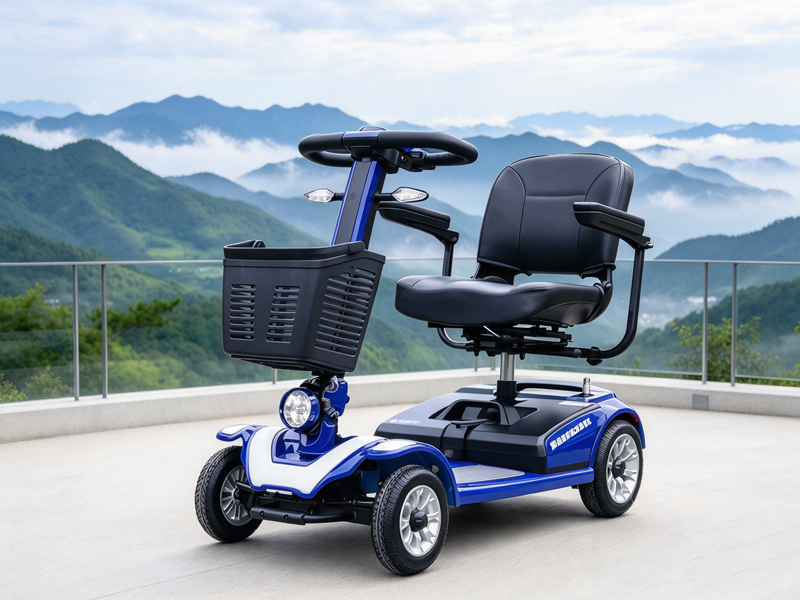
Choosing a wheelchair or mobility scooter is about more than finding a comfortable seat or a design that looks right. The frame beneath you influences how easily the equipment moves, how much effort it takes to transport, how well it handles everyday use, and how much maintenance it may need over the years.
For some people, a lightweight wheelchair means being able to travel without relying as heavily on a family member. For others, a sturdy mobility scooter provides the confidence to enjoy longer outdoor trips. These needs may seem similar, but they can lead to very different choices in frame materials.
Steel, aluminium, carbon fibre and magnesium are among the materials used in modern mobility equipment. Each offers a different balance of strength, weight, durability, comfort and cost. There is no single material that performs best in every situation, and the lightest frame is not automatically the most suitable.
Understanding these differences makes it easier to compare products based on real-life requirements rather than marketing claims.
A wheelchair or mobility scooter frame does much more than hold the seat in place. It supports the user’s weight, connects major components, transfers forces through the wheels and helps maintain stability when moving over different surfaces.
The material used in its construction affects several aspects of everyday performance.
Weight and portability are often the first considerations. A wheelchair that needs to be lifted into a car several times a week can quickly become difficult to manage if it is too heavy. The same applies to a folding mobility scooter that must be carried into a vehicle or stored inside a home.
Strength and structural stability matter just as much. The frame must support the intended user weight and withstand repeated loading, turning, braking and movement across uneven ground. A product that feels light in a showroom still needs to remain stable during everyday use.
Durability and maintenance influence long-term ownership. Outdoor equipment is regularly exposed to rain, moisture, temperature changes, minor impacts and surface abrasion. Some materials resist corrosion naturally, while others depend more heavily on protective coatings.
Finally, there is comfort. Different frame materials respond differently to vibration and flex, which can affect how a wheelchair feels over rough paving or how much vibration reaches the user through a mobility scooter. However, tyres, suspension, seat cushioning and frame geometry also play major roles.
The most useful comparison, therefore, is not simply about which material is strongest. It is about how each material performs as part of a complete mobility product.
The following table provides a practical overview of the four main materials commonly encountered when shopping for wheelchairs and mobility scooters.
| Frame material | Weight | Strength and stability | Durability considerations | Typical cost |
|---|---|---|---|---|
| Steel | Relatively heavy | Excellent when properly designed | Repairable in many cases, but exposed steel can rust | Low to moderate |
| Aluminium | Lightweight | Strong for its weight | Good corrosion resistance; vulnerable to dents from severe impacts | Low to moderate |
| Carbon fibre | Very lightweight | High strength-to-weight potential | Does not rust, but impact damage can be difficult to assess and repair | High |
| Magnesium alloy | Very lightweight | Good when correctly engineered | Protective coatings and specialist repair considerations matter | Moderate to high |
These are general comparisons, not universal specifications. Actual performance depends on the alloy or composite, frame design, manufacturing quality, component layout and product testing.
Steel has long been used in wheelchair construction because it offers a combination of structural strength, dependable performance and relatively affordable manufacturing.
Its main advantage is its ability to withstand substantial loads when the frame is properly engineered. This makes steel a practical choice for many standard wheelchairs, heavy-duty models and products designed around stability rather than minimum weight.
Steel also has a useful characteristic when dealing with certain impacts. Depending on the grade and design, it may deform before it fractures, making some types of damage easier for a qualified technician to identify and repair. This does not mean every bent frame is safe to reuse, but it can make steel equipment more straightforward to service in appropriate circumstances.
There is a trade-off, however: weight.
A steel wheelchair may be harder to lift into a car, carry up steps or manoeuvre into a compact storage space than a comparable lightweight model. For someone who regularly transports a wheelchair without assistance, this extra weight can become a daily inconvenience.
Steel also requires attention to corrosion. If the paint or protective finish becomes chipped, moisture can reach the underlying metal and allow rust to develop. Regular cleaning, drying and prompt attention to damaged coatings can help prevent the problem from spreading.
Best suited to: users who prioritise sturdy construction, affordability, dependable everyday use or a model designed for higher user-weight requirements.
Steel is particularly worth considering when a wheelchair will spend most of its time in one location or be transported infrequently. If lifting effort is a major concern, however, comparing the actual product weight with lightweight alternatives is essential.
Aluminium has become a popular choice for modern wheelchairs and mobility scooters because it provides a useful balance between strength, portability and price.
Although aluminium is lighter than steel, appropriately selected aluminium alloys can provide the structural performance required for everyday mobility equipment. Manufacturers can shape and reinforce aluminium tubing to create frames that are relatively easy to handle without sacrificing the stability needed for their intended use.
For wheelchair users and carers, the benefits are practical rather than merely technical. A lighter chair may be easier to fold, manoeuvre, lift and place in a vehicle. For self-propelled wheelchair users, reducing unnecessary frame weight can also make movement less demanding, although wheel design, tyre pressure, alignment and rolling resistance remain important factors.
Aluminium is also well suited to outdoor use. It naturally forms a thin oxide layer that helps protect the underlying metal from further corrosion. Many products also use additional surface treatments or coatings to improve protection and appearance.
That does not make aluminium indestructible. A sufficiently hard impact can dent or deform a frame, and damage around welds, joints or load-bearing areas should never be ignored. Aluminium can also fatigue under repeated stress, depending on the alloy, design and loading conditions.
Comfort is another consideration. Aluminium frames can feel firm over uneven ground, especially when paired with hard tyres or limited cushioning. However, this is not an unavoidable disadvantage: a well-designed wheelchair or scooter can deliver a comfortable ride through appropriate seating, tyres, suspension and geometry.
Best suited to: everyday wheelchair users, people who travel frequently, carers who regularly lift equipment, and scooter owners looking for a practical balance between portability and durability.
For many buyers, aluminium is the sensible starting point because it delivers useful weight savings without the premium price associated with some advanced materials.
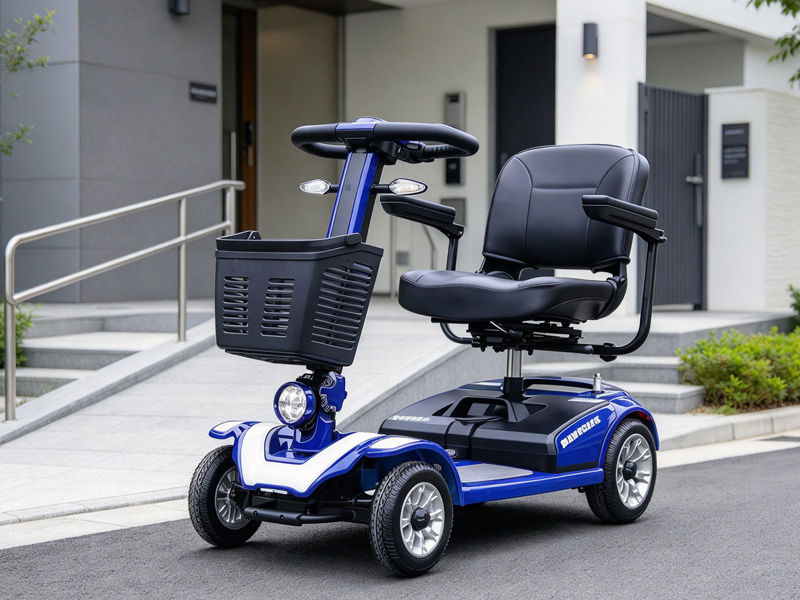
Carbon fibre stands out when reducing weight is a major priority.
Unlike steel, aluminium and magnesium alloy, carbon fibre is a composite material. It consists of carbon fibres embedded in a resin matrix. During manufacture, the orientation and arrangement of those fibres can be tailored to suit the loads a component is expected to carry.
This gives engineers considerable freedom to design lightweight structures with high stiffness and strength relative to their weight. The result can be a wheelchair or powerchair that is easier to lift and transport while remaining sufficiently rigid for its intended purpose.
The practical benefits are particularly noticeable for people who travel frequently or need to place mobility equipment into a car. Reducing the weight of a frame or other major component can make the process more manageable, although the complete product weight remains the figure that matters most.
Carbon fibre also does not rust. Its composite structure avoids the conventional corrosion problems associated with exposed steel, making it attractive for equipment used outdoors.
There are important limitations to understand before paying the higher price.
Carbon fibre can be highly resistant to loads for which it has been designed, but severe impacts may cause internal damage that is not immediately obvious from the outside. A visible crack, crushed section or damaged joint should be assessed by the manufacturer or a qualified specialist. Repair options depend on the construction and the manufacturer’s guidance, and replacement may be necessary.
Carbon fibre also tends to cost more because its manufacturing processes can be more complex. Not every user will benefit enough from the weight reduction to justify the extra expense.
Its stiffness and vibration behaviour depend on the design. Some composite frames can help reduce transmitted vibration, but carbon fibre should not automatically be treated as a substitute for proper suspension or suitable tyres.
Best suited to: users who need a particularly lightweight wheelchair or powerchair, people who frequently travel, and households where lifting effort is a significant consideration.
If portability is central to your lifestyle, carbon fibre is worth considering. Before purchasing, compare the complete product weight, removable components, folding mechanism, repair support and warranty rather than relying on the material name alone.
Magnesium alloy is less familiar to many mobility equipment buyers, but it offers another approach to reducing frame weight.
Magnesium is a relatively lightweight structural metal. When used in appropriately engineered alloys, it can provide useful strength while allowing manufacturers to create components with carefully controlled shapes and thicknesses.
Die-casting is one manufacturing method used for magnesium components. It can produce complex shapes and integrate several design features into a single part, potentially reducing the need for separate components or joints.
Another potential advantage is vibration behaviour. Depending on the alloy, component geometry and overall frame design, magnesium structures can help damp certain vibrations. This may contribute to a more comfortable experience, particularly when travelling over less-than-perfect surfaces.
However, material alone cannot guarantee a smoother ride. Tyres, seat design, suspension and the way the frame connects to other components remain important.
Corrosion protection deserves attention, too. Magnesium alloys require suitable material selection and surface protection, particularly in environments where moisture and road salts may be present. Scratches or damaged coatings should be checked and addressed according to the manufacturer’s instructions.
Magnesium products may also be less widely available than steel or aluminium alternatives. This can affect the number of models to compare, the purchase price and the availability of specialist repairs.
Best suited to: buyers who want a lightweight alternative to aluminium and can find a well-designed model that meets their comfort, support and maintenance requirements.
Magnesium is a useful option, but it is worth evaluating the finished product rather than assuming it will outperform every aluminium or carbon fibre model.
Strength and weight are often discussed together, but they are not interchangeable.
A heavy frame is not necessarily stronger in every relevant way, and a lightweight frame is not automatically fragile. What matters is how effectively the material and structure work together.
Steel offers dependable strength and is often used where a robust, economical frame is desirable. Aluminium reduces weight while maintaining suitable structural performance for many everyday applications. Carbon fibre can deliver an excellent strength-to-weight ratio through carefully engineered fibre orientation. Magnesium alloys offer another route to lighter construction, particularly where complex shapes can be manufactured efficiently.
It is also important to distinguish material strength from maximum user weight. The manufacturer’s stated weight capacity applies to the complete product, not simply to the raw material. Frame dimensions, joints, welds, fasteners, wheels, seat supports and other components all contribute to the final rating.
Never assume that a carbon fibre or aluminium model can support the same user weight as a steel model simply because the materials have favourable strength characteristics. Check the specific model’s maximum user weight and intended use.
Stability matters as well. A wider wheelbase, appropriate seat position, sound wheel alignment and well-designed centre of gravity can be just as important as the frame material. A heavier scooter may feel reassuring to one user, while another may value the ease of handling offered by a lighter model.
The right balance is the one that provides sufficient support and stability without creating unnecessary difficulties during transport or daily use.
A frame’s durability is not determined by its material alone. How the equipment is used, stored, maintained and serviced can make a substantial difference to its working life.
| Everyday challenge | What to consider |
|---|---|
| Rain and damp storage | Aluminium and carbon fibre generally avoid the conventional rust problems associated with steel. Magnesium coatings and steel finishes need appropriate care. |
| Accidental knocks | Steel may deform; aluminium may dent; carbon fibre can suffer less visible internal damage; magnesium components can also be damaged by impacts. |
| Daily loading | All materials must be designed for repeated use. Check joints, fasteners and manufacturer inspection guidance. |
| Repair after damage | Steel and some aluminium components may be repairable by qualified specialists. Carbon fibre and magnesium may require specialist assessment or replacement. |
| Long-term maintenance | Cleaning, inspection, correct storage and prompt professional attention can help extend service life. |
For steel equipment, inspect chipped paint, exposed metal and areas around joints for signs of rust. Surface corrosion should not be confused with structural damage, but spreading rust or deformation needs professional assessment.
For aluminium frames, look for dents, cracks, loose connections and changes in alignment. A frame that appears slightly bent may have sustained more serious damage than its appearance suggests.
Carbon fibre deserves a different approach. Because damage can extend beneath the surface, do not rely on a visual inspection alone after a significant collision or drop. Follow the manufacturer’s instructions and seek specialist advice if there is any doubt about structural integrity.
For magnesium alloy, check that the protective finish remains intact and follow the product’s specific cleaning and maintenance guidance. Avoid unapproved repairs or coatings that could interfere with the material’s protection.
Regardless of the frame material, stop using mobility equipment if you discover a crack, significant deformation, a loose structural joint or another fault that could affect safety. Contact the supplier or a qualified repair professional before using it again.
For wheelchair users, the best material often depends on who will propel the chair, how frequently it will be transported and how much assistance is available.
A self-propelled wheelchair places different demands on its user from a transit wheelchair pushed by a carer. With a self-propelled model, overall weight and rolling resistance can affect the effort needed to move over longer distances. With a transit chair, lifting weight may be particularly important for the person assisting.
Aluminium is a strong all-round option for many everyday users. It can make a chair easier to handle without moving into the highest price category.
Carbon fibre is worth a closer look when minimising weight is especially important. For someone who regularly transfers a chair between home, car and destination, a meaningful reduction in lifting weight may improve independence and reduce the burden on a carer.
Steel remains a reasonable choice when cost, structural robustness and straightforward servicing are higher priorities than portability. Heavy-duty wheelchairs should be selected according to their specified user-weight capacity, seat dimensions and stability, rather than material alone.
Magnesium may suit buyers looking for a lightweight design with particular construction or vibration-damping characteristics, provided the product is available in the correct size and offers appropriate after-sales support.
Whatever the material, make sure the wheelchair fits the user’s body and daily routine. Seat width and depth, back support, footrest position, cushion compatibility, manoeuvrability and transfer requirements can have a more immediate effect on comfort and usability than the frame material itself.
Mobility scooters introduce an additional consideration: the relationship between frame weight, batteries, motor systems and transport arrangements.
A folding scooter is often selected because it can be stored in a car boot or a relatively small space. In this situation, a lighter construction can be particularly valuable. However, the weight of the complete folded scooter, including any parts that must be lifted together, is more useful than the weight of the frame in isolation.
A dismantling travel scooter works differently. It separates into sections that can be lifted individually, so the heaviest removable section may matter more than the total scooter weight. A slightly heavier scooter with manageable individual components could be a better choice than a lighter model that is awkward to dismantle.
For regular outdoor journeys, frame material should be considered alongside battery range, suspension, tyre type, ground clearance, turning radius, braking performance and maximum user weight.
A lightweight scooter may be convenient to transport, but that does not automatically mean it has the range, stability or ride characteristics needed for longer trips. Larger models may offer additional features or battery capacity, although this varies by product.
Think about where you will use the scooter most often. Smooth indoor floors and well-maintained pavements create different demands from uneven paths, sloping driveways and frequent outdoor travel.
Before buying, try the controls, turning movement and seating position if possible. If you plan to load the scooter into a car, check whether you can manage the folding or dismantling process safely and comfortably.
Weight can influence how much effort is required to move mobility equipment, but the effect depends on the type of device.
With a manual wheelchair, a lighter frame can reduce the effort needed for lifting and may improve handling. Actual pushing effort also depends on tyre pressure, wheel alignment, bearing condition, seating position, terrain and the user’s propulsion technique.
For a powered wheelchair or mobility scooter, overall mass is one factor in energy consumption. Heavier loads and repeated acceleration can increase energy demand, especially on slopes or uneven ground. However, battery capacity, motor efficiency, tyre characteristics, speed, terrain and driving habits also influence range.
This means there is no universal rule that a lighter scooter will always travel farther on a charge. A heavier model with a larger battery may offer a longer range than a lighter model with a smaller battery.
When comparing electric mobility products, look at both total weight and the manufacturer’s stated range. Treat advertised range as a guide, since real-world performance can vary with user weight, weather, terrain, battery condition and usage patterns.
The most useful question is not simply whether a frame is light, but whether its weight helps you use the equipment more easily without compromising the other features you need.
It is easy to focus on advanced materials because carbon fibre and magnesium sound innovative. Yet paying more for a frame is worthwhile only when the difference solves a real problem.
Start by identifying the task that causes the greatest difficulty. Is it lifting a wheelchair into a car? Pushing it over longer distances? Finding a stable scooter for outdoor use? Keeping equipment in good condition through wet weather? Your answer will help narrow the options.
Next, compare complete products rather than materials in isolation. Check the total weight, maximum user weight, folded dimensions, removable-part weights, comfort features, warranty terms and availability of replacement parts.
Think about the long-term ownership cost as well. A lower purchase price may be attractive, but the availability of servicing and suitable replacement components can matter just as much over several years. Conversely, an expensive lightweight model may provide little practical benefit if it rarely needs to be lifted or transported.
If possible, test more than one design. Ask a supplier to demonstrate folding or dismantling, and consider whether the equipment can be loaded safely by the person who will actually be handling it.
Finally, choose a model that meets the user’s needs today while remaining practical for likely future routines. The best frame material is not the one with the most impressive specification. It is the one that makes everyday mobility safer, easier and more manageable.
Steel, aluminium, carbon fibre and magnesium each have a place in modern wheelchair and mobility scooter design.
Steel remains a dependable option for robust, cost-conscious construction. Aluminium offers a versatile balance of strength, weight and value. Carbon fibre is especially attractive when reducing lifting weight is a major priority. Magnesium alloy provides another lightweight alternative, with potential design and vibration-damping advantages.
The right choice depends on more than the material itself. Frame geometry, weight capacity, seating, wheels, suspension, maintenance requirements and the availability of servicing all contribute to real-world performance.
Before making a decision, consider how often the equipment will be transported, which surfaces it will encounter, how much assistance is available and what level of comfort and support the user needs. A well-matched wheelchair or scooter should fit naturally into everyday life rather than create another challenge to manage.
1. Which wheelchair or mobility scooter frame material is the strongest?
Steel is widely valued for its strength and robust construction, but there is no single material that is always strongest in every application. Aluminium alloys and carbon fibre composites can also provide excellent structural performance when properly engineered. The most important factors are the complete frame design, construction quality, maximum user-weight rating and intended use.
2. Is aluminium or carbon fibre better for a lightweight wheelchair?
Both can be good choices. Aluminium generally offers a practical combination of low weight, affordability and everyday durability. Carbon fibre can reduce weight further in appropriately designed products, but it usually costs more and may require specialist assessment if damaged. Compare the complete wheelchair weight, portability, repair support and warranty before deciding.
3. How can I make my wheelchair or mobility scooter frame last longer?
Clean the equipment regularly, dry it after exposure to rain, inspect the frame and joints for damage, and follow the manufacturer’s maintenance instructions. Check steel coatings for chips and rust, look for dents or cracks in aluminium, protect magnesium coatings, and seek specialist advice after significant impacts to carbon fibre. Never continue using equipment with suspected structural damage until it has been assessed by a qualified professional.