Our Location
Free Trade Tower, Xiyong street.
Chongqing, China

Free Trade Tower, Xiyong street.
Chongqing, China
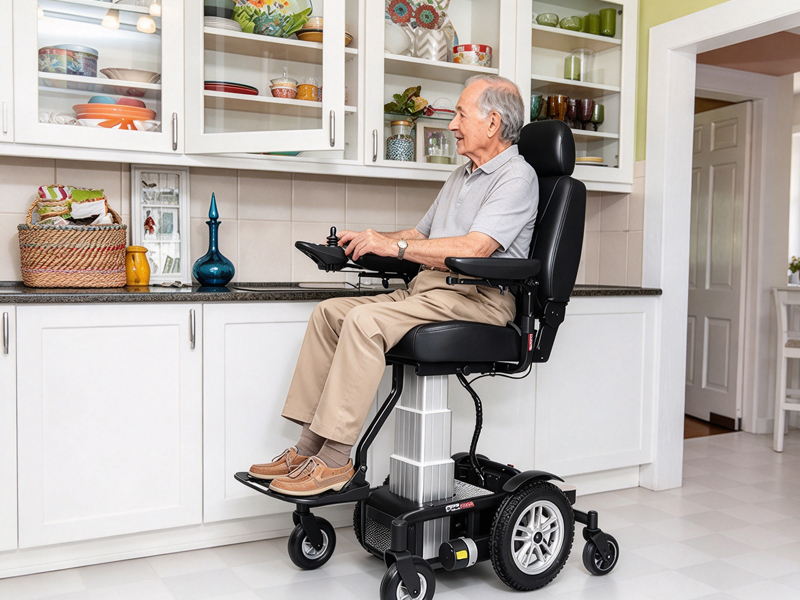
Choosing the right wheelchair lift for seniors is about more than finding a piece of mobility equipment. It is about making everyday life at home safer, more comfortable, and less dependent on other people. For older adults who have difficulty standing, walking, or reaching everyday surfaces, the right mobility solution can make a meaningful difference in how they prepare meals, spend time with family, move between rooms, and enjoy their daily routines.
However, the term wheelchair lift can mean different things. Some people are looking for a platform lift that carries a wheelchair between floors or over a flight of steps. Others need an electric wheelchair with a height-adjustable seat that helps them reach tables, kitchen counters, and other surfaces more comfortably. Understanding this distinction is the first step toward choosing the right solution for home use.
For seniors who need greater independence while moving around the house, an electric lift wheelchair may be worth considering. Models such as the IYASOCARE YSE314 and the IYASOCARE YSE315 combine powered mobility with seat-lifting functionality, but they are designed with different priorities in mind.
Before comparing products, take a moment to consider what makes everyday movement difficult for the person who will use the equipment.
For one senior, the biggest challenge may be reaching a dining table comfortably without asking someone to move the chair. For another, it may be navigating narrow hallways, managing fatigue during daily activities, or finding a more convenient seating position when interacting with family members. Someone who lives in a multi-story home may face an entirely different problem: accessing an upstairs bedroom or overcoming a staircase.
These situations require different solutions.
A stair lift or wheelchair platform lift is designed to help a person overcome a change in floor level. Depending on the design, it may carry a seated passenger or accommodate a wheelchair on a lifting platform. Installation requirements, available space, and the home’s structural layout all influence which system is appropriate.
An electric lift wheelchair, by contrast, combines motorized movement with a powered seat-height adjustment. It can help the user change their seated position while remaining in the wheelchair, making everyday tasks more accessible. It does not, by itself, provide a way to travel between floors or climb a staircase.
That distinction matters because buying the wrong type of equipment can leave the original problem unsolved.
If the main difficulty involves reaching countertops, positioning beside furniture, or moving independently around the home, an electric lift wheelchair may be a practical option. If the challenge is getting between different levels of a house, a properly designed residential lift may be necessary instead.
For families unsure which category fits their needs, an occupational therapist or qualified accessibility professional can help assess the user’s mobility, transfer ability, home layout, and safety requirements before a purchase is made.
A wheelchair may look impressive on a product page, but the features that matter most are the ones that make daily life easier. For seniors, five considerations deserve particular attention: seat-height adjustment, ease of operation, stability, comfort, and suitability for the home environment.
A powered lifting seat can help a user adjust their seated height to interact more comfortably with a table, desk, or counter. Before buying, ask how high the seat can rise, how low it can descend, and whether the adjustment range suits the user’s actual furniture and daily activities.

A one-handed joystick can make powered movement easier for people with limited strength or dexterity. The controls should be easy to reach and understand, and the user should be able to operate them without uncomfortable stretching or excessive hand movement.
3. Stability and braking
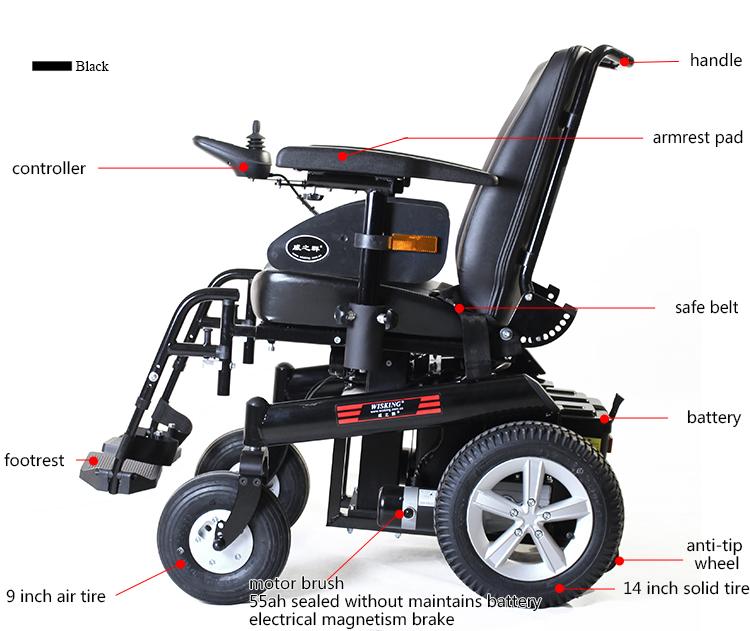
A lifting mechanism changes the user’s seating height and therefore the wheelchair’s center of gravity. Check the manufacturer’s operating instructions for lift use while stationary or moving, the permitted load, slope limits, and braking features. A rated climbing ability should never be treated as permission to operate on every slope or surface.
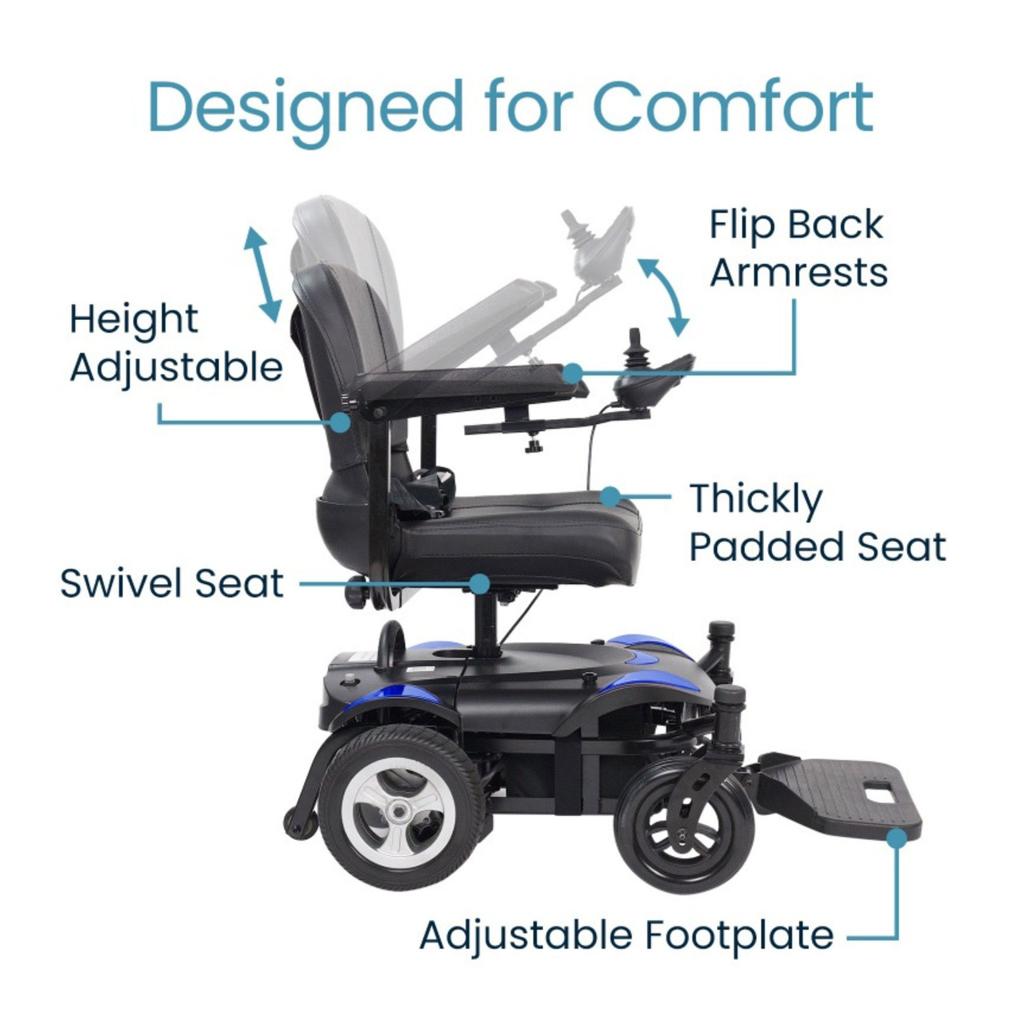
Seat width, depth, cushion support, armrest position, and footrest adjustment can affect comfort over several hours of use. A seat that is too narrow can create pressure, while one that is too wide may make it harder to maintain a stable sitting position.
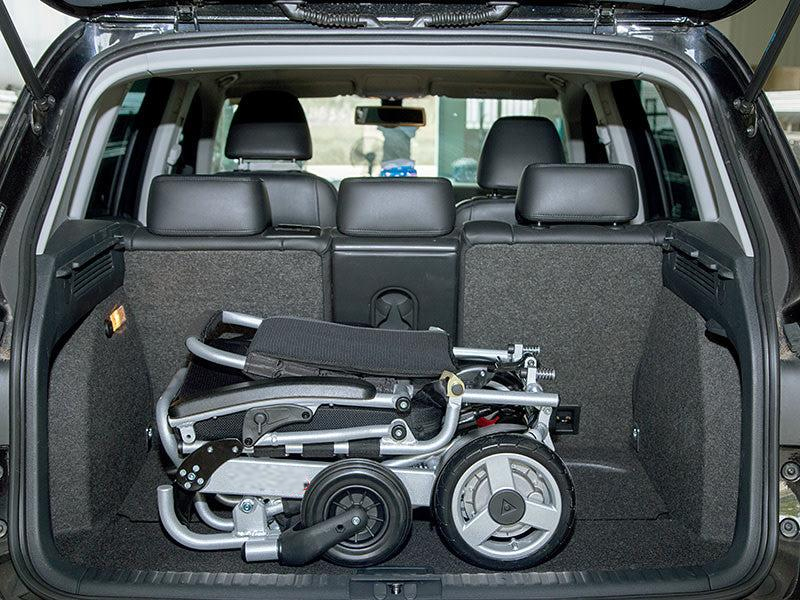
5. Storage and transportation
Consider where the wheelchair will be stored, whether it must fit in a vehicle, and who will handle loading and unloading. A folding design can be helpful, but the folded dimensions and actual lifting weight matter just as much as the fact that it folds.
These factors should be considered together. A powerful wheelchair that is too wide for the hallway will not be a good home mobility solution. Likewise, a compact chair may be inconvenient if its seat does not provide the necessary support.
For seniors who want to combine powered mobility with an adjustable seating position, the IYASOCARE YSE314 and YSE315 offer two different approaches. Both are electric wheelchairs with lifting functionality, but their folding design, motor power, seat dimensions, and adjustment features make them suitable for different priorities.
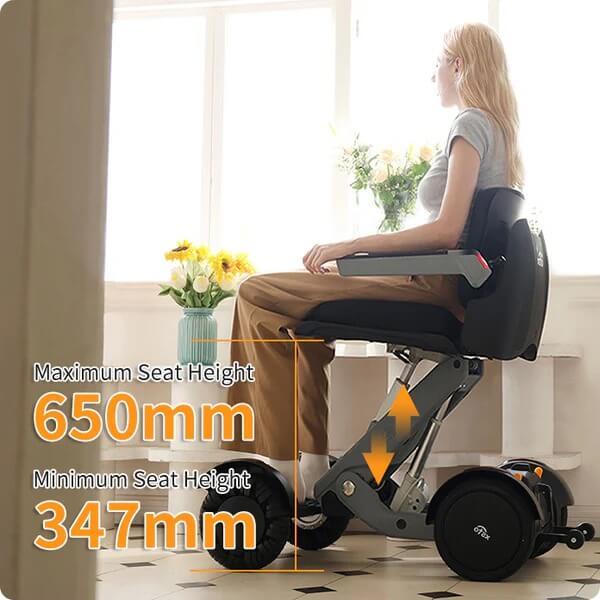
Height-adjustable folding electric wheelchair
The YSE314 is designed for users who want a powered lifting seat without giving up the convenience of a folding frame. Its combination of seat-height adjustment, joystick control, and compact folded dimensions makes it worth considering for everyday mobility, particularly when storage and transportation are important.
Explore the product: YSE314 Height-Adjustable Folding Electric Wheelchair
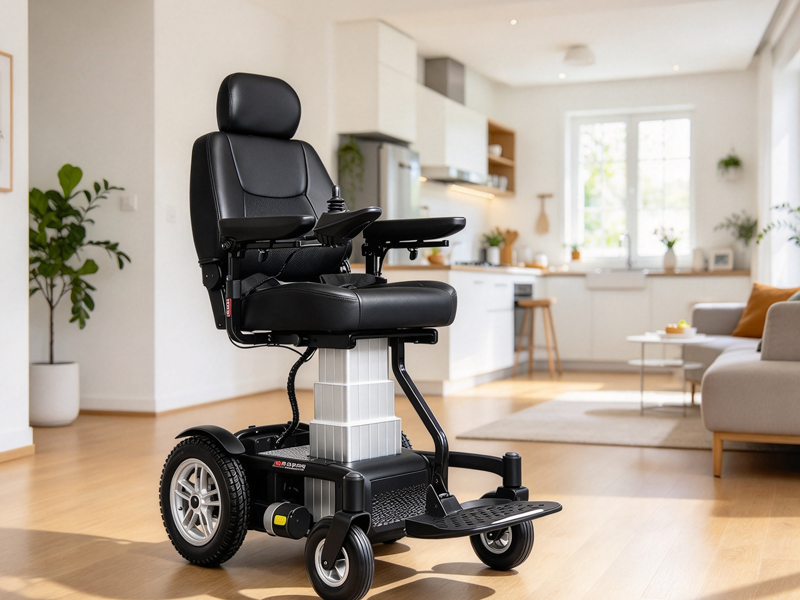
Heavy-duty electric lift wheelchair
The YSE315 places greater emphasis on motor power, maneuverability, and flexible seating adjustments. Its dual 250W motors, remote-controlled lift-seat function, and adjustable backrest, armrests, and footrests may appeal to seniors who need more control over their seating position throughout the day.
Explore the product: YSE315 Heavy-Duty Electric Lift Wheelchair
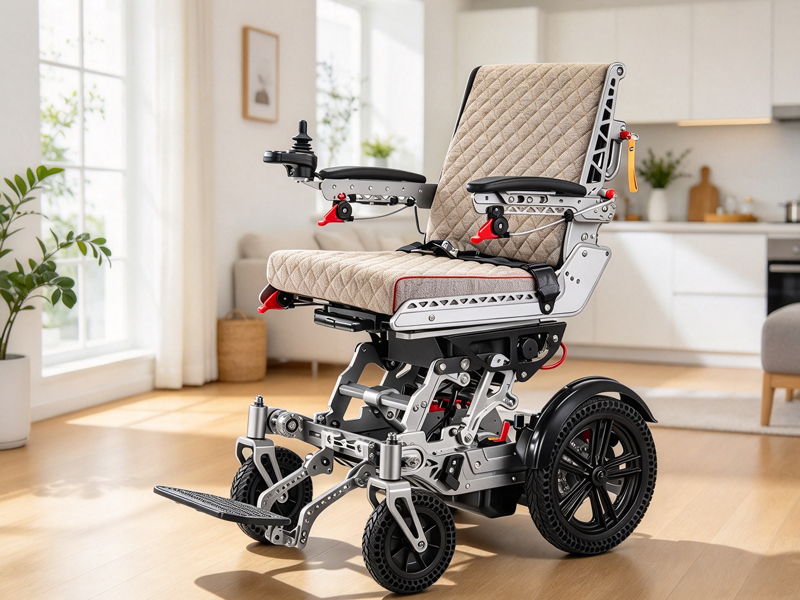
One of the practical challenges of owning mobility equipment is finding somewhere to keep it when it is not in use. In smaller homes, apartments, and shared living spaces, a wheelchair that occupies too much room can quickly become inconvenient.
The YSE314 addresses this concern with a folding steel-frame design. According to the manufacturer’s listed specifications, its folded dimensions are approximately 75 × 59 × 69 cm. This can make storage and vehicle transportation easier than with a wheelchair that cannot be folded, although the actual fit will depend on the available storage space and vehicle opening.
Its electric lift function is another important feature. Instead of relying solely on a fixed seating height, users can adjust their position to better suit different everyday activities. For example, an appropriate seat height may make it easier to sit comfortably beside a dining table or reach a work surface.
The wheelchair uses dual 24V 180W motors and a 20Ah lithium battery. Its listed maximum speed is 6 km/h, with an approximate driving range of 15 km per charge. The manufacturer also lists a maximum load capacity of 125 kg, a seat width of 47 cm, and a seat height of 45 cm. Charging takes approximately four to six hours.
These figures help establish whether the model is worth considering, but they do not tell the whole story. A stated range of 15 km is not a guarantee that every user will travel that distance in everyday conditions. User weight, terrain, temperature, battery condition, and the frequency of seat adjustments can all influence performance.
The YSE314 also features a one-handed joystick and electromagnetic braking. These features are relevant for older adults who want straightforward control, although individual hand strength, coordination, vision, and reaction time should be assessed before use.
Its listed load capacity is higher than that of the YSE315, but capacity alone should not determine the choice. Seat dimensions, posture, pressure management, and ease of transferring into the wheelchair are equally important.
Who should consider the YSE314? It is worth evaluating if the senior needs a height-adjustable electric wheelchair, values a folding design, and wants a practical balance between home mobility and transportation convenience.
Some seniors need more than a wheelchair that simply moves from room to room. They may spend much of the day seated, change positions for different activities, or need a powered chair that can maneuver in tight indoor spaces while also supporting trips outside the home.
The YSE315 is designed around these priorities.
It uses two 250W motors and has a listed maximum speed of 8 km/h. The manufacturer specifies a driving range of approximately 15–25 km, depending on battery configuration, with 12Ah, 15Ah, and 20Ah lithium battery options. The listed maximum load capacity is 120 kg.
Its powered lift seat is a key part of the design. The manufacturer describes remote-controlled seat adjustment, including forward-and-backward positioning, alongside adjustable backrest, armrests, and footrests. These adjustments may help users find a more suitable position for different activities, although the precise adjustment range and operating conditions should be confirmed before purchase.
For a senior who has difficulty repositioning independently, this flexibility may be useful. However, a powered seat adjustment should not be confused with a device that physically lifts a person from a bed or transfers them onto another surface. If the user cannot safely move between the bed and wheelchair, a separate transfer assessment may be needed.
Maneuverability is another consideration. The YSE315 has 12-inch rear wheels, 8-inch front wheels, and a listed zero-radius turning capability. This design can help with turning in confined spaces, but the wheelchair’s overall width, turning behavior, and clearance still need to be tested in the actual home.
The manufacturer lists a seat width of 42 cm and a seat depth of 40 cm. Because these dimensions differ from the YSE314, the best choice will depend partly on the user’s body measurements and support needs. Neither chair should be selected on the basis of a product label alone.
The YSE315 also features an electromagnetic braking system and a listed climbing capability of up to 12°. These specifications are useful reference points, not a substitute for safe operation. Wet floors, steep ramps, uneven paving, and raised thresholds can present risks even when a wheelchair is rated to handle certain slopes.
Who should consider the YSE315? It may be worth evaluating for seniors who prioritize stronger dual motors, flexible seating adjustments, and maneuverability, and whose body dimensions and weight are compatible with the chair.
The better choice depends on what the user needs most. The following comparison summarizes the manufacturers’ published specifications.
| Feature | YSE314 | YSE315 |
|---|---|---|
| Design priority | Folding convenience | Motor power and seating flexibility |
| Motor system | 180W × 2 | 250W × 2 |
| Maximum listed speed | 6 km/h | 8 km/h |
| Listed driving range | About 15 km | About 15–25 km |
| Maximum load | 125 kg | 120 kg |
| Seat width | 47 cm | 42 cm |
| Seat depth | Confirm with manufacturer | 40 cm |
| Seat lift | Electric height adjustment | Electric lift with remote-controlled adjustment |
| Frame or storage feature | Steel frame; folding size 75 × 59 × 69 cm | Compact overall footprint; confirm storage requirements |
| Charging time | About 4–6 hours | About 4–6 hours |
Specifications are based on the manufacturers’ published product information. Confirm the exact configuration, dimensions, lifting range, and operating requirements with the supplier before ordering.
A few differences deserve closer attention.
Choose the YSE314 as a candidate if folding and storage are important, a wider seat is more suitable, and the listed 125 kg load capacity meets the user’s needs.
Choose the YSE315 as a candidate if the user values stronger motors, a higher listed maximum speed, and additional seating adjustments.
Consider neither model without further assessment if the primary need is climbing stairs, lifting a person from a bed, or transferring someone who cannot safely move independently.
The YSE315 is not automatically the better choice simply because its motors are more powerful. Similarly, the YSE314 is not automatically more suitable just because it folds. The most useful wheelchair is the one that fits the person, the home, and the daily routine.
Even a well-designed electric lift wheelchair can be frustrating if the home environment has not been considered. A short accessibility assessment can prevent avoidable problems and help families make a more confident purchase.
Use this checklist before ordering a wheelchair lift or electric lift wheelchair.
0 of 7 completed
Reset checklist
Pay special attention to doorways and turning space. A wheelchair may fit through a doorway when traveling straight but struggle to turn immediately after entering a room. Measure the approach area as well as the doorway itself.
Floor surfaces also matter. Thick rugs, loose mats, cables, and raised thresholds can interfere with wheelchair movement. Where possible, remove trip hazards and arrange furniture to create clear, predictable routes.
Charging should be straightforward, too. Choose a dry, accessible location and follow the manufacturer’s battery and charging instructions. Avoid creating a situation where the senior must stretch across a walkway or move furniture every time the wheelchair needs charging.
Finally, consider who will help if something goes wrong. Families should know how to contact the supplier, obtain replacement parts, and arrange maintenance. Warranty coverage, battery replacement availability, and after-sales support are worthwhile questions to ask before committing to a purchase.
For older adults, a wheelchair with a lifting seat can improve access to everyday activities, but it also introduces additional considerations. Raising the seat changes the user’s position, and safe operation depends on the wheelchair’s design, the environment, and the individual’s abilities.
Before regular use, the senior should receive clear instructions on operating the lift, controlling the chair, applying the brakes, and charging the battery. A supervised trial is particularly important for anyone unfamiliar with powered mobility equipment.
Several precautions are worth following:
Use the lifting function only under the operating conditions permitted by the manufacturer.
Avoid slopes and uneven surfaces that exceed the wheelchair’s stated operating limits.
Keep hands, feet, clothing, and nearby objects clear of moving components.
Do not exceed the specified load capacity.
Check that the user can maintain a stable, supported position throughout seat adjustment.
Have a qualified professional assess transfer needs if the user requires physical assistance getting into or out of the chair.
Caregivers should also avoid assuming that a lifting seat eliminates the need for assistance. Some users may still require help with transfers, positioning, personal care, or navigating parts of the home.
If the senior has significant balance problems, poor trunk control, pressure injuries, or difficulty understanding the controls, seek advice from an occupational therapist or other qualified clinician before choosing a model.
The aim is not simply to introduce new equipment into the home. It is to make daily movement more manageable without creating new risks.
Price is naturally part of the decision, but the purchase cost alone does not determine value. A wheelchair that fits the user’s routine and remains practical over time may be more useful than a cheaper model that requires frequent assistance or proves difficult to store.
When comparing suppliers, ask for a written specification sheet and confirm the details that matter to your household. These include the final purchase price, shipping arrangements, warranty terms, battery replacement costs, spare-part availability, and the procedure for obtaining technical support.
It is also worth asking for a demonstration video showing the actual lifting mechanism in operation. For the YSE314 and YSE315, request confirmation of the seat’s minimum and maximum heights, the circumstances in which lifting is permitted, and whether the chair can be folded or stored without special tools.
If possible, arrange a hands-on trial. Have the intended user sit in the chair, reach the controls, maneuver through a representative doorway, and test the seating position at a suitable table. A few minutes of practical testing can reveal issues that a specification table cannot.
For families purchasing mobility equipment remotely, clear communication with the manufacturer becomes even more important. Ask questions before paying rather than assuming that a feature shown in a photograph will meet a specific accessibility requirement.
Choosing wheelchair lifts for seniors is ultimately about matching the equipment to the person’s real needs. The right solution should support independence, fit the home, and make everyday activities more comfortable without adding unnecessary complexity.
For seniors who need a folding electric wheelchair with a lifting seat, the IYASOCARE YSE314 is a practical model to investigate. Its folding design, 47 cm seat width, dual 180W motors, and stated 125 kg load capacity may suit users who prioritize storage flexibility and daily accessibility.
For those who place greater importance on motor power and adjustable seating, the IYASOCARE YSE315 offers dual 250W motors, remote-controlled seat adjustments, and a stated driving range of 15–25 km. Its 120 kg load capacity and 42 cm seat width should be checked carefully against the user’s individual requirements.
Neither model is the right choice for everyone. If the main challenge is climbing stairs, a residential stair lift or wheelchair platform lift may be more appropriate. If the concern is moving safely between a bed and wheelchair, professional transfer assessment may be the better starting point.
Take the time to measure the home, assess the user’s needs, compare the specifications, and verify the supplier’s support arrangements. A thoughtful choice can help seniors preserve more independence and make home life easier for both users and caregivers.
1. What type of wheelchair lift is best for seniors at home?
It depends on the mobility challenge. A stair lift or wheelchair platform lift may be suitable for overcoming changes in floor level, while an electric lift wheelchair can help users adjust their seated height for daily activities. The home layout, user’s physical abilities, and need for transfer assistance should guide the decision.
2. What is the difference between the YSE314 and YSE315 electric lift wheelchairs?
The YSE314 emphasizes folding convenience and has a listed load capacity of 125 kg, a 47 cm seat width, and a driving range of approximately 15 km. The YSE315 emphasizes motor power and seating flexibility, with dual 250W motors, remote-controlled seat adjustment, a 120 kg load capacity, and a listed range of approximately 15–25 km. Confirm the current specifications with the supplier before purchasing.
3. Can an electric lift wheelchair replace a stair lift or patient transfer lift?
No. An electric lift wheelchair adjusts the user’s seating position and provides powered mobility, but it does not automatically transport the user between floors or lift them from a bed. A stair lift, wheelchair platform lift, or patient transfer lift serves a different purpose. Choosing the correct equipment depends on the task the user needs help with and an appropriate safety assessment.