Our Location
Free Trade Tower, Xiyong street.
Chongqing, China

Free Trade Tower, Xiyong street.
Chongqing, China
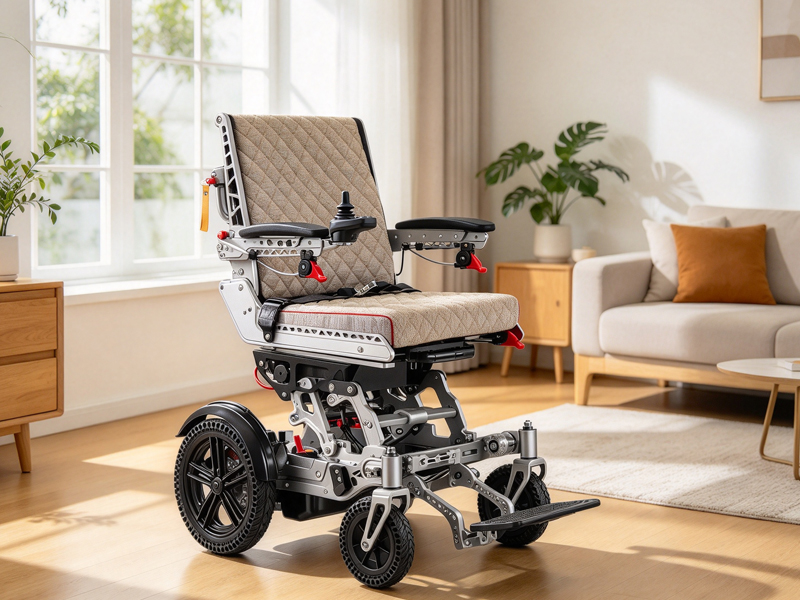
For many people who use a wheelchair, mobility is only one part of the daily experience. Reaching a kitchen counter, sitting comfortably at a dining table, speaking to someone at eye level, or transferring from a bed to a wheelchair can all present unexpected challenges. These seemingly small moments often determine how independently a person can manage everyday activities.
Traditional electric wheelchairs provide powered movement, but their fixed seating height can limit access to furniture, work surfaces, and social environments. A table may be too high, a shelf may be difficult to reach, or a conversation with someone standing nearby may feel less natural. Over time, these inconveniences can affect comfort, confidence, and participation in daily life.
This is where height adjustable electric wheelchairs offer a practical advantage. By combining powered mobility with a seat that can be raised or lowered, these wheelchairs give users greater flexibility in how they interact with their surroundings. Instead of adapting to every surface and situation, users can adjust their seating position to better suit the task at hand.
For older adults, people with limited mobility, and individuals who spend significant portions of the day seated, this additional flexibility can make a meaningful difference. It may help simplify everyday routines, improve access to shared spaces, and reduce the need to ask for assistance with certain activities.
However, not every electric lift wheelchair is designed for the same user. Some prioritize portability and convenient storage, while others emphasize adjustable seating, stronger motor performance, or longer travel range. Understanding these differences is essential when choosing a wheelchair that fits both personal needs and the environments in which it will be used.
Two models worth considering are the Iyasocare YSE314 Height-Adjustable Folding Electric Wheelchair with Power Lift and the YSE315 Heavy-Duty Electric Lift Wheelchair with Remote Control. Both combine powered movement with lifting functionality, but their designs serve somewhat different priorities.
A height adjustable electric wheelchair combines an electric drive system with a mechanism that changes the user’s seating position. Depending on the model, this may allow the seat to rise, lower, or adjust in relation to the wheelchair’s frame.
The purpose is not simply to sit higher. It is to make more everyday environments accessible and to give users greater control over their positioning.
Consider a typical morning at home. A person may need to move from the bedroom to the kitchen, sit at a dining table, prepare a simple meal, and then work at a desk. With a fixed-height wheelchair, each activity may require a different compromise. The user might struggle to position the chair close enough to a counter or find that the tabletop sits uncomfortably above their lap.
A powered lifting seat can help address these situations by bringing the user closer to a suitable working or social height, provided the chair’s adjustment range and surrounding space allow it.
The same principle applies outside the home. Reception desks, shared workspaces, retail counters, and other public environments may not be designed around a single seating height. A lift-equipped wheelchair can offer more options for approaching these spaces comfortably.
There are also potential benefits for caregivers. A suitable seating position may make some daily interactions and transfers easier to manage. Nevertheless, a lifting seat should not be treated as a substitute for appropriate transfer equipment, professional guidance, or caregiver assistance when these are needed.
It is important to distinguish seat-height adjustment from other positioning features. A wheelchair that raises its seat does not necessarily recline, tilt, or support standing. These are different functions, and buyers should confirm which movements a particular model provides before making a decision.
The most useful wheelchair is ultimately the one whose adjustments solve real problems in the user’s daily routine rather than simply offering the longest list of features.
Comfort is often discussed in terms of cushions and backrests, but seating position deserves equal attention. A wheelchair may have a comfortable seat and reliable motors yet still feel inconvenient if the user’s position does not work well with the surrounding furniture.
An adjustable-height seat can improve the relationship between the user and everyday surfaces. When the seat is positioned appropriately, dining, desk work, and face-to-face conversation may become more natural. The user can spend less time trying to compensate for an awkward height difference and more time focusing on the activity itself.
For people who work or study from a wheelchair, positioning can also influence how easily they approach desks and shared tables. An appropriate height may improve access to keyboards, notebooks, and other frequently used items. The exact benefit depends on the user’s body dimensions, the wheelchair’s adjustment range, and the height and design of the furniture.
Comfort also involves the ability to maintain a suitable seated posture. Seat width, seat depth, back support, footrest position, and armrest design all influence how a wheelchair feels during extended use. A lifting mechanism cannot compensate for a poorly fitting seat, so these details should be evaluated together.
The Iyasocare YSE314 offers a 47 cm seat width and a listed seat height of 45 cm. Its folding construction and powered lift make it an option for users who want to combine everyday mobility with easier storage. These dimensions provide a useful starting point, although each buyer should check the complete seating arrangement against their own measurements.
The YSE315, meanwhile, lists a seat width of 42 cm, a seat depth of 40 cm, and a seat height of 43 cm. Its design includes additional seating adjustments, making it worth considering for users whose comfort depends on more than seat height alone.
Neither set of dimensions is automatically better for everyone. A wider seat may suit one person while another may require a more compact fit for effective positioning. The right choice depends on body measurements, posture, clothing, pressure-management requirements, and the advice of a qualified seating professional when appropriate.
For anyone spending many hours in a wheelchair, it is worth assessing comfort in person whenever possible. A suitable fit can be just as important as motor power or battery capacity.
Not every wheelchair user has the same definition of independence. For one person, it means being able to move around the home and fold the wheelchair into a vehicle. For another, it means adjusting the seat and backrest to find a more suitable position throughout the day.
The YSE314 and YSE315 reflect these different priorities.
The Iyasocare YSE314 Height-Adjustable Folding Electric Wheelchair with Power Lift is designed for users who want powered movement, a lifting seat, and a foldable frame in one mobility solution.
Its folding design is particularly relevant for households where storage space is limited. When folded, the wheelchair measures approximately 75 × 59 × 69 cm, according to the product specifications. This can make storage more manageable and may simplify vehicle transport, subject to the vehicle’s available space and the user’s lifting arrangements.
The YSE314 uses two 24V 180W motors and a 20Ah lithium battery. Its listed maximum speed is 6 km/h, with a driving range of approximately 15 km per charge. The manufacturer also lists a charging time of around four to six hours.
These specifications suggest a design intended for everyday mobility rather than high-speed travel. The stated range may be suitable for many shorter outings and routine journeys, but actual distance will depend on factors such as user weight, terrain, inclines, temperature, battery condition, and driving habits.
One of the model’s central features is its powered lifting seat. The ability to change seating height can help users position themselves more conveniently at suitable tables, desks, and counters. For someone who frequently moves between different activities at home, this feature may offer practical value beyond basic transportation.
Control is handled through a one-hand joystick, which allows the user to manage direction and speed without a complicated control arrangement. The front universal wheels are designed to support maneuverability in spaces such as hallways, elevators, and shopping areas. As with any powered wheelchair, actual access depends on doorway width, turning clearance, floor conditions, and the dimensions of the occupied chair.
The YSE314 also features a steel frame and a listed maximum load capacity of 125 kg. Its electromagnetic braking system supports controlled stopping, while the manufacturer’s specifications list a climbing capability of up to 12 degrees and obstacle clearance of up to 40 mm. These figures should not be interpreted as a guarantee that every ramp or threshold is safe to negotiate; surface traction, approach angle, stability, and the manufacturer’s operating guidance remain important.
For buyers comparing folding electric wheelchairs, the YSE314 is worth exploring when storage, transport, powered mobility, and seat-height adjustment are all part of the decision.
Its most relevant strengths are the combination of a foldable frame, a 47 cm seat width, a powered lift, and a compact folded size. Before purchasing, users should confirm the lifting range, folded transport weight, battery configuration, and whether the chair can be transported in their intended vehicle.
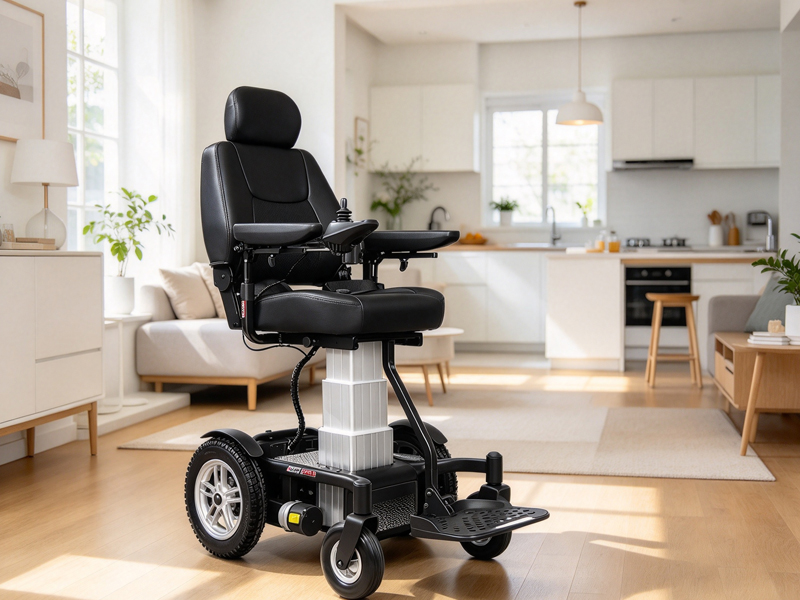
The Iyasocare YSE315 Heavy-Duty Electric Lift Wheelchair with Remote Control takes a different approach. Rather than emphasizing folding convenience, it combines a powered lifting seat with additional seating adjustments and a more powerful dual-motor system.
The YSE315 uses two 250W motors and has a listed maximum speed of 8 km/h. Depending on the selected lithium battery capacity—12Ah, 15Ah, or 20Ah—the manufacturer states a driving range of approximately 15–25 km per charge. Charging typically takes around four to six hours.
For users who make regular journeys or spend more time moving between indoor and outdoor environments, the available battery configurations are an important consideration. The best option depends on expected daily travel, charging opportunities, terrain, and the additional weight or cost associated with a particular configuration.
A major feature of the YSE315 is its remotely controlled lift seat. The product description also identifies forward-and-backward seat adjustment, an adjustable backrest, and adjustable armrests and footrests. Together, these features provide more positioning options than a simple seat-height mechanism alone.
That flexibility may be useful for users who need to refine their seating position for different activities or who find that fixed armrest and footrest arrangements are uncomfortable. The ability to adjust several seating elements can help accommodate individual preferences, although it does not guarantee a clinically appropriate posture for every user.
The model has a listed seat width of 42 cm, a seat depth of 40 cm, and a seat height of 43 cm. Its maximum load capacity is 120 kg, and its overall product dimensions are approximately 102 × 65 × 105 cm.
The YSE315 also features 12-inch rear wheels, 8-inch front wheels, and a zero-radius turning capability described by the manufacturer. This arrangement is intended to support maneuverability in confined areas. Users should still check the chair’s overall footprint and turning requirements against the layout of their homes, elevators, doorways, and usual destinations.
Its electromagnetic braking system is designed to provide controlled stopping, with a manufacturer-listed braking distance of up to 1.5 m under the stated specifications. Actual stopping performance can vary with speed, surface conditions, slope, and load, so users should practice safe operation in a suitable environment.
For someone seeking a heavy-duty electric lift wheelchair with multiple seating adjustments, the YSE315 is a model to consider. Its combination of dual 250W motors, selectable battery capacities, and remotely controlled positioning may appeal to users who prioritize adjustability and travel range over a folding frame.
As with the YSE314, buyers should confirm the exact configuration supplied, the full seat-lifting range, and any additional operating limitations before ordering.
Although both models provide powered lifting functionality, they are not interchangeable in every situation. Choosing between them is easier when the decision starts with daily routines rather than a simple comparison of specifications.
| Feature | YSE314 | YSE315 |
|---|---|---|
| Design focus | Folding electric wheelchair with power lift | Heavy-duty electric lift wheelchair |
| Motor system | Dual 24V 180W motors | Dual 250W motors |
| Listed maximum speed | 6 km/h | 8 km/h |
| Listed driving range | Approximately 15 km | Approximately 15–25 km |
| Battery | 20Ah lithium | 12Ah, 15Ah, or 20Ah lithium options |
| Seat width | 47 cm | 42 cm |
| Seat depth | Not specified in the listed specifications | 40 cm |
| Listed seat height | 45 cm | 43 cm |
| Maximum load capacity | 125 kg | 120 kg |
| Folding dimensions | 75 × 59 × 69 cm | Folding dimensions not specified |
| Additional positioning features | Powered seat lift | Powered lift, forward/backward seat adjustment, adjustable backrest, armrests, and footrests |
Specifications are based on the manufacturers’ published product information. Confirm the exact configuration and operating limits with the supplier before purchasing.
The YSE314 may be the more suitable starting point for someone who regularly needs to store a wheelchair, transport it by vehicle, or move between home and other familiar destinations. Its folding design offers a practical advantage when storage space is a concern.
The YSE315 may be more appropriate for a user who values additional seating adjustments and a higher listed maximum speed. Its selectable battery configurations also give buyers more flexibility when planning daily travel.
Seat dimensions deserve particular attention. The YSE314 has a listed seat width of 47 cm, compared with 42 cm for the YSE315. However, seat width alone cannot determine comfort. The user’s hip measurements, posture, cushion thickness, and ability to maintain a stable seated position should all be considered.
Load capacity should also be assessed carefully. The YSE314 lists a maximum capacity of 125 kg, while the YSE315 lists 120 kg. Buyers should account for their body weight and any items carried on the wheelchair, following the manufacturer’s instructions.
Neither model should be chosen solely because it has a higher motor rating or a longer advertised range. A wheelchair that fits the user and the intended environment is generally a more sensible choice than one with impressive specifications that do not match everyday needs.
The lifting function of an electric wheelchair introduces an additional dimension to safe operation. Raising the seat changes the user’s position relative to the wheelchair’s base, and the safest way to use the function depends on the model’s design and operating instructions.
Users should understand when the seat may be raised during movement, whether the wheelchair has restrictions on driving while elevated, and how the lift mechanism behaves on slopes or uneven surfaces. These details should be confirmed in the manufacturer’s manual rather than assumed from the presence of a powered lift.
A sensible approach is to practice raising and lowering the seat on a level surface in a clear area. Users should become familiar with the controls, observe the chair’s stability, and keep hands, feet, clothing, and nearby objects clear of moving components.
Door thresholds, ramps, wet pavement, loose gravel, and uneven flooring also deserve attention. A wheelchair’s stated climbing angle or obstacle height does not mean every obstacle within that limit is safe in every situation. Approaching an obstacle at an angle, for example, can create different stability risks than approaching it straight on.
Home accessibility is another important part of the decision. Before buying a wheelchair, measure the narrowest doorways, hallway turns, elevator entrances, and storage areas that the chair will need to navigate. Consider the chair’s dimensions in its normal operating configuration, not just its folded size.
For users who intend to travel by car, confirm the wheelchair’s actual transport weight and the available space in the vehicle. A folding frame does not automatically mean the wheelchair can be lifted easily or transported safely without suitable equipment.
Battery care matters, too. Follow the supplied charging instructions, use the appropriate charger, and avoid storing or charging the battery in conditions prohibited by the manufacturer. If the chair will be used frequently outdoors, plan routes around the expected battery range and allow a reasonable reserve rather than relying on the maximum advertised distance.
Finally, anyone who needs assistance with transfers or has specific posture, pressure-management, or balance concerns should seek an assessment from an appropriate healthcare or seating professional. The goal is not simply to find a chair that moves, but to find one that supports safe and sustainable daily use.
Buying an electric wheelchair is rarely just a technical decision. It involves a person’s home, habits, physical needs, preferred activities, and expectations for independence.
One useful starting point is to list the situations that cause the most difficulty today. Perhaps the user struggles to reach a kitchen counter. Perhaps they need a chair that fits inside a compact car. Another person may want more control over their seated position during long periods at home or at work.
These priorities help narrow the options without becoming distracted by features that may never be used.
Next, consider how often the lifting function will be needed. If it is primarily intended to improve access to dining tables and work surfaces, the available lift range and compatibility with those surfaces are essential questions. If repositioning the backrest, armrests, or footrests is also important, a model with multiple adjustments may deserve closer attention.
Daily travel should be evaluated just as carefully. Estimate the distance covered on a typical day, identify the terrain, and think about where the wheelchair can be charged. Advertised battery range is a useful reference point, but real-world performance will vary. Buyers should leave enough flexibility for changes in route, weather, battery condition, and personal activity.
Portability is another factor that can influence long-term satisfaction. A wheelchair that works well inside the home may be less convenient if it is difficult to store or transport. Conversely, a highly adjustable model may be worth the additional space if its positioning features are central to the user’s comfort.
It is also worth asking the supplier for details that may not appear clearly on a product page: the complete lifting range, whether adjustments can be made while seated, the operating limits of the lift, maintenance requirements, spare-parts availability, warranty coverage, and the support available after purchase.
For international buyers, shipping arrangements, local service options, electrical charger compatibility, and applicable transport requirements should be confirmed before placing an order.
These questions are not signs of overthinking. They are part of choosing a mobility device that is expected to support everyday life for an extended period.
The value of a height adjustable electric wheelchair lies in the opportunities it can create. A better seating position may make it easier to join a meal, work at a desk, interact with family, or approach a suitable counter. A well-chosen model may also reduce some of the repeated adjustments that make everyday activities tiring.
For caregivers and family members, a wheelchair that fits the user’s routines can help make daily support more manageable. Yet independence should remain the central goal: the user should have a meaningful role in choosing the features, controls, and seating arrangements that work for them.
Iyasocare’s YSE314 and YSE315 offer two different approaches to this goal. The YSE314 combines seat lifting with a foldable design and a wider listed seat, making it worth considering for users who value storage and transport flexibility. The YSE315 focuses on a heavy-duty lift-chair configuration, additional seating adjustments, dual 250W motors, and multiple battery options.
The best option will depend on the individual rather than a universal ranking. Before making a final decision, compare the published specifications with actual body measurements, the layout of the intended environment, travel requirements, and any professional seating recommendations.
A wheelchair should do more than move a person from one place to another. It should help make the places and activities that matter in daily life more accessible, comfortable, and manageable.
1. What are the main benefits of height adjustable electric wheelchairs?
Height adjustable electric wheelchairs allow users to change their seating position to better suit suitable tables, desks, counters, and social environments. Depending on the model, this may improve access to everyday activities and reduce the need for certain adjustments or assistance. Comfort, safety, and practical benefits depend on the user’s needs, the chair’s adjustment range, and the environment in which it is used.
2. What is the difference between the Iyasocare YSE314 and YSE315 electric wheelchairs?
The YSE314 combines a powered lift with a folding frame, a 47 cm seat width, dual 180W motors, and a listed driving range of approximately 15 km. It is worth considering for users who prioritize portability and convenient storage.
The YSE315 features dual 250W motors, a listed driving range of approximately 15–25 km depending on battery configuration, and additional positioning features, including forward/backward seat adjustment and an adjustable backrest, armrests, and footrests. It may suit users who prioritize seating flexibility and travel capability. Both models have a powered lifting function, but buyers should confirm their exact adjustment ranges and configurations with the manufacturer.
3. How do I choose the right height adjustable electric wheelchair for everyday use?
Start by evaluating seat width and depth, user weight, required lift range, daily travel distance, indoor turning space, and transportation needs. Consider whether you need a folding design or additional seating adjustments, and check the battery configuration and charging requirements. Ask the supplier about safety restrictions, warranty coverage, and after-sales support. If you have specific posture, transfer, or pressure-management needs, consult a qualified healthcare or seating professional before making your final choice.