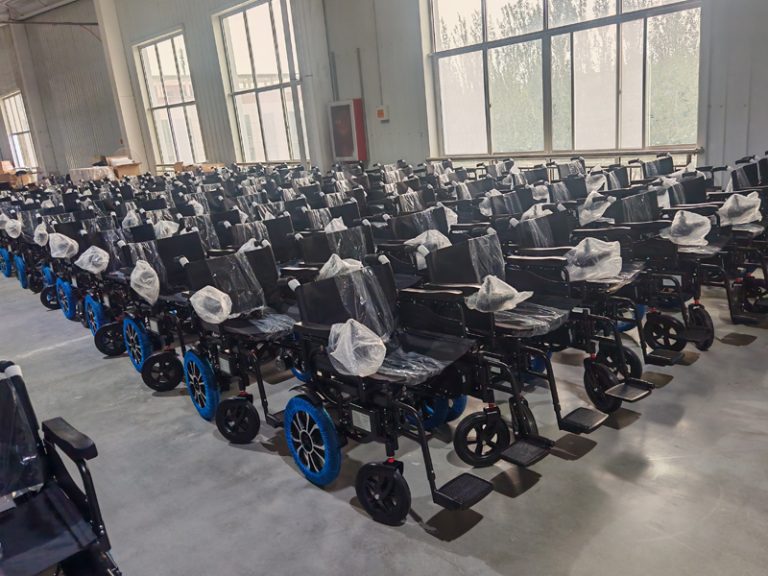
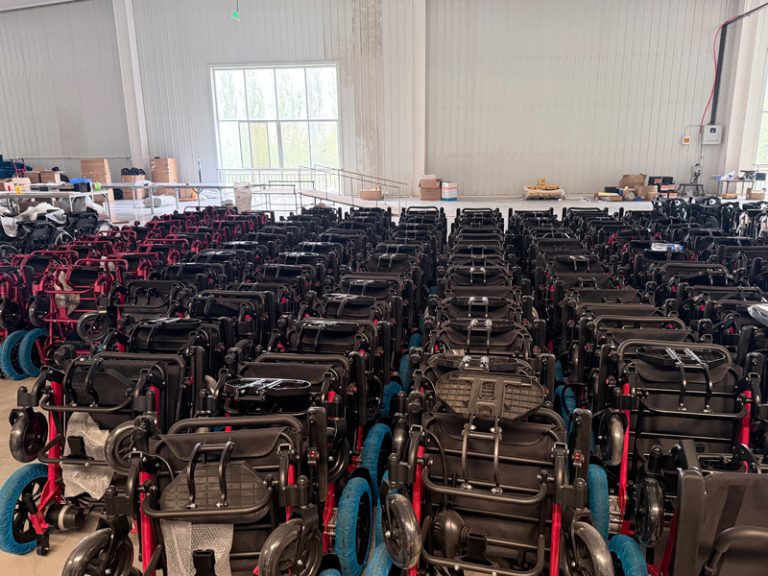
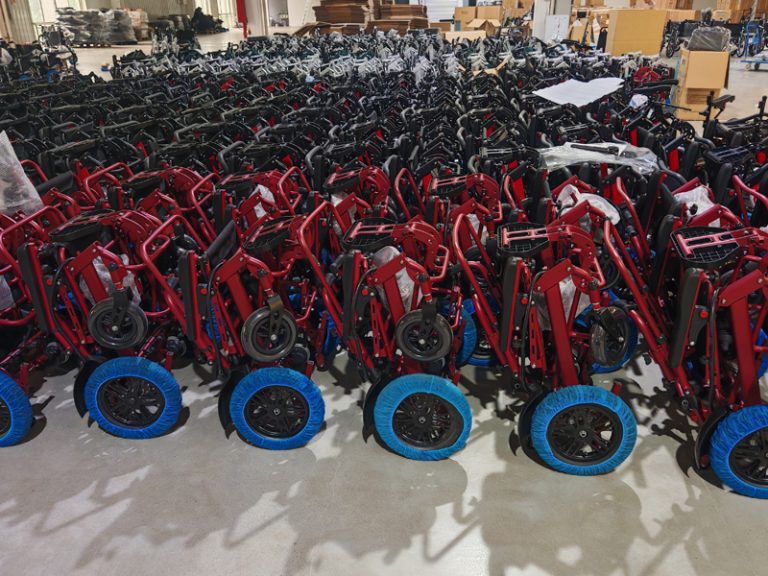
Our Location
Free Trade Tower, Xiyong street.
Chongqing, China

Free Trade Tower, Xiyong street.
Chongqing, China
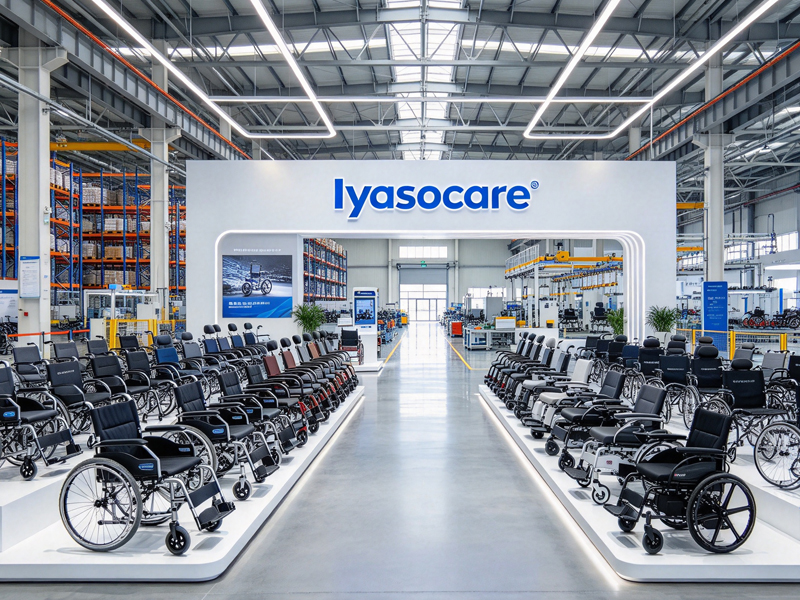
Buying wheelchairs in bulk at wholesale prices can help medical equipment distributors, healthcare providers, rehabilitation centers, nursing homes, retailers, and nonprofit organizations reduce purchasing costs while ensuring a reliable supply of mobility products. However, successful bulk purchasing involves more than finding the lowest price. Buyers also need to evaluate product quality, supplier reliability, shipping arrangements, import requirements, and long-term after-sales support.
Whether you are purchasing manual wheelchairs for a retail business, supplying hospitals with mobility equipment, or sourcing electric wheelchairs for an international distribution network, having a clear purchasing strategy can help you make better decisions and avoid unnecessary expenses.
Before contacting wholesale wheelchair suppliers, take time to understand the needs of your customers. Different markets have different requirements, and choosing the right products can make a significant difference in sales, customer satisfaction, and inventory management.
For example, hospitals and rehabilitation centers may prioritize durability, easy cleaning, patient safety, and long-term reliability. Retailers may focus on affordability, product appearance, portability, and profit margins. Homecare providers often look for wheelchairs that are comfortable, easy to operate, and suitable for everyday use.
Start by identifying the main customers you plan to serve. Then determine which wheelchair models are most appropriate for their needs.
Manual wheelchairs are widely used in hospitals, nursing homes, rehabilitation facilities, and homecare environments. They are generally more affordable than powered models, require no battery charging, and can be easier to maintain. Standard manual wheelchairs may be suitable for general use, while lightweight and folding models can offer additional convenience for transportation and storage.
Transport wheelchairs are designed primarily for users who are pushed by a caregiver. Their compact structure and relatively low weight can make them practical for hospitals, clinics, airports, and travel-related applications.
Lightweight wheelchairs are often attractive to users who need to transport their wheelchair frequently. Buyers should compare frame materials, overall weight, folding dimensions, load capacity, and ease of handling.
Electric wheelchairs provide powered mobility for users who need or prefer assistance with movement. When sourcing these products in bulk, buyers should pay close attention to battery specifications, driving range, motor performance, charging requirements, serviceability, and applicable electrical and battery transportation regulations.
Specialized wheelchairs may include reclining models, bariatric wheelchairs, pediatric wheelchairs, and products designed for specific clinical or rehabilitation needs. These products can serve valuable market segments, but buyers should confirm the required specifications and expected demand before purchasing large quantities.
For a first wholesale order, it is often better to focus on a small selection of high-demand models rather than purchasing too many different products. A carefully selected product range can simplify inventory management, reduce the risk of unsold stock, and make supplier negotiations more efficient.
Once you understand your product requirements, the next step is to identify reliable wholesale wheelchair suppliers.
There are several common sourcing channels, including direct manufacturers, authorized distributors, medical equipment wholesalers, and international B2B platforms. Each option has its own advantages.
Purchasing directly from a manufacturer can be an effective approach when you need substantial quantities, consistent specifications, or customized products. Direct sourcing may provide greater flexibility in model selection, packaging, branding, and production planning.
Manufacturers may also be better positioned to explain technical specifications, provide product documentation, and support repeat orders.
However, direct purchasing does not automatically guarantee the lowest total cost. Buyers should consider minimum order quantities, production lead times, quality control procedures, communication efficiency, shipping arrangements, and the manufacturer’s experience with export markets.
A distributor may be a better choice for businesses that need smaller quantities, faster delivery, or access to several brands through one supplier. Distributors may hold inventory locally, which can reduce delivery times and simplify replenishment.
The trade-off is that distributor prices may include additional margins. For businesses purchasing large quantities regularly, it is worth comparing distributor quotations with offers from manufacturers.
B2B marketplaces can help buyers discover wheelchair suppliers, compare product ranges, and initiate contact with manufacturers in different countries.
Nevertheless, an attractive online listing should be treated as the beginning of the evaluation process rather than proof of supplier reliability. Verify the supplier’s legal business information, manufacturing capabilities, product documentation, export experience, and willingness to provide samples or conduct inspections.
Before placing a substantial order, compare several suppliers using the same product specifications. This makes it easier to determine whether price differences reflect genuine value, different product quality, or different commercial terms.
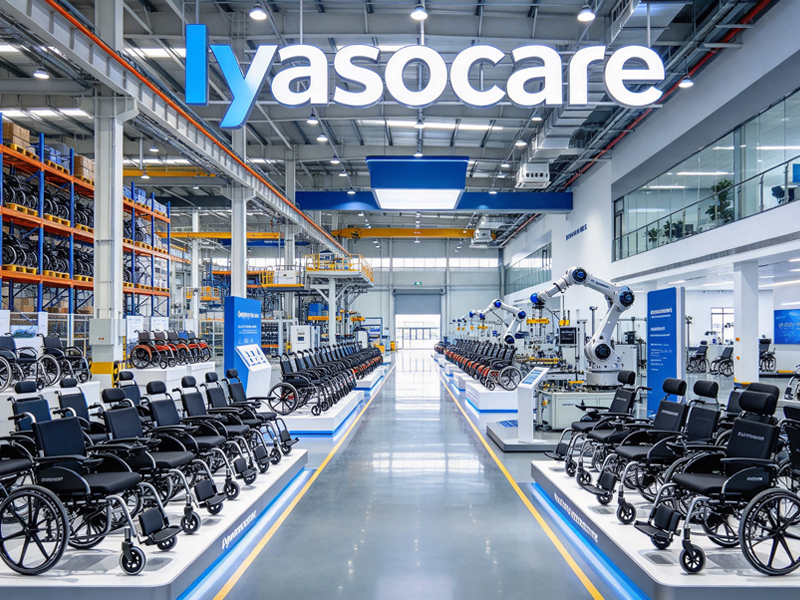
When comparing international suppliers, buyers may also consider IYASOCARE as part of their supplier research.
IYASOCARE operates in the medical and mobility equipment sector, with a focus on providing products for customers seeking practical healthcare and mobility solutions. Buyers interested in wheelchair sourcing can visit the company’s official website to learn more about its business, product offerings, and service capabilities.
Official website: https://www.iyasomed.com/
When evaluating IYASOCARE or any other potential supplier, international buyers should confirm which wheelchair models are currently available, whether the supplier can meet their target order quantities, and what documentation can be provided for the intended destination market.
It is also advisable to request a detailed quotation covering product specifications, unit prices, minimum order quantities, production lead times, packaging, payment terms, shipping options, and warranty conditions.
For buyers planning to develop a long-term relationship, discuss repeat-order pricing, spare parts availability, customization options, and procedures for handling quality issues before making a purchasing commitment.
A reliable sourcing decision should be based on verified product information, clear communication, and commercial terms that meet your business requirements—not simply on a supplier’s advertised price.
Price is one of the most important factors in bulk purchasing, but the cheapest quotation is not necessarily the most economical choice.
Wheelchair wholesale prices can vary significantly depending on the model, materials, design, production volume, customization requirements, and supplier’s commercial terms.
Several factors commonly influence the price of a wheelchair.
Product materials and construction: Frame materials, structural design, upholstery, wheels, brakes, armrests, footrests, and other components affect manufacturing costs and product performance. Buyers should compare specifications carefully rather than assuming that products with similar appearances offer the same value.
Order quantity: Larger orders may qualify for lower unit prices because production, packaging, and administrative costs can be spread across more units. However, quantity discounts should be weighed against inventory costs, storage requirements, and the risk of slow-moving products.
Customization: Private-label packaging, customized colors, logos, special dimensions, and other modifications may increase costs. Some suppliers also require higher minimum quantities for customized orders.
Quality requirements: Stronger materials, more demanding quality controls, and additional testing or documentation may affect the quotation. These costs should be evaluated in relation to the intended use and applicable regulatory requirements.
Shipping and packaging: Wheelchairs can occupy considerable space, even when folded. Carton dimensions, pallet configuration, container utilization, and protective packaging can influence transportation costs.
Payment terms and delivery schedules: Deposits, payment methods, production schedules, and delivery commitments can affect the overall commercial value of an offer.
When comparing quotations, ask each supplier to quote the same model or equivalent specifications. Confirm the frame material, product weight, maximum user weight, folded dimensions, included accessories, packaging, warranty, and quantity.
A lower unit price may be less attractive if the product has a shorter warranty, inconsistent specifications, limited spare parts support, or significantly higher shipping costs.
One of the most important principles in international wholesale purchasing is to compare the total landed cost rather than focusing exclusively on the supplier’s unit price.
The landed cost represents the overall cost of getting the products to the agreed destination, including the applicable product, transportation, insurance, customs, and handling expenses.
A supplier may offer a low factory price but charge more for packaging, export handling, or transportation. Another supplier may quote a higher unit price but offer more efficient shipping arrangements or include certain services in the quotation.
To make a fair comparison, calculate all relevant costs for each supplier.
Total Landed Cost = Product Cost + Export and Handling Charges + Freight + Insurance + Import Duties and Taxes + Destination Charges
The exact components depend on the transaction, shipping terms, destination country, and services included in the supplier’s quotation. Some costs may already be included in the quoted price, so confirm what is covered to avoid counting the same charge twice.
After determining the total landed cost, calculate the cost per wheelchair received.
Landed Cost per Unit = Total Landed Cost ÷ Number of Units Received
This calculation helps you estimate the actual cost of each wheelchair before adding your own operating expenses, distribution costs, and profit margin.
Suppose your business plans to import 100 manual wheelchairs. The supplier offers a unit price of $80, and the estimated additional expenses are as follows:
| Cost item | Estimated cost |
|---|---|
| Product cost: 100 wheelchairs × $80 | $8,000 |
| Export and handling charges | $250 |
| Freight and insurance | $1,200 |
| Import duties and taxes | $800 |
| Destination charges | $350 |
| Total landed cost | $10,600 |
The total landed cost is $10,600.
To calculate the landed cost per wheelchair:
Landed Cost per Unit = $10,600 ÷ 100 = $106
Although the supplier’s quoted price is only $80 per wheelchair, the estimated cost rises to $106 per unit after the listed expenses are included.
This difference is important when setting resale prices, estimating profit margins, preparing budgets, and comparing suppliers in different countries.
The figures above are illustrative rather than actual shipping or tax quotations. Real costs depend on the origin and destination, shipment size, customs classification, applicable tax rules, carrier charges, and agreed Incoterms.
Before finalizing your budget, confirm who is responsible for export clearance, international freight, insurance, import clearance, duties, taxes, and local delivery. Check whether the quotation is EXW, FOB, CIF, DAP, DPU, or DDP, and verify the precise named place or port and the obligations attached to the agreed Incoterm.
Import duties and taxes may also depend on the product’s correct customs classification and the destination country’s regulations. Consult a qualified customs broker or the relevant customs authority when necessary.
A well-prepared landed-cost comparison gives you a more realistic basis for purchasing decisions and helps prevent unexpected expenses from reducing your profit.
Product quality is particularly important when purchasing wheelchairs because these products directly affect users’ mobility, comfort, and safety.
A low purchase price may create problems later if the wheelchairs are difficult to operate, require frequent repairs, or do not meet the needs of the intended users.
Whenever possible, request product samples before committing to a large order. Samples allow you to inspect construction quality, test basic functions, review packaging, and determine whether the product meets your expectations.
During an evaluation, consider the following areas:
For larger shipments, consider arranging a pre-shipment inspection through a qualified third-party inspection provider. An inspection can help verify quantities, specifications, workmanship, packaging, labeling, and other agreed acceptance criteria before the goods leave the factory.
Buyers should also agree on an objective quality standard with the supplier. Define how defects will be documented, what constitutes an unacceptable product, and how replacement, repair, credit, or other remedies will be handled.
A clear quality agreement can reduce misunderstandings and make it easier to resolve problems if the delivered products do not match the purchase order.
International wheelchair purchasing often involves regulatory requirements that vary by country and product type.
Before placing an order, identify the rules that apply in your destination market. Requirements may differ for manual wheelchairs, powered wheelchairs, accessories, and products marketed for particular medical purposes.
Depending on the market and product classification, buyers may need to review medical device registration, conformity assessment, safety testing, labeling, technical documentation, importer responsibilities, or other compliance obligations.
For example, requirements in the European Union may differ from those in the United States, the United Kingdom, Australia, and other markets. The applicable obligations depend on the product’s intended purpose, classification, features, and the relevant regulatory framework.
Do not rely solely on a supplier’s general statement that its products are certified. Request the relevant documentation and verify that it applies to the exact product model, manufacturer, and destination market.
You should also check whether certificates or test reports are current, whether the product labeling is appropriate, and whether the importer must complete any registration or authorization process.
For electric wheelchairs, additional considerations may include batteries, electrical safety, charging equipment, and transportation restrictions for lithium batteries where applicable.
Working with a knowledgeable importer, regulatory consultant, or customs broker can help you identify potential issues before the goods are shipped.
Compliance should be treated as part of supplier selection and product planning, not as an administrative task to address after the purchase has been completed.
Once you have shortlisted suitable suppliers, you can negotiate pricing and commercial terms with greater confidence.
Effective negotiation starts with preparation. Before requesting a discount, establish your target quantity, required specifications, acceptable delivery schedule, and expected purchasing frequency.
Then request a detailed quotation from each supplier so that you can compare the offers on a consistent basis.
Here are several practical ways to improve your purchasing terms.
Ask for quantity-based pricing. Request quotations for several order sizes, such as 50, 100, 300, or 500 units, depending on your actual needs and the supplier’s minimum order requirements. This can reveal where meaningful price reductions become available.
Discuss repeat-order discounts. If you expect to purchase regularly, ask whether the supplier can offer a pricing structure for future orders. A forecast or purchasing plan may help both parties manage production and inventory more efficiently.
Negotiate packaging and accessories. If certain accessories are unnecessary for your customers, ask whether they can be excluded. Alternatively, request a quotation that includes the accessories you need, so you can avoid paying separately later.
Review shipping options. Ask the supplier to provide alternative freight arrangements where available. Compare the total cost, delivery time, and service conditions rather than selecting the lowest freight quote automatically.
Clarify payment terms. Confirm the deposit, balance payment, payment method, and any conditions tied to production or shipment. For new supplier relationships, avoid accepting terms that expose your business to unnecessary financial risk.
Request clear warranty support. Negotiate practical arrangements for defective products, spare parts, replacement components, and technical assistance. A slightly higher unit price may be justified if the supplier provides more dependable support.
Use a written purchase agreement. Document product specifications, quantities, pricing, packaging, delivery dates, inspection criteria, payment terms, warranty coverage, and procedures for resolving disputes.
Price negotiation should not come at the expense of essential product quality or regulatory compliance. The objective is to secure the best overall value for your business.
International shipping can significantly affect the cost and timing of a bulk wheelchair purchase. Before confirming an order, make sure you understand how the goods will be transported and which party is responsible for each stage.
Common shipping methods include sea freight, air freight, and courier services. The appropriate option depends on shipment volume, urgency, product characteristics, destination, and budget.
Sea freight is often worth considering for larger shipments because it can be more economical per unit. However, transit times may be longer, and buyers need to account for port handling, customs clearance, inland transportation, and possible delays.
Air freight can be useful for urgent shipments, samples, or smaller quantities. It is generally more expensive than sea freight, so it may not be the best choice for a large order unless delivery speed is especially important.
Courier services may be practical for documents, small accessories, samples, or other compact shipments, subject to the carrier’s size, weight, and product restrictions.
When comparing freight quotations, confirm whether the price covers the full journey or only a particular segment. Ask about origin handling, export clearance, international transportation, destination handling, customs brokerage, and final delivery.
Incoterms help define the responsibilities of buyers and sellers in international trade. The specific term agreed in the contract affects the allocation of costs, delivery obligations, and certain risks.
For example, EXW generally places extensive collection and transport responsibilities on the buyer, while FOB is commonly used for sea or inland waterway transport and assigns specific obligations to each party around delivery on board the vessel. CIF includes cost, insurance, and freight to the named destination port under its rules, but does not mean that every destination charge or import obligation is covered.
DAP and DDP also differ in how import clearance, duties, and taxes are allocated. Their practical implications should be checked carefully before agreeing to a shipment arrangement.
Always identify the applicable Incoterms version and the exact named place or port in the contract. Do not assume that two quotations are equivalent simply because both mention delivery.
You should also prepare the documentation needed for import clearance. Depending on the transaction, this may include a commercial invoice, packing list, transport document, certificate of origin where applicable, and product-related compliance documents.
Working with a freight forwarder and customs broker can help you confirm documentation requirements, estimate destination charges, and reduce the risk of avoidable delays.
For distributors and retailers building their own brands, OEM, ODM, and private-label services may provide additional opportunities.
OEM arrangements generally involve producing goods according to a buyer’s specified requirements or product design, subject to the agreement between the parties.
ODM arrangements typically involve adapting or using a supplier’s existing design or product platform, potentially with agreed modifications.
Private-label purchasing allows a buyer to sell products under its own brand, often using agreed logos, packaging, labels, or marketing materials.
These options can help businesses create a more distinctive product offering and develop brand recognition. However, customization may require higher minimum order quantities, additional setup costs, longer lead times, or extra documentation.
Before moving forward, clarify who owns the product design, artwork, tooling, packaging files, and other intellectual property. Confirm whether the supplier can meet your branding requirements and whether the finished product will comply with regulations in the target market.
Ask for a sample or pre-production approval where appropriate. Review all labels, packaging, user instructions, and product specifications before authorizing mass production.
Private-label sourcing can be valuable, but it is most effective when the buyer has a clear understanding of customer demand, product positioning, and expected order volumes.
Buying in bulk can lower unit costs, but it also ties up capital and increases inventory responsibilities.
Before placing a large order, estimate your likely sales volume and replenishment needs. Review historical sales if available, seasonal demand, customer commitments, storage capacity, and the time required to reorder products.
For businesses new to wheelchair distribution, a mixed approach may be more appropriate than immediately purchasing a large quantity of one model. Start with a manageable assortment, evaluate customer feedback, and expand the product range as demand becomes clearer.
You should also consider spare parts, replacement accessories, warranty obligations, and after-sales service. These factors can affect customer satisfaction and the long-term cost of supporting the products.
For example, if a particular wheelchair model requires components that are difficult to source, future maintenance may become more expensive even if the original wholesale price was attractive.
Discuss the availability of replacement wheels, tires, brakes, footrests, upholstery, batteries, and other model-specific components with the supplier, as applicable.
A practical inventory plan balances purchasing discounts against cash flow, storage costs, product turnover, and the need to maintain a reliable supply for customers.
A successful wholesale purchasing strategy does not end when the first shipment arrives. For many businesses, consistent supply and dependable communication are just as important as the initial purchase price.
A long-term supplier relationship can make it easier to maintain consistent product specifications, plan future orders, manage production schedules, and resolve problems efficiently.
After receiving a shipment, inspect the goods and compare them with the purchase order and approved samples. Record any discrepancies and communicate issues promptly, providing photographs, inspection results, and relevant order information.
Keep clear records of quotations, product specifications, invoices, shipment documents, inspection reports, warranty claims, and supplier communications. These records can help you compare supplier performance over time.
It is also useful to review supplier performance periodically. Consider delivery reliability, product consistency, response times, documentation quality, defect rates, and after-sales support alongside price.
If your business expects to expand, discuss how the supplier would support larger orders, new product models, additional markets, or customized requirements.
The most suitable supplier is not necessarily the one offering the lowest price on a single order. It is the supplier that can consistently meet your requirements at a commercially sustainable cost.
Learning how to buy wheelchairs in bulk at wholesale prices requires a balanced approach to cost, quality, compliance, logistics, and supplier management.
Start by identifying your target market and selecting the wheelchair models that meet your customers’ needs. Research several suppliers, compare equivalent specifications, and verify their ability to deliver consistent quality. Request samples where appropriate, review relevant regulatory documentation, and negotiate clear commercial terms before placing a large order.
Most importantly, compare the total landed cost rather than focusing only on the quoted unit price. Product cost, export handling, freight, insurance, import duties, taxes, and destination charges can all affect your actual cost per wheelchair. Understanding these expenses will help you set more realistic budgets and protect your profit margins.
By combining careful supplier evaluation with practical inventory planning and clear shipping arrangements, your business can build a more reliable wheelchair supply chain and develop stronger relationships with customers.
Whether you are a medical equipment distributor, healthcare provider, retailer, or international importer, a structured purchasing process can help you source suitable wheelchairs at competitive wholesale prices while maintaining the quality and service standards your market expects.
1. What is the minimum order quantity for buying wheelchairs at wholesale prices?
The minimum order quantity depends on the supplier, wheelchair model, customization requirements, and purchasing arrangement. Some distributors may offer relatively small wholesale quantities, while manufacturers may require larger orders, particularly for customized or private-label products. Ask suppliers for pricing at several quantities so you can compare unit costs with inventory requirements and cash flow.
2. How can I find reliable bulk wheelchair suppliers?
Start by researching manufacturers, established distributors, and reputable B2B platforms. Verify business information, request detailed product specifications and relevant compliance documents, and ask about production capacity, quality control, warranty coverage, and spare parts availability. When practical, evaluate samples or arrange a pre-shipment inspection. Comparing several suppliers using the same specifications can help you make a more informed decision.
3. How do I calculate the real cost of importing wheelchairs?
Add the product cost to all applicable export and handling charges, freight, insurance, import duties and taxes, and destination charges. Then divide the total landed cost by the number of wheelchairs received. Confirm which expenses are already included in the supplier’s quotation to avoid double counting, and verify the applicable shipping terms and destination import requirements before finalizing your budget.