Our Location
Free Trade Tower, Xiyong street.
Chongqing, China

Free Trade Tower, Xiyong street.
Chongqing, China
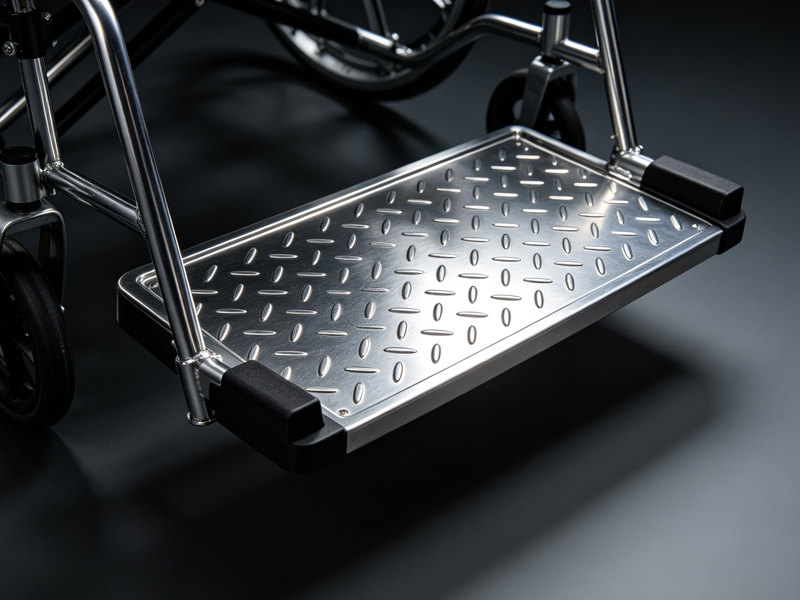
Choosing the right wheelchair involves much more than selecting a comfortable seat or finding a frame that suits the user’s lifestyle. Every component plays an important role in the overall experience, including parts that are sometimes overlooked. One such component is the footplate.
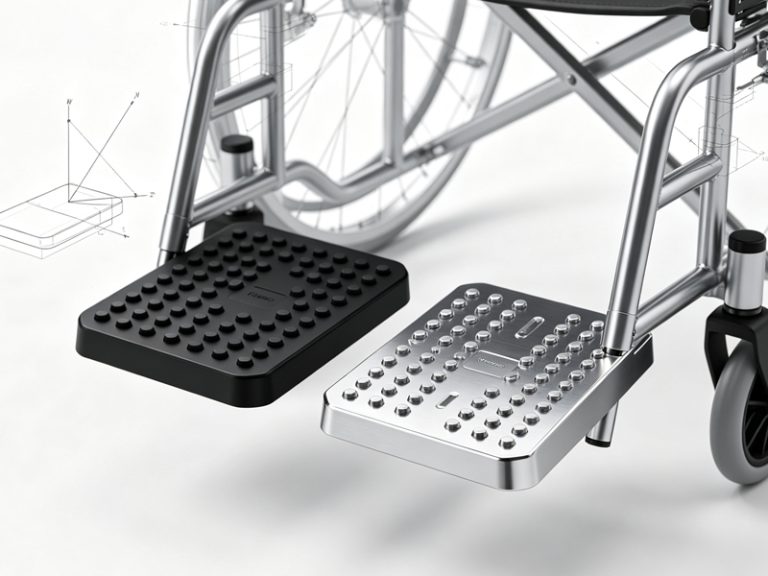
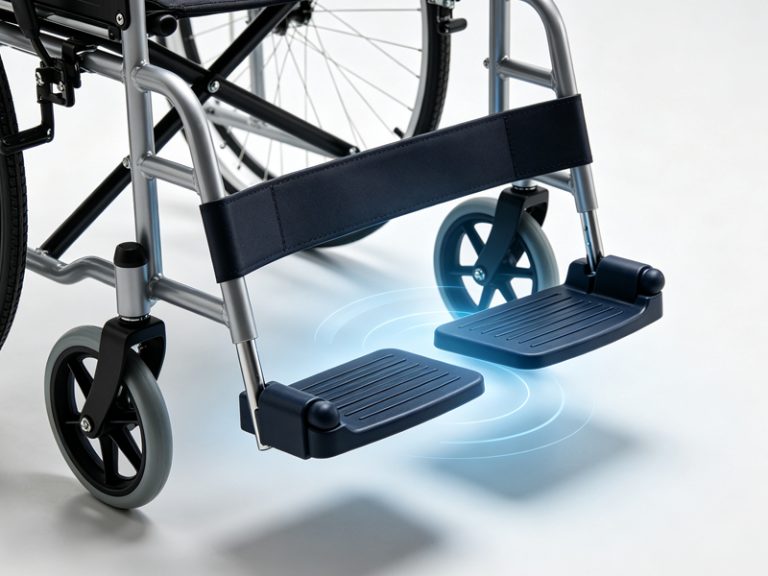
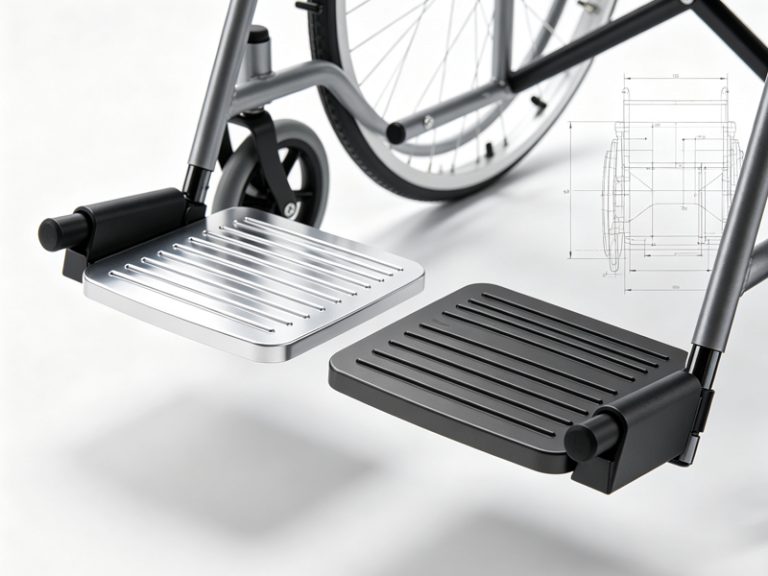
Although wheelchair footplates may appear to be simple accessories, they have a direct impact on lower-limb support, daily comfort, user safety, and the overall functionality of a wheelchair. Among the different materials used in wheelchair footplate manufacturing, steel remains a popular choice because of its strength, durability, and ability to withstand regular use.
So, what are the advantages of steel footplates wheelchairs? Are they really better than aluminum or plastic alternatives? And what should buyers consider before choosing a wheelchair equipped with steel footplates?
In this guide, we will explore the key benefits of steel wheelchair footplates, explain how they contribute to everyday mobility, compare them with other commonly used materials, and discuss what makes a well-designed footplate worth considering.
Whether you are a wheelchair user, caregiver, healthcare professional, or medical equipment distributor, understanding these details can help you make a more informed purchasing decision.
Before looking at the advantages of steel, it is helpful to understand what wheelchair footplates actually do.
A wheelchair footplate is the platform attached to the lower front section of a wheelchair. It provides a surface where users can rest their feet while sitting. Depending on the wheelchair design, footplates may be individual platforms or part of a combined footrest system.
They are commonly found on manual wheelchairs, transport wheelchairs, and many types of powered mobility equipment.
At first glance, a footplate might seem like a minor structural component. However, it serves several important purposes.
First, it provides a stable resting position for the feet. Without appropriate foot support, a user’s feet may hang freely, slide backward, or come into contact with the floor. This can become uncomfortable, particularly during extended periods of sitting.
Second, footplates help maintain a more consistent sitting position. Properly positioned feet can contribute to better lower-body alignment and reduce unnecessary movement during wheelchair use.
Third, they provide a protective platform between the user’s feet and potential obstacles. Depending on the design and construction, a sturdy footplate can also help protect against accidental impacts.
The material used to manufacture this component matters because footplates are exposed to repeated loading, movement, moisture, cleaning, and occasional impacts.
This is where steel offers several practical advantages.
One of the biggest advantages of steel footplates wheelchairs is their impressive mechanical strength.
Steel is widely used in structural applications because it can withstand substantial forces without easily bending or losing its shape. This characteristic makes it a practical material for wheelchair components that experience repeated pressure during everyday use.
When a wheelchair user places their feet on the footplates, the platforms must support the weight of the feet and tolerate additional forces created by movement, repositioning, and transfers.
Although footplates are not designed to support a person’s entire body weight, they still need sufficient structural strength to handle normal use reliably.
Steel provides a strong foundation for this purpose.
Compared with some lightweight plastic alternatives, a properly manufactured steel footplate is generally more resistant to bending under repeated loads. It can also offer greater resistance to deformation when exposed to accidental knocks or pressure.
This is particularly useful in environments where wheelchairs are used frequently, such as:
In these settings, equipment may be used by multiple people throughout the day. Components that maintain their structural integrity over time can help reduce maintenance interruptions and improve equipment reliability.
For wheelchair manufacturers, steel also provides flexibility in designing footplates with different thicknesses, shapes, mounting points, and reinforcement structures.
Of course, actual strength depends on more than the material itself. Steel grade, thickness, welding quality, surface treatment, and overall engineering design all influence the final performance.
Nevertheless, steel remains a dependable option when structural strength is a priority.
Durability is another important reason why steel footplates are commonly considered for wheelchair applications.
Wheelchairs are often used every day, sometimes for many hours at a time. Their components must withstand repeated movement, environmental exposure, and routine handling without becoming unreliable.
Footplates experience several types of everyday wear.
Users may place their shoes on them repeatedly, move their feet to adjust their sitting position, or accidentally hit them against door frames, furniture, and other obstacles. Caregivers may also fold, lift, clean, or reposition footrests during daily care activities.
Over time, these repeated interactions can affect the condition of a footplate.
Steel is valued for its ability to withstand many of these mechanical stresses. When manufactured to an appropriate specification, it can maintain its shape and structural performance despite regular use.
This is especially relevant for institutional buyers.
A hospital or rehabilitation facility may need to manage dozens or hundreds of wheelchairs. Replacing damaged components too frequently can increase operating costs and create additional work for maintenance staff.
A durable steel footplate may help reduce the frequency of replacement caused by ordinary mechanical wear.
However, durability should not be confused with being completely maintenance-free. Steel can corrode if its protective coating is damaged and moisture is allowed to remain on the surface.
For this reason, manufacturers often use powder coating, plating, painting, or other protective finishes to improve corrosion resistance.
When steel footplates are properly designed, finished, and maintained, they can provide dependable service over an extended period.
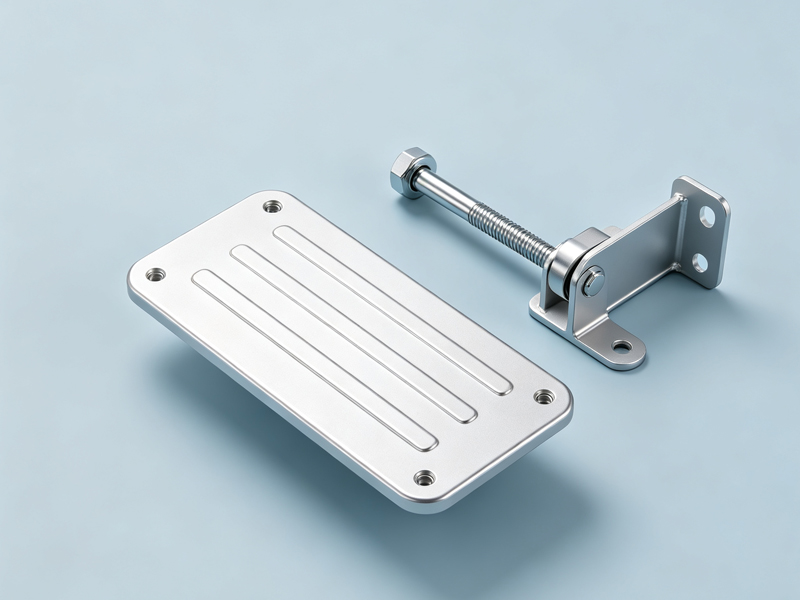
Wheelchair components are regularly exposed to unexpected situations.
A wheelchair may pass through a narrow doorway, move over an uneven surface, or come into contact with furniture. During transportation, footrests can also experience pressure if the wheelchair is not positioned or secured correctly.
Footplates are particularly exposed because they extend toward the front of the wheelchair.
A material that bends easily may become damaged after repeated impacts. Once a footplate is deformed, it may no longer provide a comfortable or stable surface for the user’s feet.
Steel offers a useful advantage in this area.
Its strength and rigidity can help footplates resist everyday impacts and reduce the likelihood of permanent deformation under normal operating conditions.
For example, when a wheelchair is used in a busy care facility, the footplates may occasionally come into contact with beds, walls, or equipment. A well-designed steel platform can tolerate many minor impacts without immediately losing its original shape.
This does not mean steel footplates are indestructible.
A severe collision, excessive loading, poor installation, or repeated misuse can still cause damage. A bent footplate should never be ignored simply because it is made of steel.
Nevertheless, steel provides a level of mechanical robustness that makes it attractive for wheelchairs expected to handle demanding daily use.
Comfort is one of the most important considerations when selecting a wheelchair.
For people who spend extended periods sitting, proper foot positioning can make a noticeable difference to their overall experience.
A wheelchair footplate should provide a reasonably stable surface that allows the user to rest their feet without unnecessary movement.
Steel can contribute to this stability because of its rigidity.
Unlike certain flexible materials, a properly constructed steel footplate is less likely to flex noticeably under normal foot pressure. This can help create a consistent support surface.
Stable foot support may be particularly valuable for users who:
It is important to understand that a steel footplate does not automatically improve posture or prevent medical complications.
Foot positioning depends on several factors, including seat height, footrest length, ankle mobility, leg length, footwear, and individual physical needs.
A footplate that is too high or too low may cause discomfort regardless of its material.
For this reason, material selection should always be considered alongside proper wheelchair adjustment.
When the dimensions and positioning are appropriate, a rigid steel footplate can provide a dependable foundation for everyday foot support.
Price is an important consideration for individual buyers and organizations purchasing wheelchairs in larger quantities.
While the initial purchase price matters, it should not be the only factor used to evaluate the value of a wheelchair component.
A cheaper footplate may require replacement sooner if it is not suitable for the intended operating environment. Frequent repairs and component replacements can gradually increase the total cost of ownership.
Steel can offer an attractive balance between manufacturing cost, mechanical performance, and expected service life.
Steel is an established industrial material with widely available manufacturing processes. Depending on the design and production volume, manufacturers can use stamping, cutting, bending, welding, and surface-finishing techniques to produce wheelchair footplates efficiently.
These established processes can make steel a practical option for both standard wheelchair models and larger production runs.
For distributors, healthcare providers, and equipment rental businesses, this can be an important advantage.
Consider a facility that uses wheelchairs throughout the day. If the footplates are frequently damaged, staff may need to arrange repairs, purchase replacement parts, and temporarily remove equipment from service.
A robust steel design may help reduce some of these expenses associated with ordinary wear and accidental damage.
Of course, steel is not automatically the cheapest option. Material prices, finishing requirements, labor costs, product design, and production volume all affect the final price.
The most sensible approach is to compare the total expected ownership cost rather than focusing exclusively on the initial purchase price.
A wheelchair with a slightly higher upfront cost may provide better long-term value if its components remain reliable for longer.
Another advantage of steel is its versatility in manufacturing.
Wheelchair footplates come in various shapes and configurations depending on the intended user and wheelchair model.
Some designs feature a single continuous footplate, while others use two separate platforms. Certain wheelchairs have swing-away footrests, detachable leg rests, or adjustable footplate assemblies.
Steel can be manufactured into different shapes to accommodate these design requirements.
For example, manufacturers can cut and bend steel sheets into specific dimensions, create mounting holes, and incorporate reinforcement features where necessary.
This makes steel suitable for a range of wheelchair configurations, including:
The ability to adapt the material to different production requirements gives manufacturers considerable design flexibility.
However, compatibility is determined by the complete footrest assembly rather than the material alone.
When replacing a footplate, buyers should check the mounting dimensions, bolt positions, attachment method, and wheelchair model. A steel footplate that does not match the original assembly may not install correctly or provide safe support.
For this reason, choosing manufacturer-approved replacement parts is generally the safest approach.
Wheelchair hygiene is particularly important in healthcare environments and shared-use settings.
Footplates regularly come into contact with shoes, dust, dirt, and moisture. In some situations, they may also be exposed to spills or cleaning products.
A smooth, properly finished steel surface can be relatively easy to wipe down.
Unlike some porous or heavily textured materials, a coated steel footplate can provide a surface where ordinary dirt and residue are easier to remove.
This is useful in hospitals, nursing homes, rehabilitation centers, and other facilities where wheelchairs may be shared between users.
Regular cleaning can also help maintain the appearance of the wheelchair and identify potential damage before it becomes more serious.
A simple maintenance routine may include:
One important consideration is corrosion protection.
Steel can rust when exposed to moisture and oxygen, particularly if its protective finish has been damaged. A scratched or chipped coating should therefore be inspected and addressed according to the manufacturer’s maintenance instructions.
It is also important to use cleaning agents that are compatible with the footplate’s surface treatment.
With appropriate care, steel footplates can remain functional and presentable for a long time.
Not every wheelchair operates under the same conditions.
A lightweight wheelchair designed for occasional travel has different requirements from a heavy-duty wheelchair used throughout the day in a demanding care environment.
In more intensive applications, structural reliability becomes especially important.
Steel is frequently considered for wheelchair components that need a robust construction. Its strength allows manufacturers to design footplates that can tolerate repeated mechanical stress when properly engineered.
For heavy-duty wheelchair models, this can be an advantage.
However, buyers should understand that the weight capacity of a wheelchair is determined by the entire structure, including the frame, wheels, axles, seat, fasteners, and footrest assembly.
A steel footplate does not increase the wheelchair’s officially rated weight capacity by itself.
It is equally important to consider the user’s individual needs. Some wheelchair users require additional foot positioning support, while others benefit from adjustable or specialized footrest systems.
In these cases, selecting a suitable complete assembly is more important than choosing a particular material in isolation.
Steel is not the only material used in wheelchair footplate manufacturing.
Aluminum and plastic are also widely used, and each has its own strengths and limitations.
Understanding the differences can help buyers choose a product that matches their mobility needs and operating environment.
| Feature | Steel Footplates | Aluminum Footplates | Plastic Footplates |
|---|---|---|---|
| Strength | Generally high | Good, depending on design | Varies by material and construction |
| Weight | Usually heavier | Usually lighter | Often lightweight |
| Impact resistance | Generally robust | Depends on alloy and thickness | Depends on plastic type and design |
| Corrosion resistance | Requires suitable protection | Generally good | Generally resistant to rust |
| Manufacturing | Established metalworking processes | Established metalworking processes | Molding and other plastic processes |
| Maintenance | Requires coating inspection | Requires routine inspection | Requires inspection for cracks and wear |
| Typical advantage | Strength and durability | Lower weight | Lightweight construction and design flexibility |
Steel is a strong choice for applications where structural robustness and resistance to deformation are important.
Its main disadvantage is weight. A steel footplate may add more weight to the wheelchair than an equivalent aluminum or plastic component.
It also needs appropriate surface protection to reduce the risk of corrosion.
For users and organizations that prioritize durability over minimum component weight, steel can be a practical solution.
Aluminum is popular because it offers a favorable strength-to-weight ratio.
Compared with steel, aluminum components are generally lighter, which can help reduce the overall weight of a wheelchair.
This may be especially useful for users who frequently transport their wheelchair in a vehicle or need a lightweight mobility setup.
However, aluminum is not automatically stronger or more durable than steel. Performance depends on the alloy, thickness, design, and manufacturing quality.
For users who prioritize lightweight equipment, aluminum may be the better option.
Plastic footplates are another practical alternative.
They can be lightweight, relatively inexpensive to manufacture, and shaped into different designs using molding processes.
Certain engineering plastics also offer good resistance to moisture and corrosion.
However, performance varies considerably between plastic materials. Some products may be more vulnerable to cracking, aging, or deformation under particular loading and environmental conditions.
Buyers should evaluate the actual product specifications rather than assuming all plastic footplates have the same performance.
There is no universal winner.
Steel is often suitable when strength, rigidity, and long-term mechanical reliability are important.
Aluminum is worth considering when reducing wheelchair weight is a priority.
Plastic may be appropriate when lightweight construction, corrosion resistance, and manufacturing flexibility are important.
The best choice depends on the wheelchair design, user’s mobility requirements, daily usage conditions, maintenance expectations, and budget.
Although steel offers several advantages, selecting the right footplate requires more than simply checking the material specification.
A good footplate should be designed around the user’s needs and the wheelchair’s overall structure.
Here are several important factors worth considering.
Not all steel footplates are manufactured to the same standard.
Steel grade and thickness influence the component’s strength, stiffness, weight, and resistance to deformation.
A thicker plate is not necessarily better in every situation. Excessive thickness may add unnecessary weight, while insufficient thickness may compromise structural performance.
Manufacturers should select material specifications based on the intended application and relevant testing requirements.
Since steel can rust, surface treatment is an important part of product quality.
Common finishing options include powder coating, painting, and plating.
A suitable protective finish helps reduce exposure to moisture and environmental contaminants while improving the product’s appearance.
Buyers should pay attention to coating consistency, surface defects, and exposed metal around edges or mounting holes.
The footplate should provide sufficient space for the user’s feet without creating unnecessary interference with the surrounding environment.
A platform that is too small may not offer adequate support, while one that is excessively large may make the wheelchair more difficult to maneuver through narrow spaces.
The shape should also be appropriate for the user’s footwear and positioning requirements.
Different users have different leg lengths, sitting positions, and physical requirements.
Adjustable footplates can make it easier to achieve an appropriate footrest height.
Correct adjustment helps support a comfortable sitting position and reduces the risk of feet dragging on the floor.
For users with specific postural or orthopedic needs, a healthcare professional or qualified wheelchair specialist should help determine the appropriate configuration.
A footplate should provide a reasonably secure surface for the user’s shoes.
Some designs include textured surfaces, raised edges, or anti-slip features to help reduce unwanted foot movement.
These details can be particularly useful when a wheelchair is used on uneven surfaces or during frequent repositioning.
However, no anti-slip design eliminates the need for correct foot positioning and appropriate safety precautions.
Many wheelchairs include folding or swing-away footrest assemblies.
These features make it easier for users to transfer into and out of the wheelchair. They can also improve access during storage and transportation.
When purchasing replacement steel footplates, ensure that the design is compatible with the original footrest mechanism.
The footplate should not interfere with folding, locking, or swing-away functions.
Even high-quality steel can produce an unreliable component if manufacturing standards are poor.
Welding quality, edge finishing, dimensional accuracy, mounting-hole placement, and coating consistency all influence the finished product.
For bulk purchases, distributors and healthcare organizations should consider requesting product specifications, quality inspection records, and relevant compliance documentation.
A reliable manufacturer should be able to explain the material used, production process, available dimensions, and applicable product testing.
Steel footplates offer several practical benefits, but they are not necessarily the ideal choice for every user.
For someone who frequently lifts a manual wheelchair into a car, minimizing overall equipment weight may be a major priority. In that situation, aluminum or another lightweight option could be more suitable.
For a wheelchair used mainly in a hospital, care facility, or other demanding environment, structural durability may carry more weight in the purchasing decision.
Individual physical requirements also matter.
Some users may need specialized foot supports, heel loops, calf supports, adjustable leg rests, or positioning accessories. A standard steel footplate may not provide all the features they require.
Users with limited sensation, involuntary leg movements, or difficulty maintaining foot position may also need additional support features.
In such cases, a qualified rehabilitation professional or wheelchair seating specialist can help identify the most appropriate configuration.
It is also worth remembering that a footplate is only one part of the wheelchair’s seating and positioning system.
Seat depth, seat width, cushion selection, back support, footrest height, and overall wheelchair fit should be considered together.
The goal is not simply to choose the strongest material. It is to create a mobility setup that is comfortable, functional, and appropriate for the individual.
The advantages of steel footplates are not limited to wheelchair users. They also matter to manufacturers, wholesalers, and medical equipment distributors.
For manufacturers, steel provides a familiar material with established processing methods. This can support consistent production, different design configurations, and efficient manufacturing workflows.
For distributors, product durability can be an important consideration when selecting wheelchair models for different customer groups.
Healthcare facilities and equipment rental companies often look for products that can withstand repeated use while keeping maintenance requirements manageable.
Steel footplates may meet these expectations when the design and manufacturing quality are appropriate.
There are several points that professional buyers should evaluate before placing an order:
A reliable supplier should be able to provide clear technical information rather than relying entirely on general descriptions such as heavy-duty or high-strength.
This is particularly important for bulk procurement, where product consistency can have a direct impact on maintenance and operating costs.
Even a durable steel footplate benefits from regular maintenance.
Fortunately, the basic care process is relatively straightforward.
Clean the surface regularly. Remove dust, dirt, and other residue using a soft cloth and an appropriate cleaning solution. Follow the wheelchair manufacturer’s disinfection instructions, especially in shared healthcare environments.
Keep the footplate dry. After cleaning or exposure to moisture, dry the surface thoroughly. Pay particular attention to joints, mounting areas, and edges where water may accumulate.
Inspect the protective coating. Look for scratches, peeling paint, chipped powder coating, or visible rust. Damaged finishes should be addressed according to the manufacturer’s recommendations.
Check mounting hardware. Bolts, screws, and attachment points should remain secure. Loose hardware may cause unnecessary movement and affect the stability of the footrest assembly.
Look for deformation. If a footplate becomes bent, cracked around a mounting point, or otherwise damaged, stop using it until it has been assessed and repaired or replaced appropriately.
Avoid excessive loading. Footplates are designed to support the user’s feet, not to serve as standing platforms or lifting steps. Standing on them can create dangerous loads and may damage the wheelchair.
These simple habits can help maintain the performance of steel footplates and support the safe operation of the wheelchair.
Steel footplates may look like a small detail in wheelchair construction, but their contribution to everyday mobility should not be underestimated.
Their main advantages include excellent structural strength, resistance to bending, dependable foot support, durability, manufacturing versatility, and potential long-term cost-effectiveness.
For wheelchairs used frequently in hospitals, rehabilitation facilities, nursing homes, and other demanding environments, these characteristics can make steel a worthwhile material choice.
At the same time, steel is not automatically the best solution for everyone. Its additional weight and need for corrosion protection may make aluminum or plastic more appropriate in certain situations.
The most important thing is to choose a footplate that matches the wheelchair’s design, the user’s physical requirements, and the conditions in which the equipment will be used.
A well-designed steel footplate, manufactured with suitable materials and protective finishing, can be a reliable part of a wheelchair that supports comfortable and dependable daily mobility.
Ultimately, good wheelchair design is about getting the details right. Even a component as simple as a footplate can make a meaningful difference to the quality, usability, and long-term performance of mobility equipment.
1. Are steel wheelchair footplates better than aluminum footplates?
It depends on the user’s priorities.
Steel footplates generally offer high structural strength and good resistance to deformation, making them suitable for applications where durability is important.
Aluminum footplates are usually lighter, which can be beneficial for wheelchair users who frequently transport or lift their equipment.
If strength and mechanical robustness are the main priorities, steel may be a suitable choice. If reducing overall wheelchair weight is more important, aluminum may be preferable.
The final decision should also consider material thickness, manufacturing quality, wheelchair compatibility, and the user’s individual needs.
2. Do steel wheelchair footplates rust easily?
Steel can rust when exposed to moisture and oxygen, particularly when its protective coating is damaged.
However, many wheelchair footplates use protective finishes such as powder coating, paint, or plating to reduce the risk of corrosion.
Regular cleaning, proper drying, and routine inspection can help maintain the surface finish.
If scratches, chipped coating, or rust spots appear, they should be addressed according to the manufacturer’s maintenance instructions.
A properly finished and maintained steel footplate can provide reliable service for an extended period.
3. How do I choose the right steel footplate for a wheelchair?
Start by checking the wheelchair model and the specifications of its existing footrest assembly.
Important considerations include:
You should also consider the user’s leg length, footwear, mobility requirements, and daily wheelchair usage.
For users with specific positioning or postural needs, consult a qualified wheelchair specialist or healthcare professional before selecting a replacement.
Choosing a properly fitted, well-manufactured steel footplate can help ensure reliable foot support, comfortable daily use, and long-term wheelchair performance.