Our Location
Free Trade Tower, Xiyong street.
Chongqing, China

Free Trade Tower, Xiyong street.
Chongqing, China
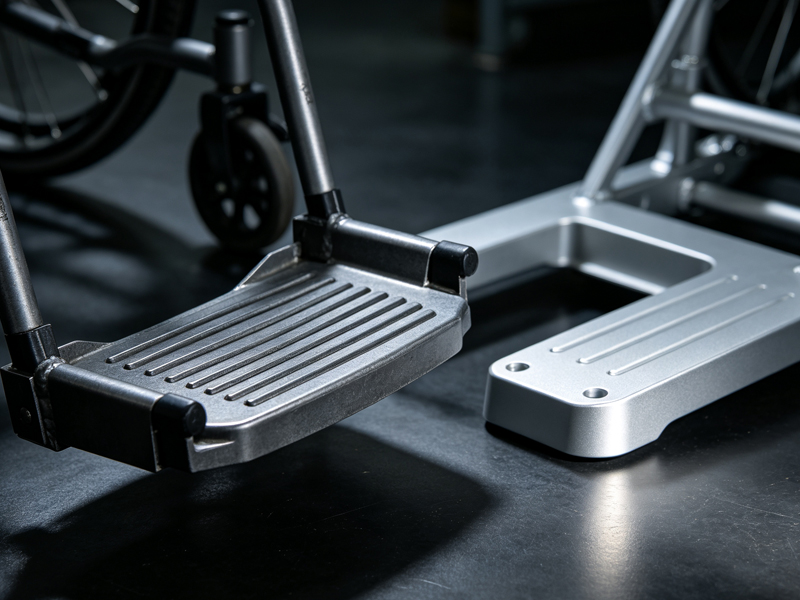
Choosing the right wheelchair footplates might seem like a small decision, but it can make a noticeable difference in everyday comfort, safety, and long-term usability. For wheelchair users, caregivers, and equipment buyers, footplates are more than simple accessories. They support the feet and lower legs, help maintain a comfortable sitting position, and contribute to overall wheelchair stability.
When comparing different options, two materials frequently come up: steel and aluminum. Both are widely used in wheelchair components, and each offers distinct advantages. Steel is known for its strength and durability, while aluminum stands out for its lighter weight and resistance to corrosion. However, the better choice depends on how the wheelchair is used, the user’s physical needs, and the environment in which the equipment operates.
So, steel vs aluminum wheelchair footplates: which is better?
The short answer is that aluminum is often the more practical choice for everyday mobility, particularly when reducing wheelchair weight is a priority. Steel, on the other hand, remains a dependable option when strength, affordability, and resistance to demanding use are important considerations.
Let’s take a closer look at how these two materials compare and what really matters when choosing wheelchair footplates.
Before comparing performance, it helps to understand what separates these two materials.
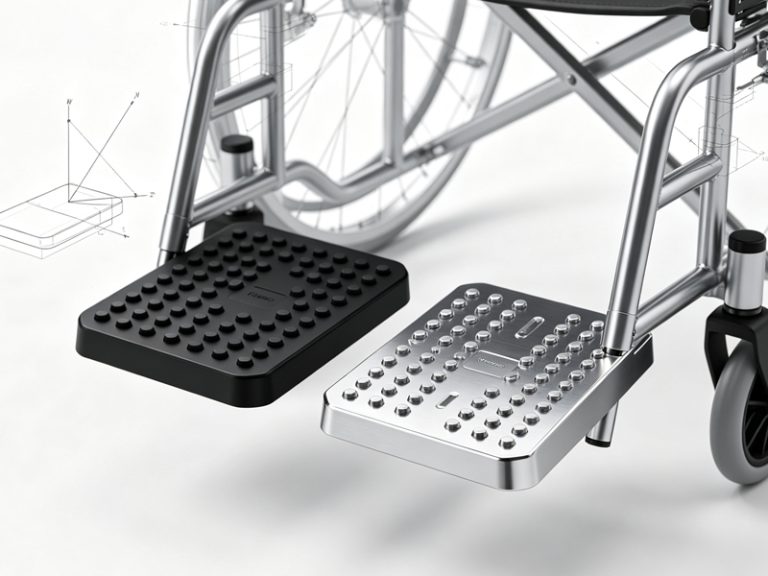
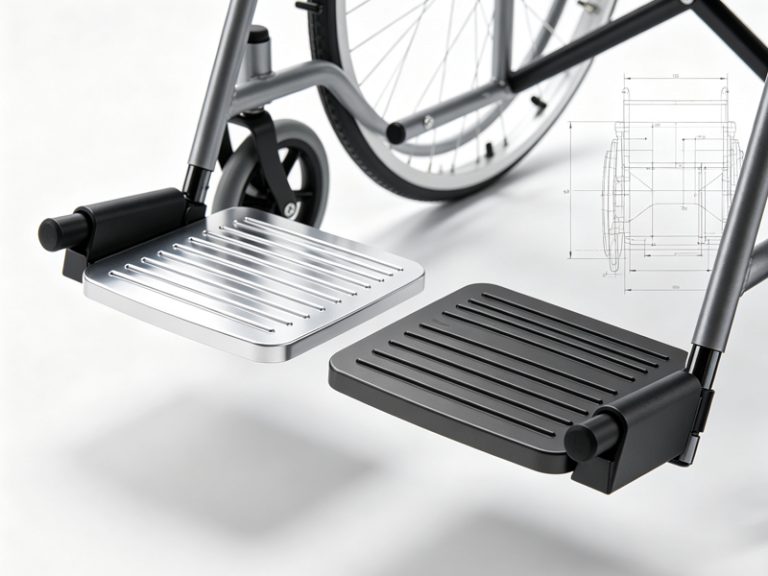
Steel wheelchair footplates are typically made from steel sheet metal or formed steel components. Depending on the design, they may feature a protective coating, painted finish, or plated surface to help prevent corrosion. Steel has a long history in wheelchair manufacturing because it provides excellent structural strength and can withstand repeated everyday use.
Aluminum wheelchair footplates are manufactured using aluminum alloys. These alloys offer a favorable balance of strength and low weight, making them popular in modern wheelchair designs. Aluminum components are also naturally more resistant to corrosion than untreated carbon steel because they form a protective oxide layer when exposed to air.
Although both materials can perform well, their physical properties influence how they behave in real-world conditions.
| Comparison Factor | Steel Footplates | Aluminum Footplates |
|---|---|---|
| Weight | Generally heavier | Generally lighter |
| Strength | High strength and stiffness | Good strength, depending on alloy and design |
| Corrosion resistance | Depends on coating and steel type | Naturally good corrosion resistance |
| Durability | Excellent under appropriate conditions | Excellent with proper design and maintenance |
| Maintenance | Coating damage may require attention | Generally low maintenance |
| Cost | Often more affordable | May cost more |
| Portability | Adds more weight | Easier to handle and transport |
| Appearance | Traditional, robust finish | Modern, lightweight appearance |
One important point: material alone does not determine product quality. Thickness, alloy composition, manufacturing methods, mounting hardware, and overall construction all influence how well a footplate performs.
A well-designed steel footplate can outperform a poorly manufactured aluminum one. Likewise, a properly engineered aluminum footplate can provide excellent service without the extra weight associated with steel.
For many wheelchair users, weight is not just a technical specification. It affects daily routines.
Think about how often a wheelchair is lifted into a vehicle, placed in storage, transported upstairs, or adjusted by a caregiver. Even relatively small differences in component weight can become noticeable when these tasks are repeated regularly.
Steel is considerably denser than aluminum. As a result, steel footplates generally weigh more than comparable aluminum versions when their dimensions and designs are similar.
Aluminum offers a practical advantage here. Its lower density allows manufacturers to produce lightweight components without necessarily sacrificing the level of strength needed for their intended application.
This can be particularly useful for:
However, there is an important distinction between component weight and total wheelchair weight.
Replacing steel footplates with aluminum ones will not automatically transform a heavy wheelchair into a lightweight model. The frame, wheels, seating system, brakes, and other accessories also contribute to overall weight.
Still, if reducing unnecessary weight is a priority, aluminum is usually the more attractive option.
Practical takeaway: Choose aluminum when portability, easier handling, and reducing overall equipment weight are important parts of your daily routine.
Steel has a well-earned reputation for strength. It offers high tensile strength and stiffness, making it suitable for components exposed to repeated mechanical stress.
This is one reason steel remains common in wheelchair hardware, support structures, and other equipment that needs to withstand demanding use.
But does that automatically mean steel wheelchair footplates are better?
Not necessarily.
Aluminum alloys can also provide substantial mechanical strength. Modern manufacturing techniques allow manufacturers to create aluminum footplates with carefully selected thicknesses, reinforced sections, and structural shapes that deliver reliable performance.
The real difference comes down to how the footplate is engineered.
For example, a footplate’s ability to support the user’s feet depends on several factors:
Steel generally offers greater stiffness for a comparable geometry, while aluminum can achieve an effective balance between strength and weight through appropriate design.
It is also important to understand that wheelchair footplates are not intended to function as standing platforms. Users should not stand on them or use them to support body weight during transfers unless the manufacturer explicitly states that the particular product is designed for that purpose.
For users who need additional support, the manufacturer’s load specifications and compatibility information matter much more than simply choosing the heavier material.
Our recommendation: Steel is a sensible option for buyers who prioritize traditional heavy-duty construction. Aluminum is equally worth considering when the product has been properly engineered and tested for its intended application.
Wheelchairs are used in many different environments. Some remain indoors most of the time, while others are regularly exposed to rain, humidity, outdoor surfaces, cleaning products, and changing temperatures.
Over time, these conditions can affect the appearance and condition of metal components.
This is where aluminum has a natural advantage.
Aluminum forms a thin oxide layer when exposed to oxygen. This layer helps protect the underlying metal from further corrosion under normal conditions.
Steel behaves differently. Carbon steel can rust when exposed to moisture and oxygen, particularly if its protective coating becomes damaged.
However, not all steel footplates are equally vulnerable. Manufacturers may use powder coating, painting, plating, or other surface treatments to improve corrosion resistance.
The quality and condition of these protective finishes make a difference.
Consider the following situations:
Indoor wheelchair use: Both steel and aluminum can perform well. Corrosion is usually less of a concern when equipment is kept clean and dry.
Outdoor wheelchair use: Aluminum is often the more convenient choice because it generally requires less attention to surface rust.
Humid environments: Aluminum offers an advantage, although the quality of the alloy and surrounding hardware still matters.
Frequent cleaning: Both materials can tolerate appropriate cleaning methods, but harsh chemicals and unsuitable cleaners may damage finishes or affect other wheelchair components.
One detail worth remembering is that aluminum is not completely immune to corrosion. Certain environments, particularly those involving saltwater or aggressive chemicals, can cause corrosion or damage protective surfaces. Contact between dissimilar metals can also create galvanic corrosion under suitable conditions.
For everyday use, however, aluminum is generally easier to maintain when moisture exposure is a concern.
Durability is often the deciding factor for buyers who want wheelchair components that will last.
Steel and aluminum can both offer long service lives, but they age differently.
Steel footplates are generally resistant to deformation when properly designed and manufactured. Their stiffness makes them suitable for regular use, and many traditional wheelchair models use steel components because of their straightforward construction.
The main concern is corrosion. If the paint or protective coating becomes scratched, exposed steel may begin to rust, especially in damp environments.
Regular inspection helps identify problems before they become serious.
Aluminum footplates also offer good durability. They do not develop ordinary red iron rust, and their corrosion-resistant surface makes them convenient for routine maintenance.
Nevertheless, aluminum can still bend, dent, or crack if subjected to excessive force, impact, or repeated stress beyond its design limits.
For both materials, users should pay attention to:
A damaged footplate should be inspected and replaced when necessary rather than repaired through improvised methods.
Another factor is the quality of the mounting assembly. A strong footplate with poorly secured brackets can still become unstable. The attachment system deserves just as much attention as the material itself.
In other words, long-term reliability depends on the entire assembly, not just the metal used to manufacture it.
Price matters, particularly for hospitals, rehabilitation centers, wheelchair distributors, and buyers purchasing replacement components in larger quantities.
Steel wheelchair footplates are often less expensive than comparable aluminum models. Steel is widely available, and established manufacturing processes can make it a cost-effective material for standard wheelchair accessories.
Aluminum components may have a higher purchase price depending on the alloy, manufacturing process, design, and finishing requirements.
However, looking at the initial price alone does not always provide a complete picture.
A better way to evaluate cost is to consider the total ownership experience.
For example, an aluminum footplate may be worth the additional investment if its lower weight makes transportation easier or its corrosion resistance reduces maintenance concerns in a particular environment.
Meanwhile, a steel footplate may offer better value for a wheelchair that is primarily used indoors and does not need to be transported frequently.
Buyers should also consider replacement availability. A less expensive component is not necessarily economical if compatible replacement parts are difficult to find.
When comparing prices, check whether the product includes:
For bulk purchasing, it is worth requesting product specifications, samples, and quotations from manufacturers rather than making decisions based on material descriptions alone.
It is easy to focus entirely on strength, weight, and price when comparing wheelchair components. But comfort deserves equal attention.
A wheelchair footplate helps support the user’s feet and lower legs in a stable position. Its dimensions, angle, surface design, and adjustability can affect the overall seating experience.
Interestingly, the material itself is not usually the biggest factor in comfort.
A poorly positioned aluminum footplate can be less comfortable than a properly adjusted steel one.
The following design features often matter more:
Footplate size: The platform should provide suitable support without creating unnecessary pressure points.
Angle adjustment: Some wheelchair users benefit from adjustable footplate angles to accommodate individual positioning needs.
Height adjustment: Proper footplate height helps support the legs without creating excessive pressure beneath the thighs.
Surface design: A suitable surface can help prevent the feet from slipping during normal wheelchair use.
Edge finishing: Smooth, properly finished edges help reduce the risk of scratches and contact injuries.
Temperature can also influence how metal surfaces feel. Aluminum and steel can both become uncomfortable to touch in very hot or cold environments, although their thermal properties differ.
If temperature sensitivity is a concern, consider suitable footplate covers or protective accessories that are compatible with the wheelchair design.
Ultimately, a comfortable footplate is one that fits the user’s body, supports proper positioning, and works well with the wheelchair’s overall seating configuration.
There is no universal winner. The most appropriate material depends on the wheelchair’s intended use and the priorities of the person using it.
Here is how we would approach some common purchasing situations.
For active wheelchair users
Aluminum is generally the preferred starting point. Its lower weight can make transportation and equipment handling easier, especially for people who regularly lift or disassemble their wheelchairs.
For everyday home use
Both materials are suitable. If affordability is the main concern, a well-made steel footplate can be an excellent option. Aluminum is attractive when easier handling and lower maintenance are priorities.
For outdoor environments
Aluminum often has the advantage because of its natural corrosion resistance. However, surface finish, hardware quality, and regular cleaning remain important.
For hospitals and rehabilitation facilities
The decision should focus on durability, ease of maintenance, compatibility, and replacement availability. Steel may be attractive for standard equipment budgets, while aluminum can be useful when lighter equipment is preferred.
For caregivers
Aluminum may be easier to handle during transportation, storage, and routine equipment adjustments. The actual benefit depends on the wheelchair’s overall weight and design.
For replacement footplates
Compatibility should come before material preference. Buyers should confirm the mounting dimensions, attachment style, adjustment range, and manufacturer specifications before ordering.
A replacement component that does not fit correctly can create safety and usability problems, regardless of whether it is made from steel or aluminum.
Choosing between steel and aluminum is only one part of the purchasing process.
Before placing an order, take a closer look at the actual product specifications. Two footplates made from the same material can have very different performance characteristics.
Here are five things worth checking.
1. Compatibility with the wheelchair
Confirm the make and model of the wheelchair, mounting dimensions, bracket configuration, and attachment method. Do not assume that all footplates are interchangeable.
2. Material specifications
For aluminum, ask about the alloy and material thickness. For steel, check the steel type and protective finish.
Manufacturers should be able to provide meaningful specifications rather than relying on general descriptions such as heavy-duty or premium quality.
3. Structural design
Look at the overall shape, reinforcement, edges, and mounting areas. A carefully designed footplate should provide suitable support without unnecessary bulk.
4. Adjustability
If the user requires customized positioning, check whether the footplate supports height or angle adjustment. Also confirm whether the adjustment mechanism is compatible with the wheelchair.
5. Quality control and after-sales support
Reliable manufacturers should be able to explain their quality inspection procedures, product specifications, warranty coverage, and replacement-part availability.
For distributors and institutional buyers, these details are especially important because consistent product quality and long-term supply can affect the overall purchasing experience.
After comparing weight, strength, corrosion resistance, durability, maintenance, cost, and everyday usability, the choice becomes much clearer.
Aluminum wheelchair footplates are often the better all-around option for modern everyday mobility. They are lightweight, naturally corrosion-resistant, and convenient for users who frequently transport or handle their wheelchairs.
Steel wheelchair footplates remain a reliable and economical choice. They offer excellent stiffness, established manufacturing performance, and good value for buyers who prioritize affordability and robust construction.
Here is our final comparison:
| Your Main Priority | Recommended Material |
|---|---|
| Lightweight wheelchair components | Aluminum |
| Easier transportation and handling | Aluminum |
| Better natural corrosion resistance | Aluminum |
| Lower initial purchase cost | Often steel |
| High stiffness and robust construction | Often steel |
| Everyday indoor use | Either |
| Outdoor use with moisture exposure | Generally aluminum |
| Budget-conscious bulk purchasing | Often steel |
Our overall recommendation is aluminum for most users who prioritize lightweight mobility and convenient maintenance. However, steel remains a practical choice when budget, stiffness, and established construction are more important.
The best wheelchair footplate is not necessarily the one made from the strongest or lightest material. It is the one that matches the user’s needs, fits the wheelchair correctly, and provides reliable support throughout everyday use.
Before making a final decision, compare the actual product specifications and consult the wheelchair manufacturer or a qualified seating and mobility professional when fit or positioning is uncertain.
1. Are aluminum wheelchair footplates stronger than steel footplates?
Not generally. Steel typically offers higher stiffness and strength for comparable dimensions. However, aluminum alloys can provide excellent strength when properly engineered. The actual performance depends on material grade, thickness, structural design, and manufacturing quality. Buyers should compare product specifications rather than judging strength by material alone.
2. Do aluminum wheelchair footplates rust?
Aluminum does not develop the typical red iron rust associated with carbon steel. It naturally forms a protective oxide layer that helps resist corrosion. However, aluminum can still experience corrosion under certain environmental conditions, particularly when exposed to saltwater, aggressive chemicals, or unsuitable combinations of metals. Regular cleaning and proper maintenance help extend its service life.
3. Which wheelchair footplate material is better for everyday use?
For many everyday wheelchair users, aluminum is a practical choice because it is lightweight, corrosion-resistant, and easy to handle. Steel can be a better option for buyers who prioritize affordability and a rigid, robust construction. The final decision should also account for wheelchair compatibility, foot positioning, adjustability, and the manufacturer’s quality standards.