Our Location
Free Trade Tower, Xiyong street.
Chongqing, China

Free Trade Tower, Xiyong street.
Chongqing, China
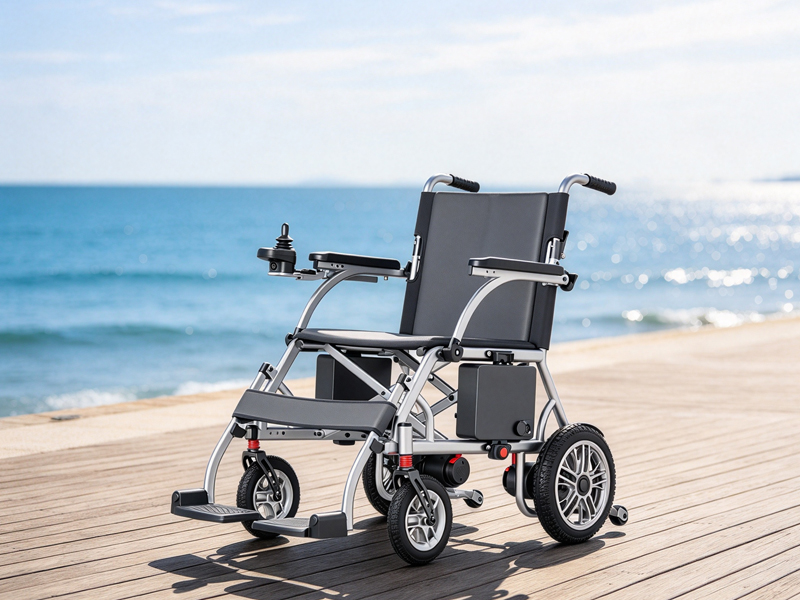
Air travel can open up a world of possibilities, but for people who rely on powered mobility, a successful journey depends on more than booking a flight. The wheelchair needs to be easy to transport, comfortable enough for extended use, simple to handle in unfamiliar surroundings, and compatible with airline battery and handling requirements.
This is why airline approved folding power wheelchairs have become an important consideration for travelers, mobility equipment retailers, healthcare distributors, and international wholesalers. A compact folding design can make airport transfers, hotel stays, family visits, and road trips considerably more manageable. For businesses, these products also represent an opportunity to serve customers who want greater independence without the bulk of a traditional power wheelchair.
However, there is an important distinction between a wheelchair designed for travel and one that has been confirmed acceptable by a particular airline. Battery capacity, battery protection, aircraft storage arrangements, and the airline’s own procedures all matter. Buyers should evaluate these details alongside weight, folded dimensions, driving range, and comfort.
Two models worth considering are the IYASOCARE YSE106 Foldable Electric Wheelchair and the IYASOCARE YSE133 Lightweight Aluminum Electric Wheelchair. Both combine folding functionality with powered mobility, but their different designs make them suitable for different priorities.
A conventional power wheelchair can offer excellent support for everyday mobility, yet its weight and size may create challenges when traveling by car, train, cruise ship, or airplane. A folding power wheelchair addresses part of this problem by reducing the space required for storage and transportation.
For an individual traveler, this can mean less difficulty fitting mobility equipment into a vehicle trunk or storing it at a hotel. For a caregiver, a lighter chair may reduce the physical effort involved in lifting and handling the equipment. For retailers, a compact product can appeal to customers who want one wheelchair for daily activities and occasional travel.
Three practical considerations tend to matter most.
First, weight affects the entire journey. A chair that is manageable to move at home may feel very different when it must be lifted into a car several times in one day. Comparing the weight with and without the battery helps buyers understand the actual handling requirements.
Second, folded dimensions determine where the chair can go. A compact wheelchair may fit more easily into a car trunk or storage area, but buyers should compare the folded measurements with the available space rather than relying on the word “portable.”
Third, battery arrangements influence air travel. Lithium battery capacity and protection are essential parts of the transportation decision. A wheelchair may be suitable for travel in general without being eligible for every form of aircraft storage.
A well-chosen folding electric wheelchair therefore needs to balance portability, practical driving performance, user comfort, and transport requirements. The lightest model is not automatically the best choice for every traveler, just as the longest advertised driving range is not necessarily the most important feature for someone who primarily needs help navigating an airport or shopping center.
The phrase “airline approved” is frequently used when searching for a portable power chair, but it should be interpreted carefully. There is no single approval that automatically guarantees every powered wheelchair can be carried in an aircraft cabin on every airline.
According to the U.S. Federal Aviation Administration (FAA), the transportation of battery-powered mobility devices depends on the battery type, battery protection, and how the device is prepared and stowed. Airlines may also impose additional restrictions. The FAA’s official guidance is available in its PackSafe information for wheelchairs and mobility devices.
For lithium-ion batteries, the battery’s watt-hour (Wh) rating is a key specification. It can be calculated by multiplying voltage by amp-hours:
Watt-hours (Wh) = Voltage (V) × Capacity (Ah)
For example, a 24V, 6Ah battery has a nominal energy rating of 144Wh. A 24V, 10Ah battery has a rating of 240Wh, while a 24V, 20Ah battery has a rating of 480Wh.
These calculations are particularly relevant when comparing the battery configurations available for the YSE106 and YSE133. They also illustrate why buyers should never assume that every battery option offered for a wheelchair is acceptable for air travel.
The FAA’s requirements for lithium-ion batteries in mobility devices differ from the general rules for ordinary portable electronics. Depending on the wheelchair’s battery protection and whether the battery must be removed, specific limits and handling procedures apply. A battery installed in a properly protected mobility device may be treated differently from a battery that must be removed and carried separately. Spare or removed batteries are subject to their own restrictions.
Before purchasing a wheelchair specifically for an upcoming flight, travelers should:
A folding wheelchair should not be assumed to fit in an overhead compartment simply because it becomes compact when folded. Cabin storage depends on the aircraft, available space, and applicable airline procedures. For many powered wheelchairs, checked transport may be the relevant arrangement.
For manufacturers, importers, and wholesale buyers, this distinction is equally important. Product pages and sales materials should state verified transport information rather than promising universal airline acceptance without supporting documentation.
When comparing portable power wheelchairs, the most useful approach is to start with the user’s actual routine. Someone who frequently loads a chair into a vehicle may prioritize a compact folding structure and low handling weight. Another person who spends longer periods outdoors may place greater importance on seating comfort, battery choices, and suspension.
The following models offer different combinations of these features.
Product page: https://www.iyasomed.com/products/foldable-electric-wheelchair-yse106/
The IYASOCARE YSE106 Foldable Electric Wheelchair is designed for users who want a compact powered wheelchair that is easier to store and transport than a larger conventional model.
Its aluminum alloy frame and one-touch folding mechanism are central to its appeal. The published specifications list a folded size of 56 × 31 × 78 cm and a product weight of approximately 18.9 kg. The chair has a maximum load capacity of 100 kg.
For travelers who frequently move between a home, vehicle, hotel, or public transport connection, the relatively compact folded dimensions can be particularly useful. The one-touch folding mechanism is intended to simplify preparation for transport, while the flip-up armrests provide easier access when getting into or out of the seat.
The YSE106 also uses two 250W hub motors, giving it a combined rated motor output of 500W. Its listed maximum speed is 6 km/h, and its specified climbing capability is 6°. These figures make it a candidate for everyday mobility around homes, shopping areas, paved walkways, and other suitable environments. Actual performance will depend on the user’s weight, terrain, battery condition, and operating conditions.
Battery options listed by the manufacturer include 24V lithium batteries in 6Ah, 10Ah, and 20Ah capacities. The published driving range is approximately 10–15 km, with a charging time of around four to six hours. Actual range varies with battery configuration, surface conditions, temperature, load, and driving style.
The seat measures 41 cm wide and 39 cm deep, with a seat height of 50 cm. The chair also features 7-inch front wheels, 10-inch rear wheels, and an electronic parking brake.
For an individual buyer, the YSE106 is worth considering when compact storage, straightforward folding, and everyday maneuverability are the main priorities. It may also appeal to mobility retailers looking for a portable model that can serve customers who travel by car or need a folding chair for regular outings.
There is one important qualification for air travel: the 20Ah battery option has a nominal rating of 480Wh at 24V, which exceeds the FAA’s standard 300Wh lithium-ion mobility-device limit described in its relevant guidance. The 6Ah and 10Ah options have nominal ratings of 144Wh and 240Wh respectively, but those figures alone do not establish airline acceptance. The exact battery configuration and required handling arrangements must be confirmed before flying.
Product page: https://www.iyasomed.com/products/lightweight-aluminum-electric-wheelchair-yse133/
The IYASOCARE YSE133 Lightweight Aluminum Electric Wheelchair takes a slightly different approach. Its principal advantage is a lightweight aluminum alloy frame combined with a folding structure and a range of battery configurations.
The manufacturer lists the frame weight at approximately 17 kg without the battery. The overall wheelchair weighs more once a battery is installed, so buyers should use the weight for their chosen configuration when planning transportation.
Its folded dimensions are listed as 90 × 33 × 82 cm, while the unfolded dimensions are 118 × 64 × 88 cm. The maximum load capacity is 100 kg.
Compared with the YSE106, the YSE133 has a wider and deeper seat, measuring 44 cm wide and 43 cm deep. The seat height is 46 cm, and the backrest height is 40 cm. These differences may be meaningful for users who prefer additional seating width or need to assess leg position and posture before selecting a chair.
Comfort-oriented features include a breathable backrest, a leather seat cushion, flip-up armrests, a three-position adjustable footrest, and front-wheel shock absorption. The chair also uses PU non-inflatable tires, reducing the need for routine tire inflation and helping avoid punctures associated with pneumatic tires.
For powered performance, the YSE133 is equipped with two 200W brushless motors. Its listed maximum speed is 6 km/h, and its specified climbing capability is 9°. The manufacturer gives an approximate driving range of 5–20 km, depending on the battery configuration and operating conditions, with a charging time of around four to six hours.
The listed battery options are 24V 6Ah, 12Ah, and 20Ah. Their nominal energy ratings are 144Wh, 288Wh, and 480Wh respectively. As with the YSE106, these ratings are useful for product comparison, but travelers should confirm the acceptability of the precise battery option with the airline.
The YSE133 may be particularly attractive to buyers who value a lighter frame, a slightly wider seat, brushless motors, and adjustable leg support. For distributors, it provides an alternative to a more compact model and helps address different customer preferences within the folding electric wheelchair category.
Before ordering, wholesalers should confirm the final configuration, including battery capacity, complete chair weight, packaging dimensions, and any model-specific documentation required for the intended market.
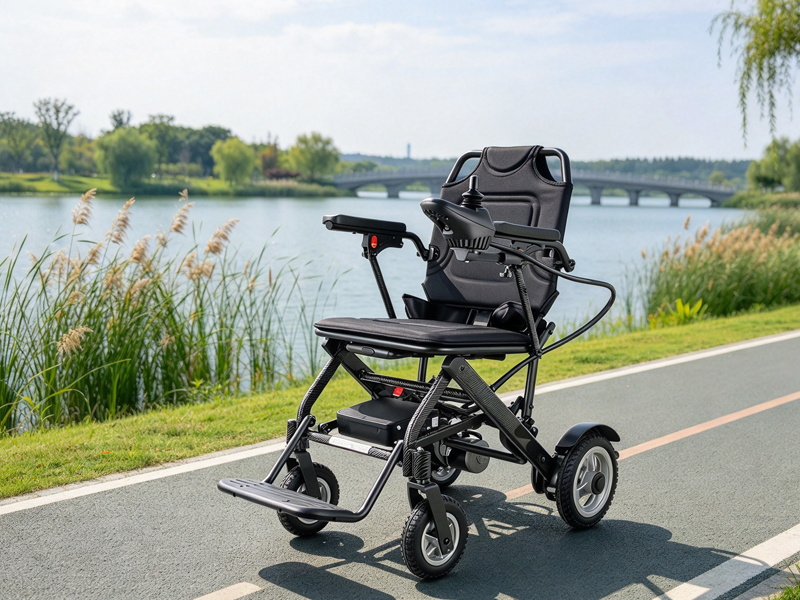
The two models are designed around portability, but their dimensions and features serve somewhat different priorities.
| Feature | YSE106 | YSE133 |
|---|---|---|
| Frame | Aluminum alloy | Aluminum alloy |
| Published frame/net weight reference | Approx. 18.9 kg listed product weight | Approx. 17 kg without battery |
| Folded dimensions | 56 × 31 × 78 cm | 90 × 33 × 82 cm |
| Seat width | 41 cm | 44 cm |
| Seat depth | 39 cm | 43 cm |
| Motor configuration | Dual 250W hub motors | Dual 200W brushless motors |
| Maximum speed | 6 km/h | 6 km/h |
| Specified climbing capability | 6° | 9° |
| Battery options | 24V 6Ah, 10Ah, 20Ah | 24V 6Ah, 12Ah, 20Ah |
| Published driving range | Approx. 10–15 km | Approx. 5–20 km |
| Maximum load | 100 kg | 100 kg |
| Charging time | 4–6 hours | 4–6 hours |
| Main consideration | Compact folding dimensions | Lighter frame and wider seat |
Specifications are based on the manufacturer’s published product information. Confirm the selected configuration and final specifications with the supplier before purchase.
The folded dimensions make one difference immediately apparent: the YSE106 is substantially shorter when folded. That can be an advantage when boot space or storage room is limited. The YSE133, meanwhile, offers a wider seat and a lower published frame weight before the battery is installed.
Neither model should be selected solely on the basis of its advertised maximum range or climbing angle. For example, the YSE133’s 9° specification does not mean that every ramp of that gradient is safe in every condition. Surface grip, ramp length, user weight, and the manufacturer’s operating guidance all affect real-world suitability.
For individual travelers, a sensible comparison includes a trial of seating comfort, turning space, transfer access, folding effort, and the ability to load the chair safely. For wholesale buyers, the comparison should also include landed cost, warranty terms, packaging efficiency, replacement parts, and the documentation available for each battery configuration.
The most suitable travel wheelchair depends on where it will be used and how often it must be transported.
For airport transfers and occasional flights, a compact folding design can make handling easier, but battery compliance and airline arrangements must come first. Buyers should request the battery’s technical specifications and ask the airline to confirm the transport procedure for the exact model.
For road trips and family visits, folded dimensions and complete weight often matter more than the label attached to the product. The YSE106 may be worth evaluating when trunk space is restricted. The YSE133 may suit someone who prefers its wider seat and lightweight frame. In both cases, the chair should be checked against the actual vehicle opening and storage area.
For shopping centers and everyday community activities, users should consider turning space, control responsiveness, seat comfort, braking, and the distance normally covered in a day. A stated range of 10–15 km or 5–20 km is a manufacturer estimate rather than a guaranteed distance under every condition.
For longer outdoor outings, comfort features can become more noticeable. The YSE133’s front-wheel shock absorption, adjustable footrest, and breathable backrest may be useful to some users. However, people who require specialized postural support, pressure management, or particular seating dimensions should obtain an individual assessment before choosing a model.
A good buying decision is not about finding a wheelchair with the longest list of features. It is about matching the equipment to the person’s physical needs, typical routes, transportation arrangements, and budget.
Demand for lightweight folding power wheelchairs creates opportunities for distributors serving older adults, people with mobility limitations, caregivers, rehabilitation equipment retailers, and travel-focused mobility businesses. Yet choosing a wholesale supplier requires more than comparing the unit price of two products.
A successful product range needs consistent specifications, reliable documentation, manageable logistics, and a clear after-sales process.
Product positioning and market coverage
The YSE106 and YSE133 can serve different positions within the same product category. The YSE106’s compact folded dimensions may appeal to customers who prioritize storage space. The YSE133’s wider seat and lightweight aluminum frame may appeal to customers who place greater emphasis on frame handling and seating dimensions.
Offering both models can help a retailer accommodate different needs without presenting them as interchangeable products. Each model should have its own product page, specification sheet, photographs, battery information, and intended-use guidance.
Battery documentation and transport planning
Battery details deserve particular attention in international wholesale orders. A supplier should be able to confirm the precise battery configuration being quoted, its voltage and amp-hour rating, calculated watt-hours, removability, and available transport documentation.
Where applicable, buyers should request relevant lithium-battery test documentation, such as a UN 38.3 test summary, and confirm which documents are needed for the specific shipping method and destination. A test summary should not be represented as blanket airline approval or as a substitute for the airline’s acceptance process.
Wholesalers importing products for resale should also establish how battery models are identified in packaging, manuals, and replacement-part orders. Clear identification reduces confusion when customers later request spare batteries or seek travel assistance.
Quality consistency and after-sales support
A wholesale purchase should include a review of production specifications, inspection procedures, packaging protection, spare-parts availability, warranty coverage, and procedures for handling defects.
For folding wheelchairs, particular attention should be paid to the folding mechanism, frame joints, wheel assemblies, motor operation, brake performance, joystick controls, battery connections, and armrest hardware. These are practical checkpoints for evaluating consistency and usability, not a claim that either model has passed a particular test unless the relevant evidence is available.
Before committing to a large order, buyers should request a sample or conduct an appropriate product evaluation. They should also clarify whether different battery capacities or other configurations affect the price, lead time, packaging, or technical documentation.
OEM, ODM, and private-label opportunities
Retailers with an established brand may also want to explore OEM or ODM cooperation. Depending on the manufacturer’s capabilities, a project could involve branded packaging, manuals, product labeling, market-specific accessories, or agreed product configurations.
The scope of any customization should be confirmed in writing. Changes to batteries, electrical components, frame construction, or other safety-relevant features require additional technical review and may affect the validity of existing documentation.
For buyers targeting several countries, it is also important to check the applicable medical-device, product-safety, labeling, and importer obligations in each destination market. Compliance requirements should be confirmed for the actual product and intended classification rather than assumed from the wheelchair’s general description.
Wholesale buyers often compare several suppliers before making a purchasing decision. While price is an important factor, an apparently inexpensive wheelchair can become costly if its specifications are inconsistent, spare parts are difficult to obtain, or shipping documentation is incomplete.
A more useful evaluation considers the total cost of ownership. This includes the purchase price, freight, duties, warehousing, inspection, warranty claims, replacement parts, and customer support.
For example, a retailer may find that a slightly more expensive folding wheelchair is easier to sell because its specifications are clearly presented and the supplier provides prompt technical support. Conversely, a model with attractive headline specifications may be harder to distribute if the exact battery configuration or packaging dimensions cannot be confirmed.
The same principle applies to consumer marketing. Product descriptions should distinguish between measured specifications, manufacturer estimates, and verified compliance claims. Driving range should be identified as an estimate, load capacity should be stated clearly, and airline transport information should be linked to the appropriate battery configuration and airline requirements.
For IYASOCARE’s YSE106 and YSE133, prospective buyers can begin with the published product pages, then request a current quotation and configuration-specific documentation directly from the supplier.
For wholesale enquiries, it is useful to provide the intended destination market, estimated order quantity, preferred battery configuration, branding requirements, and expected shipping method. This gives the supplier a clearer basis for confirming price, lead time, packaging, and documentation.
Choosing a folding power wheelchair is ultimately about making mobility easier without overlooking safety or practicality.
For an individual traveler, the decision should begin with the user’s comfort, handling needs, storage space, and typical travel distance. The YSE106 is worth considering when compact folded dimensions are a priority. The YSE133 offers a different combination of a lightweight frame, wider seat, brushless motors, and comfort-oriented features.
For wholesalers and mobility retailers, the priorities extend further. A commercially viable product needs a clear market position, consistent specifications, suitable documentation, reliable logistics, and a workable after-sales support arrangement.
The term “airline approved” should always be backed by accurate, model-specific information and confirmation from the airline concerned. A foldable design is an important convenience, but it does not by itself guarantee acceptance on every flight.
By comparing the YSE106 and YSE133 against actual user requirements and verifying battery and transportation details before ordering, both consumers and professional buyers can make a more informed decision.
For current specifications, configuration options, and wholesale discussions, visit the official IYASOCARE product pages linked above and request confirmation of the exact version under consideration.
1. Are the IYASOCARE YSE106 and YSE133 approved for all airlines?
Not automatically. Both models have folding designs intended to simplify transportation, but airline acceptance depends on the exact battery configuration, battery protection, aircraft storage arrangements, and the airline’s policies. Contact the airline before travel and provide the model specifications, battery watt-hours, dimensions, and weight. Do not assume that a folding wheelchair can be stored in the cabin.
2. Which is better for travel: the YSE106 or the YSE133?
The better choice depends on the user’s priorities. The YSE106 has smaller published folded dimensions of 56 × 31 × 78 cm, which may be helpful when storage space is limited. The YSE133 has a wider 44 cm seat, a lightweight aluminum frame listed at approximately 17 kg without the battery, and dual 200W brushless motors. Compare the complete weight with the selected battery, seat comfort, storage requirements, and airline transport arrangements before deciding.
3. Can international wholesalers purchase folding power wheelchairs in bulk from IYASOCARE?
Prospective wholesalers can contact IYASOCARE to discuss bulk purchasing, quotations, product configurations, and potential OEM or ODM requirements. Before placing an order, confirm the minimum order quantity, unit pricing, lead time, warranty, spare-parts support, packaging dimensions, battery documentation, and shipping arrangements. Any customization and market-specific compliance requirements should also be agreed upon before production.