Our Location
Free Trade Tower, Xiyong street.
Chongqing, China

Free Trade Tower, Xiyong street.
Chongqing, China
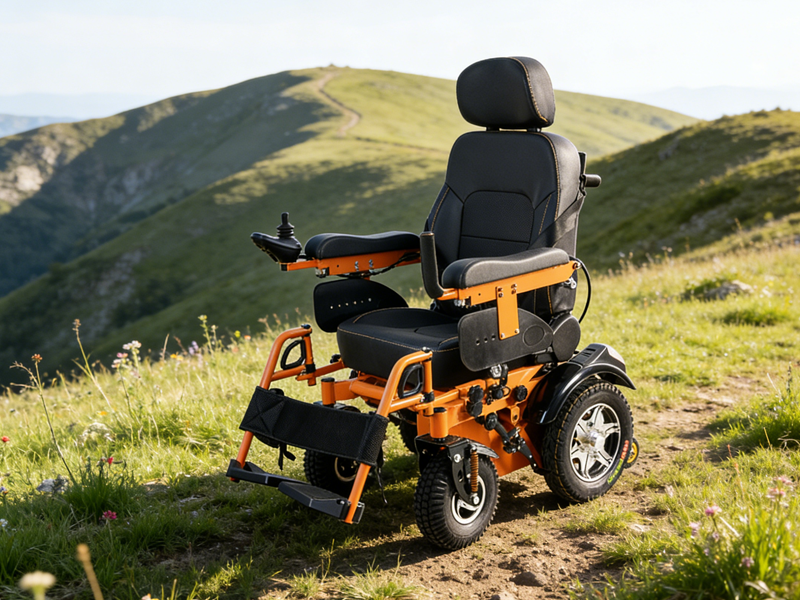
Mobility isn’t just about moving from point A to B — it’s about living life without limits. For millions of people worldwide, traditional wheelchairs are essential, but only in controlled environments: smooth pavements, indoor pathways, or city sidewalks. What many users crave is the freedom to go beyond those boundaries — to feel the wind on a forest trail, to reach scenic overlooks, or simply to roll comfortably on grass, gravel, and uneven terrain.
This is where auto anti-tip off-road electric wheelchairs come in — specialized mobility devices engineered for stability, power, terrain adaptability, comfort, and safety. In this article, we dive deep into what makes them different, why anti-tip features matter, and how two specific models — the YSE101A and YSE104 from Iyasocare — redefine what personal mobility can be.
Before we explore these innovative wheelchairs, it helps to unpack the term:
Auto anti-tip – refers to a built-in design that prevents backward or sideways tipping — a key safety feature when navigating slopes, uneven ground, or unexpected terrain irregularities.
Off-road – indicates capability beyond flat, paved surfaces. This includes grass fields, gravel paths, garden trails, mild sand, park terrain, and light hiking paths.
Electric wheelchair – means powered mobility, typically with a joystick control that allows users with limited arm strength or dexterity to operate the chair independently.
Together, the phrase describes an advanced category of power wheelchairs engineered for challenging environments with safety mechanisms that prevent tipping, giving users confidence beyond conventional electric chair boundaries.
In standard electric wheelchairs, uneven terrain, sudden slopes, or soft ground can lead to dangerous balance issues. Users might find their chair tilting backward or sideways, forcing them to lose confidence or avoid certain paths altogether. High center of gravity and abrupt terrain changes can compromise user safety.
Auto anti-tip systems change that by:
Stabilizing the chair when gradients change unexpectedly
Keeping the user upright even on slopes up to ~15°
Reducing the risk of backward rolling on ramps
Giving dependable balance during turns on uneven surfaces
This added safety translates into real-world independence — users can confidently navigate more environments without constant assistance.
The YSE101A is designed for users who want a robust, reliable, and capable off-road mobility solution without sacrificing comfort or safety. Built for long-distance travel, tough terrain, and everyday ease, this chair blends strength with thoughtful design.
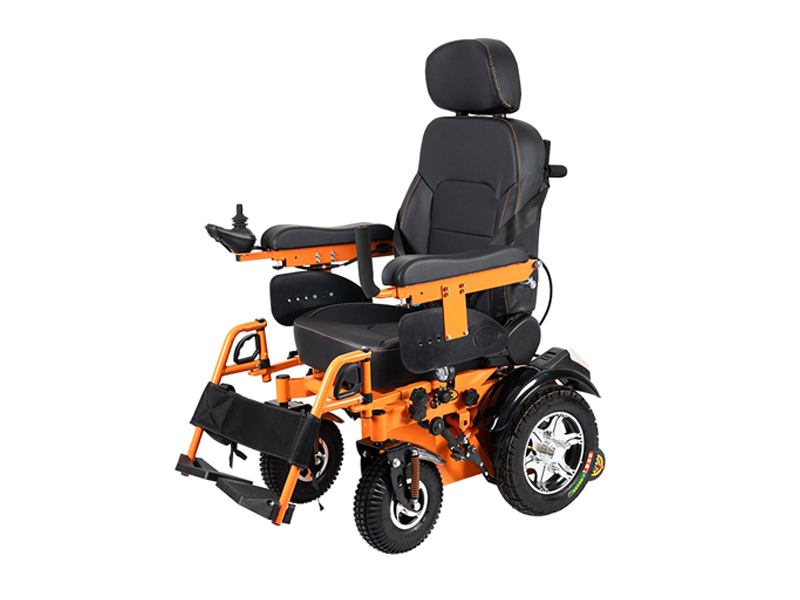
At its core, the YSE101A features a 24V 250W dual motor system paired with optional 40Ah or 64Ah lead-acid batteries. This combination delivers:
A top speed of 8 km/h — ideal for both urban movement and gentle outdoor travel.
A range of 25–60 km on a single charge, depending on battery choice and terrain.
This range is significant — it supports full-day use, long outdoor visits, or even short excursions without constant recharging.
The YSE101A’s design emphasizes off-road readiness:
Rear wheels: 14 inch
Front wheels: 10 inch
Climbing ability: ~15°
These larger wheels and higher grade capability allow the chair to conquer grass, gravel pathways, speed bumps, and mild slopes — without worry. More importantly, the chair’s structure inherently reduces tipping risk, giving users an extra layer of balance and confidence on challenging ground.
The presence of running lights and turn signals on the rear wheels adds visibility — a rare but valuable safety feature when outdoors or in low-light conditions.
Mobility is more than movement — it’s comfort. Recognizing this, the YSE101A comes with:
Thickened and widened leather seat options
Optimized shock-absorbing cushions
Adjustable footrests tailored for different body types
These features are not luxury extras. For users spending hours in their chair — whether on a full-day outdoor excursion or a long commute — seat comfort and ergonomic support matter.
With a width of only 62 cm, the YSE101A fits through narrow doorways and tight spaces — making it practical for both indoor transitions and outdoor use.
This balance — compact footprint with rugged capability — is one of the key reasons it stands out in its class.
If the YSE101A is a strong all-rounder, the YSE104 pushes performance even further. It’s a wheelchair designed with powerful motors, extended range, and advanced comfort options — ideal for users who want an enhanced outdoor experience without sacrificing daily learnability.
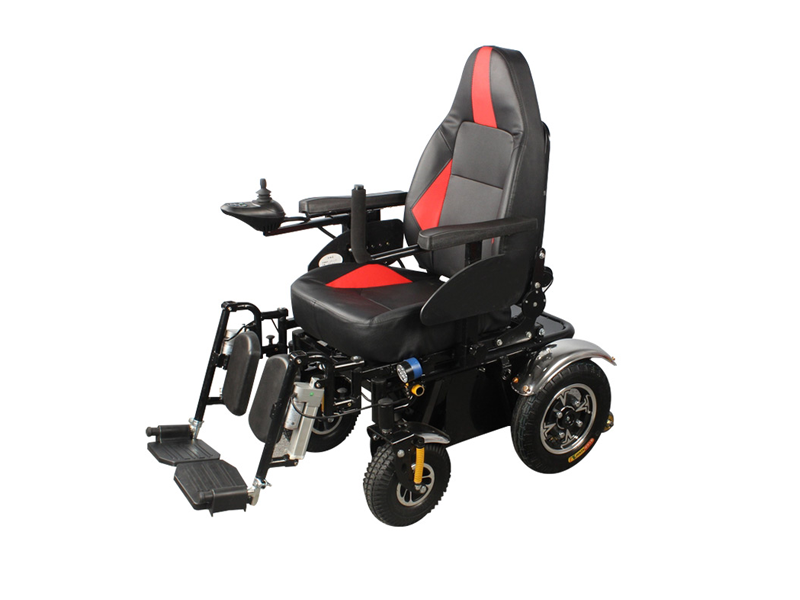
The YSE104 includes:
Two 24V 350W motors
A choice between 40Ah or 64Ah lead-acid batteries
This combination gives the chair a 35–60 km range — a clear step up from many standard electric wheelchairs. The added peak motor power also provides greater traction and momentum on difficult ground, such as muddy grass, sidewalks with gaps, or garden trails.
The YSE104 is built to confidently handle:
15° slopes
10 cm high steps
Few electric wheelchairs can gracefully climb small curbs or handle steps of this size, especially outdoors. This feature alone makes the YSE104 ideal for users navigating mixed terrain — like urban parks, doorstep transitions, or nature paths.
For users who spend long periods seated or need personalized posture support, the YSE104 goes further:
45-degree adjustable seat
170-degree reclining backrest
Electric footrest control
These adjustments allow users to find just the right position for comfort — whether resting, traveling long distances, or adapting to temporary health needs.
Safety and usability combine through smart features:
Intelligent electronic brake + electromagnetic brake system
Low-speed start control to prevent sudden moves
USB charging port for accessories
Universal joystick control
These elements are not just accessories — they are part of a user-centric design philosophy that enhances confidence and independence.
Most everyday paths are unpredictable. Grass is soft, slopes are uneven, and pavement edges appear without warning. In these common situations, a standard wheelchair can feel limiting.
The auto anti-tip design in both the YSE101A and YSE104 changes that dynamic by:
Sudden gradients or dropping off a small ledge won’t send you tipping backward.
Even on uneven ground, the chair maintains a balanced footprint.
When safety mechanisms work seamlessly, users can focus on the experience — not the risk.
These features matter most when venturing outside familiar terrain — whether to a park, picnic area, garden, or neighborhood path.
| Feature | YSE101A | YSE104 |
|---|---|---|
| Motor | 24V 250W dual | 24V 350W dual |
| Range | 25–60 km | 35–60 km |
| Top Speed | 8 km/h | 8 km/h |
| Climbing Ability | Up to 15° | Up to 15° |
| Adjustable Comfort | Basic | Advanced recline + electric footrest |
| Ideal For | Everyday & versatile off-road | Extended outdoor & adaptive comfort |
Both chairs offer auto anti-tip safety, robust frames, and indoor/outdoor versatility — but the YSE104 is clearly geared toward users who want extra power, longer range, and finer comfort adjustability.
Whether you’re walking in the neighborhood, going to parks, visiting friends, or simply exploring local trails, the combination of power, anti-tip stability, and comfort makes these wheelchairs practical for real daily use.
The longer range and climbing capability make trips — even outside the city — more feasible. You don’t need constant rest stops or external help to navigate small slopes or uneven ground.
For many users, the emotional and psychological benefits of enhanced mobility are as important as the physical ones. Being able to navigate diverse terrain without assistance fosters confidence and a sense of autonomy.
Electric wheelchairs designed for off-road use — especially those with auto anti-tip protections — are more than gadgets or luxury upgrades. They are mobility enablers that open up real-world experiences. With powerful motor systems, thoughtful safety features, generous range, and adaptable comfort, models like the YSE101A and YSE104 are helping users reshape what “mobility freedom” looks like in the 21st century.