Our Location
Free Trade Tower, Xiyong street.
Chongqing, China

Free Trade Tower, Xiyong street.
Chongqing, China

Wheelchair requirements for travel, public transportation, and daily home use are crucial. They primarily require lightweight, easy folding, durability, comfortable pushing, and effortless handling, without sacrificing safety or user experience.
Weight-to-load ratio: The ideal wheelchair weight is typically between 10kg and 15kg, making it easy for a person or a walker to lift it into a vehicle or up and down stairs. The load capacity should be appropriate for the user’s weight, while leaving some margin.
Folding method/volume: The folded wheelchair should be compact enough to fit in a car trunk, public transportation luggage compartment, airplane cabin, or train space. The folding structure should be sturdy and secure, while also enabling quick folding and unfolding.
Pushing/maneuvering comfort: Wheel quality, wheel diameter, front/rear wheel design, shock absorption or damping, handlebar height and angle, seat backrest, and footrests all influence the pushing and riding experience.
Material and durability: Lightweight, strong materials such as aluminum alloy, carbon fiber, and reinforced steel are the mainstream. Folding hinges, welds, and connectors should be corrosion-resistant and fatigue-resistant. Safety and Accessory Support: Safety belts, braking systems, reverse anti-skid systems, armrest and footrest locking mechanisms, and electric models must have long-lasting battery life, convenient charging, and fast controller response. Additional accessories such as headrests, backrest bags, and rain covers also add value.
Appearance and Customer Experience: Modern styling, vibrant colors, comfortable fabrics, and pleasant feel of armrests and footrests. After-sales service, warranty, and parts replacement are also crucial.
Increasing Popularity of Electric Lightweight Folding Wheelchairs: Higher battery density, longer range, and improved weight control make electric folding or power-assisted folding wheelchairs practical. Modular designs facilitate maintenance and upgrades, such as removable and replaceable wheels, controllers, and footrests.
Greater Adaptability: Wheel and suspension designs suitable for different terrains (city streets, caravan parks, cobblestone roads, etc.).
Introducing Smart Features: USB charging, lighting, Bluetooth control, and even app-based battery status monitoring. IYASOCARE recommends three wheelchairs: the YSE109, YSE130L (electric), and YSE110 (electric). Below is a comparison of their strengths and weaknesses for lightweight travel and daily use, as well as comparisons with competing models on the market.
| model | type | Weight & Folding | advantage | insufficie | Suitable for groups/scenes |
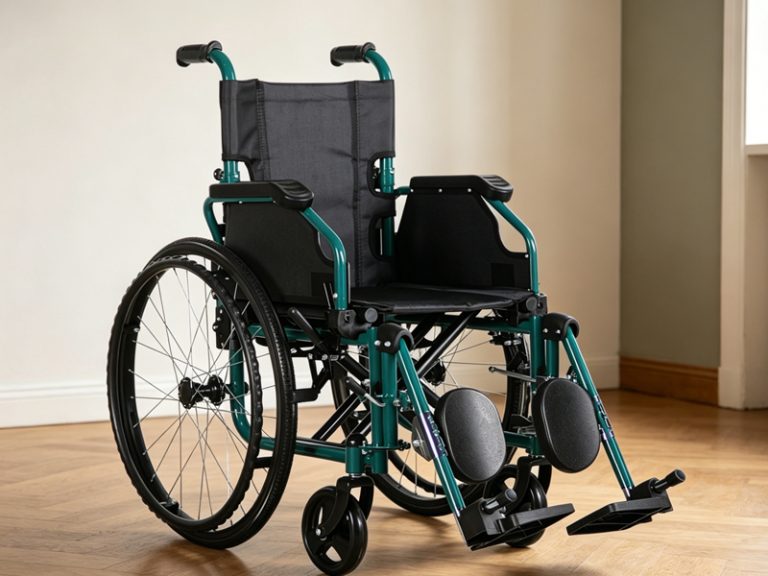
| YSE109 | Hand-pushed lightweight folding wheelchair | Judging from the model, it is a lightweight folding wheelchair, which is on the lightweight side among the manual wheelchair specifications. | Generally, push-type models are easy to maintain, low cost, light weight, and do not rely on electricity. Folding methods such as center folding or side folding can save space. | It requires more manpower to push than electric models and is more sensitive to inclines or slopes. Without proper brakes or structural support, stability may be weak | For daily household use, short-distance travel, public transportation assistance, and light-propelled transportation |
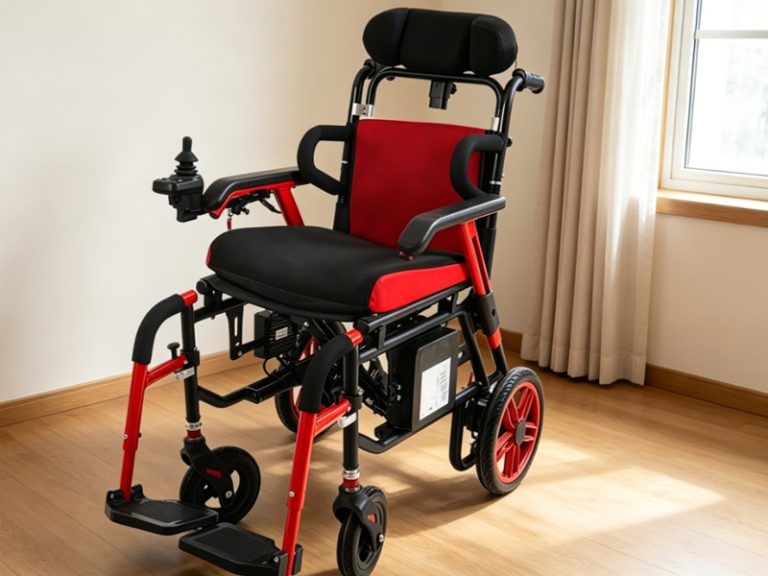
| YSE130L(electric) | Electric folding wheelchair | The “L” in the name usually indicates a long wheelbase or a larger battery capacity; the folding mechanism, motor, and battery are key for electric models. | Electric assist makes it easy to push over long distances or on inclined ramps; a good folding design can also take into account portability; long battery life and large load capacity make it suitable for a wide range of applications | The weight of the battery, motor, and structure make the foldable model larger and heavier than the push-type model; charging facilities are required; the price is usually high; and maintenance costs may also increase. | Those who need to travel longer distances, those who are heavier, those who travel on a lot of uphill or uneven roads, and those who rely on self-propelled/electric propulsion |
| YSE110(electric) | Electric folding wheelchair | Same type as above, but may differ slightly in maneuverability or weight control | If the lightweight design is good, it can provide electric assistance without being too bulky; it is easy to operate; if the controller and wheels are good, it is better for urban environments or indoors. | Battery life, ease of charging, and foldable size remain considerations; durability and maintenance of the electric system are key. | Users who frequently travel, use public transportation, and have a strong need for electric assistance |
Combining the above criteria, along with the pros and cons of the aforementioned models, here’s a practical decision-making process to help you choose the best wheelchair for your needs amidst the vast array of wheelchairs on the market.
1. Determine the Use Environment and Frequency
Is it a daily outing or occasional trip?
Surface Condition (Flat/Slopes/Rough/Stonewalls/Grass)
Does it require public transportation/airplane check-in/baggage space restrictions?
2. Manual vs. Electric
If physically pushing a manual wheelchair isn’t a problem, choosing a manual wheelchair saves on batteries and weight.
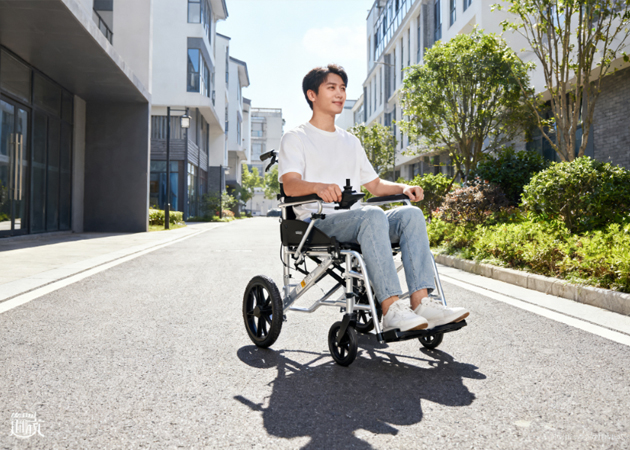
If you frequently travel long distances, go up and down hills, or have physical limitations, an electric-assisted or fully electric wheelchair may be more suitable.
3. Weight vs. Folding Size
Try to choose a lightweight model that’s within your budget (e.g., no more than 15kg for a manual model; for a power-folding model, consider whether it can fit in your car trunk or checked baggage). Consider whether the folded model will fit in your car trunk or home storage space.
4. Comfort and Support
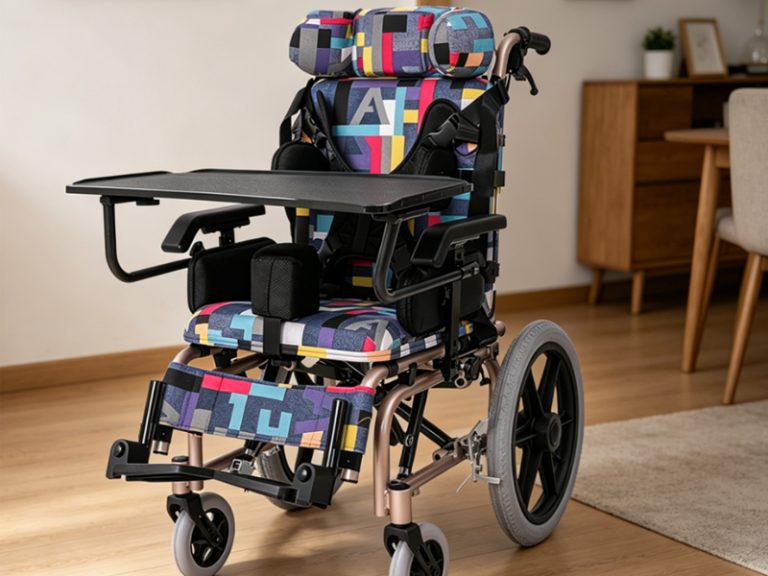
The seat cushion, backrest, armrests, and footrests should all fit properly. Also consider lumbar support and seating angle. Consider whether it’s prone to fatigue after extended use.
5. Battery and Range (If Electric)
Consider the battery type (lithium, density, safety), charging time, and ease of replacement. The range should be enough for a day’s travel, plus some extra space.
6. Safety and After-Sales Service
Check the reliability of the braking system, the strength of the frame structure, and the safety of the folding and locking mechanism. Consider the warranty policy, parts availability, and brand reputation.
7. Price vs. Total Cost
Beyond the initial purchase price, consider the cost of battery replacement, repairs, and accessories. Manual models are generally easier to maintain. If you spend most of your time in flat urban areas, rarely climb hills, and have no significant physical limitations, the YSE109 (manual lightweight folding model) is the most economical and practical choice. It’s lightweight, requires little maintenance, and folds easily.
If you travel frequently, have long journeys with uphill climbs, or need to push a wheelchair long distances or find it difficult to push yourself, the electric YSE110 would be a better balance, assuming it offers a good balance between size and battery life when folded.
If you have higher requirements for power and battery life, are heavier, or need to carry more luggage or equipment, the YSE130L (electric model) may offer a larger load capacity and better battery life/structural strength, making it suitable for users who need to carry heavy loads.
Don’t just look at the word “lightweight” in advertising. Some wheelchairs labeled “lightweight” may have complicated folding mechanisms or be bulky overall.
Electricity doesn’t guarantee portability: batteries and motors add weight and bulk. If the wheelchair doesn’t fold properly or the battery can’t be removed, shipping costs can be high. Safety must not be neglected: Folding or locking a wheelchair improperly can be dangerous; the brake system, pedal locks, and armrest securement are all crucial.
Regulations/Airline Restrictions: If a travel wheelchair is to be carried on an airplane, ensure its battery complies with air transport regulations.
Q1: What are the most important considerations for traveling with a folding electric wheelchair?
A1: The most critical considerations for travel are the folded size/weight and battery safety and battery life. Can it fit in a car trunk, train baggage compartment, or airplane cabin after folding? Is the battery removable and does it meet air transport safety standards for lithium batteries? Is the battery life sufficient for a full day’s journey with some extra juice left over? Charging convenience (e.g., easy access to an outlet, fast charging support, or the ability to carry a spare battery) is also crucial.
Q2: Which is more suitable for daily use, a manual wheelchair or an electric wheelchair?
A2: This depends on the user’s physical fitness, frequency of use, and the ground conditions. If you have good physical strength, use short distances daily, and primarily on flat surfaces, a manual wheelchair (such as the YSE109) offers clear advantages: light weight, low cost, easy maintenance, and easy folding. If you need to climb hills, travel long distances, have limited mobility, or have difficulty pushing yourself, an electric wheelchair (such as the YSE110 or YSE130L), while more expensive, offers greater freedom and comfort.
Q3: Which parameters should you avoid compromising on when choosing a lightweight folding wheelchair?
A3: The following parameters are best avoided:
1. Safety of the folding locking mechanism – It must be secure when folded to prevent it from moving even after being folded.
2. Brake and pedal locking systems – These two systems determine stable stopping and user safety.
3. Battery quality and battery life of electric models – Low-quality batteries not only have a short lifespan but can also pose safety risks.
4. Material strength and structural stability – Repeated folding and use can cause fatigue in hinges, welds, and connectors, so high-quality materials and craftsmanship are essential. 5. After-sales and parts replacement capabilities – Even if the product is good, if the parts are hard to buy or the after-sales service is poor, it will be a headache to use.