Our Location
Free Trade Tower, Xiyong street.
Chongqing, China

Free Trade Tower, Xiyong street.
Chongqing, China
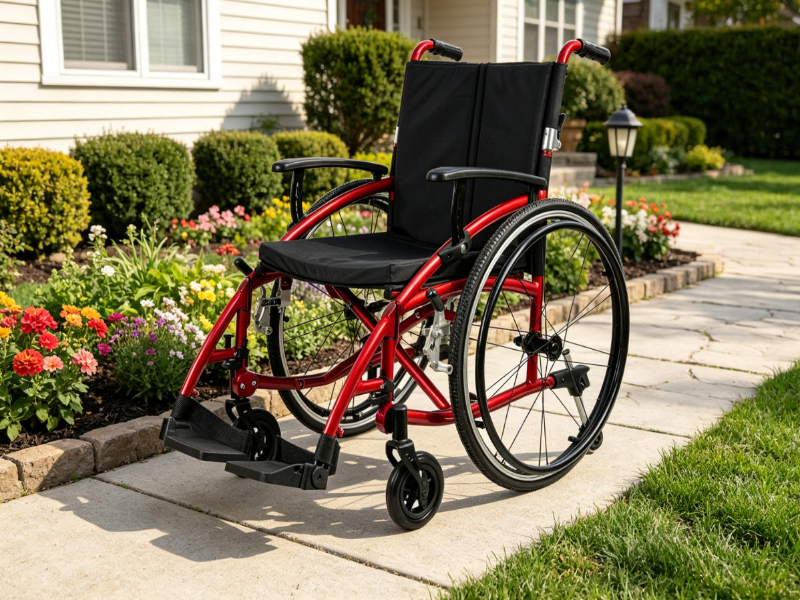
When people compare manual wheelchairs, they often pay close attention to the frame, seat width, wheel size, folding mechanism, and overall weight. One small component, however, deserves much more attention than it usually receives: the handrim. For a self-propelled manual wheelchair user, the handrim is the direct connection between the person and the wheelchair. Every push, turn, acceleration, and controlled stop depends on how well the handrim fits the user’s hands and how effectively it transfers force to the wheel.
So, what is the best material for a wheelchair handrim? There is no single material that is perfect for every user. Aluminum, stainless steel, titanium, coated metals, and other material combinations each offer different advantages. The right choice depends on how often the wheelchair is used, the user’s hand strength, climate, daily travel distance, grip requirements, maintenance expectations, and budget.
For wheelchair manufacturers, distributors, rehabilitation professionals, and users looking for a reliable manual wheelchair, understanding these differences is particularly important. A well-designed handrim can influence propulsion efficiency, comfort, grip, durability, and the overall experience of using a wheelchair.
A wheelchair handrim may look like a simple circular tube attached to the rear wheel, but its material affects several important characteristics at the same time. Weight, surface temperature, grip, corrosion resistance, strength, maintenance, and tactile feedback can all change depending on the material and finish.
For an active manual wheelchair user, this becomes especially noticeable because propulsion is repeated throughout the day. The user does not simply touch the handrim occasionally; the handrim may be contacted hundreds or even thousands of times during daily mobility. Clinical guidance on wheelchair configuration emphasizes that inappropriate handrim design or inefficient propulsion can contribute to upper-limb discomfort and repetitive strain, while selecting an appropriate handrim can improve propulsion efficiency and hand ergonomics.
This is why the question should not simply be, “Which material is strongest?” A better question is:
Which wheelchair handrim material provides the best combination of grip, weight, durability, comfort, and control for the intended user?
For one person, anodized aluminum may be the most practical option. Another user may prefer stainless steel because of its durability and temperature characteristics. Someone who spends long hours propelling a wheelchair may benefit more from an ergonomic or high-friction design than from simply choosing a different metal.
The material is only one part of the equation, but it is an important starting point.
Aluminum is one of the most widely used materials for wheelchair handrims, particularly because it offers a useful balance between low weight, durability, cost, and manufacturing flexibility.
A standard anodized aluminum handrim is particularly suitable for users who have adequate hand strength and use a wheelchair primarily on relatively smooth surfaces. Anodizing provides a protective surface that helps reduce oxidation while maintaining the lightweight characteristics of aluminum. Industry guidance commonly describes anodized aluminum as a practical standard option because it combines relatively low weight with dependable everyday performance.
The biggest advantage is versatility.
For a lightweight manual wheelchair, keeping unnecessary weight down can make transportation and handling easier. Frame material research also shows why aluminum has become common in wheelchair construction: it provides a favorable strength-to-weight ratio and can be manufactured without the complexity associated with some higher-end materials.
The same principle makes aluminum attractive for handrims.
Advantages of aluminum handrims
| Feature | Aluminum Handrim |
|---|---|
| Weight | Lightweight |
| Durability | Good for everyday use |
| Cost | Generally practical |
| Maintenance | Relatively simple |
| Corrosion resistance | Good when properly finished |
| Availability | Widely available |
| Best suited for | Daily manual wheelchair use |
However, aluminum is not automatically the best choice for every user. A smooth aluminum surface can provide less grip than a coated or ergonomic handrim, especially in wet conditions or for people with reduced hand strength.
That is why the surface finish matters almost as much as the underlying material.
A hard-anodized or powder-coated aluminum handrim can provide a different tactile experience from a smooth polished surface. Some users prefer a slightly textured surface because it provides better control without requiring an extremely aggressive grip.
For many general-purpose manual wheelchairs, therefore, aluminum remains one of the best wheelchair handrim materials because of its balance rather than because it dominates every individual category.
Stainless steel is another established option for wheelchair handrims. Compared with aluminum, stainless steel is generally heavier, but it can provide excellent durability and a solid tactile feel.
This makes stainless steel particularly interesting for institutional environments, demanding daily use, and applications where long-term durability is more important than minimizing every gram of weight.
Stainless steel also has a different thermal behavior from aluminum. Users who regularly operate a wheelchair outdoors in cold or hot conditions may notice differences between materials. Industry guidance notes stainless steel as an option valued for durability and reduced heat transfer compared with some other metal handrims.
For a user who frequently pushes a manual wheelchair over long distances, the extra weight may or may not be important. A highly active wheelchair user who frequently lifts the chair into a vehicle may prioritize lightweight construction, while a facility purchasing wheelchairs for repeated everyday use may place greater emphasis on robustness.
This illustrates an important point:
The best wheelchair handrim material depends on the job the wheelchair needs to perform.
A wheelchair intended for occasional indoor use has very different requirements from one used every day in hospitals, rehabilitation centers, airports, shopping environments, or outdoor spaces.
Titanium is often associated with premium mobility equipment because of its excellent strength-to-weight characteristics and resistance to fatigue. Titanium can be significantly lighter than conventional steel while maintaining impressive mechanical performance.
For users who prioritize weight reduction but still want a high-performance metal, titanium can be attractive. It can also provide a premium tactile experience and strong long-term durability.
The main disadvantage is cost.
Titanium requires more specialized manufacturing processes and generally costs considerably more than aluminum. Similar differences appear in wheelchair frame construction, where titanium and carbon fiber can provide advanced strength-to-weight characteristics but at a higher manufacturing cost.
For most everyday manual wheelchair users, titanium is therefore not necessarily the most economical answer to the question of what is the best material for a wheelchair handrim.
Instead, it is better understood as a premium option for users who have a specific reason to prioritize advanced material performance.
If the wheelchair is primarily being purchased for a large-scale distribution program, hospital supply contract, or value-focused product range, aluminum is often easier to justify. If the target customer is a performance-oriented wheelchair user who is highly sensitive to weight and willing to pay more, titanium becomes more interesting.
A common mistake is to compare handrims only by their base material.
In reality, the coating or surface treatment can dramatically change how the handrim feels.
A smooth metal handrim may work well for a user with good grip strength, while someone with limited hand strength may need more friction. High-friction coatings can increase grip and make propulsion easier for some users, particularly when the hand tends to slip from a conventional smooth rim.
Coated handrims can also be useful in wet environments. However, more grip is not always better. A surface with excessive friction can create discomfort during repeated propulsion, turning, or braking. Some coatings may also wear over time, especially when the wheelchair is heavily used.
This is why manufacturers need to consider the complete handrim system rather than simply selecting a material.
A practical selection process should examine:
Base material → surface finish → rim shape → diameter → distance from wheel → mounting position → user grip → intended environment.
This approach produces a much more useful result than simply asking whether aluminum is better than stainless steel.
For many users, the most important improvement may not come from switching from aluminum to stainless steel. It may come from changing the shape of the handrim.
Traditional handrims are usually round tubes. They are simple and effective, but they do not necessarily provide the most natural hand position.
Ergonomic handrims can increase the contact area between the hand and the rim and may allow users to push with a more comfortable grip. Sunrise Medical, for example, describes ergonomic oval-shaped handrims as providing additional surface area and a more ergonomic pushing position, particularly for users who travel longer distances or place greater demands on their upper limbs.
Research into ergonomic handrim designs has also examined their potential to reduce hand contact forces and improve comfort and function.
This leads to an important distinction:
The best material for a wheelchair handrim is not necessarily the best handrim overall.
A beautifully engineered titanium rim may still be a poor choice if its shape does not suit the user’s hand. Conversely, a well-designed aluminum ergonomic handrim can provide an excellent combination of comfort, control, weight, and value.
For buyers comparing wheelchair manufacturers, it is useful to look beyond one individual component and evaluate the complete wheelchair platform.
Iyasocare’s manual wheelchair range includes lightweight, folding, sports, ergonomic, and other manual wheelchair configurations. Its product range includes the YSM2025 manual wheelchair with an ergonomic handrim drive, making the brand relevant to buyers who are specifically interested in how handrim design affects manual propulsion.
The advantage of working with a manufacturer rather than selecting an isolated replacement component is that the handrim can be considered together with the frame, rear wheel, seating geometry, braking system, footrests, folding structure, and intended application.
This matters particularly for B2B buyers.
A distributor may not simply want “an aluminum handrim.” The distributor may need a complete manual wheelchair that is lightweight enough for transportation, comfortable enough for everyday users, reliable enough for repeated retail sales, and configurable for different customer groups.
Iyasocare positions itself as a manufacturer and supplier covering manual wheelchairs, electric wheelchairs, off-road wheelchairs, sports wheelchairs, standing wheelchairs, beach wheelchairs, transfer wheelchairs, and other mobility categories.
For international buyers, this broader product portfolio can be useful because different markets often require different wheelchair configurations rather than one universal model.
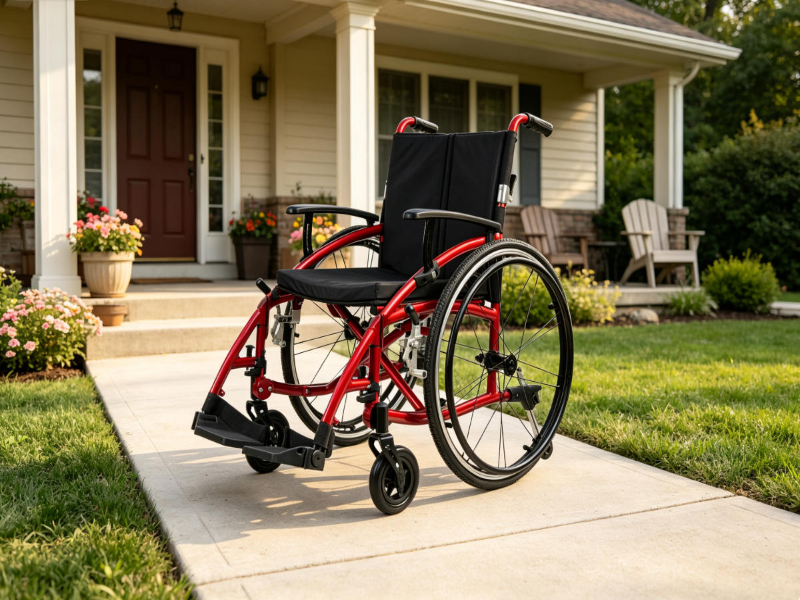
There is no universal winner, but the following comparison makes the decision easier.
Aluminum
Aluminum is usually the strongest overall choice for buyers who want a lightweight, practical, affordable handrim. It is especially appropriate for everyday manual wheelchairs, travel-oriented products, and users who need to lift or transport the wheelchair frequently.
Best for: lightweight mobility, daily use, value-focused products, general-purpose manual wheelchairs.
Stainless Steel
Stainless steel is better suited to buyers who prioritize durability and a solid, robust feel over minimum weight. It can be a practical choice for institutional environments and demanding daily use.
Best for: durability-focused applications, institutional use, heavy everyday operation.
Titanium
Titanium is an advanced premium option. Its attractive strength-to-weight characteristics make it suitable for users who prioritize performance and weight reduction and are prepared to pay more.
Best for: premium mobility products, performance-focused users, weight-sensitive applications.
Coated Aluminum or Other High-Friction Designs
A coated handrim may be the better solution when grip is more important than the bare-metal feel. It can be especially useful for users who struggle with hand strength or operate their wheelchair in conditions where slipping is a concern.
Best for: increased grip, reduced hand strength, demanding propulsion environments.
Ergonomic Designs
An ergonomic handrim can be more valuable than simply upgrading the material. By increasing the contact area and changing hand positioning, ergonomic designs can improve the relationship between the user’s hand and the wheel.
Best for: active users, longer daily distances, users seeking improved hand comfort and propulsion efficiency.
A good purchasing decision should begin with the user rather than the material.
For an elderly user who only needs a wheelchair for occasional indoor movement, a standard aluminum handrim may be completely adequate. Spending considerably more on titanium would provide little practical benefit.
For an active manual wheelchair user who propels the chair independently every day, however, handrim shape, grip, diameter, and surface treatment become much more important. An ergonomic or higher-friction design may provide greater practical value than simply choosing a more expensive metal.
For rehabilitation facilities, durability and ease of maintenance may be priorities. Stainless steel or durable coated designs can be considered depending on the environment and cleaning requirements.
For wheelchair distributors, the ideal strategy is often to offer several configurations rather than treating one handrim as suitable for everyone. A basic aluminum option can serve the mainstream market, while ergonomic and high-friction options can target users with more specific requirements.
The decision should also take climate into account. Wheelchairs used outdoors in wet or humid environments require careful consideration of grip and corrosion resistance. Likewise, products sold into colder climates should be evaluated for how the handrim feels when exposed to low temperatures.
If you are a distributor, importer, rehabilitation equipment company, or medical equipment retailer, the handrim is only one part of the supplier evaluation process.
A reliable wheelchair manufacturer should be able to demonstrate consistent product quality, provide clear specifications, support customization when necessary, and maintain stable production capacity.
It is also worth asking whether the manufacturer offers different manual wheelchair configurations rather than relying on one standardized product. This makes it easier to build a product portfolio around different customer needs.
Iyasocare’s official product portfolio demonstrates this type of broader approach, covering more than one manual wheelchair configuration as well as electric, off-road, sports, standing, transfer, and beach wheelchair categories.
For B2B buyers, this can simplify supplier management because one manufacturing partner may be able to support several segments of the mobility market.
The important point is not simply choosing the cheapest wheelchair or the most expensive material. It is choosing a supplier capable of producing a consistent product that matches the requirements of the intended market.
So, what is the best material for a wheelchair handrim?
For most everyday manual wheelchair applications, aluminum is the best all-around material because it offers a strong balance between low weight, durability, affordability, and ease of manufacturing. Anodized aluminum is particularly practical for standard wheelchair applications.
However, aluminum is not automatically the best option for every user.
If durability and a robust feel are the priority, stainless steel can be a better choice. If premium lightweight performance is the goal and budget is less restrictive, titanium may be worth considering. If grip is the main concern, a coated or high-friction handrim may be more useful than changing the base material. And if the user spends many hours independently propelling the wheelchair, an ergonomic handrim can potentially provide greater practical value than a premium metal alone.
In other words, the best wheelchair handrim is the one that matches the user’s hands, propulsion ability, environment, and daily routine.
For manufacturers and distributors, this principle is equally important. A well-designed wheelchair should not be judged by one specification in isolation. Frame material, wheel configuration, seating position, handrim design, braking system, portability, and user comfort all work together to determine the final mobility experience.
This is why a manufacturer such as Iyasocare can be a useful option for B2B buyers seeking a broader range of wheelchair configurations rather than a single product. Its portfolio covers multiple mobility categories and includes manual wheelchair solutions designed around different user requirements.
The right handrim may be a small part of a wheelchair, but for an independent manual wheelchair user, it is one of the most frequently touched and functionally important components. Choosing it carefully is therefore not a minor detail—it is part of designing a wheelchair that is easier, safer, and more comfortable to use every day.
1. What is the best material for a wheelchair handrim?
For most general-purpose manual wheelchairs, aluminum is the best overall choice because it combines low weight, good durability, reasonable cost, and easy maintenance. Anodized aluminum is particularly common for standard handrims. However, users with specific grip, durability, or performance requirements may benefit more from stainless steel, titanium, coated surfaces, or ergonomic designs.
2. Is stainless steel better than aluminum for wheelchair handrims?
Not necessarily. Stainless steel can provide excellent durability and a robust feel, while aluminum is lighter and generally more practical for everyday mobility and transportation. The better choice depends on how the wheelchair will be used. For users who frequently lift or transport their wheelchair, aluminum may be preferable; for demanding environments where durability is the priority, stainless steel may be more appropriate.
3. Are ergonomic wheelchair handrims better than standard round handrims?
For some users, yes. Ergonomic handrims can provide a larger contact area and a different hand position, which may improve comfort and propulsion efficiency. They can be particularly useful for active users, people who travel longer distances, or users who experience discomfort with conventional round handrims. The ideal design still depends on individual hand strength, propulsion technique, and wheelchair configuration.