Our Location
Free Trade Tower, Xiyong street.
Chongqing, China

Free Trade Tower, Xiyong street.
Chongqing, China
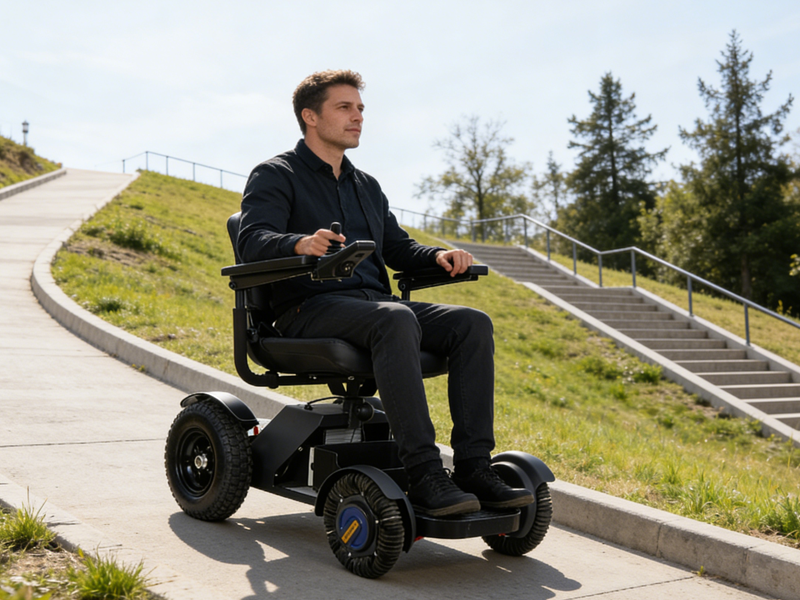
Electric wheelchairs have transformed mobility, empowering individuals with freedom, independence, and enhanced quality of life. However, safety remains a top concern for many users and caregivers, and one question frequently arises: Can electric wheelchairs tip over? Understanding this risk, the factors that influence it, and strategies to prevent tipping is essential for anyone considering or currently using an electric wheelchair.
While the thought of tipping can be alarming, it’s important to note that modern electric wheelchairs are meticulously engineered for safety. Manufacturers incorporate stability features, electronic systems, and design innovations to minimize risk. Yet, as with any mobility device, the user’s habits, environment, and choices play an equally critical role in maintaining balance. This guide explores the key aspects of wheelchair tipping, practical safety tips, and real-world examples to help users navigate confidently and securely.
Tipping in an electric wheelchair is influenced by several interconnected factors. Recognizing these can help prevent incidents before they happen.
Weight Distribution
How weight is distributed in a wheelchair affects its stability significantly. If a user leans too far forward, backward, or sideways, the center of gravity shifts, increasing the risk of tipping. Carrying heavy items on the chair without evenly distributing the load can exacerbate the problem. Maintaining balanced posture and minimizing sudden shifts is a fundamental step in preventing falls.
Terrain Challenges
The environment where the wheelchair is used is equally important. Uneven surfaces such as gravel, grass, sand, or soft soil can destabilize a chair. Curbs, ramps, and steep inclines require careful navigation. Even minor surface irregularities can impact balance at higher speeds. Planning routes and evaluating terrain in advance can significantly reduce tipping risk.
Speed and Maneuvering
Electric wheelchairs offer speed settings for convenience and efficiency, particularly outdoors. However, higher speeds increase tipping potential, especially when combined with abrupt turns or rough surfaces. Gradual acceleration, steady movement, and wide turns are essential to maintain stability.
Turning Angles
Sharp turns, particularly at speed, introduce lateral forces that may lift one side of the wheelchair. In contrast, wide, gentle turns minimize this effect, helping users maintain control. For highly maneuverable indoor models, it’s important to combine turning awareness with attention to floor surfaces to prevent unexpected shifts.
Electric wheelchairs are available in multiple drive configurations, each with unique handling characteristics that influence tipping potential.
Front-Wheel Drive (FWD)
Front-wheel drive wheelchairs offer excellent traction on uneven surfaces and are ideal for outdoor use. The front wheels pull the chair, allowing it to handle inclines effectively. While stability is good overall, the wider turning radius can be a consideration for indoor navigation in tight spaces.
Rear-Wheel Drive (RWD)
Rear-wheel drive models excel at higher speeds and offer predictable handling on outdoor surfaces. The back wheels provide a stable base for propulsion. However, sharp turns can feel less stable compared to mid-wheel designs, so caution is advised when navigating tight corners.
Mid-Wheel Drive (MWD)
Mid-wheel drive wheelchairs are highly maneuverable, making them ideal for indoor environments. With centrally located drive wheels, these chairs offer tight turning radii and agile performance. However, the central balance point can make tipping slightly more likely on uneven terrain, requiring careful navigation outdoors.
Understanding these design differences helps users select a wheelchair suited to their daily routines and the environments they frequent. For instance, someone primarily navigating indoor spaces may benefit from a mid-wheel drive model, while a person frequently outdoors may prefer front- or rear-wheel drive for additional traction and speed stability.
Modern electric wheelchairs incorporate multiple safety mechanisms to reduce the likelihood of tipping and enhance user confidence.
Anti-Tip Wheels
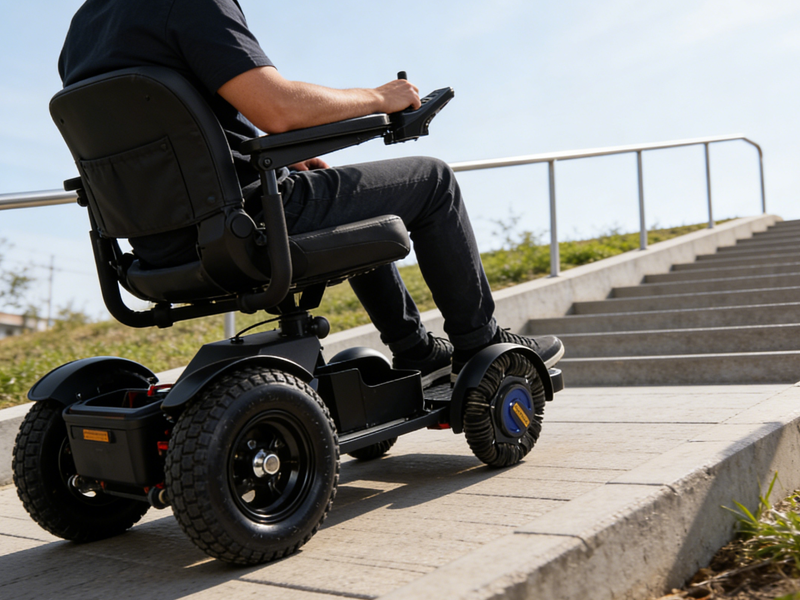
Most electric wheelchairs include anti-tip wheels at the rear and sometimes the front. These small, strategically placed wheels prevent backward or forward tipping when navigating slopes or uneven ground. They act as a physical safeguard, especially on inclines.
Seat Belts
Seat belts not only secure the user but also help maintain proper posture, preventing weight shifts that could destabilize the chair. They are particularly helpful during sudden stops, inclines, or unexpected bumps.
Electronic Stability Systems
Some advanced electric wheelchairs feature electronic stability control, which automatically adjusts wheel speeds or applies subtle braking to maintain balance. This technology acts as an extra layer of safety, particularly when navigating challenging terrain.
Low Center of Gravity Design
Wheelchairs with a lower center of gravity inherently resist tipping. Designers optimize the seat height, wheelbase, and overall chair geometry to improve stability without compromising comfort or maneuverability.
While design and safety features are crucial, the user’s behavior often determines real-world safety. Following these practical guidelines can dramatically reduce tipping risks:
Maintain Proper Posture: Sit upright, with feet firmly on the footrests. Avoid leaning excessively forward, backward, or sideways.
Smooth Maneuvers: Accelerate, decelerate, and turn gradually. Abrupt movements increase tipping risk.
Exercise Caution on Slopes: When moving uphill, lean slightly forward. When moving downhill, keep weight shifted back and move slowly.
Avoid Overloading: Distribute any extra weight evenly to prevent imbalance. Heavy bags or equipment can significantly alter the chair’s stability.
Know Your Terrain: Plan routes to avoid unstable surfaces like gravel, sand, or steep ramps. Slow down when encountering unexpected obstacles.
Follow Manufacturer Instructions: Each wheelchair model has specific operating guidelines that optimize safety and performance. Always adhere to these instructions.
These habits, combined with built-in safety features, ensure users can enjoy mobility without compromising security.
Even with precautions, certain situations present higher tipping risks. Here’s how users can handle them safely:
Navigating Rough Terrain:
Scenario: Your wheelchair sinks slightly in gravel or uneven soil.
Solution: Slow down and carefully assess the path. If necessary, ask for assistance or adjust your route to more stable ground.
Reaching for Objects:
Scenario: Leaning forward to grab an item causes the chair to tilt.
Solution: Use tilt or recline features if available. Avoid leaning beyond safe limits; reposition the chair closer instead.
Steep Inclines or Ramps:
Scenario: Navigating a parking ramp or outdoor incline feels precarious.
Solution: Move slowly, lean forward when climbing, and shift weight backward when descending to maintain balance.
By proactively anticipating these situations, users can dramatically reduce tipping incidents while maintaining mobility independence.
Electric wheelchairs offer unparalleled freedom, but safety awareness ensures that freedom remains consistent. Choosing the right chair type, understanding the terrain, practicing safe maneuvers, and using built-in features strategically all contribute to daily stability.
Consulting mobility specialists or manufacturer representatives can provide personalized insights tailored to individual needs, maximizing both safety and comfort. With thoughtful precautions, electric wheelchairs can deliver confidence and independence every day.
For those considering or using electric wheelchairs, professional guidance can simplify decision-making. Mobility experts help match users with wheelchairs that suit their lifestyle, environment, and physical requirements. In addition, flexible financing options such as installment plans, Klarna, Shop Pay (via Affirm), and PayTomorrow allow users to access mobility solutions without financial strain.
Investing time in expert consultation, understanding chair functionality, and implementing best safety practices ensures a smooth, confident mobility experience.
1. How can I prevent my wheelchair from tipping on uneven surfaces?
Slow down, maintain a centered posture, use anti-tip features, and, if available, engage electronic stability control. Plan your routes to avoid unstable terrain when possible.
2. Are mid-wheel drive wheelchairs more prone to tipping than front- or rear-wheel drive?
Mid-wheel drive models offer excellent indoor maneuverability but require caution on uneven terrain. Their central balance point can make forward or backward tipping slightly more likely outdoors.
3. What is the most important factor for overall stability?
Maintaining correct posture and even weight distribution is the single most important factor, followed by cautious speed management and awareness of terrain. Combined with safety features, this approach minimizes tipping risk effectively.