Our Location
Free Trade Tower, Xiyong street.
Chongqing, China

Free Trade Tower, Xiyong street.
Chongqing, China
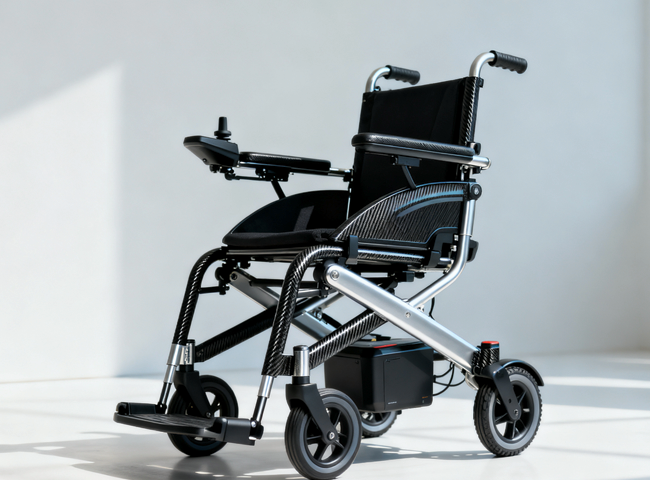
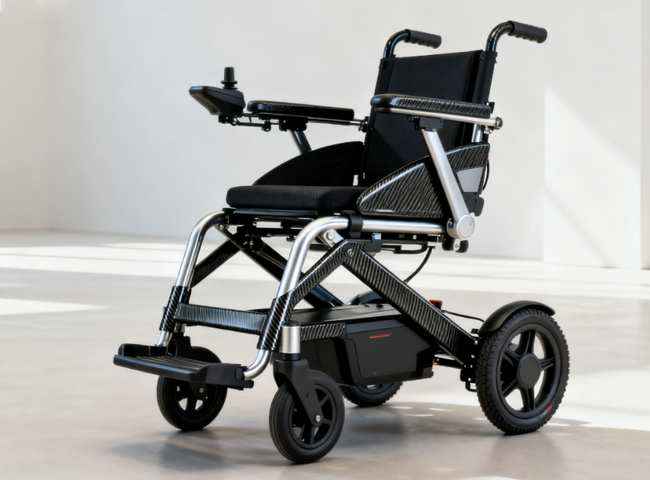
A carbon fiber electric wheelchair represents the future of mobility—combining lightness,durability,and intelligent design in a way that makes movement effortless.Whether for active seniors,travelers,or individuals with mobility impairments,this innovation delivers a blend of strength and convenience unmatched by traditional designs.
Let’s explore why carbon fiber is reshaping the industry,what makes these wheelchairs special,and how brands like Iyasocare are leading the charge in designing smarter,stronger,and lighter mobility solutions.
Carbon fiber is no longer limited to aerospace or high-performance sports cars.Its entry into the mobility aid industry has changed the rules.Made by weaving carbon filaments into a matrix and curing them at high temperatures,carbon fiber achieves an extraordinary balance:it is stronger than steel yet significantly lighter than aluminum.
This unique combination is what makes it so transformative for electric wheelchairs.Traditional wheelchairs—especially powered ones—have long been criticized for being heavy,difficult to transport,and cumbersome to handle.But a carbon fiber electric wheelchair solves that problem beautifully.
Imagine being able to lift your entire powered wheelchair with one hand,or fold it and place it into the trunk of a small car in seconds.For frequent travelers or those living in urban areas,that’s not just a convenience—it’s independence regained.
Weight has always been one of the biggest challenges for electric wheelchair users.A standard electric wheelchair can weigh anywhere from 70 to 120 pounds(32 to 55 kg).Transporting such a device can be exhausting,requiring ramps,lifts,or assistance from others.
Carbon fiber changes everything.A well-designed carbon fiber electric wheelchair can weigh as little as 30 to 40 pounds(13–18 kg),while maintaining impressive load capacity.This reduction in weight translates to easier lifting,better portability,and smoother rides.
For people who travel frequently or rely on public transportation,this is a breakthrough.It means no more struggling to fold the wheelchair or worrying about airline baggage restrictions.For caregivers,it means less strain and faster daily routines.
Lightweight doesn’t mean fragile—carbon fiber is incredibly tough.It can absorb shocks,resist deformation,and maintain its structural integrity for years.In fact,it’s one of the few materials that becomes stronger as it flexes,rather than weaker.
The appeal of carbon fiber goes beyond just being light.It provides superior ride quality due to its natural vibration damping.When moving over rough terrain or uneven ground,carbon fiber frames minimize vibration transfer to the user’s body.This creates a smoother,more comfortable ride,which is especially important for people with spinal sensitivities or long-term conditions.
Another engineering benefit is corrosion resistance.Unlike metal frames,carbon fiber doesn’t rust or weaken due to humidity,salt,or temperature changes.This makes it ideal for people living in coastal regions or humid climates,and for those who travel internationally.
The precision of carbon fiber manufacturing also allows for beautifully sleek and ergonomic designs.Every curve can be engineered for both strength and aesthetics,resulting in modern wheelchairs that look as elegant as they perform.
Mobility should never compromise on style.Today’s users want devices that look modern and sophisticated—tools that empower them,not remind them of limitations.A carbon fiber electric wheelchair naturally fulfills that desire.
Its glossy black or matte finish exudes premium craftsmanship,while its aerodynamic form mirrors the look of high-end sports gear.Many users describe their carbon fiber wheelchair as not just a necessity,but a statement of lifestyle and independence.
Brands like Iyasocare take this philosophy seriously.Their carbon fiber wheelchairs blend aesthetics and technology seamlessly.With precision manufacturing,minimalist folding mechanisms,and compact motor integration,Iyasocare models deliver both performance and beauty.
The new generation of carbon fiber electric wheelchairs isn’t just about materials—it’s also about intelligence.Many models now come equipped with AI-powered controllers,brushless motors,and Bluetooth connectivity,allowing users to customize speed,acceleration,and sensitivity via smartphone apps.
Some even offer automatic folding systems that activate with a single button press,making it easier than ever to prepare for travel or storage.Long-lasting lithium batteries provide extended range—often 15 to 25 miles(25–40 km)—while maintaining quick charging times.
With intuitive joystick controls,electromagnetic braking systems,and obstacle detection sensors,these wheelchairs deliver confidence and control on every ride.
Air travel has always been a concern for wheelchair users.Airlines impose strict regulations on battery types and wheelchair dimensions.However,carbon fiber electric wheelchairs,especially those using removable lithium batteries,are designed to comply with international travel standards.
Many Iyasocare models are FDA-approved,airline-friendly,and feature folding mechanisms that reduce their size in seconds.For business travelers,adventurers,or retirees exploring the world,this freedom is invaluable.
Whether boarding a plane,a train,or a cruise ship,users can now bring their own electric mobility aid without hassle.No more heavy lifting,no more waiting for assistance—just independence and ease.
The shift to carbon fiber isn’t just a matter of convenience—it’s part of a global movement toward sustainability.Carbon fiber,despite being energy-intensive to produce,contributes to long-term energy savings due to its durability and light weight.
Because lighter electric wheelchairs require less battery power,they consume less energy per use.This reduces the environmental footprint while improving efficiency.In addition,many manufacturers,including Iyasocare,are exploring recycled carbon composites to make production more eco-friendly.
Sustainability in mobility means building products that last longer,perform better,and require fewer resources to maintain.A carbon fiber electric wheelchair embodies this principle perfectly.
These wheelchairs cater to a wide range of users.For active seniors,the lightweight design provides comfort and control without dependence on caregivers.For patients recovering from surgery or injury,it allows safe outdoor activity during rehabilitation.
For frequent travelers,carbon fiber wheelchairs eliminate the stress of transport.And for tech-savvy users,smart control options and advanced battery systems enhance daily life.
But the most powerful benefit is psychological.Lightweight mobility means users feel less restricted—more willing to explore,socialize,and engage with the world around them.The wheelchair becomes not a reminder of limitation,but an enabler of freedom.
Among the growing number of global wheelchair brands,Iyasocare stands out for its dedication to innovation and user-centric design.As a trusted manufacturer of electric and manual wheelchairs,Iyasocare has continually pushed boundaries to deliver comfort,safety,and modern functionality.
Their carbon fiber electric wheelchair lineup showcases cutting-edge materials,foldable structures,and ergonomic control systems designed for real-world needs.From lightweight travel models to full-featured electric designs with intelligent power management,every Iyasocare product reflects precision engineering.
Unlike many generic manufacturers,Iyasocare invests heavily in R&D,ensuring each wheelchair meets international safety standards and performance expectations.Their customer-first philosophy means products are designed not just for mobility,but for lifestyle enhancement.
If you’re exploring advanced mobility options,a carbon fiber model from Iyasocare offers unmatched reliability,comfort,and global support.
If you’re considering this next-generation technology,keep a few things in mind:
Frame Material Quality:Ensure the carbon fiber is genuine and multi-layered,not a surface coating.True carbon fiber provides strength and shock absorption.
Motor Power&Range:Look for brushless dual motors for balanced performance,and check the travel distance per charge.
Folding Design:A one-step or automatic folding mechanism makes transport simple and efficient.
Battery Type:Detachable lithium batteries are best for both safety and travel compliance.
Comfort Features:Adjustable cushions,suspension,and ergonomic armrests enhance long-term usability.
Brand Reputation:Choose a brand with a proven record of reliability—like Iyasocare—for after-sales support and parts availability.
The carbon fiber electric wheelchair is more than an innovation—it’s a revolution in independence.It combines aerospace-grade engineering with human-centered design,delivering comfort,efficiency,and style in a single form.
For those seeking to reclaim mobility without compromise,carbon fiber offers the perfect balance between power and freedom.And with manufacturers like Iyasocare leading the way,the future of mobility is not only lighter—but brighter.
1.Are carbon fiber electric wheelchairs safe for air travel?
Yes.Most carbon fiber electric wheelchairs use airline-approved removable lithium batteries and can be folded to meet baggage size requirements.Brands like Iyasocare design their models with travel regulations in mind.
2.How long does a carbon fiber electric wheelchair last?
With proper maintenance,a carbon fiber electric wheelchair can last over 10 years.The frame resists corrosion,and the batteries are replaceable,ensuring long-term reliability.
3.Is carbon fiber worth the extra cost compared to aluminum wheelchairs?