Our Location
Free Trade Tower, Xiyong street.
Chongqing, China

Free Trade Tower, Xiyong street.
Chongqing, China
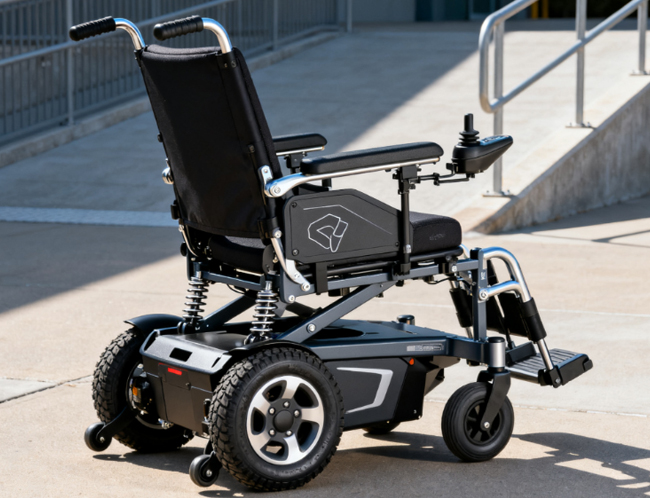
Mobility is more than getting from point A to point B. For many users, a wheelchair is a lifeline, a tool for independence, health, social engagement, and dignity. But not all wheelchairs are equal. Over the years, demand has grown for wheelchairs that do more than just roll—you see standing (or stand-assist) wheelchairs, elevating chairs, and hybrid designs.
A heavy-duty standing wheelchair ideally combines structural robustness, high weight capacity, versatile posture support (sitting, standing, even reclining), and reliable control systems. In this article, we explore what to look for in such a wheelchair, highlight the YSE307 multifunctional standing electric wheelchair as a representative model, show real-world advantages, compare alternatives, and propose key questions for buyers and caregivers.
Before diving into specific models, let’s clarify what “heavy-duty standing wheelchair” should mean to a user or purchaser. The more precisely you define your needs, the better match you’ll find.
Frame strength and structure
A heavy-duty wheelchair must resist bending, flex, fatigue over time, especially when supporting a user in a near-standing posture. Steel (especially thicker gauge or reinforced steel) is a proven material, though hybrid frames (steel + aluminum alloys) are used. Welds, joint reinforcements, gussets, and cross-bracing all matter.
Weight capacity / load limit
Many “standard” standing wheelchairs top out at 250 lb or 300 lb (≈ 113–136 kg). A heavy-duty variant may push to 350 lb, 400 lb, or more. That margin gives comfort, durability, and safety buffer.
Motion range & posture flexibility
Standing support: a mechanism (linear actuator, motor + linkage) that transitions the user into a vertical or semi-vertical posture.
Sitting / reclining: many users will want to shift between sitting, semi-recline, full recline, or lying positions.
Simultaneous coordinated motion: good designs move footrests, backrest, and knee supports concurrently to avoid strain or unnatural posture transitions.
Drive and maneuverability
Even though it’s a heavy-duty design, the wheelchair should still navigate indoors (doors, hallways) and outdoors (ramps, gentle slopes). Turning radius, wheel size, motor torque, ground clearance, and suspension are relevant.
Power systems, batteries, and control
Efficient, durable motors and battery packs (often lithium-ion these days) provide range and reliability. Control interfaces (joysticks, tilt sensors, remote overrides) must be safe and intuitive.
Safety systems
Anti-tip wheels, braking systems (regenerative, electromagnetic, fail-safes), safety belts, automatic locking during posture changes, and alarms/indicators.
Comfort and ergonomics
Cushioned seating, adjustable headrests, padded knee supports, limb supports, modular seating parts—while still being robust.
Serviceability, spare parts, international support
For global users, accessibility to replacement parts (actuators, batteries, controllers), documentation, and technical service matter hugely.
This YSE307 is positioned by Iyasocare as a multifunctional, heavy-duty standing electric wheelchair. While official specs on the page may vary over time, here is a breakdown of strengths, features, and how it fits into the “ideal” criteria above.
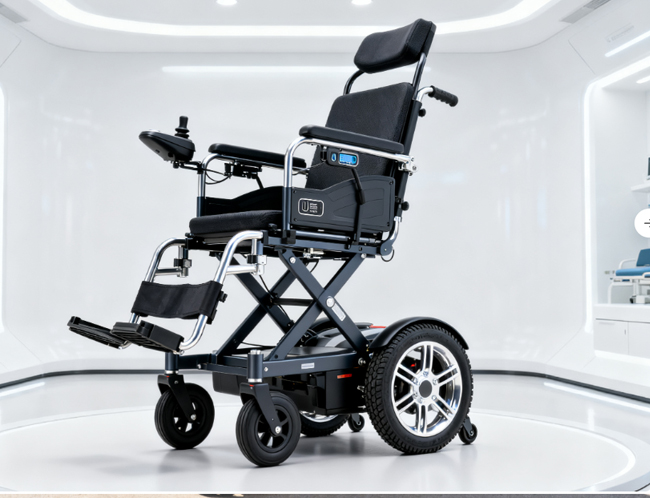
Steel heavy-duty frame:The YSE307 uses a reinforced steel frame to ensure durability and stability during standing transitions. That steel core gives confidence when the user is in more vertical postures.
Multifunctional posture support:As the name suggests, the YSE307 is not merely a stand-assist device. It supports multiple modes: sitting, standing, reclining. This flexibility makes it useful across daily tasks, therapy, and rest.
Motorized actuation & synchronized movement:The backrest, footrest, and knee supports move in harmony as posture changes, reducing muscle strain or awkward angles for the user.
High load capacity:While Iyasocare may list specific numbers, by its design orientation it’s marketed toward heavier users or those who want a margin of safety beyond minimal specs.
All-day usability & battery design:The YSE307 is designed to work indoors and outdoors, to handle moderate slopes, and support standard-to-long range use between charges.
User-centric controls & safety:Joystick control, intuitive interface, built-in braking mechanisms, safety interlocks during posture change—all are integral. The design tries to minimize the risk that posture changes could break the balance.
Global reach & support:Because Iyasocare serves international markets, users can likely get support, warranty, documentation, and parts for global shipment.
Given those attributes, the YSE307 is well suited as a flagship “heavy-duty multifunctional standing wheelchair.” It aligns well with the criteria we laid out above.
Where YSE307 Shines
1.It is ideal for users who spend long hours in their wheelchair but also wish to transition to standing—or semi-standing—for health (e.g. circulation, bone density) or social reasons (eye-level conversation, reach tasks).
2.The synchronized motion ensures transitions are smoother, reducing the jarring effects of older or cheaper standers that move footrest first, then backrest, etc.
3.Coupling steel frame robustness with actuator design tailored for load distribution helps maintain integrity even under repeated usage.
4.International users (outside China) will benefit if Iyasocare supports customer service, spare parts, and shipping logistics (which they appear to offer, judging by their web presence).
Comparing YSE307 with Other Options
To help readers situate YSE307, let’s briefly compare with another standing wheelchair and with general heavy-duty power chairs.
Alternative Standing Option
Draco Standing Power Wheelchair
This is a high-end standing wheelchair that allows multiple posture transitions: sit → stand → recline → lie down in coordinated motion. Like YSE307, it prioritizes comfort and safety. Draco is well-known internationally and often compared in catalogs of standing wheelchairs.
Comparatively, Draco is a strong benchmark — for users deciding, the question is whether YSE307 can match its durability, support, price, and global service.
Heavy-Duty Power Chairs (Non-standing)
In contrast, many heavy-duty power chairs (without standing functionality) are designed strictly for pushing power, torque, stability, and higher weight support. Examples include:The Jazzy EVO 614 HD from Pride, capable of 450 lb load.
Best Power Wheelchair
Heavy-duty designs from 1800Wheelchair that support up to 500 lb, with reinforced motor and frame systems.
Those chairs excel at load and torque but lack standing transitions. So for a user who needs posture variation and still requires high structural strength, a standing model like YSE307 or Draco is more suitable.
Here are real-world advantages and scenarios where a unit like YSE307 offers major value:
Health & Physiological Benefits
Improved circulation & reduced edema
Standing helps blood flow, reduces swelling in lower limbs, and reduces venous stasis. For long-term seated users, these benefits aren’t trivial.
Bone density and muscle maintenance
Standing reduces the continuous load on bones that leads to bone loss (especially in paraplegia) and gives weight-bearing stress that helps stimulate bone maintenance.
Pressure relief and risk mitigation
Frequent posture changes, including standing, help mitigate pressure ulcers by shifting pressure points and reducing static load in one area.
Digestive & bladder function
Some users report improved digestion, bowel function, and bladder drainage when standing, due to gravity and repositioning of internal organs over time.
Daily Living & Independence
Access to higher surfaces:With standing mode, you can access countertops, cabinets, shelves, tables—especially useful in kitchens, labs, or workspaces.
Eye-level conversation & dignity:Standing enables face-to-face interaction in social contexts, which can reduce isolation and improve personal dignity.
Therapeutic use:In rehab settings, gradual standing transitions can be part of therapy plans. The chair becomes more than a mobility device.
Task performance:For example, in a workplace or home, standing lets a user reach things, clean, or complete tasks without needing assistance.
Durability & Long-Term Value
Structural margin:Heavy-duty design gives a safety buffer; even if the user gains weight or carries accessories, the chair handles it.
Less wear / frame fatigue:Steel-reinforced, well-bridged frames hold up better over time under repeated stress of transitions.
Better resale / longevity:A high-spec standing wheelchair may retain value longer or be adaptable to future user needs.
Tips for Selecting & Maintaining a Heavy-Duty Standing Wheelchair
Even if YSE307 is compelling, users should vet models with care. Here are practical tips:
Verify actual load ratings with margin — if you weigh 200 lb, don’t buy a 220 lb rated chair; aim for 300+ lb capacity.
Inspect transition smoothness — test how fluidly the motion occurs, how synchronized the supports are, and whether there’s jerk or lag.
Consider turning radius & footprint — make sure it can navigate your doorways, ramps, and indoor spaces.
Check battery range under load — real-world range with weight and inclines must be measured, not just datasheet numbers.
Ensure spare parts availability — actuators, controllers, batteries, fasteners, bearings.
Human factors & ergonomic fit — how well the seat, supports, and controls match your body is key.
Safety certifications & standards — e.g. EN, ISO, medical device classification, EMI/EMC compliance.
Test environment on slopes, curbs, thresholds — real-world obstacles matter.
Maintenance & Longevity Best Practices
Routine inspection:Check welds, joints, fasteners monthly. Look for cracks, fatigue lines, or loosening.
Lubrication and dust protection:Apply light grease or specified lubricant to pivot joints and actuator rails (where allowed). Keep dust-out of actuators.
1.Charge regularly; avoid full depletion
2.Store in moderate temperature
3.Replace when capacity falls below ~ 70–80%
4.Use matched battery packs (same brand/model, matched age)
Motor & actuator checks:Monitor current draw; unusual load increases may signal binding or wear.
Software / controller firmware updates:If the manufacturer offers updates, apply patch fixes, especially those improving safety or efficiency.
Follow load and horizon limits:Don’t regularly exceed tilt or slope ratings, as those impose undue stress.
Spare parts inventory:Keep a spare actuator, fasteners, or belts (if applicable). In many regions, shipping parts takes time.
By observing regular care, a well-designed heavy-duty standing wheelchair—even one under heavy load—can last many years with smooth operation.
Q:Is it safe to continuously support a user in a fully standing mode for extended periods?
A1:While standing modes offer significant benefits (circulation, bone stimulation, social access), continuous full standing for many hours can stress joints, cause muscle fatigue, and potentially overload supports. It’s usually recommended to alternate between standing, semi-standing, and seated or reclined modes. A chair like YSE307 is designed to manage transitions safely, but users should follow medical or therapeutic guidance on standing durations. Periodic adjustment or small breaks help mitigate overstrain.
Q2:How does long-term maintenance cost compare between a heavy-duty standing wheelchair and a standard power wheelchair?
A2:Maintenance for a standing model tends to be more complex and slightly costlier, because there are more moving parts (actuators, linkages, synchronization systems). Actuators and control electronics may need replacement over time. However, a robust design like YSE307, with modular parts and good spare support, can reduce those costs. In contrast, a plain power wheelchair has fewer moving posture components and thus simpler upkeep. Over a 5–10 year lifetime, the incremental maintenance cost is acceptable when balanced against the functional benefits.
Q3:For international users (Europe, North America, Asia), how critical is regional service, warranty, and spare parts when selecting a heavy-duty standing wheelchair?
A3:Extremely critical. Even the best mechanical design fails its value if a key actuator or battery fails and cannot be replaced or serviced locally for months. Before purchase, users should verify: