Our Location
Free Trade Tower, Xiyong street.
Chongqing, China

Free Trade Tower, Xiyong street.
Chongqing, China
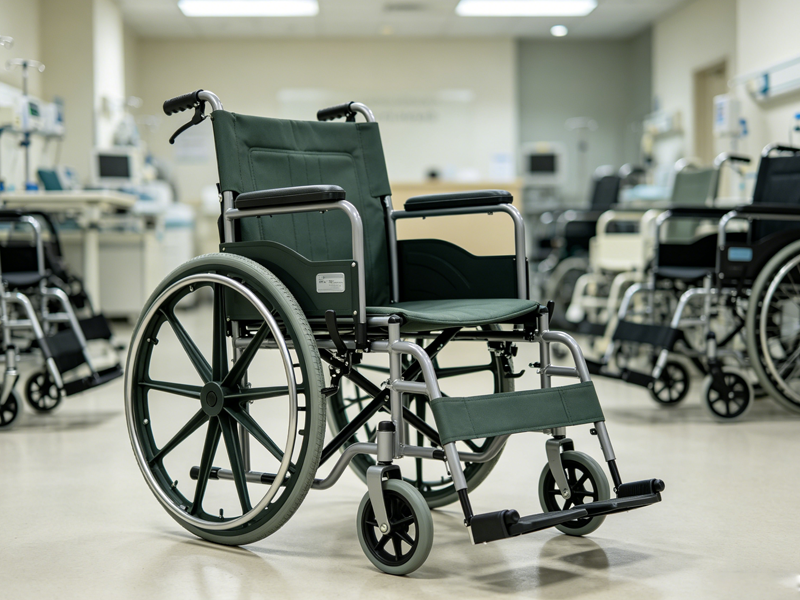
When people start researching bariatric wheelchairs, the first question is almost always about weight capacity. It sounds straightforward—how much weight can the chair hold?—but the answer is more nuanced than a single number on a spec sheet.
A bariatric wheelchair isn’t just a “bigger chair.” It’s a piece of engineered mobility equipment designed for stability, durability, and long-term use under higher loads. Understanding its real capacity means looking beyond the headline figure and into how that weight is supported, distributed, and sustained over time.
Most bariatric wheelchairs support 300 to 700 pounds (136–318 kg). Heavy-duty models typically start at 400 lbs, while specialized designs can go even higher—some exceeding 800 lbs in clinical or custom-built configurations.
But here’s the key:
The stated weight capacity is a tested maximum under controlled conditions—not a daily-use recommendation.
In practice, staying below that limit—ideally with a 10–20% safety margin—helps extend the life of the wheelchair and maintain safe performance.
Manufacturers determine weight limits through structural testing, focusing on frame integrity, wheel strength, and joint durability. However, real-life use introduces variables:
A chair rated for 500 lbs can technically support that weight, but continuous daily use at the limit will increase wear and reduce lifespan. Think of it like a bridge—it can handle maximum load, but it’s designed to operate comfortably below it.
A standard wheelchair and a bariatric wheelchair may look similar at first glance, but their internal construction tells a different story.
Reinforced Frames
Bariatric models use heavy-gauge steel or reinforced aluminum alloys. Cross-bracing is stronger and often double-layered to prevent flexing.
Wider Seat Dimensions
Seat widths range from 20 inches to over 30 inches. This isn’t just about comfort—it ensures proper weight distribution, which directly affects stability.
High-Capacity Wheels and Tires
Rear wheels are thicker, with reinforced spokes or solid mag wheels. Front casters are larger and more robust to prevent wobbling under load.
Upgraded Upholstery and Support
Seats and backrests use heavy-duty materials designed to resist stretching and tearing over time.
Enhanced Braking Systems
More weight requires stronger braking. Bariatric chairs often include extended brake handles or dual-lock systems.
Instead of thinking in a single number, it’s more useful to view bariatric wheelchairs in tiers:
Each step up increases not only capacity but also the chair’s overall weight and footprint, which affects transport and storage.
A common mistake is choosing a wheelchair solely based on weight capacity. In reality, fit and ergonomics are just as important.
A chair that’s too narrow can create pressure points and circulation issues. Too wide, and the user may struggle with posture and control. The right balance ensures:
Seat depth, back height, and armrest positioning all play a role in how the weight is carried—not just how much.
Another factor often overlooked is usage frequency.
If the wheelchair is used:
For example, a 450 lb user may technically fit a 500 lb chair—but for daily use, a 600 lb-rated model will perform better over time.
Higher capacity usually means:
This is where trade-offs come in. A stronger chair is safer, but it may require:
Choosing the right model means balancing strength with real-life usability.
Weight capacity also varies depending on the type:
Manual Bariatric Wheelchairs
Electric (Power) Bariatric Wheelchairs
For users prioritizing independence, electric models are often worth considering—but they come with added complexity.
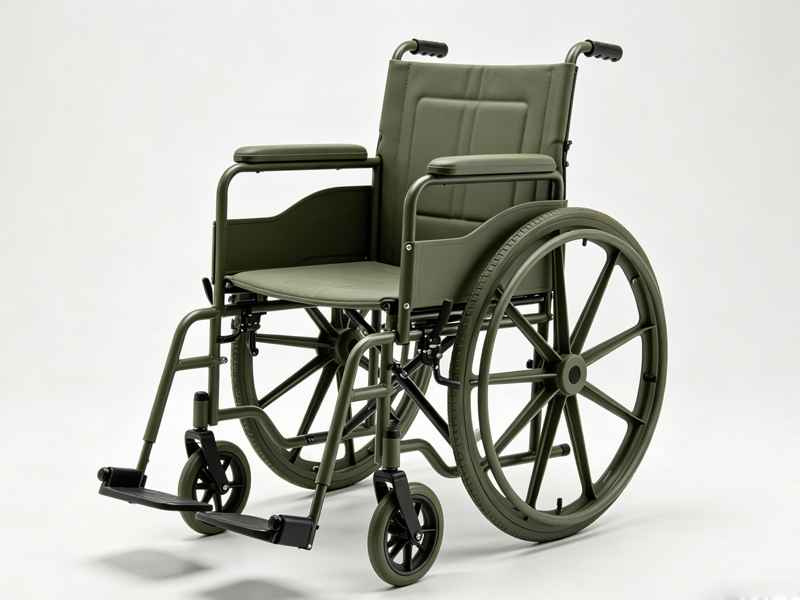
Weight capacity isn’t just about whether the chair holds—it’s about how safely it performs.
Watch for:
These are early signs that the chair may be under strain.
Also, always consider dynamic weight—movement adds force. Sitting down quickly or shifting position can temporarily exceed static weight limits.
Instead of asking, “What’s the maximum weight?” ask:
A simple rule:
Choose a wheelchair with at least 15–25% higher capacity than the user’s weight for long-term use.
Bariatric wheelchairs are more expensive than standard models due to reinforced materials and engineering.
While it may be tempting to save money upfront, under-specifying capacity often leads to faster wear and replacement—costing more in the long run.
A bariatric wheelchair’s weight capacity is more than just a number—it’s a reflection of design, durability, and real-world usability. Choosing the right one means understanding how that number translates into daily life.
The best wheelchair is not the one with the highest capacity, but the one that offers the right balance of strength, comfort, and practicality for the individual using it.
1. Can I use a wheelchair at its maximum weight capacity every day?
Technically yes, but it’s not recommended. Regular use at maximum capacity accelerates wear and can reduce safety over time. Choosing a higher-rated chair provides a buffer and improves durability.
2. What happens if I exceed the weight limit occasionally?
Short-term overloading may not cause immediate failure, but it increases stress on the frame and components. Repeated overload can lead to structural damage or sudden failure.
3. Are bariatric wheelchairs harder to push or maneuver?
Yes, generally. They are heavier and wider, which can make them more difficult to handle. However, proper fit and high-quality wheels can significantly improve maneuverability.