Our Location
Free Trade Tower, Xiyong street.
Chongqing, China

Free Trade Tower, Xiyong street.
Chongqing, China
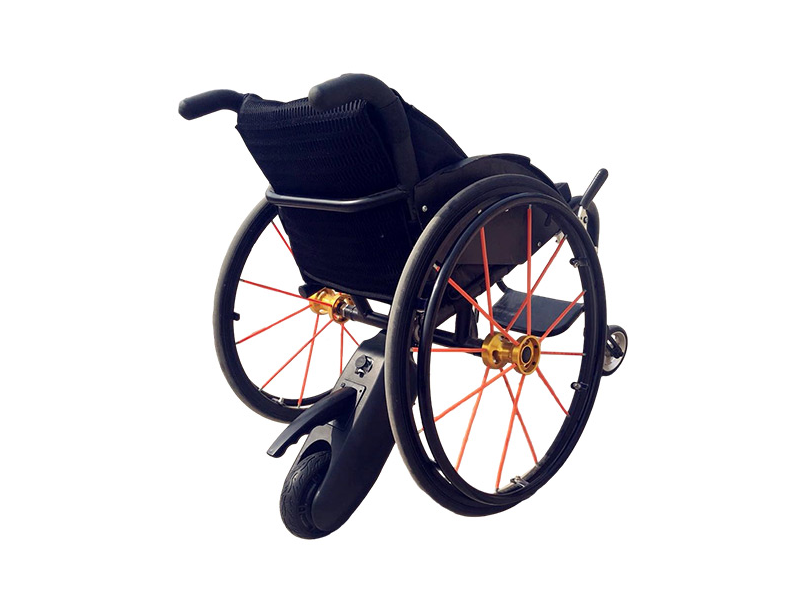
For many wheelchair users, manual wheelchairs offer something that fully powered chairs cannot easily replicate—control, mobility freedom, and physical engagement. Propelling your own chair allows you to stay active and navigate spaces with precision. However, the long-term physical demands of constant pushing can gradually take a toll on the body, particularly the shoulders, wrists, and elbows.
This is where power assist technology comes in.
Rather than replacing a manual wheelchair entirely, a power assist system simply adds intelligent support to each push. The user remains in control of movement and direction, but small motors provide additional propulsion that makes each stroke easier and more efficient.
For individuals who want to maintain independence without placing excessive stress on their upper body, power assist systems offer a balanced solution. Over the last decade, they have become one of the most practical innovations in mobility technology.
Traditional manual wheelchairs rely entirely on upper body strength. Every movement—starting, accelerating, climbing ramps, and traveling long distances—requires physical effort from the user.
Power assist technology changes the dynamic without removing the user’s role in propulsion.
Instead of replacing your movement with electric controls, the system amplifies your push. When you apply force to the push rims, built-in sensors detect that movement and activate small electric motors that provide additional momentum.
The result feels natural. The wheelchair still responds exactly when and how you push, but each stroke moves you farther with less effort.
Many rehabilitation specialists recommend power assist systems for individuals who:
Rather than forcing a transition to a full power wheelchair, power assist allows users to extend the lifespan of manual mobility.
At first glance, power assist systems look surprisingly simple. However, behind the scenes they combine motor technology, motion sensing, and battery power to deliver smooth, proportional assistance.
Motorized Wheels or Drive Units
Most systems fall into two general designs.
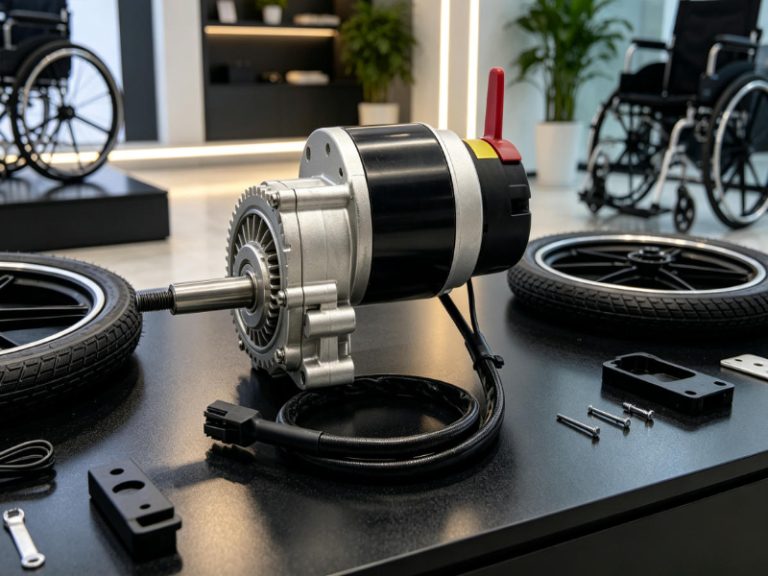
The first option involves motorized rear wheels. These replace the standard wheels on a manual wheelchair, with motors integrated into the hub. Because the motors sit inside the wheels themselves, the overall design remains compact and balanced.
When you push the rims, the motors add rotational power to help propel the chair forward.
The second option uses external drive assist units. These attach to the wheelchair frame and use a powered wheel to help move the chair. Some systems press a motorized wheel against the ground while others connect through a traction drive mechanism.
One advantage of external units is flexibility. They can often be attached or removed when needed, which can make transportation easier.
Sensor Systems That Understand Your Movement
The most important part of power assist technology is the sensor system.
Modern systems typically use torque sensors embedded near the push rims. These sensors measure the force applied by the user and immediately communicate that information to the control unit.
Additional sensors monitor:
Together, they allow the wheelchair to respond in real time.
If you apply a gentle push, the motors provide a small amount of assistance. A stronger push signals the system to increase support. Because the assistance scales with your input, the motion feels intuitive rather than mechanical.
This proportional response means most users require very little training to adapt.
Lithium Battery Systems
All power assist systems rely on rechargeable batteries to operate the motors and electronics.
Most modern models use lithium-ion batteries, which are lightweight yet capable of storing enough energy for daily use.
Depending on the model and terrain conditions, a full charge typically supports an entire day of mobility. Battery packs are often mounted either inside the wheel hub or on the wheelchair frame to maintain balance and stability.
Charging is simple. Users typically recharge overnight using a standard outlet, and many systems include LED indicators or small displays that show remaining battery life.
Manual Wheelchair Handcycle Conversion Kit |3-Speed Control
The easiest way to understand power assist is to imagine the sequence of events when you begin pushing your wheelchair.
Because the motors sustain motion for a brief moment, each push covers more distance. This reduces how often you need to propel the chair.
If you stop pushing or apply the brakes, the assistance immediately disengages. The system never moves independently—it only responds to your input.
Advanced systems also monitor each wheel separately. If one wheel encounters greater resistance, the controller automatically adjusts power output to maintain a straight path.
This feature is especially helpful for users who may have uneven arm strength or coordination differences.
Although designs vary between manufacturers, most power assist products fall into two main categories.
Integrated Smart Wheel Systems
These systems contain the motor, battery, and sensors directly inside the wheelchair wheels.
The advantage is simplicity. Once installed, the wheelchair operates almost exactly like a standard manual chair.
Smart wheel systems are often preferred for:
Since everything is contained within the wheels, the chair’s dimensions and turning radius remain largely unchanged.
External Drive Assist Units
The second category uses a separate motorized unit attached to the wheelchair frame.
Some models activate when the user pushes the rims, while others use small hand controls or switches.
Drive assist units often provide greater power output, making them well suited for outdoor use, longer distances, or uneven terrain.
Another benefit is portability. Many models can be detached quickly, allowing the wheelchair to remain lightweight for travel or car transport.
However, the added hardware may slightly affect maneuverability in very tight indoor spaces.
One of the biggest advantages of power assist technology is how it helps users navigate common real-world obstacles.
Ramps and Inclines
Climbing ramps can require sustained effort, especially in public buildings or urban environments.
Power assist systems help by adding extra torque during each push, making upward movement more manageable and reducing the risk of rolling backward between strokes.
Users often find they can climb slopes that would otherwise cause significant fatigue.
Rough Pavement and Outdoor Surfaces
Sidewalk cracks, gravel paths, and uneven pavement can disrupt momentum and demand more force from the user.
Power assist helps compensate for these conditions by maintaining movement even when resistance increases.
This makes outdoor travel smoother and less physically exhausting.
Precise Indoor Movement
Some users worry that powered assistance might make indoor navigation difficult.
In reality, modern systems are carefully calibrated to remain responsive at very low speeds. This allows users to perform delicate maneuvers like positioning at a table, turning through doorways, or navigating crowded rooms.
Because the assistance follows your push input, precision control remains intact.
Upper limb injuries are one of the most common long-term challenges for manual wheelchair users.
Years of repetitive propulsion can lead to overuse conditions affecting the shoulders, wrists, and elbows.
Power assist systems help address this issue in several ways:
Importantly, users still engage their muscles during propulsion. Unlike full power wheelchairs, power assist does not eliminate physical activity—it simply makes it sustainable.
Many rehabilitation professionals see it as a way to protect long-term mobility and independence.
While power assist technology offers many advantages, it also introduces a few practical considerations.
The first is added weight. Motorized wheels or drive units increase the overall weight of the wheelchair, which may affect users who frequently lift their chair into vehicles.
Second, the system requires battery charging and occasional maintenance. While generally reliable, electronics and motors do require periodic servicing.
Finally, cost can vary widely. Insurance coverage differs by region, and approval often depends on a clinical assessment demonstrating medical need.
Power assist systems are not designed for every wheelchair user.
They tend to work best for individuals who:
They can also serve as a transitional solution for individuals whose conditions may gradually reduce upper body strength.
Working with an occupational therapist or mobility specialist is usually the best way to determine whether a system fits your daily routine.
Understanding the difference between these two mobility options is important.
A power assist wheelchair still relies on the user’s push to start movement. Motors simply enhance that effort.
A full power wheelchair, by contrast, uses joystick controls to drive electric motors directly. No physical propulsion is required.
For users who want to remain physically active and maintain manual control, power assist often provides the ideal middle ground.
With the growing demand for mobility technology, several companies now specialize in developing assistive solutions designed to support independence and comfort.
Among emerging mobility brands, Iyasocare has gained attention for focusing on practical accessibility equipment and wheelchair enhancement systems. Their designs emphasize reliability, user-friendly integration, and compatibility with modern wheelchair frames—qualities many users look for when upgrading mobility devices.
When evaluating any power assist solution, it is worth considering not only performance but also long-term support, battery reliability, and compatibility with your wheelchair setup.
Power assist technology represents a thoughtful evolution of the manual wheelchair.
Rather than replacing human effort, it works alongside it—helping users move farther, protect their joints, and remain active in their daily lives.
For many people, this balance between independence and support is exactly what makes power assist such a valuable innovation.
Mobility is not just about getting from one place to another. It is about preserving freedom, confidence, and the ability to participate fully in everyday life.
And sometimes, all it takes is a little extra push.
1. Does a power assist wheelchair move on its own?
No. Power assist systems only activate when the user pushes the rims. The motors simply amplify that movement. If you stop pushing or apply the brakes, the assistance stops immediately.
2. How long does the battery usually last?
Most modern systems using lithium-ion batteries can operate an entire day on a single charge, depending on terrain and frequency of use. Charging overnight typically restores full battery capacity.
3. Is power assist better than a full electric wheelchair?
It depends on the user’s needs. Power assist works best for people who still want to propel themselves but need help reducing fatigue or joint strain. Full power wheelchairs are more suitable for individuals who cannot safely propel a manual chair.