Our Location
Free Trade Tower, Xiyong street.
Chongqing, China

Free Trade Tower, Xiyong street.
Chongqing, China
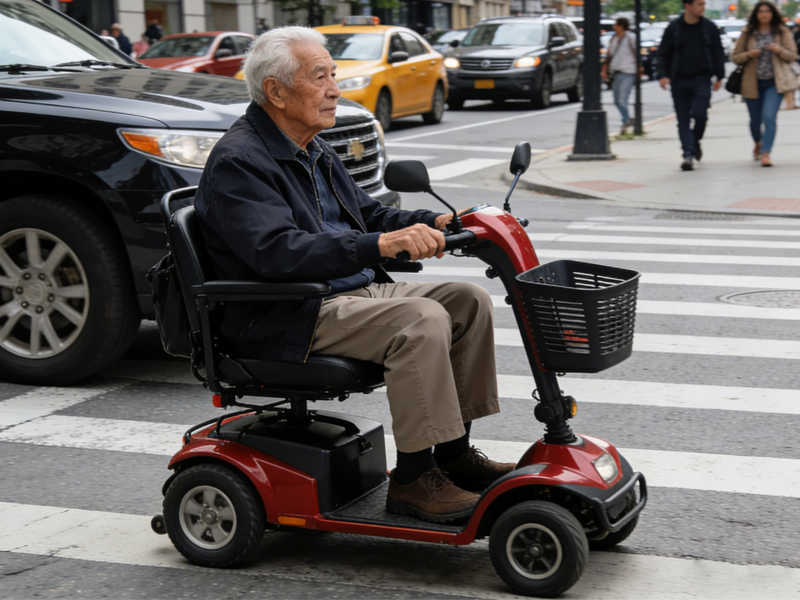
Mobility is more than just movement—it’s independence, confidence, and quality of life. For elderly individuals or people with disabilities, power wheelchairs have become essential tools for maintaining freedom, participating in social activities, and handling daily tasks with minimal assistance. But one question frequently arises: how far can a power wheelchair go on a single charge?
The answer depends on a combination of factors, including the wheelchair type, battery, terrain, and user habits. Understanding these elements not only helps users plan their daily routines but also ensures they maximize the longevity and efficiency of their device.
Power wheelchairs are not one-size-fits-all. Each design has unique strengths that influence how far it can travel.
Rear-wheel drive models are prized for stability and speed. They perform exceptionally well on longer outdoor routes and open spaces, providing a smooth, reliable ride.
Front-wheel drive chairs excel indoors, with tight turning radii that make navigating hallways and corners effortless. They offer precision and comfort in confined spaces but may sacrifice some outdoor efficiency.
Mid-wheel drive designs strike a balance, delivering maneuverability and versatility for both indoor and outdoor use. They are particularly effective in urban environments where users need to transition between different surfaces.
Choosing the right type is more than a comfort decision—it directly impacts battery usage and range. The more efficient the design for your environment, the further your wheelchair can travel without needing a recharge.
Modern power wheelchairs are equipped with advanced features that enhance both usability and travel distance. Adjustable seating systems, ergonomic controls, and sophisticated suspension reduce energy loss during movement.
Technology such as GPS tracking, Bluetooth connectivity, and user-friendly displays not only improves convenience but also allows for better route planning, helping users avoid steep inclines or rough terrain that might reduce range.
Battery type and management remain the most critical factors. Lead-acid batteries are robust and cost-effective but heavier, often limiting mobility. Lithium-ion batteries, on the other hand, are lighter, more efficient, and capable of longer travel distances on a single charge.
Even the most advanced wheelchair can be limited by physics. Rough terrain, inclines, and uneven surfaces increase energy consumption, reducing the distance a wheelchair can cover. Smooth, flat pavements, on the other hand, allow the battery to perform at its peak, extending travel distances.
Weight is another important consideration. The combined weight of the user and the wheelchair can significantly affect battery efficiency. Heavier loads require more power, shortening the effective range. Users who are mindful of carrying extra weight—such as bags or personal items—can enjoy longer travel distances.
Getting the most out of a power wheelchair requires a mix of proper maintenance, battery care, and lifestyle adjustments.
Maintenance is essential. Regularly checking tire pressure, ensuring wheels and axles move smoothly, and inspecting battery connections prevents unnecessary power drain. Even small issues, like misaligned wheels, can reduce range.
Battery care goes hand-in-hand with maintenance. Avoid fully depleting the battery, charge consistently, and store the wheelchair in a cool, dry environment. Using the correct charger according to manufacturer instructions helps extend battery life, ensuring you get the maximum mileage.
Lifestyle adjustments are surprisingly effective. Planning routes along smooth paths, reducing onboard weight, and using energy-saving modes can all enhance efficiency. Even subtle changes—like avoiding unnecessary turns or inclines—can add measurable distance to daily travel.
On average, most power wheelchairs travel 10 to 25 miles per charge, though this varies widely depending on battery type, user weight, and terrain. High-end models with lithium-ion batteries may exceed 25 miles under ideal conditions, while smaller, indoor-focused chairs may cover closer to 8–12 miles.
Understanding these ranges is crucial for planning trips, running errands, or engaging in outdoor activities. For extended outings, carrying a backup battery or planning charging stops can prevent disruptions and maintain independence.

The benefits of a reliable power wheelchair extend beyond distance. Increased mobility promotes social interaction, reduces dependence on caregivers, and supports both mental and physical health. By choosing the right wheelchair, caring for its battery, and planning routes wisely, users can transform daily limitations into newfound freedom.
Mobility isn’t just about moving from point A to B—it’s about reclaiming independence and confidence. Each mile traveled on a well-maintained power wheelchair is a step toward autonomy and enriched quality of life.
1. Can battery type make a significant difference in distance?
Absolutely. Lithium-ion batteries are lighter and more efficient than traditional lead-acid batteries, often allowing 20–30% more range on a single charge.
2. Does outdoor terrain reduce mileage drastically?
Yes. Uneven or inclined surfaces consume more energy, meaning users may experience 10–50% less range outdoors compared to smooth indoor floors.
3. How can I extend the life of my wheelchair’s battery?
Regular charging without fully depleting the battery, keeping the wheelchair in a cool, dry place, and following manufacturer instructions are the most effective ways to preserve battery health and maintain consistent travel distances.
Power wheelchairs are more than mobility aids—they are vehicles of independence. With thoughtful maintenance, smart route planning, and proper battery management, users can confidently enjoy the freedom to explore, socialize, and live life on their terms.